AMD closed its purchase of World Labs on Nov. 132. Three days later, on Nov. 16, the chipmaker made it official. Fei-Fei Li now runs its science work as executive vice president and chief scientist, reporting straight to chief executive Lisa Su1.
AMD's price ran to $8.2 billion in its own stock, for a lab of roughly 70 people. That works out to more than $117 million for each of them3. The real question for anyone watching AI hiring is what that seat actually buys.
The Godmother of AI Gets a New Boss
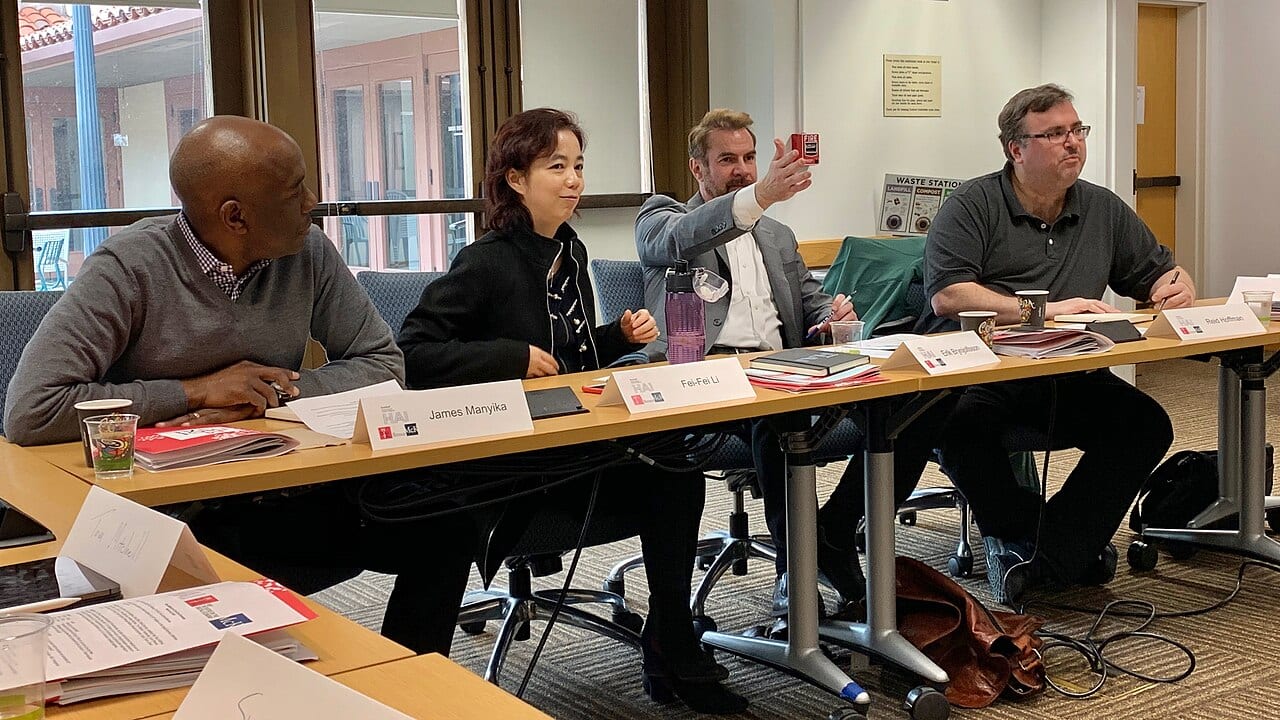
Reporters called Li the godmother of AI years before AMD came calling7. She ran Stanford's AI lab from 2013 to 2018. ImageNet, the labeled-image dataset that helped prove deep learning could scale, came out of that lab.
A sabbatical took her to Google Cloud's machine-learning push next. Back at Stanford, she co-founded its Human-Centered AI Institute in 2019 and started World Labs in 2024, as its co-founder and chief executive8.
AMD's relationship with that lab predates the acquisition by a year. World Labs had already been training and testing models on AMD's chips since 2025, well before either side signed anything4. Justin Johnson and Ben Mildenhall are two of Li's co-founders. Both are staying on to run the research team now that it reports inside AMD.
World Labs shipped its newest model, Atlas, on Nov. 12, one day before the deal closed4. Atlas builds and edits three-dimensional scenes from photographs, the kind of spatial work robots and game studios both need. World Labs walked into AMD already shipping Atlas to outside developers.
AMD Closes Its Fei-Fei Li Deal 48 Days After Signing
Key dates in AMD's purchase of World Labs, Sept. 26 to Nov. 16, 2026
Each pin marks one date in the sale; the gap between the signed agreement and the closing shows the 48 days AMD spent finishing a deal it had already announced.
Sources: AMD Newsroom [1]; AMD Investor Relations [2]; Unite.AI [4]. Chart by Ryan Elliott Dennis.
The numbers behind this chart
| Date | Event |
|---|---|
| Sept. 26, 2026 | Agreement signed |
| Sept. 28, 2026 | AMD announces deal |
| Nov. 12, 2026 | World Labs ships Atlas |
| Nov. 13, 2026 | Deal closes |
| Nov. 16, 2026 | Li named chief scientist |
The Price of Seventy Scientists
AMD's own filing puts a number on the deal that a press release skips. The company issued 14,978,322 shares of its stock to World Labs' stockholders when the deal closed2. World Labs employs about 70 people, so the price comes to more than $117 million for each of them13.
The per-employee math tells a recruiter something on its own. World Labs already sells a product, called Marble. AMD's price leaned mostly on people and a roadmap the company first saw only after talks began3.
Patrick Moorhead, a technology analyst who writes often on chip deals, called it "a talent and model-insight buy, not a revenue play" on Sept. 28, the day AMD announced the deal5. He added that AMD was "buying its way into the model layer," the way Nvidia had already built one of its own. Moorhead also put the stock AMD issued at less than 1 percent of its market value.
Patrick Moorhead@PatrickMoorhead$AMD is buying @theworldlabs for ~$8.2B in stock, and Fei-Fei Li (@drfeifei) will join as EVP and chief scientist reporting to @LisaSu.
I called Fei-Fei a great hire for Google Cloud back in 2017. Same here. This wasn't out of the blue, either. Lisa had her on stage at CES in… pic.twitter.com/ZXNpGiCiXz

World Labs follows three earlier AI-stack purchases at AMD. The company paid $4.9 billion for ZT Systems, $1.9 billion for Pensando and $665 million for Silo AI6. World Labs alone cost more than those three combined.
AMD Pays $8.2 Billion for World Labs, Topping Three Earlier AI Deals
AMD's disclosed price for four AI-related acquisitions, 2022 to 2026
Each bar is one acquisition's disclosed price in billions of dollars; the magenta bar, World Labs, alone costs more than the three gray bars combined.
Each price is the deal's announced value in its own signing year, left unadjusted for time.
Sources: AMD Newsroom [1]; Forkast News (via Yahoo Finance) [6]. Chart by Ryan Elliott Dennis.
The numbers behind this chart
| Item | Value |
|---|---|
| Pensando (2022) | $1.90B |
| Silo AI (2024) | $0.67B |
| ZT Systems (2024) | $4.90B |
| World Labs (2026) | $8.20B |
The Case AMD Is Buying a Future
Su's own explanation is the strongest case for the deal. She said the purchase lets AMD build its chips and its models side by side from the start. "Delivering the infrastructure that will power the next era of superintelligence requires us to optimize compute platforms and models together," she said when the deal closed. "We are thrilled to welcome Fei-Fei Li and the exceptional World Labs team to AMD. Their pioneering model research will help shape our future hardware, software and systems"1.
AMD's own announcement backs that plan with specifics. The World Labs team keeps advancing its own research. Its engineers now work alongside AMD's on what the company builds next1.
Li's title gives her a direct line to the one executive who can make that happen. Few acquired research leads ever get that line.
The Price of Being Owned
Keith Adams has watched this pattern before. He helped start Facebook's AI research lab, the one that built PyTorch, before becoming chief architect at Slack. Today he runs Pebblebed, a seed-stage venture firm3.
Adams says a lab's standing survives a sale on one condition only. "The moment a lab's output is leashed to the parent company's marketing roadmap, their credibility starts to erode," he told EO3. A lab that sells its own product can usually choose its own path, in his view. One whose real asset is talent tends to end up on somebody else's balance sheet instead.
Writer Dave Winer gave that risk a name 25 years ago: the strategy tax. He grounded the idea in a real case. "Consider a company that develops both a Web browser and a word processor," he wrote. "The product team for the browser might get lots of input from users saying, 'We'd like a better editor in the browser.' It would be natural to give the users what they want. So they put the feature in their project plan, but when it comes up for review, the CEO shoots them down"3.
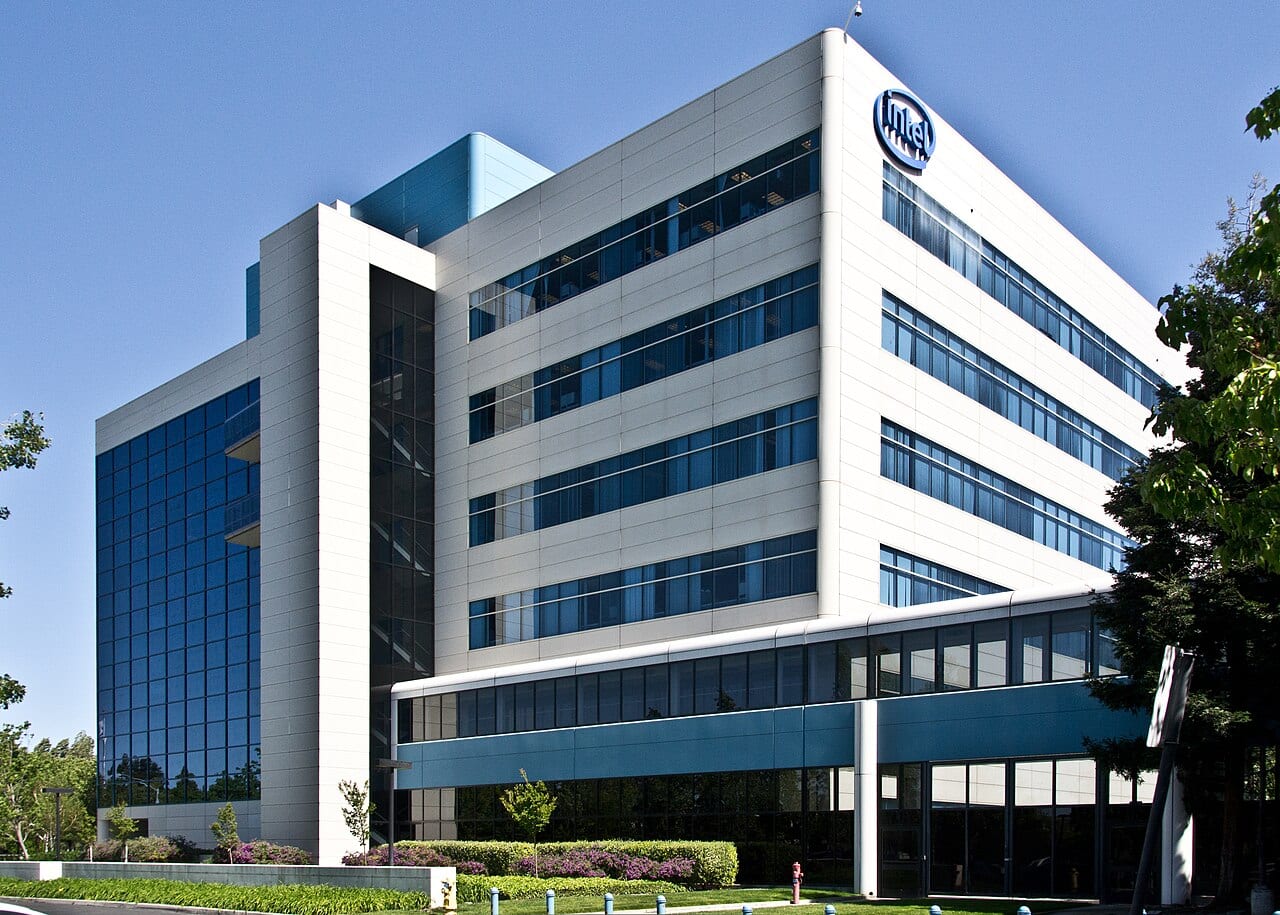
Intel ran that experiment on two AI chip labs it bought. It paid about $400 million for Nervana in 2016. Then it paid $2 billion for Habana Labs in December 2019 and called Habana an independent entity3.
Within two months, Intel ended Nervana's own chip program and backed Habana's line. A reporting line left Nervana exposed; its own sibling lab replaced it.
Li's seat beside Su is the one defense against that outcome. Adams frames the real test plainly: "For World Labs to succeed as part of a product company, someone with tangible authority has to keep saying 'not yet' to perfectly reasonable requests on behalf of paying customers"3.
What to do
Study Li's title over her price, if you are building or courting a research team of your own. A number like $117 million a head stays rare. The direct line to a chief executive, though, is the part another company can copy.
Ask any lab you are courting who it answers to on day one, and get that answer in writing before signing anything. Then watch whether World Labs keeps publishing and running its models on chips besides AMD's own. Outside publishing like that is the clearest sign the seat still means something.
By the numbers
- $117 million: what AMD's $8.2 billion price works out to for each of World Labs' roughly 70 employees13.
- 14,978,322 shares: AMD's stock issued to close the purchase on Nov. 132.
- 48 days: how long AMD took to close the deal after its Sept. 26 merger agreement2.
- $7.4 billion: AMD's combined price for Silo AI, Pensando and ZT Systems, less than World Labs alone cost6.
- Nov. 12: when World Labs shipped its Atlas model, one day before AMD's purchase closed4.
- Two months: how long it took Intel to end Nervana's own chip program after calling its newer purchase, Habana Labs, independent3.
What to watch
Watch whether World Labs keeps shipping models that run on chips beyond AMD's own. Adams says that is the sign of real independence. AMD's next earnings call will show whether it credits World Labs with a product line or files it as a research cost. A year from now, Johnson and Mildenhall still running the team would be its own answer.
Sources
- AMD, "AMD Completes Acquisition of World Labs," AMD Newsroom, Nov. 16, 2026, https://newsroom.amd.com/news/amd-completes-acquisition-world-labs/
- Advanced Micro Devices, Inc., "Form 8-K/A: Current Report," AMD Investor Relations, Nov. 16, 2026, https://ir.amd.com/financial-information/sec-filings/content/0001193125-26-462340/d105780d8ka.htm
- Hyeri Jo, "The Strategy Tax: What World Labs Risks by Joining AMD," EO, Oct. 25, 2026, https://www.eomag.io/article/world-labs-strategy-tax
- Evan Mercer, "AMD Closes World Labs Acquisition and Names Fei-Fei Li Chief Scientist," Unite.AI, Nov. 16, 2026, https://www.unite.ai/amd-closes-world-labs-acquisition-and-names-fei-fei-li-chief-scientist/
- Patrick Moorhead, post on X, Sept. 28, 2026, https://x.com/PatrickMoorhead/status/2104666894112526459
- Lena Park, "AMD Just Bought the Research That Defines What Its Chips Are For," Forkast News (via Yahoo Finance), Oct. 1, 2026, https://finance.yahoo.com/technology/ai/articles/amd-just-bought-research-defines-174221101.html
- Stanford University, "Fei-Fei Li," Stanford Profiles, https://profiles.stanford.edu/fei-fei-li
- Silicon Valley Invest Club, "Fei-Fei Li," Silicon Valley Invest Club, Nov. 17, 2026, https://siliconvalleyinvestclub.com/companies/world-labs/team/fei-fei-li/