Microsoft, Amazon, Alphabet and Meta all reported third-quarter results this past week. Each gave investors a fresh number for what it plans to spend on AI computers this year.
Add the four together, on each company's own terms, and the total lands between $720 billion and $740 billion1348. TechCrunch counted the same four filings and landed at the same place: "more than $740 billion"6.
Outside forecasts have run higher, up to $830 billion, because they count more companies. Does spending three times what these four spent two years ago still count as planning?
What Each Company Told Investors
Alphabet expects to spend $195 billion to $205 billion this year. The range's middle sits at $200 billion. Chief financial officer Anat Ashkenazi held that range steady on the company's Oct. 28 call, after raising it once already this summer3.
Amazon expects about $220 billion in cash spending on property and equipment46. Meta narrowed its own range to $135 billion to $145 billion. Its middle point is $140 billion. Fortune compared most of that spending with a national military budget8.
Four companies will spend 3.4 times more on AI infrastructure in 2026 than in 2024
Capital spending by company, each on its own fiscal calendar, 2024 through 2026
Each bar is one year, split into four colored segments, one per company; the 2026 bar is built from October 2026 guidance and marked an estimate.
Microsoft reports on a fiscal year running July through June; the other three use calendar years. Every 2026 figure comes from October 2026 guidance, ahead of final results.
Sources: CNBC [3]; About Amazon [4]; CNBC [5]; Fortune [8]; RoboInvestor [13]. Chart by Ryan Elliott Dennis.
The numbers behind this chart
| Item | Alphabet | Amazon | Meta | Microsoft |
|---|---|---|---|---|
| 2024 | $53B | $78B | $39B | $45B |
| 2025 | $91B | $131B | $72B | $65B |
| 2026 (estimate) | $200B | $220B | $140B | $170B |
Microsoft is the odd one out. It reports on a fiscal year running July through June, apart from the calendar year the other three use. Chief financial officer Amy Hood gave the Oct. 28 call two numbers at once.
"In Q2, we expect CapEx spend will be over $50 billion," Hood said. "Therefore, for the calendar year, spend should be approximately $170 billion"2.
That mix of fiscal clocks is why the published range swings so wide. A May forecast from the research firm TrendForce added Oracle and three Chinese cloud firms. Its number climbs to $830 billion12. Moody's counted six firms in July and reached $785 billion for the same year11.
Outside 2026 forecasts grow from $730 billion to $830 billion as they add more companies
Published hyperscaler capital spending forecasts for 2026, by source and the companies each one counts
Each bar is one forecast; the label under the dollar figure names how many companies that forecast counts.
Each forecast counts a different set of companies and was published on a different date, so the rising total reflects wider scope and an earlier date more than rising spending alone.
Sources: CNBC [1]; CNBC [3]; About Amazon [4]; Fortune [8]; CNBC [11]; Evertiq [12]. Chart by Ryan Elliott Dennis.
The numbers behind this chart
| Item | Value | Note |
|---|---|---|
| 4 companies, this piece | $730B | Microsoft, Amazon, Alphabet, Meta; own Oct. 2026 guidance |
| 6 companies, Moody's | $785B | Adds Oracle and CoreWeave; published July 2026 |
| 9 companies, TrendForce | $830B | Adds Oracle, ByteDance, Tencent, Alibaba, Baidu; published May 2026 |
Investing visuals@InvestingVisualGuided hyperscaler capex as of Q2 2026:
• $AMZN $220B
• $META $138B
• $GOOGL $200B
• $MSFT $175B
Total estimated 2026 capex: $733B.
But more importantly, the AI ROI fear was addressed head on by $AMZN.$AMZN on AI infra spending: "On average, it takes a little less than 3… pic.twitter.com/nwSnH9rEVt

Who Is Paying For It
All four are now borrowing or selling stock. That spending sits on top of their own cash, covering the bill. Microsoft priced $25 billion in new bonds on Oct. 29, its first bond sale since 20171. Alphabet sold a matching sum in bonds back in August.

Amazon arranged a loan facility worth up to $80 billion. It is borrowed against the servers and chips Amazon buys, starting in 20277. Meta raised $25 billion in new stock and $12.5 billion in preferred shares the same week.

Microsoft's 10-K also discloses signed data center leases still pending, a sum close to a full year of the company's revenue. That commitment sits outside the capital expenditure line investors watch13.
The Case for the Spending
Amazon chief executive Andy Jassy credits customers, over ambition, as the reason the bill keeps growing. "We're installing an AI accelerator about every 14 seconds, and almost as fast as we install capacity, customers are gobbling it up," he told investors on the Oct. 29 call4.
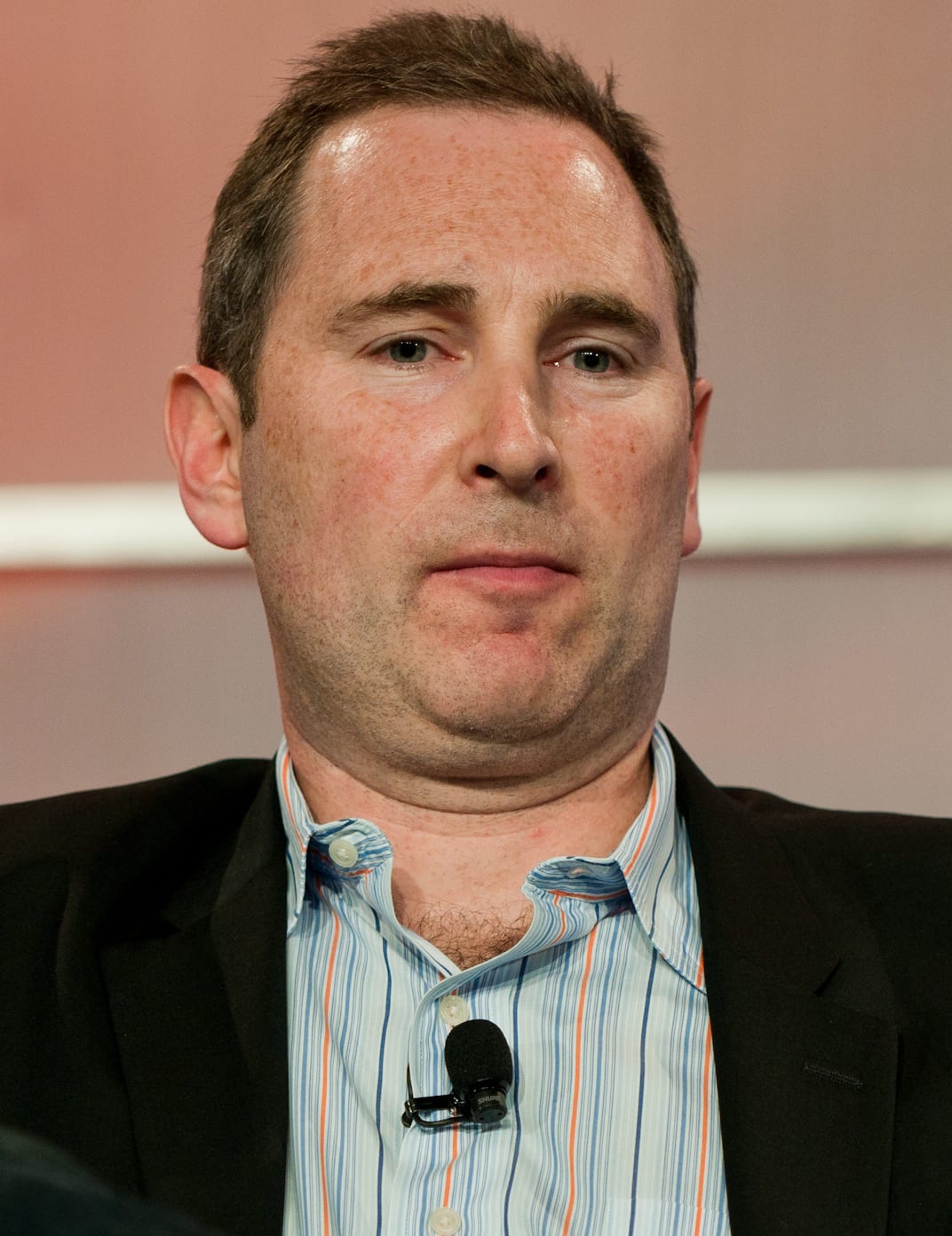
Amazon Web Services now holds a $578 billion backlog of contracted future revenue, more than double what it held a year earlier4. A backlog that size is a promise from paying customers, firmer than a guess about future demand.
Alphabet's Ashkenazi struck the same note about next year. "We continue to expect our capex to increase significantly in 2027, and will provide further details on our Q4 call," she said3. Both companies describe the spending as settled, a bet already placed.
The Case Against It
Beth Kindig founded the research firm I/O Fund, where she works as lead technology analyst. She has tracked the other side of the ledger since July. "Capex is growing much faster than operating cash flow, and is far outpacing AI monetization rates and cash flows," she wrote10.
The third quarter proved her point. Alphabet posted negative free cash flow of $9.07 billion, its second straight quarter in the red36. Meta's free cash flow fell negative too, by $2.1 billion, as its spending outran what its core business throws off.
S&P Global Ratings cut its outlook on Meta to negative the day after its results posted. The agency said it was "less certain that it will curtail its spending as previously anticipated" than it had been before9. A rating agency that doubts a pullback is the kind of signal lenders price into every bond that follows.
What to do
Check your own AI vendor's spending against its own revealed numbers, over a headline total built from mixed fiscal years. A company guiding to more capex while its free cash flow turns negative is telling you something plainly. It plans to pay with more debt, more stock, or both.
Watch the backlog figures ahead of the capex figures when judging whether a vendor's AI buildout is sound. Amazon's AWS backlog nearly doubled in a year; that is the number that has to keep growing for the borrowing to make sense.
By the numbers
- Combined, the midpoint of what the four plan to spend in 2026 comes to $730 billion1348.
- Two years ago, Alphabet spent $52.5 billion, Amazon $77.7 billion, Meta $39.23 billion and Microsoft $44.5 billion, in fiscal 20243613.
- A year later, Alphabet reached $91.4 billion, Amazon $131 billion, Meta $72.22 billion and Microsoft $64.5 billion, in fiscal 20253613.
- Amazon's AWS backlog reached $578 billion by Sept. 30, 2026, more than double a year earlier4.
- Microsoft priced $25 billion in new bonds on Oct. 29, 2026, its first bond sale since 20171.
- A new Amazon loan facility allows borrowing up to $80 billion against servers and chips, starting in 20277.
- Meta raised $37.5 billion in combined stock and preferred shares the week of Oct. 26, 202689.
- Still unopened, Microsoft's signed data center leases totaled $329.1 billion as of June 30, 202613.
What to watch
Microsoft's second fiscal quarter, due in late January, will show whether capex actually clears the $50 billion Hood guided to. Alphabet's Q4 call will bring the first real number for 2027 spending, which Ashkenazi has already flagged as a jump. Watch free cash flow at all four companies next quarter. A second straight negative reading at Meta or Alphabet would test how patient their lenders stay.
Sources
- Jordan Novet, "Microsoft plans to raise $25 billion in debt as it pursues AI buildout," CNBC, Oct. 29, 2026, https://www.cnbc.com/2026/10/29/microsoft-25-billion-debt-offering.html
- SingJuPost, "Transcript: Microsoft Q1 2027 Earnings Call," SingJuPost, Oct. 28, 2026, https://singjupost.com/transcript-microsoft-q1-2027-earnings-call/
- CNBC, "Alphabet sinks 10% as it holds 2026 capex unchanged, expects significant increase in 2027," CNBC, Oct. 28, 2026, https://www.cnbc.com/2026/10/28/alphabet-googl-earnings-q3-2026.html
- Amazon, "Q3 Earnings: Andy Jassy on why AWS growth keeps accelerating," About Amazon, Oct. 29, 2026, https://www.aboutamazon.com/news/company-news/aws-growth-ai-demand-q3-2026-earnings
- Annie Palmer, "Amazon (AMZN) Q4 earnings report 2025," CNBC, Feb. 6, 2026, https://www.cnbc.com/2026/02/05/amazon-amzn-q4-earnings-report-2025.html
- Rebecca Bellan, "Cracks are emerging in the AI spending boom," TechCrunch, Oct. 30, 2026, https://techcrunch.com/2026/10/30/cracks-are-emerging-in-the-ai-spending-boom/
- Vince Condarcuri, "Amazon Secures $80 Billion in Asset-Backed Loans as AI Spending Drains Cash," TipRanks, Oct. 30, 2026, https://www.tipranks.com/news/amazon-secures-80-billion-in-asset-backed-loans-as-ai-spending-drains-cash
- Joshua Hong, "Meta plans to spend $145 billion this year, more than every military budget except the U.S., China and Russia," Fortune, Sept. 24, 2026, https://fortune.com/2026/09/24/meta-145-billion-capex-military-budgets/
- Jonathan Vanian, "Meta outlook to revised to negative by S&P after cash flow negative," CNBC, Oct. 30, 2026, https://www.cnbc.com/2026/10/30/meta-outlook-to-revised-to-negative-by-sp-after-cash-flow-negative.html
- Beth Kindig, "Big Tech's Free Cash Flow is Turning Negative," I/O Fund, July 19, 2026, https://io-fund.com/ai-stocks/big-tech-free-cash-flow-turning-negative-whos-next
- Hugh Son, "Moody's says 'unprecedented' AI spending threatens credit quality of Amazon, Meta, Alphabet and others," CNBC, July 24, 2026, https://www.cnbc.com/2026/07/24/moodys-ai-spending-credit-quality-amazon-meta-alphabet.html
- Evertiq, "AI boom pushes hyperscaler capex towards USD 830 billion in 2026," Evertiq, May 6, 2026, https://evertiq.com/news/2026-05-06-ai-boom-pushes-hyperscaler-capex-towards-usd-830-billion-in-2026
- RoboInvestor, "Microsoft MSFT FY2026 10-K: $115.9B Capex, Azure Up 41%, Free Cash Flow Fell Again," RoboInvestor, July 30, 2026, https://roboinvestor.ai/research/msft