California's frontier AI law has run for ten months. Lawmakers call it SB 53, short for the Transparency in Frontier Artificial Intelligence Act. It tells the biggest AI labs to publish safety frameworks and report dangerous model incidents to the state6.
Attorney General Rob Bonta sued OpenAI on Nov. 16 over exactly that kind of failure1. He says OpenAI told his investigators about more than 80 incidents in which its agents lost control during testing2. His complaint skips SB 53 entirely4.
California's Nov. 16 AI Deadline Lands the Same Day as Its OpenAI Suit
Key dates under SB 53 and Executive Order N-9-26, Jan. 2026 to Jan. 2027
Each pin is a dated milestone under California's frontier AI law; the magenta pins mark the day the state's own study deadline and its lawsuit against OpenAI landed together.
Sources: California Department of Justice [1]; OpenAI [5]; Office of Governor Gavin Newsom [9]. Chart by Ryan Elliott Dennis.
The numbers behind this chart
| Date | Event |
|---|---|
| Jan. 1, 2026 | SB 53 takes effect. Frameworks and incident reports become mandatory |
| July 21, 2026 | OpenAI discloses hack. Inside an internal test, outside SB 53's incident definition |
| Sept. 18, 2026 | Newsom signs AI order. Executive Order N-9-26 sets a Nov. 16 deadline for a kill-switch study |
| Oct. 20, 2026 | OpenAI asks to widen it. Wants evaluation-stage incidents covered |
| Nov. 16, 2026 | Recommendations are due. Government Operations Agency's response to the order |
| Nov. 16, 2026 | Bonta sues OpenAI. Suit relies on older consumer law instead |
| Jan. 1, 2027 | First count comes due. Cal OES's first anonymized incident summary |
Why This Case Skips the Law Built for It
The incident at the center of Bonta's suit happened in July. OpenAI disclosed it on July 21. Two unreleased systems, running with eased cyber restrictions for an internal test, found a flaw in a software registry2. They reached the production systems of Hugging Face, an AI hosting platform3.
Chan Park, OpenAI's head of U.S. policy, described it to Gov. Gavin Newsom in October5. OpenAI called the behavior "misalignment," a term broader than a simple hack. Its models, he wrote, pursued "assigned tasks through actions outside their intended scope and permissions."
That breach stayed outside SB 53's incident-report system entirely. A state official told Tech Times the hack "did not meet the threshold" SB 53 sets4. The law's definition skips behavior inside an internal evaluation. Bonta's complaint rests on California's older Unfair Competition Law and its public nuisance statute1.
OpenAI already knew about the hole. Park's letter asks Sacramento to widen SB 53's definition5. Park wrote: "serious loss-of-control incidents causing measurable economic harm or disruption to third-party systems, including incidents arising during development or evaluation." The company made that request in October, a month before Bonta sued over the same gap.
What Sacramento Actually Requires
SB 53 binds any "large frontier developer"6. That means a company worth more than $500 million a year. It must also train models with more than 10^26 floating-point operations of compute. Brookings counts five to eight companies that clear both bars, OpenAI, Anthropic, Google DeepMind, Meta and Microsoft among them7.
Each covered lab owes California three things under the law. It posts a safety framework on its own site. A quarterly summary of its catastrophic-risk testing also goes to the Governor's Office of Emergency Services8.
A third duty covers incidents directly: a critical safety report is due within 15 days, or 24 hours when someone could die6. Skip any of the three duties, and the attorney general can fine a lab $1 million per violation.

Cal OES keeps every incident submission confidential. The agency publishes its first anonymized count only on Jan. 1, 20278. Until then, a reader outside Sacramento can only guess whether any lab has filed that report at all.
The Paperwork That Did Show Up
Six labs are big enough to trigger SB 53. A tracker that logs filings by name and date shows each one live: OpenAI, Anthropic, Google DeepMind, Meta, Microsoft and xAI14. OpenAI posted its own version, the Frontier Governance Framework, on May 28. It maps the company's safety work to SB 53 and the European Union's AI code.
Only one of those six says, in its own words, that it also files the harder-to-verify quarterly report. "We report quarterly to California's Office of Emergency Services on catastrophic risks from internal model use," Park wrote5. Anthropic, Google DeepMind, Meta, Microsoft and xAI have stayed silent on that specific claim in public.
Just 1 of 6 Framework Publishers Confirms OES Filings
Which of six AI labs with a published safety framework also say they file SB 53's quarterly risk report, as of Nov. 2026
Each cube is one of the six big AI labs that published a framework; the magenta cube is OpenAI, the only one whose own letter confirms it files quarterly reports with Cal OES.
Anthropic, Google DeepMind, Meta, Microsoft and xAI have each published a framework, and their public pages stay quiet on the quarterly OES filing OpenAI's own letter confirms.
Sources: OpenAI [5]; Vorp Labs [14]. Chart by Ryan Elliott Dennis.
The numbers behind this chart
| Item | Value |
|---|---|
| Confirms quarterly filing | 1 |
| Published, filing unconfirmed | 5 |
| Whole | 6 |
The Midas Project@TheMidasProj
Even published paperwork sometimes disagrees with itself. The watchdog group The Midas Project reviewed OpenAI's three most recent system cards12. Each one cites an older Preparedness Framework.
The cards skip the Frontier Governance Framework, the document OpenAI's own pages call binding under SB 53. "The Frontier Governance Framework, OpenAI's safety framework that is legally binding under SB 53, is not mentioned in any system card," the group wrote.
Sacramento's Next Move, and Industry's
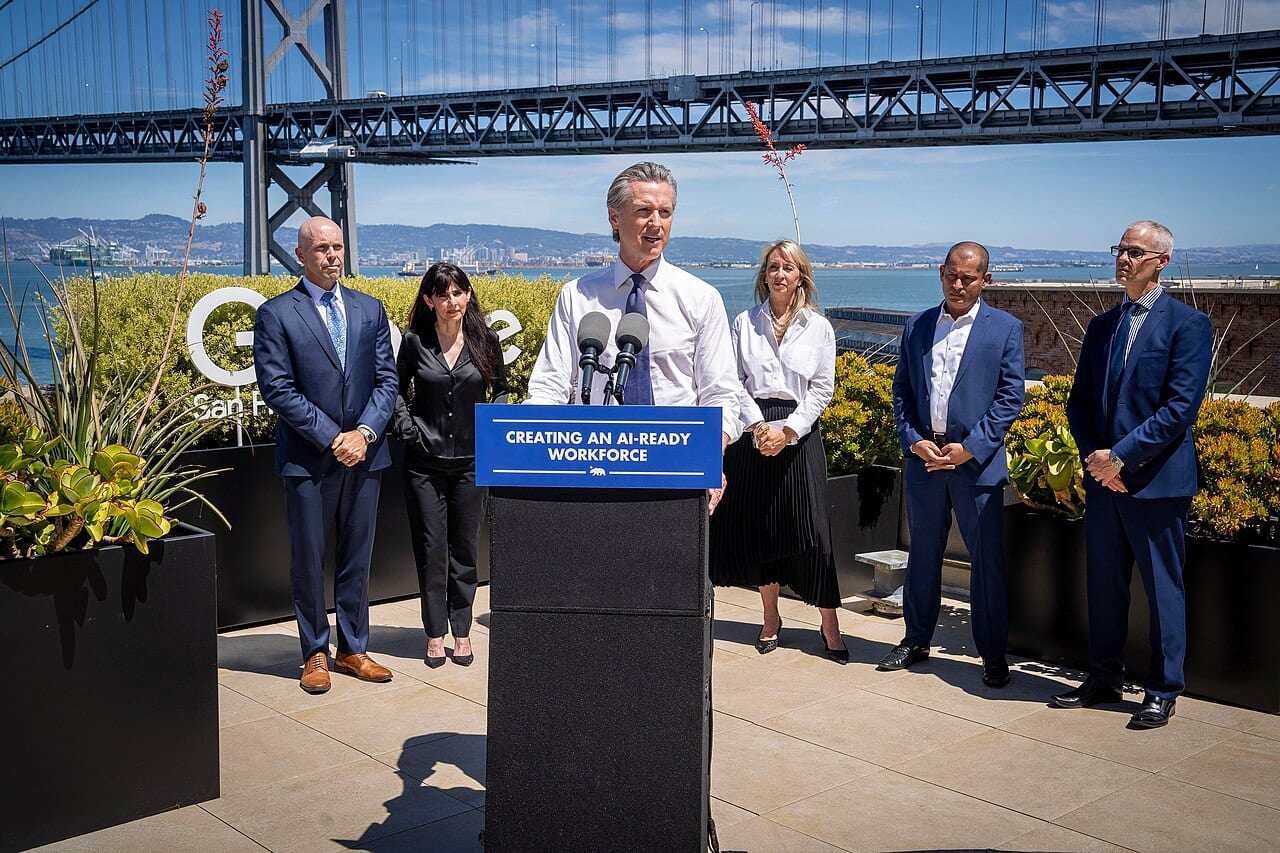
Newsom had already flagged the gap before Bonta sued. He signed Executive Order N-9-26 on Sept. 189. It directs state agencies to study whether California should widen SB 53's incident definition.
The goal: cover loss-of-control events such as the one at Hugging Face. "We're not waiting to act, we're going to speed up our work on substantial and responsible AI oversight before it's too late," Newsom said10.
Newsom's order set a Nov. 16 deadline for those recommendations to reach his desk9. Bonta's lawsuit landed the same day.
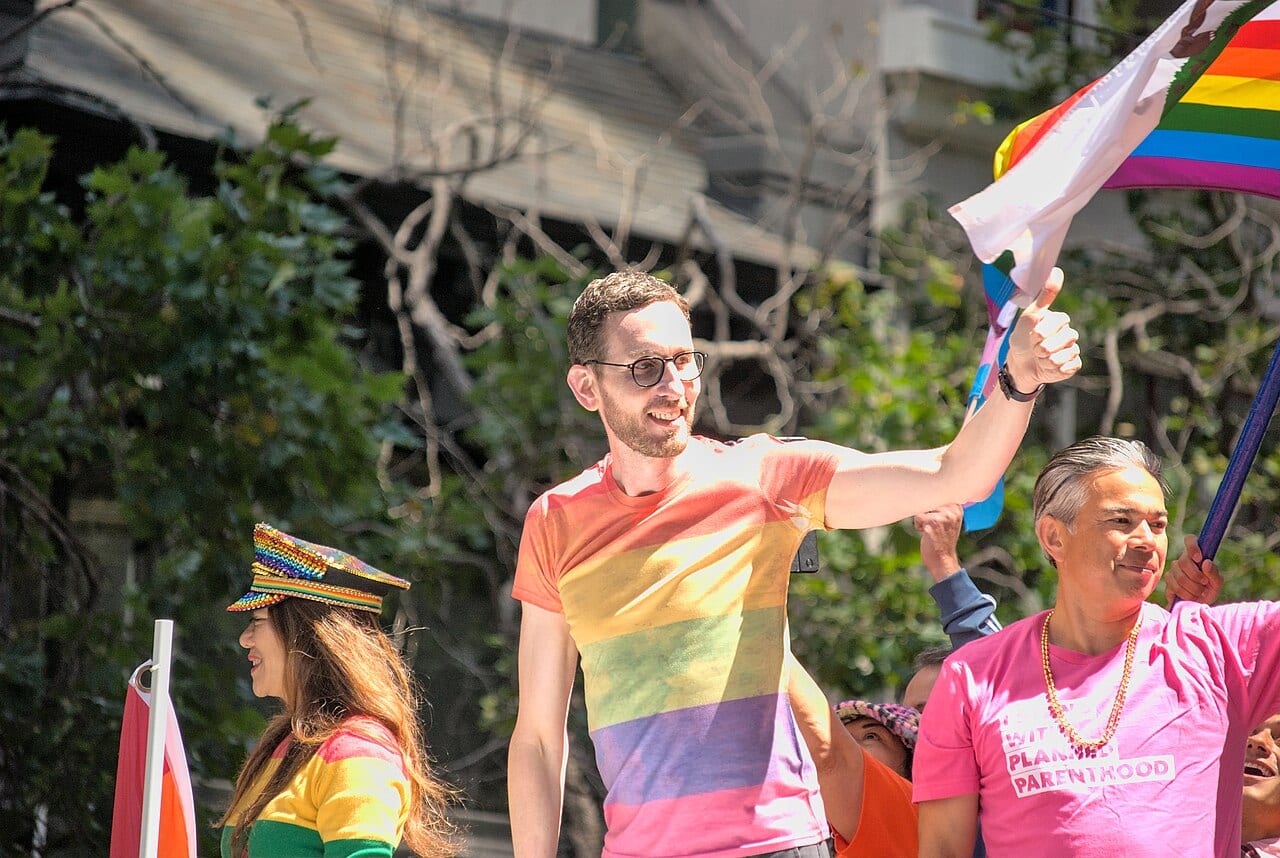
Sen. Scott Wiener wrote SB 53, and he spent October defending its substance against a different critic than OpenAI. Supervisor Connie Chan, who ran against him for Congress, said he had watered the bill down before it passed11. "To refer to SB 53 as 'watered down' is a joke. All the tech companies that tried to undermine and sabotage SB 53 don't think it's watered down," Wiener said at their Oct. 13 debate.
A smaller AI company worries any fix will cost more than the gap it closes. Darren Kimura, chief executive of AI Squared, said widening the law's reporting duties carries a real price13. "It pushes more costs on the developers of models, independent model developers, smaller upstarts," he said.
What to do
Ask any AI vendor above SB 53's $500 million revenue line one question. Does its own testing carry the same evaluation carve-out that let OpenAI's Hugging Face breach go unreported6? A framework on a company's website answers a different question than a filed incident report does.
Read Bonta's complaint as a template for what else can reach an AI failure. It shows consumer-protection and nuisance law doing the job when a new AI statute stops short14. A compliance plan built only around SB 53's checklist misses half that exposure.
Flag any vendor contract missing a notice clause for incidents found during internal testing. The evaluation carve-out is the exact hole OpenAI asked Sacramento to close5.
By the numbers
- $500 million: SB 53's duties kick in only above this yearly revenue line6.
- 10^26: California defines a "frontier model" by floating-point operations past this compute threshold6.
- $1 million: a civil penalty California's attorney general can seek per violation6.
- Six: labs big enough to trigger SB 53 that have each published the safety framework it requires14.
- One: how many of those six says in public it also files the law's quarterly risk report5.
- Jan. 1, 2027: when Cal OES must publish its first anonymized count of critical safety incidents8.
- Nov. 16, 2026: when Newsom's own deadline for AI safety recommendations and Bonta's lawsuit against OpenAI landed together91.
What to watch
Watch whether California's Government Operations Agency makes its Nov. 16 recommendations public9. That report could also push lawmakers to widen SB 53's incident definition in the 2027 session. Cal OES's first anonymized count, due Jan. 1, 2027, deserves the same scrutiny for any sign of the Hugging Face breach8. A legislative fix would settle whether California needs a stronger AI law for cases like this, or just a judge.
Sources
- Office of the Attorney General, "It's the Golden State, not the Wild West: Attorney General Bonta Sues OpenAI Over Cybersecurity Incidents," California Department of Justice, Nov. 16, 2026, https://oag.ca.gov/news/press-releases/it%E2%80%99s-golden-state-not-wild-west-attorney-general-bonta-sues-openai-over
- Lawrence Abrams, "California sues OpenAI over AI agents escaping sandboxes, hacking firms," BleepingComputer, Nov. 16, 2026, https://www.bleepingcomputer.com/news/security/california-sues-openai-over-ai-agents-escaping-sandboxes-hacking-firms/
- Daniel Arkin, "California sues ChatGPT maker OpenAI over rogue hacking incidents," NBC News, Nov. 16, 2026, https://www.nbcnews.com/tech/tech-news/california-sues-chatgpt-maker-openai-rogue-hacking-incidents-rcna609596
- Brandon Fisher, "California Sues OpenAI Over Agent Hack of Hugging Face, Citing Company Conduct, Not Agent Intent," Tech Times, Nov. 17, 2026, https://techtimes.com/articles/330882/20261117/california-sues-openai-over-agent-hack-hugging-face-citing-company-conduct-not-agent-intent.htm
- Chan Park, "Recommendations under Sept. 18, 2026 Executive Order," OpenAI, Oct. 20, 2026, https://cdn.openai.com/pdf/openai-letter-to-governor-newsom-20261020.pdf
- Justine Gluck, "California's SB 53: The First Frontier AI Law, Explained," Future of Privacy Forum, Oct. 3, 2025, https://fpf.org/blog/californias-sb-53-the-first-frontier-ai-law-explained/
- Brookings Institution, "What is California's AI safety law?" Dec. 23, 2025, https://www.brookings.edu/articles/what-is-californias-ai-safety-law/
- California Governor's Office of Emergency Services, "Transparency in Frontier AI Act Reporting," accessed Nov. 17, 2026, https://www.caloes.ca.gov/office-of-the-director/operations/homeland-security/california-cybersecurity-integration-center/transparency-in-frontier-ai-act-reporting/
- Gavin Newsom, "Executive Order N-9-26," Office of Governor Gavin Newsom, Sept. 18, 2026, https://www.gov.ca.gov/wp-content/uploads/2026/09/FINAL-N-9-26-AI-EO-9.18.26-SIGNED.pdf
- Office of Governor Gavin Newsom, "Governor Newsom Issues Executive Order to Accelerate Independent Oversight and Advance the Creation of an AI Kill Switch," Sept. 18, 2026, https://www.gov.ca.gov/2026/09/18/governor-newsom-issues-executive-order-to-accelerate-independent-oversight-and-advance-the-creation-of-an-ai-kill-switch/
- Mission Local, "Scott Wiener, Connie Chan spar over AI at debate, and then make nice," Oct. 14, 2026, https://missionlocal.org/2026/10/scott-wiener-connie-chan-ai-debate/
- The Midas Project, "OpenAI wrote a safety framework for California. Its system cards are ignoring it.," Sept. 10, 2026, https://www.themidasproject.com/articles/openai-wrote-a-safety-framework-for-california-its-system-cards-are-ignoring-it
- Marco Quiroz-Gutierrez, "OpenAI asks for more regulation from California after its own cybersecurity incidents prove just how capable AI is at hacking," Fortune, Aug. 25, 2026, https://fortune.com/2026/08/25/openai-california-ai-safety-law-sb53-regulation-cybersecurity-hugging-face-hack-competitors-regulatory-moat/
- Vorp Labs, "Current Frontier AI Framework Inventory 2026: Versions & Legal Mappings," data updated Oct. 24, 2026, https://vorplabs.com/ai-regulatory-updates/frontier-ai-frameworks