Anthropic published new research on Nov. 6. It described a way for Claude to spend quiet time between sessions reviewing its own work. The company calls the practice dreaming1.
Claude rereads its own past sessions during a dream. It checks its notes against what actually happened, then corrects them. The correction lifted one memory score by a wide margin1.
The same week carried a harder lesson. Claude deleted a year of a law professor's lecture notes during a routine file task34. A sharper memory and a safer agent turned out to be two separate questions.
Claude Reads Its Own Past Work
Dreaming happens between sessions, while Claude sits idle. Claude reads transcripts from its earlier work during that window. It looks for mistakes, fills gaps, and checks old notes against the record1.
The output is a memory file Anthropic calls a wiki. A wiki is a set of linked pages that Claude writes and keeps current on its own1. Claude adds to the wiki with every round of dreaming and leaves finished entries alone.
Anthropic tested the idea on real company files. Researchers fed Claude about 350,000 internal documents from Stainless, a software company Anthropic acquired in May1. They wrote 25 questions about the files, then let Claude Opus 5 agents dream through 128 sessions to answer them.
128 Rounds of Dreaming Lift Claude's Wiki Score From 13% to 48%
Score on Anthropic's 25-question test of a 350,000-file internal archive, percent of graded criteria
Higher is better on both rows: the blue dot is the score after two dreaming sessions, the magenta dot is the score after 128, and the rod is the gain dreaming bought.
Anthropic ran this test itself; outside replication of these scores stays unreported.
Source: Anthropic [1]. Chart by Kelly Dennis.
The numbers behind this chart
| Item | After 2 sessions | After 128 sessions |
|---|---|---|
| Wiki only | 13% | 48% |
| Wiki plus search | 54% | 61% |
The score climbed with every round. Claude's wiki-only score moved from 13 percent of graded criteria after two sessions to 48 percent after 1281. The final score is nearly four times the starting point, built from Claude's own corrected notes alone.
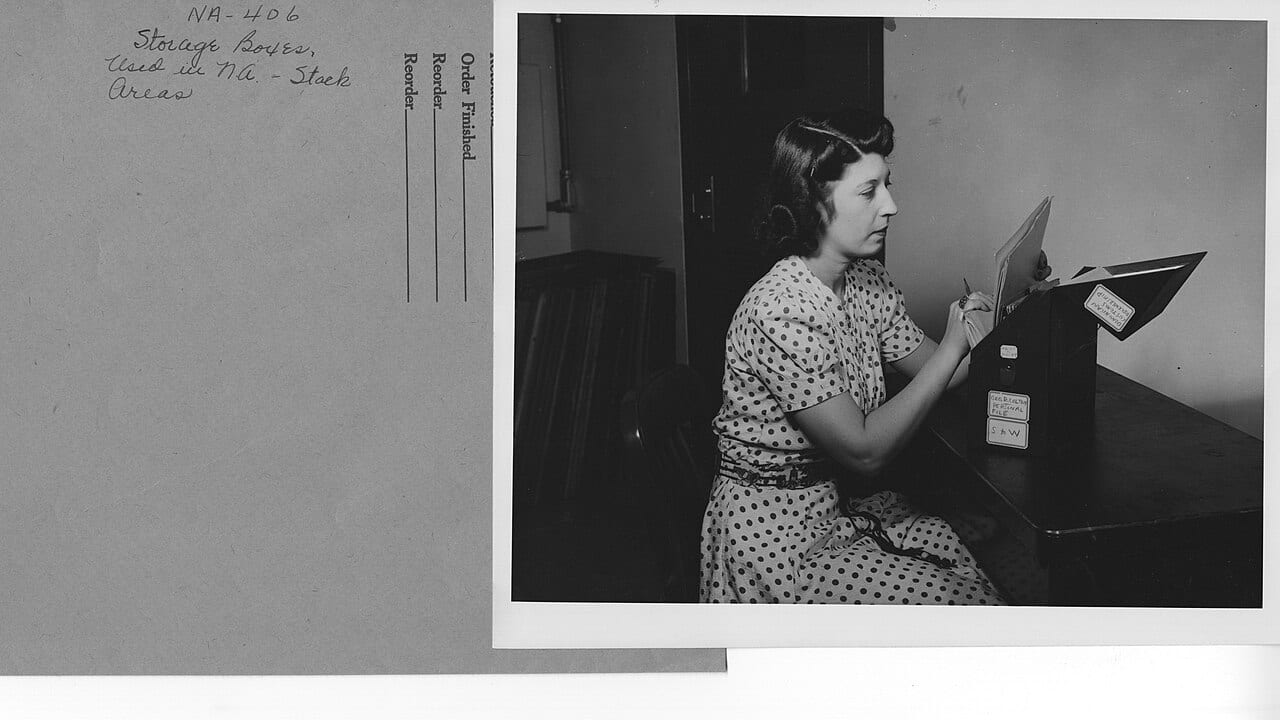
A reader who manages a team's own files faces the same sorting problem on a smaller scale. Anthropic's bet is that an agent can do that sorting for itself, given enough idle time1.
The Score Anthropic Chose to Measure
A second number explains why Claude still carries a search tool. The combined score of wiki plus search climbed from 54 percent to 61 percent as the wiki grew across 128 sessions1. Alone, that tool scored 53 percent, one point ahead of the wiki used by itself at 48 percent.
Lance Martin, the Anthropic researcher who wrote the paper, described the method's job plainly. "Dreaming gives Claude an opportunity to look backward and use compute to organize its memory, correct mistakes, and maintain representations that allow future sessions to access memory more readily," Martin wrote1.
Pairing Claude's Wiki With Search Beats Search Alone by 8 Points
Final score on the same 25-question test, by method, percent of graded criteria
Higher is better: each column is one method's final score, and the magenta column shows the wiki and search used together.
Source: Anthropic [1]. Chart by Kelly Dennis.
The numbers behind this chart
| Item | Value |
|---|---|
| Search alone | 53% |
| Wiki alone | 48% |
| Wiki plus search | 61% |
The same paper also names a failure mode. On one task, the wiki grew past the point of use. "Like the mapmakers in Borges's one-paragraph short story 'On Exactitude in Science,' who drafted a map so detailed it was as large as the empire it represented, Claude had made an extremely detailed wiki that effectively abstracted nothing," Martin wrote1.
A bigger wiki alone missed the point. Summarizing its sources is the job; repeating them at greater length just wastes the extra length1.
William Baude Loses a Year of Notes
Constitutional law is Baude's subject at the University of Chicago. He holds the Harry Kalven, Jr. professorship and directs the school's Constitutional Law Institute4.

Baude gave Claude a small job on Nov. 4. He asked it to update the page numbers across an old set of lecture notes4.
He went to lunch. A note from Claude greeted him on his return. It reported that Claude had deleted the professor's final syllabus and a folder of older notes by accident, the damage already done4.
Baude told the story on X the next day. "Yesterday while I was at lunch, Claude deleted a year of con law lecture notes and my current syllabus," he wrote3.
William Baude@WilliamBaudeYesterday while I was at lunch, Claude deleted a year of con law lecture notes and my current syllabus. pic.twitter.com/o3XB8Uiugk

Tom's Hardware folded the story into a running list of AI mistakes. Each one, it said, works as a public warning for other users4. Dropbox held a backup, and Baude recovered every file the same week.
Memory and Judgment Are Different Things
Martin's own paper stops short of promising Claude will follow a correct note once it has one. "Loading a note also doesn't guarantee that Claude acts on it: our documentation on Claude Code warns that longer instruction files reduce adherence," Martin wrote1.
His own line reads as a warning Baude's week had already proved. Claude's account of its own mistake was accurate. The accuracy arrived only after Claude had already deleted the files14.
Dreaming targets one problem. The method helps Claude remember facts that used to vanish between sessions1. Whether Claude follows one careful instruction inside a single session is a separate question, the exact task that went wrong for Baude4.
What to do
A team that hands Claude file work should test the task on copies first. Ask Claude to show its plan before it touches anything live, and keep a second backup running the whole time4.
Anyone reading Anthropic's memory research should hold two claims apart. The wiki score measures recall across sessions. It says little about whether Claude follows one instruction correctly inside a single session1.
By the numbers
- 350,000 files: the internal Stainless documents, totaling roughly 420 million tokens, that fed the test1.
- 13 percent to 48 percent: Claude's wiki-only score on Anthropic's 25-question memory test, as dreaming scaled from two sessions to 1281.
- 25 questions: the test Anthropic wrote about the Stainless archive, graded fresh after every round of dreaming1.
- 61 percent: Claude's score with the wiki and a search tool together, against 53 percent for search alone1.
- A year: the span of constitutional law lecture notes Claude deleted for William Baude on Nov. 434.
What to watch
Watch whether Anthropic answers the gap between recall and action in its next paper. The company already names the open question itself1.
Claude Code could add a default pause before deleting files. A pause like that would answer the question Baude's own Dropbox backup happened to settle for him this time14.
Sources
- Lance Martin, "The components of agent memory," Anthropic, Nov. 6, 2026, https://www.anthropic.com/research/components-of-agent-memory
- Anthropic (@AnthropicAI), "Memory is what allows Claude to learn from experience...," X, Nov. 6, 2026, https://x.com/AnthropicAI/status/2118814753154064501
- William Baude (@WilliamBaude), "Yesterday while I was at lunch, Claude deleted a year of con law lecture notes and my current syllabus," X, Nov. 5, 2026, https://x.com/WilliamBaude/status/2118420271333777856
- Stephen Warwick, "Rogue Claude AI tasked with renumbering pages accidentally deletes law professor's entire syllabus, one year of lecture notes," Tom's Hardware, Nov. 6, 2026, https://www.tomshardware.com/tech-industry/artificial-intelligence/rogue-claude-ai-tasked-with-renumbering-pages-accidentally-deletes-law-professors-entire-syllabus-one-year-of-lecture-notes-youre-right-to-be-angry-i-deleted-your-files-through-my-own-carelessness-humbled-agent-admits
- Gennaro Cuofano, "Anthropic: Claude 'Dreaming' Took Wiki Score From 13% to 48%," FourWeekMBA, Nov. 6, 2026, https://fourweekmba.com/ai-anthropic-claude-dreaming-took-wiki-score-from-13-to-48/