Anthropic starts watermarking text from four older Claude models on Tuesday, Nov. 3. xAI follows on Saturday, Nov. 7, with the same kind of mark on seven Grok API models25.
Readers see the same words as before. A pattern in word choice carries the mark, and only approved checkers can read it today12.
"Anthropic just emailed customers. Starting Nov 3, text carries an invisible watermark," Pete Sena wrote on X on Oct. 304.
Pete Sena@petesenaClaude gonna start snitching on Tuesday.
Anthropic just emailed customers. Starting Nov 3, text carries an invisible watermark.
You can't see it. It survives copy and paste, and it can survive some editing.
Only regulators, journalists, fact-checkers and researchers can check… pic.twitter.com/VeqOEGc1Td

Eleven Models, Two Dates
The email went to Claude Platform customers, and its wording reaches the public through FourWeekMBA, which read a screenshot5. It names Claude Mythos 5, Opus 4.7, Opus 4.6 and Sonnet 4.6.
"On November 3, 2026, Anthropic will begin applying its text watermark to outputs from these four models," the email says. It adds: "This is the same watermark our newer models, including Claude Opus 5.5, already carry." Amazon Bedrock customers wait longer, because rollout there "may take a few additional days."
xAI's developer docs, updated Oct. 31, list seven models for Saturday: versions 4.7, 4.6, 4.5 and 4.3, plus three variants of 4.202. TokenPost counted five, so the docs serve as the record here6. The change covers the API, and consumer Grok products stay as they are.

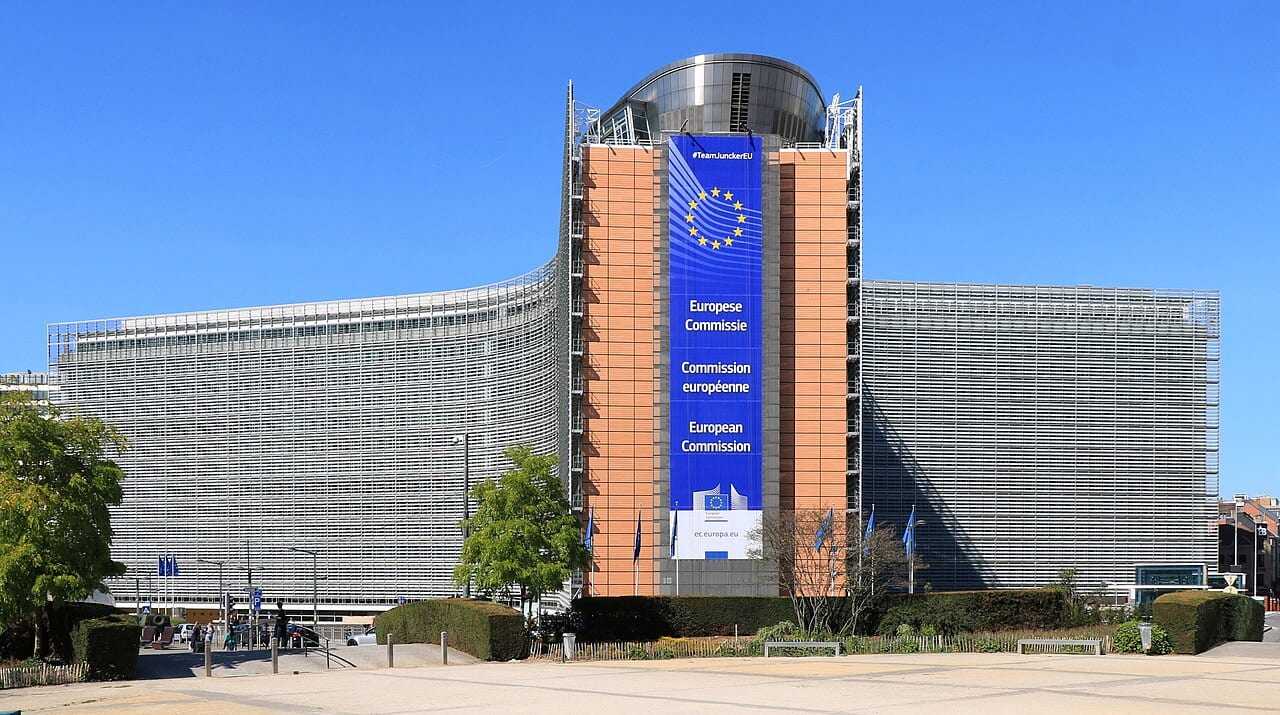
Both vendors point to one law. Article 50 of the EU AI Act took effect on Aug. 2, 2026, and it requires providers to mark what their systems produce3. xAI's docs, which now go by the name SpaceXSI, give the reason: "SpaceXSI watermarks text model output to comply with the EU AI Act."2
Anthropic explained its method on Aug. 14. It says it signed the EU's Code of Practice on Transparency of AI-Generated Content in July, alongside around 190 signatories1. Anthropic applies the mark worldwide. It explains: "We’re applying watermarking globally at launch because we don't yet have a durable way to scope it by region."
Claude and Grok start marking text four days apart, Nov. 3 and Nov. 7
Dates the EU rule, Anthropic's explainer and each vendor's start fall on, 2026
Each marker is one dated event, from the EU rule taking effect to the Grok API start, placed by real time.
Sources: Anthropic [1]; xAI Docs [2]; arXiv [3]; FourWeekMBA [5]. Chart by Ryan Elliott Dennis.
The numbers behind this chart
| Date | Event |
|---|---|
| Aug. 2, 2026 | EU marking rule starts. Article 50 of the EU AI Act takes effect. |
| Aug. 14, 2026 | Anthropic explains mark. Anthropic publishes how Claude's text watermark works. |
| Nov. 3, 2026 | Claude: 4 older models. Mythos 5, Opus 4.7, Opus 4.6 and Sonnet 4.6 begin carrying the mark. |
| Nov. 7, 2026 | Grok API: 7 models. The watermark turns on by default for seven Grok models. |
How a Word Choice Becomes a Mark
A model writes one word at a time. Anthropic's example is the sentence "The weather today was cold and…", where "overcast" and "grey" fit equally well1.
Today a random number picks between them. A watermark swaps in a different source of randomness: a secret key and the few words before the gap settle the pick. Readers still see ordinary text.
A detector holding the key replays that process over finished text. It checks whether the word choices match what the key would have produced. More text means more choices to check, and xAI puts it this way: "Longer text gives a stronger signal."2
Google DeepMind published the method, SynthID-Text, in Nature in 2024. The family of methods goes back to a 2022 proposal by Scott Aaronson1.
A common worry says a watermark plants odd words in your text. Anthropic answers the worry directly: "And it’s not the case that the watermarking method pushes Claude to choose a word it wouldn’t have considered anyway."1
Where one answer is correct, the mark stays out. After "2 + 2 =" the next token is 4, so the mark leaves it alone. Code carries less of the mark for the same reason, though comments inside code can carry it.
What a Mark Shows
A match answers one question. Anthropic words it as "What is the likelihood this was partly written by Claude?"1 Human authorship and rival models sit outside what a match can answer.
Anthropic lists the limits itself. Short passages hold fewer choices, so confidence drops. A complete rewrite removes the mark, while light editing probably leaves it in place. Translations carry the mark, because Claude chooses every word.
Quick proofreading shows how the sources disagree. Sena wrote: "It doesn't say who you are. It says Claude touched the words. Even a quick proofread counts."4 Anthropic describes the same case differently: "If you hand Claude a piece of writing and ask it to edit only the grammar and punctuation and nothing else, the watermark can only live in the handful of corrections, which might be too few to register."1
Who can check? Anthropic's detection API sits in private preview for eligible organizations, among them regulators, law enforcement, media, fact-checkers and independent researchers. xAI grants detection by application2. Both vendors keep the checker behind an application.
FourWeekMBA counted the rows of Anthropic's Help Center table. Of 16 listed Claude models, 7 carry the text mark on Anthropic's own surfaces only5. The other 9 carry all three marks Anthropic tracks.
7 of 16 listed Claude models carry the text mark on Anthropic's own surfaces only
Claude models in Anthropic's Help Center table, one cube per model, by FourWeekMBA's count
Each cube is one listed Claude model: magenta cubes carry the text mark on Anthropic's own surfaces only, and blue cubes carry all three marks.
The count is FourWeekMBA's own reading of the table, which omits a start date for each model.
Source: FourWeekMBA [5]. Chart by Ryan Elliott Dennis.
The numbers behind this chart
| Item | Value |
|---|---|
| Text mark on Anthropic only | 7 |
| All three marks | 9 |
| Whole | 16 |
The Case That the Mark Is Harmless
Anthropic's case rests on testing. The company wrote on Aug. 14: "In internal testing, we’ve seen no impact of watermarking on the content, level of creativity, or readability of Claude’s text."1
Google DeepMind ran a larger trial. It served a watermarked model to a share of Gemini traffic and compared thumbs-up ratings. The ratings differed by amounts below statistical significance.
Outside measurements agree on prose. Alexander Nemecek, Vipin Chaudhary and Erman Ayday ran the open-source version on two open-weight models. They report: "On prose, the measured effect of the watermark does not exceed that of changing the sampling seed."3 On code, the cost reached three points of correctness on one model.
The Case That Only Vendors Can Check It
Those authors draw a sharper conclusion. Nemecek, Chaudhary and Ayday write: "In this work, we argue that neither the objections nor the assurances can currently be verified and that this unverifiability, rather than watermarking itself, is the substantive governance failure."3
Users have raised four objections3. The mark hurts code, it hides identifying details, it is easy to remove, and it is inescapable. Anthropic says the mark identifies Claude and leaves every user, organization and chat anonymous1. The authors tested open-weight models "because no public tool can test the deployed systems."
xAI's opt-out shows who carries the risk. The docs say: "Opting out asks you to confirm that an exception under applicable law applies to your use, and that you are solely responsible for any marking, disclosure, or other legal requirement."2 Team admins choose per model, changes apply within five minutes, and an audit log records every change. Some models stay locked on for a team.
Anthropic's side holds if outside testers confirm its quality and privacy claims on the deployed models. The critics' side holds if those tests stay behind vendor access.
What to Do
If Claude writes your public copy, expect a checker with a key to find Claude's hand in it. Decide now what you tell readers about your tools.
Grok API users should send one test request before Saturday and read the x-watermark header on the response. Then ask your lawyer whether your use qualifies for an opt-out, since xAI makes you responsible for that choice.
By the Numbers
- Eleven: models gaining a text watermark between Nov. 3 and Nov. 7, four from Claude and seven from Grok25.
- 7 of 16: listed Claude models that carry the text mark on Anthropic's own surfaces only, by FourWeekMBA's count5.
- Around 190: signatories of the EU Code of Practice on Transparency of AI-Generated Content, Anthropic among them1.
- Three points: the code-correctness cost the outside study measured on one open-weight model3.
- Five minutes: how long an xAI opt-out change takes to apply to new requests2.
- Aug. 2: the day Article 50 of the EU AI Act took effect3.
What to Watch
Watch for an Anthropic release note on Nov. 3 and a date for Amazon Bedrock, since the email gives only "a few additional days"5. xAI's detection form will show who gets access. The outside paper names five fixes: "release of matched outputs, configuration disclosure, accredited audits, a shared evaluation protocol, and interoperable detection."3 A vendor that grants one of them gives readers a result they can check.
Sources
- Anthropic, "How Claude's text watermarking works," Anthropic, Aug. 14, 2026 (updated Sept. 1), https://www.anthropic.com/news/claude-text-watermark
- xAI, "Output Watermarking," xAI Docs, Oct. 31, 2026, https://docs.x.ai/developers/advanced-api-usage/watermarking
- Alexander Nemecek, Vipin Chaudhary and Erman Ayday, "Watermarks Without Verification: AI Text Watermarking After the EU AI Act," arXiv, Sept. 9, 2026, https://arxiv.org/abs/2609.09604
- Pete Sena (@petesena), post on X, Oct. 30, 2026, https://x.com/petesena/status/2116243133956796806
- Gennaro Cuofano, "Anthropic to Watermark 4 Older Claude Models for EU AI Act," FourWeekMBA, Nov. 1, 2026, https://fourweekmba.com/ai-anthropic-to-watermark-4-older-claude-models-for-eu-ai-act/
- Simon Yoon, "xAI Will Add Invisible Watermarks to Grok API Text Nov. 7," TokenPost, Oct. 31, 2026, https://www.tokenpost.com/news/technology/45622