
Google DeepMind announced Genie 4 on Oct. 271. It is a world model. The system builds a simulated place frame by frame.
A person can act inside it, and it keeps responding. Type a sentence, and the scene changes while it runs.
It adds one new thing: sound. "With this foundation, you can set an event in motion, and Genie 4 simulates what happens next: how the world responds, how it sounds, and how the people in it move, react, and speak," Google DeepMind wrote1. Only the testers Google chose can check that claim today.
What Genie 4 actually does
A world model differs from a video generator. Point a camera at a scene, and a video generator renders one fixed clip. Steer a world model instead. The same prompt can lead to different places, depending on what a person does next1.
It holds one scene together for up to 2 minutes before details start to slip, Google told reporters. That doubles the one-minute memory its predecessor carried25.
Mid-scene, a person can type a new instruction: change the weather, move the camera, add a character. Every world now carries its own ambient noise, music and spoken dialogue. Google generates all of it alongside the picture, instead of layering it on after1.
Tejas Kulkarni, a Google research director, described the bigger bet behind it2. He pictures a model like Gemini writing the plan and the text.
Genie then turns that plan into a running simulation, at different levels of detail. Gemini Omni anchors how things look and move1. A second model, Gemini 3.8 Flash, watches each scene as it unfolds, to keep it coherent.
Who gets to try it, and when
Genie 4 is live today only as a research preview, open to "a limited group of trusted testers" Google selected itself12. Everyone else waits.
Wider access carries three names and zero dates. Google AI Ultra subscribers get it through Project Genie, early partners through the Gemini API, and Google AI Studio users last. Each is marked "coming soon".
Google@GoogleWe’ve started rolling out Genie 4 as a research preview to trusted testers. It’s coming soon to Google AI Ultra subscribers in Project Genie and early access partners in the Gemini API and @GoogleAIStudio.
Learn more ↓ https://t.co/J3N7rx1czM
That matters because Project Genie already has a price. Google's $200-a-month AI Ultra tier bundles it worldwide, a plan Google cut from $250 back in May4. Today that tier still runs an earlier version. Its output also carries a hidden SynthID watermark, Google's standing mark for AI-made media7.
This marks Google's fourth Genie. The original shipped in March 2024 at one frame a second, flat and two-dimensional5. December 2024 brought Genie 2, a three-dimensional model that held a world together for 10 to 20 seconds. August 2025 brought Genie 3, stretching that memory to a full minute.
The newest version followed fourteen months later, nearly double the eight- or nine-month gaps that came before it5. Demis Hassabis stepped back from running Google DeepMind day to day in August 20261. He became its chairman and Alphabet's chief scientist instead. Today he oversees a lab moving slower between major versions, even as each version claims more.
Why the Big Claim Needs Outside Eyes
Diego Rivas helped write the launch post, as a Google DeepMind engineer2. He named the use case he expects testers to reach for first. "The real time aspect becomes most valuable in the areas where keeping a state of flow in the creativity space becomes incredibly useful," Rivas said. "For example, in the ideation phase, in the storyboarding phase — anytime you're kind of in need of rapid ideation."
That is a real, narrow claim: a director or a game designer sketches a scene instead of describing it. Only Google's own test group can check the larger claim today. The company itself makes it: holding a world together for two minutes marks "a crucial step" toward artificial general intelligence1.
Alan Shimel, founder and editor-in-chief of Techstrong Group, read that gap against an outside benchmark. "The gap between 'looks right' and 'behaves like physics' is still the story," Shimel wrote3.
Researchers tested nine video-generation models for whether they get physics right, as well as realistic-looking3. The top score reached just 52 percent. Google's Genie models sat outside that test.
Google's own post agrees, in different words. "Visual details and object permanence can still shift or drift over time — especially as a simulation runs longer, after multiple complex prompt edits, or when navigating throughout the scene," the company wrote1. The admission reads as honest. It also means the company behind it is the only one that has watched it fail.
One narrow version of this technology already has outside proof. Waymo built a simulator on Genie 3, DeepMind's prior model. It generates scenarios from elephant encounters to tornadoes that its robotaxis rarely meet on real streets6.
The Waymo Driver has logged nearly 200 million autonomous miles. It racks up billions more inside that simulator before any of them touch a public road.
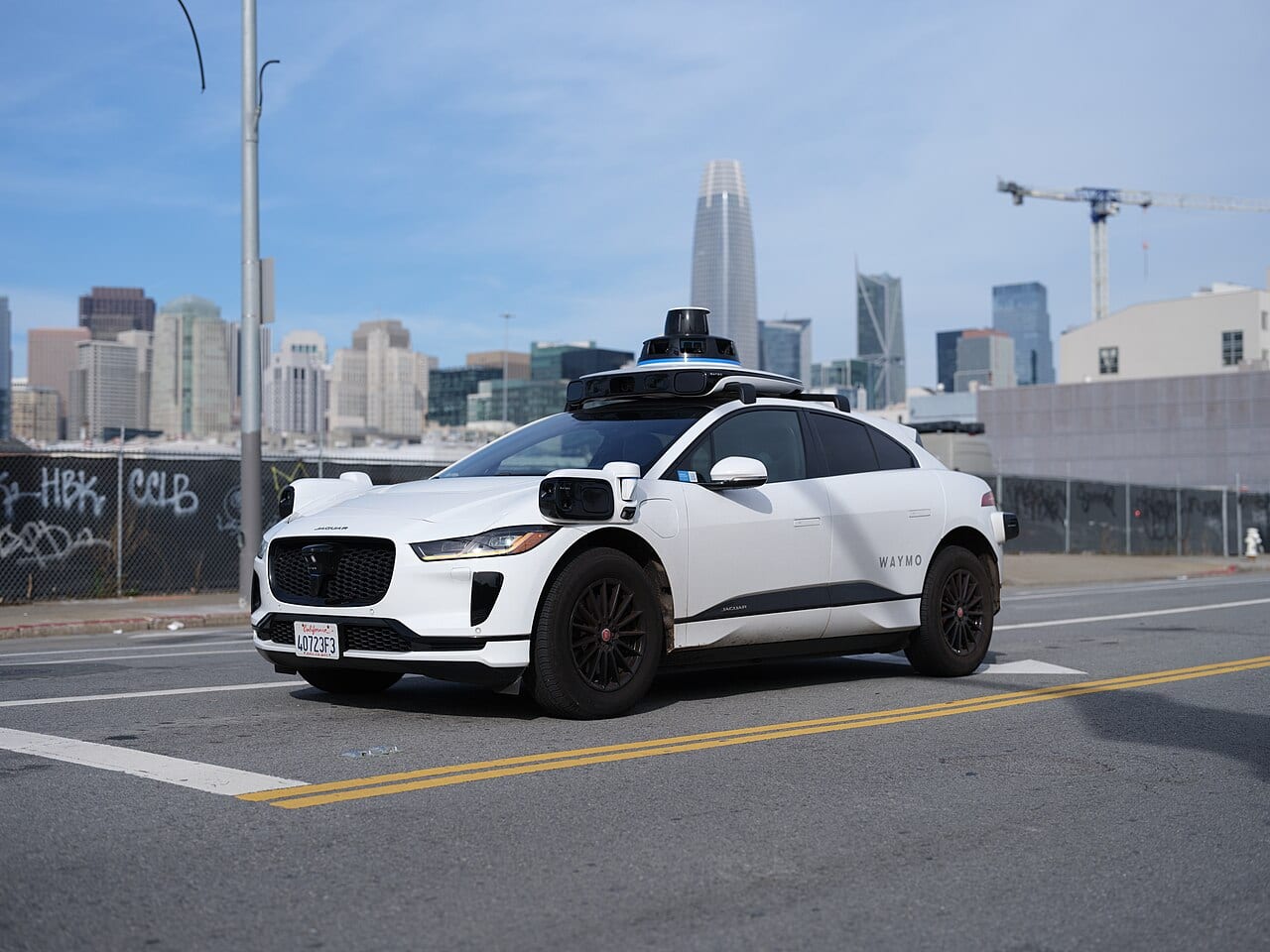
That use works because Waymo can measure it against real crashes and real miles. Its larger claim still waits for that kind of yardstick, since few outside Google have driven it to supply one.
What to do
Skip buying it this week; only Google's chosen testers can reach it today. Watch instead for the first outside account. That could be a trusted tester's own video, posted apart from Google's edit. It could also be an independent lab's attempt to reproduce the two-minute claim.
If sketching a scene before shooting it is the job, Genie 3 already answers part of that inside Project Genie's $200 tier. Test that tier now on a real storyboard task before paying for whatever comes once the research preview ends.
Genie 4's scene lasts 2 minutes, double Genie 3's 1
Longest a Genie world stays coherent before details drift, by version, in seconds
Each column is the longest a world holds together before Google says its details begin to drift; the gray column for Genie 2 uses the midpoint of its published 10-to-20-second range.
Sources: TechCrunch [2]; Wikipedia [5]. Chart by Kelly Dennis.
The numbers behind this chart
| Item | Value | Note |
|---|---|---|
| Genie 2 | 15 sec | Midpoint of Genie 2's published 10-to-20-second range |
| Genie 3 | 60 sec | |
| Genie 4 | 120 sec |
By the numbers
- 2 minutes: how long Genie 4 holds a scene before details start to drift, double Genie 3's one minute15.
- Oct. 27, 2026: the date Genie 4 reached "a limited group of trusted testers," with zero date yet for the rest1.
- $200 a month: Google's global price for the AI Ultra tier that already bundles Project Genie, the site running Genie 3 today4.
- Jan. 29, 2026: when Project Genie first opened to Ultra subscribers 18 and older, each world capped at 60 seconds57.
- 14 months: Genie 4 arrived this long after Genie 3's August 2025 debut, the longest wait yet between Genie versions5.
- Nearly 200 million miles: how far Waymo's robotaxis have driven on public roads, backed by billions more inside a Genie 3 simulator6.
Google takes 14 months to follow Genie 3 with Genie 4, its longest gap yet
Public launch dates for Google DeepMind's Genie world models, March 2024 to October 2026
Each pin marks one Genie model's public debut, spaced by real time; the magenta pin, Genie 4, follows the longest gap of the four.
Sources: Google DeepMind [1]; Wikipedia [5]. Chart by Kelly Dennis.
The numbers behind this chart
| Date | Event |
|---|---|
| March 2024 | Genie 1 launches. One frame a second, flat and two-dimensional |
| Dec. 2024 | Genie 2 launches. Holds a 3D world for 10 to 20 seconds |
| Aug. 2025 | Genie 3 launches. Holds a world for a full minute |
| Oct. 2026 | Genie 4 launches. Adds sound and a 2-minute memory |
What to watch
Watch for the first review written by someone outside Google's own pick list. That account will show whether its two-minute scenes hold up outside a controlled demo. It will also show whether its audio keeps pace with its pictures.
Check Google AI Ultra's own page for when Project Genie swaps to the new version. That swap marks the real public launch this announcement only previewed.
Sources
- Raia Hadsell, Diego Rivas and Hang Qi, "Genie 4: A new generation of world simulation," Google DeepMind, Oct. 27, 2026, https://deepmind.google/blog/genie-4-a-new-generation-of-world-simulation/
- Rebecca Bellan, "Google's Genie 4 world model adds audio, more realistic worlds, and real-time steering," TechCrunch, Oct. 27, 2026, https://techcrunch.com/2026/10/27/googles-genie-4-world-model-adds-audio-more-realistic-worlds-and-real-time-steering/
- Jaime Hampton, "Google DeepMind Opens Genie 4 World Model Research Preview," Techstrong.ai, Oct. 27, 2026, https://techstrong.ai/articles/google-deepmind-opens-genie-4-world-model-research-preview/
- Shimrit Ben-Yair, "Everything new in our Google AI subscriptions, fresh from I/O 2026," Google, May 19, 2026, https://blog.google/products-and-platforms/products/google-one/google-ai-subscriptions/
- Wikipedia contributors, "Genie (AI model)," Wikipedia, accessed Oct. 29, 2026, https://en.wikipedia.org/wiki/Genie_(AI_model)
- Matthias Bastian, "Waymo taps Google DeepMind's Genie 3 to simulate driving scenarios its cars have never seen," The Decoder, Feb. 6, 2026, https://the-decoder.com/waymo-taps-google-deepminds-genie-3-to-simulate-driving-scenarios-its-cars-have-never-seen/
- Luis Rijo, "Google's Genie 4 Simulates People Who Talk Back in Real Time," PPC Land, Oct. 28, 2026, https://ppc.land/googles-genie-4-simulates-people-who-talk-back-in-real-time/