Physical Superintelligence says it proved a quantum computing conjecture open since 20081. A hidden Anthropic model helped find the proof. The Cambridge, Massachusetts lab calls its system a virtual physicist, built to search mathematics, apart from its usual work on atoms3.
Scott Aaronson and Andris Ambainis posed the question in 2008. PSI says its model found the proof on the third day of a research run1. Lean, a proof assistant, rechecked every step twice before PSI called the work done4.
A Question Physicists Asked in 2008
Quantum computers read their input differently than ordinary machines do. Each read, or query, lets an ordinary computer check one bit. A quantum query can act on many bit positions inside one step2.
Peter Shor used that gap in 1994. His algorithm factors huge numbers fast. The number hides a repeating pattern, and a quantum computer finds that pattern in far fewer reads than any classical method12.

Random strings rarely carry a pattern like that1. Aaronson and Ambainis asked a sharper question. Could a quantum computer still beat an ordinary one on such a string, on a single true-or-false question?
PSI's proof says the gain stays small for almost every random string1. An ordinary computer can match a quantum algorithm's answer using a few more reads, far short of an exponential jump2. Shor's algorithm still stands on its own. Factoring hides a pattern most problems lack.
The proof turns on a property called influence, the amount a polynomial's value swings when one bit flips. PSI's version guarantees that swing stays large enough for an ordinary computer to find. The plan follows work by two mathematicians, Shachar Lovett and Jiapeng Zhang14.
A Model Only PSI Can See
David Turturean, a PSI staff researcher, built and ran the system behind the search1. He picked the problem and ran the system on it. Then he had a model draft the paper4. Turturean reviewed every line himself and stands behind its correctness.
Multiple copies of a single Anthropic model worked inside Turturean's system3. They searched past papers, proposed ideas, and tested each other's arguments. PSI keeps that model's name private. Anthropic keeps it off its own product pages1.
Two PSI advisors checked the work from outside Turturean's own review: physicist Jim Halverson and mathematician Phiala Shanahan.
PSI's proof itself stays open. It posted the paper and Lean code on GitHub, free to download4. Two separate programs replayed every step from scratch: Lean's own kernel, and a second checker called lean4lean.
The audit misses one thing. A reader still has to confirm that PSI's formal statement matches the conjecture Aaronson and Ambainis printed in 20144. Lean's kernel, its math library and the machines that ran the checks form a trusted base. The audit stops there.
PSI's quantum proof is its second major announcement in two weeks. The lab opened to the public on Sept. 1 with a $58 million seed round. It published its first proofs in October, on five problems from a public list of open quantum questions3.
Who Backs the Proof, and Who Doubts the Secrecy
Four Stanford researchers read PSI's full proof before it posted. Guy Blanc, Jordan Docter, Carmen Strassle and Li-Yang Tan had already proved a narrower version of the same claim in August1. PSI shared a draft. The four sent back their verdict in writing.
PSI Closes an 18-Year Gap With Three Days of Machine Time
Dated milestones in the Aaronson-Ambainis conjecture, 2008 to Nov. 6, 2026
Each pin marks one dated event; the rail breaks across the twelve-year gap between the 2014 paper and the 2026 proofs.
Sources: PSI [1]; GitHub [4]. Chart by Kelly Dennis.
The numbers behind this chart
| Date | Event |
|---|---|
| 2008 | Aaronson poses question. A 2008 lecture frames the conjecture |
| 2014 | Conjecture published. Theory of Computing |
| Aug. 2026 | Stanford's partial proof. Blanc, Docter, Strassle, Tan |
| Nov. 6, 2026 | PSI claims full proof. Found on day three of a run |
"This is a huge result," they wrote. "It resolves a decades-old conjecture with important implications for the nature of problems that admit quantum speedups"1. Tan teaches at Stanford, where his own research already touches the boolean functions this proof extends.
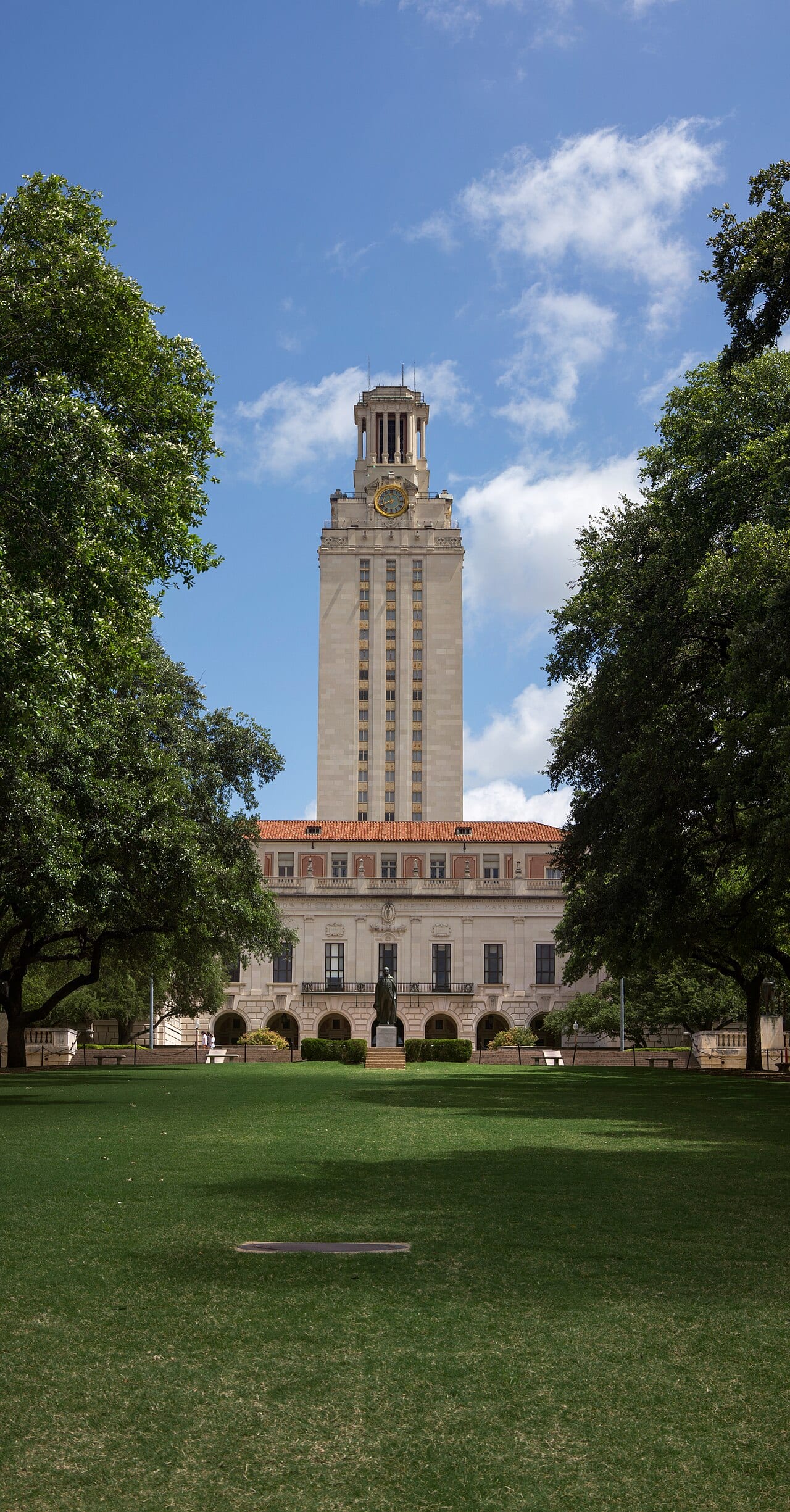
Scott Aaronson doubts the secrecy, apart from the math. The complexity theorist, whose name sits on the conjecture, teaches at the University of Texas at Austin5.
In October, writing about a separate Anthropic result, Aaronson argued that "the 'Anthropic model' puts a private company in the position of picking and choosing which human mathematicians get to be the emissaries of the AI"5. He set that against OpenAI's own approach. OpenAI posts raw proof drafts in one bulk release, a habit he called "a crazy race among humans to digest and explain a messy AI proof". That OpenAI batch, he wrote, came from "simply the latest internal OpenAI model—one that might be released to paying ChatGPT customers within the next couple of months".
Both practices share one problem, in Aaronson's telling. Outsiders miss the chance to run the model. They miss the chance to grade it too.
PSI's own post already drew 1,718 favorites and 286 reposts on X6. GitHub shows just 13 stars on the proof code, and Hacker News shows 9 points on its thread47. Coders and mathematicians have barely begun to check the claim.
PSI's Proof Draws 1,718 Marks on X, Just 9 on Hacker News
Public reactions to PSI's announcement, one tally per platform, evening of Nov. 6, 2026
Each bar is one platform's own count: X favorites on PSI's announcement post, GitHub stars on its public proof code, and Hacker News points on the thread discussing it.
X favorites, GitHub stars and Hacker News points are each that platform's own measure, so the gap is a difference in kind as well as scale.
Sources: GitHub [4]; Physical Superintelligence on X [6]; Hacker News [7]. Chart by Kelly Dennis.
The numbers behind this chart
| Item | Value |
|---|---|
| X favorites, PSI's post | 1,718 |
| GitHub stars, proof code | 13 |
| Hacker News points | 9 |
Physical Superintelligence@psipbcToday Physical Superintelligence PBC is announcing a proof of the Aaronson-Ambainis conjecture, one of the central open problems in quantum complexity, with major implications for quantum computing speedup.https://t.co/sAewkKdSOu
Thread 👇
What to Do
Treat the search and the proof as two separate claims. The Lean files sit free on GitHub for any reader who wants to run the checks alone4. Short of that, lean on Jim Halverson and Phiala Shanahan, the two PSI advisors who already checked the formalization. Watch next for a verdict from Aaronson or Ambainis1.
Ask PSI and Anthropic, directly, which model did the work. Both companies have stayed quiet on the name so far.
By the Numbers
- 18 years: the Aaronson-Ambainis conjecture's run from a 2008 lecture to PSI's claimed proof on Nov. 6, 20261.
- Day three: when PSI's system produced its first complete proof inside the research run1.
- Two kernels: the independent Lean checkers, Lean's own and lean4lean, that each replayed the full proof4.
- 13 stars, 2 forks: the size of the GitHub following for PSI's public proof code the evening it posted4.
- $58 million: the seed round Breakthrough Energy Ventures led when PSI launched publicly on Sept. 13.
- 25-plus: researchers and engineers PSI lists on its own website3.
What to Watch
Aaronson and Ambainis are the two mathematicians whose names anchor the claim. A written verdict from either would settle plenty on its own. Peer review at a journal would add a check Lean skips entirely. A later Anthropic release that names this model would settle the biggest open question for free.
Sources
- Physical Superintelligence, "A proof of the Aaronson‑Ambainis conjecture," PSI, Nov. 6, 2026, https://psi.inc/research/aaronson-ambainis/
- Matt Swayne, "AI-Assisted Proof Settles Longstanding Question About Quantum Speedups," The Quantum Insider, Nov. 6, 2026, https://thequantuminsider.com/2026/11/06/ai-assisted-proof-settles-longstanding-question-about-quantum-speedups/
- OfficeChai Team, "US Startup Physical Superintelligence Proves Aaronson-Ambainis Conjecture, A Key Open Problem In Quantum Computing," OfficeChai, Nov. 6, 2026, https://officechai.com/ai/us-startup-physical-superintelligence-proves-aaronson-ambainis-conjecture-a-key-open-problem-in-quantum-computing/
- David Turturean, "physical-superintelligence/aaronson-ambainis," GitHub, Nov. 6, 2026, https://github.com/physical-superintelligence/aaronson-ambainis
- Scott Aaronson, "The Mathocalypse," Shtetl-Optimized, Oct. 7, 2026, https://scottaaronson.blog/?p=10169
- Physical Superintelligence (@psipbc), post on X, Nov. 6, 2026, https://x.com/psipbc/status/2118706269506949152
- tuxguy, "A proof of the Aaronson‑Ambainis conjecture," Hacker News, Nov. 6, 2026, https://news.ycombinator.com/item?id=50393770