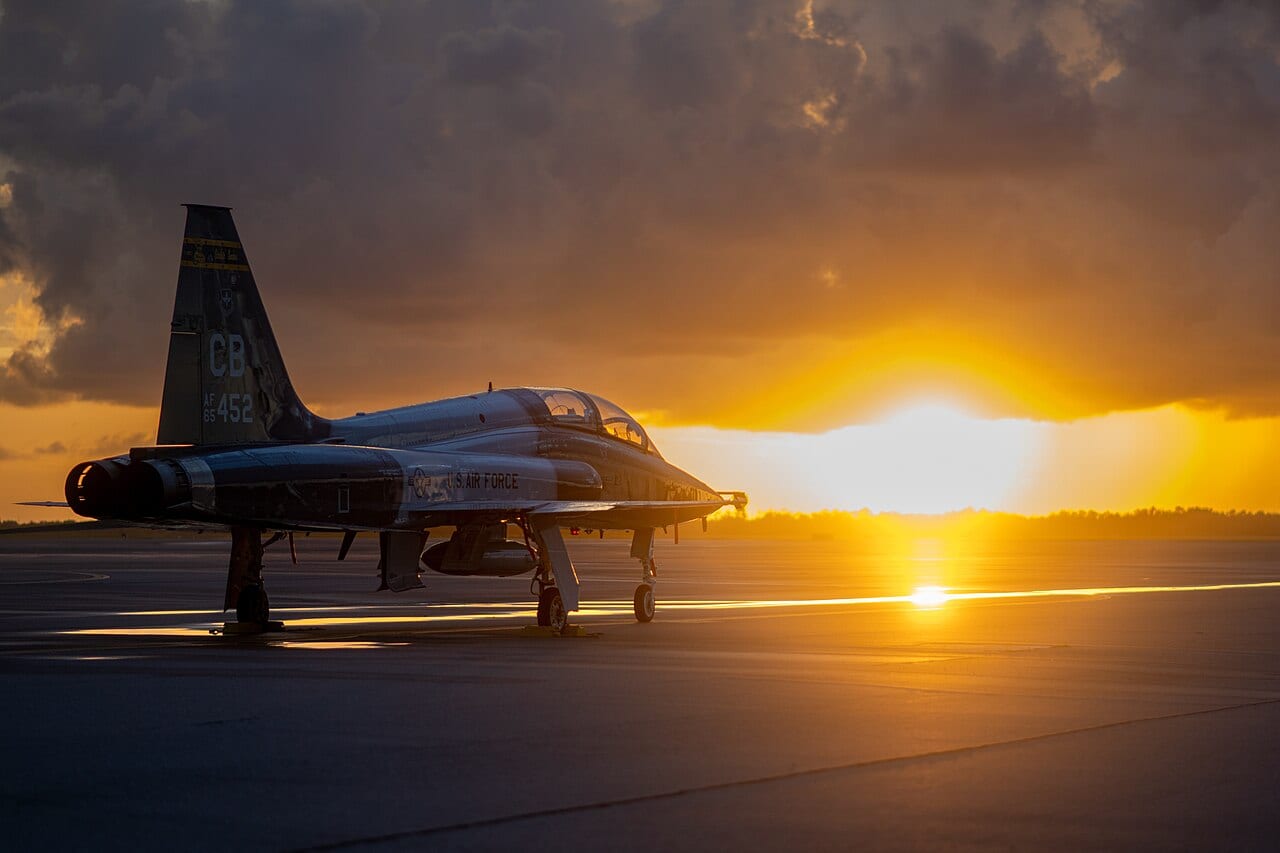
The Pentagon asked for $13.4 billion for AI and autonomy in its fiscal 2026 budget, filed in June 20251. For the first time, the Defense Department gave AI its own budget line. The money buys drones, ships and the software meant to run military logistics on live data instead of paper.
That total splits five ways. Drones take $9.4 billion, the biggest share. Ships take $1.7 billion, undersea systems $734 million, and ground robots $210 million. Software and networking get $1.2 billion1.
Drones take $9.4 billion of the Pentagon's $13.4 billion AI budget
Fiscal 2026 Defense Department budget request for AI and autonomy, by category, billions of dollars
Each bar is one spending category inside the Pentagon's first dedicated AI and autonomy budget line; the longer the bar, the more money that category gets.
Source: Defense Daily [1]. Chart by Ryan Elliott Dennis.
The numbers behind this chart
| Item | Value |
|---|---|
| Aerial drones | $9.40B |
| Maritime vessels | $1.70B |
| Software and networking | $1.20B |
| Underwater systems | $0.73B |
| Ground systems | $0.21B |
Read that number alone, and a conclusion follows fast. A record AI budget must mean the whole supply chain is going digital, parts bins included. The Pentagon undercut that story about a year later.
On July 13, 2026, the Department of War suspended Phase 2 of its cybersecurity certification program2. That rule targeted more than 120,000 small businesses in the defense supply chain. Each would have needed an outside audit proving its computer systems could safely share data with AI tools, continuously monitored under contract. The suspension let most of them skip the upgrade, its restart date still unannounced.
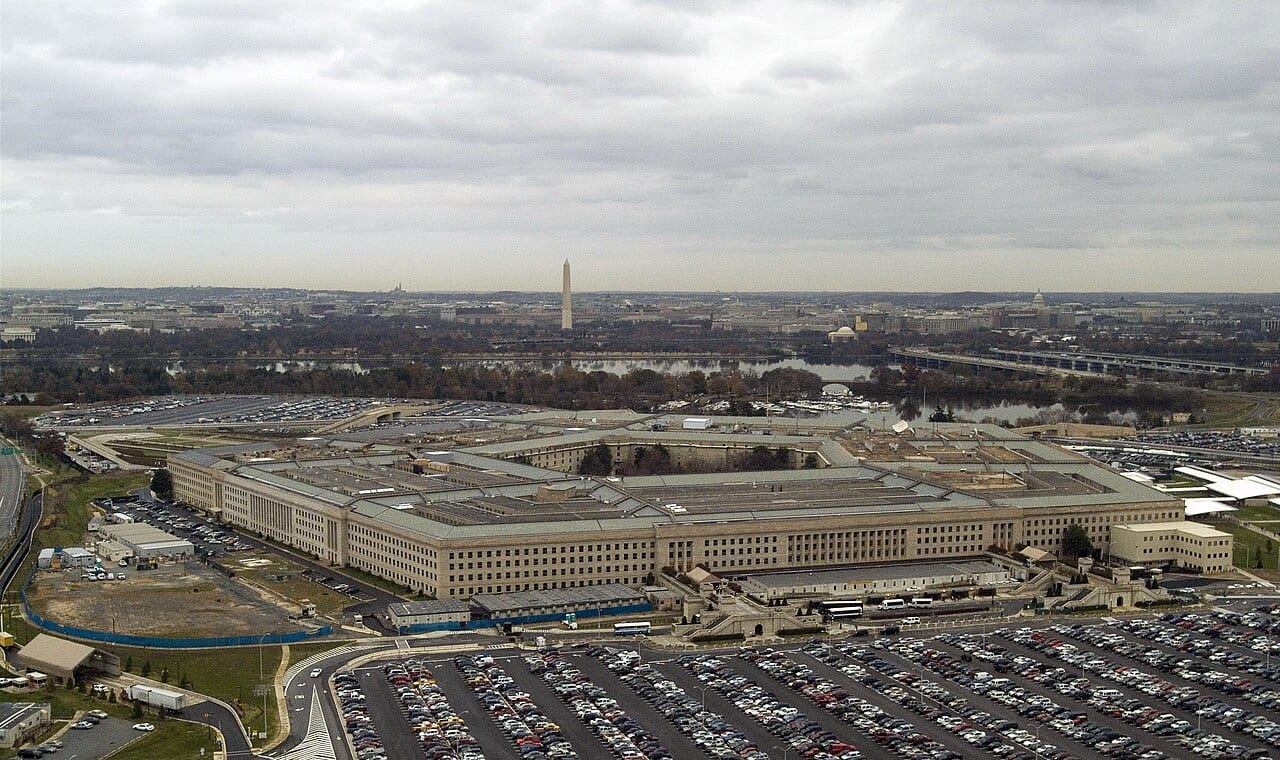
Kelly Loeffler runs the Small Business Administration. She spoke for the decision. "Cybersecurity cannot come at the cost of bureaucracy that shuts out the very companies our warfighters depend on," she said, days after the move2. Her agency tallied the price.
A third-party audit could run $593,800 a firm. Self-assessment ran cheaper, about $388,6002. Loeffler frames the suspension as rescue for small firms.
A third-party CMMC audit would have cost small suppliers 53 percent more than self-assessment
Estimated total compliance cost per small defense supplier, by assessment path, U.S. Small Business Administration analysis
Each column is one path to Pentagon cybersecurity certification; the taller column is the audited path the suspended rule would have required for most small suppliers.
Source: U.S. Small Business Administration [2]. Chart by Ryan Elliott Dennis.
The numbers behind this chart
| Item | Value |
|---|---|
| Self-assessment | $388,600 |
| Third-party audit | $593,800 |
The Air Force's own AI contractor tells a different story about where the money goes. C3 AI runs PANDA, the predictive maintenance system the Air Force made its system of record for tracking fleet readiness4. Thomas Siebel, C3 AI's chief executive, called the work central to the mission.
"Enterprise AI is critical to modernizing military preparedness, and its impact is exponential when fully scaled, helping ensure mission-critical assets across defense networks remain ready for deployment at any time," he said, after the Air Force expanded his company's contract4. His firm already meets the Pentagon's toughest data rules. GE Aerospace meets them too.
Amy Gowder leads GE Aerospace's defense and systems unit. She described the company's expansion with Palantir to keep the Air Force's T-38 trainer jets flying5. "By integrating data across the enterprise and applying AI to predict demand and identify constraints earlier, our collaboration with Palantir is helping our customers keep more aircraft available so airmen get the training required to execute on their mission," Gowder said in March.
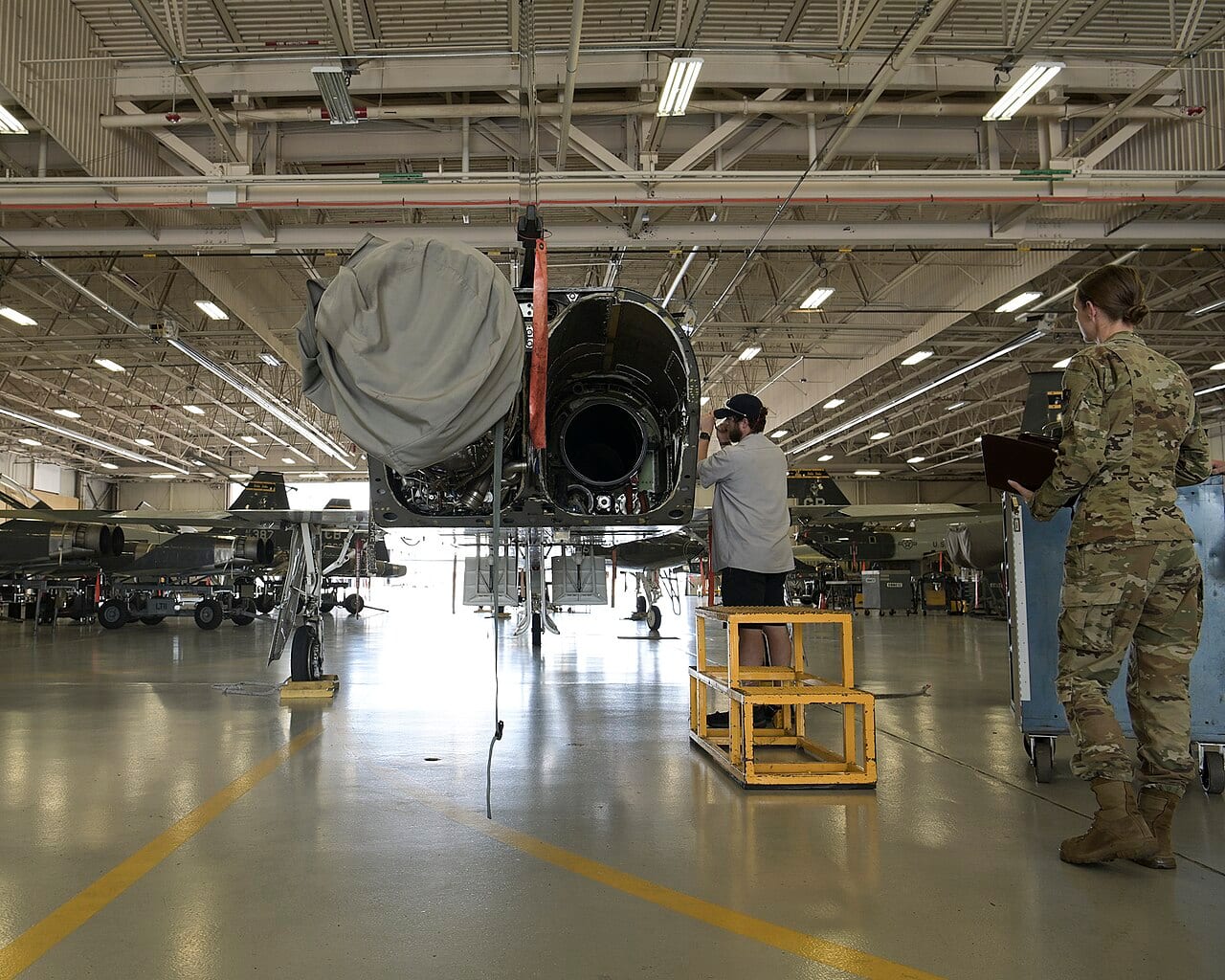
GE Aerospace and Palantir already run cloud systems built for continuous government audits. The suspended rule skipped them entirely.
Welders, machinists and small parts makers supply those primes. The suspended rule targeted them instead, the firms running thin on compliance staff. Stacy Bostjanick ran defense industrial base cybersecurity at the Pentagon before the suspension. She named that tier plainly.
"The Defense Industrial Base has become the soft underbelly of the department," Bostjanick said, about contractors that often run on outdated safeguards3. Her tier is the one the suspension left alone, unaudited and, for now, unmodernized.
Here is the moral question the Pentagon's budget line leaves open. The primes profit twice. Twice is enough. They win the contracts, then meet a rulebook built for firms already running at their level.
The small suppliers keep their seat in the supply chain today, spared a six-figure bill. Risk shifts elsewhere. Unaudited shops still move the data that AI logistics needs. One day the Pentagon will ask them to plug into the systems built above them.
Small manufacturers gained time from the suspension. Their old systems stayed in place. A budget line that funds drones and software for primes already cleared for audits leaves their suppliers exactly where they stood. The Pentagon's $13.4 billion modernizes its primes faster than it modernizes the suppliers that feed them.
Sign up for The Signal, AI Lately's daily email. It tracks who gets paid in AI, one move at a time.
Sources
- Cal Biesecker, "DoD Says Budget Request Includes $13 Billion For Autonomy And Related Systems," Defense Daily, June 26, 2025, https://www.defensedaily.com/dod-says-budget-request-includes-13-billion-for-autonomy-and-related-systems/advanced-transformational-technology/
- Staff, "SBA Commends U.S. Department of War's Suspension of CMMC Phase II for Small Defense Contractors," U.S. Small Business Administration, July 13, 2026, https://legacy.sba.gov/article/2026/07/13/sba-commends-us-department-wars-suspension-cmmc-phase-ii-small-defense-contractors
- Rahul Neel Mani, "Stacy Bostjanick Shares Cyber Strategies for Enhancing Cyber Resilience," Bank Info Security, May 2, 2025, https://www.bankinfosecurity.com/defense-industrial-base-strengthens-cybersecurity-cmmc-a-28199
- Staff, "C3 AI Awarded $13M Task Order to Expand Predictive Maintenance Program Across USAF Fleet," HPCwire, June 3, 2025, https://www.hpcwire.com/bigdatawire/this-just-in/c3-ai-awarded-13m-task-order-to-expand-predictive-maintenance-program-across-usaf-fleet/
- Staff, "GE Aerospace and Palantir Expand Partnership to Transform Military Aircraft Readiness with AI," GE Aerospace, March 12, 2026, https://www.geaerospace.com/news/press-releases/ge-aerospace-and-palantir-expand-partnership-transform-military-aircraft-readiness