Wall Street is looking in the wrong place for an AI crash.
Public investors spend every week debating a repeat of the 2000 dot-com bust. That framing misses where the real risk sits. Top AI labs are growing sales fast. Business is booming.
The real risk sits one layer down. Cloud firms and Oracle pay for the buildout with stretched accounting rules and off-balance-sheet debt. When this cycle turns, the initial shock will hit bondholders and private-credit funds first. Tech shareholders carry less exposure.
Real Revenue at the Model Layer
Start with the case for building. Top AI labs bring in cash at a pace software has rarely seen.
Anthropic filed an updated IPO registration with the SEC on November 2, 20269. "In 2023, 2024, and 2025, our revenue was $41 million, $386 million, and $4.6 billion, respectively, representing year-over-year growth of 841% in 2024 and 1,088% in 2025," the filing states. "In the nine months ended September 30, 2026, our revenue was $33.2 billion, representing a year-over-year growth rate of 1,206%."
Sales jumped from $197 million in late 2024 to $17.0 billion in the third quarter of 20269. That is audited revenue.
OpenAI shows similar scale alongside steep bills. On October 8, 2026, Bloomberg News reported on the firm's pace10. "OpenAI is on track to generate annualized revenue of roughly $50 billion based on its current performance, according to people familiar with the matter, an uptick from the prior year but less than some recently reported estimates for the ChatGPT maker," reporters Rebecca Torrence and Shirin Ghaffary wrote.
Fast growth brings high costs. Fortune's reporting on OpenAI's financials, relayed in June 2026, put 2025 revenue at $13.07 billion against $34 billion in costs11. The result, in Fortune's words, "yielded an operating loss of $20.92 billion" for the year.
Regular firms outside the labs struggle to turn AI tools into profit. In August 2025, Fortune covered MIT's NANDA report on AI use at work12. Only "about 5% of AI pilot programs achieve rapid revenue acceleration," the article said, while "the vast majority stall, delivering little to no measurable impact on P&L."
Researchers tied that gap to "the 'learning gap' for both tools and organizations" rather than model quality12.
Meta CEO Mark Zuckerberg made the builder's case on a podcast in September 20258. "If we end up misspending a couple of hundred billion dollars, I think that that is going to be very unfortunate obviously," Zuckerberg said. "I actually think the risk is higher on the other side."
He spoke in the conditional, "If we end up." He softened a multibillion-dollar bet into an "unfortunate" event. For a founder with a deep cash pile, falling behind costs more than overpaying for servers.
Four cloud giants now guide to roughly $735 billion in combined 2026 capital spending. Amazon kept its target near $220 billion on October 29, 202613. Third-quarter AWS sales climbed 39 percent to $46 billion.
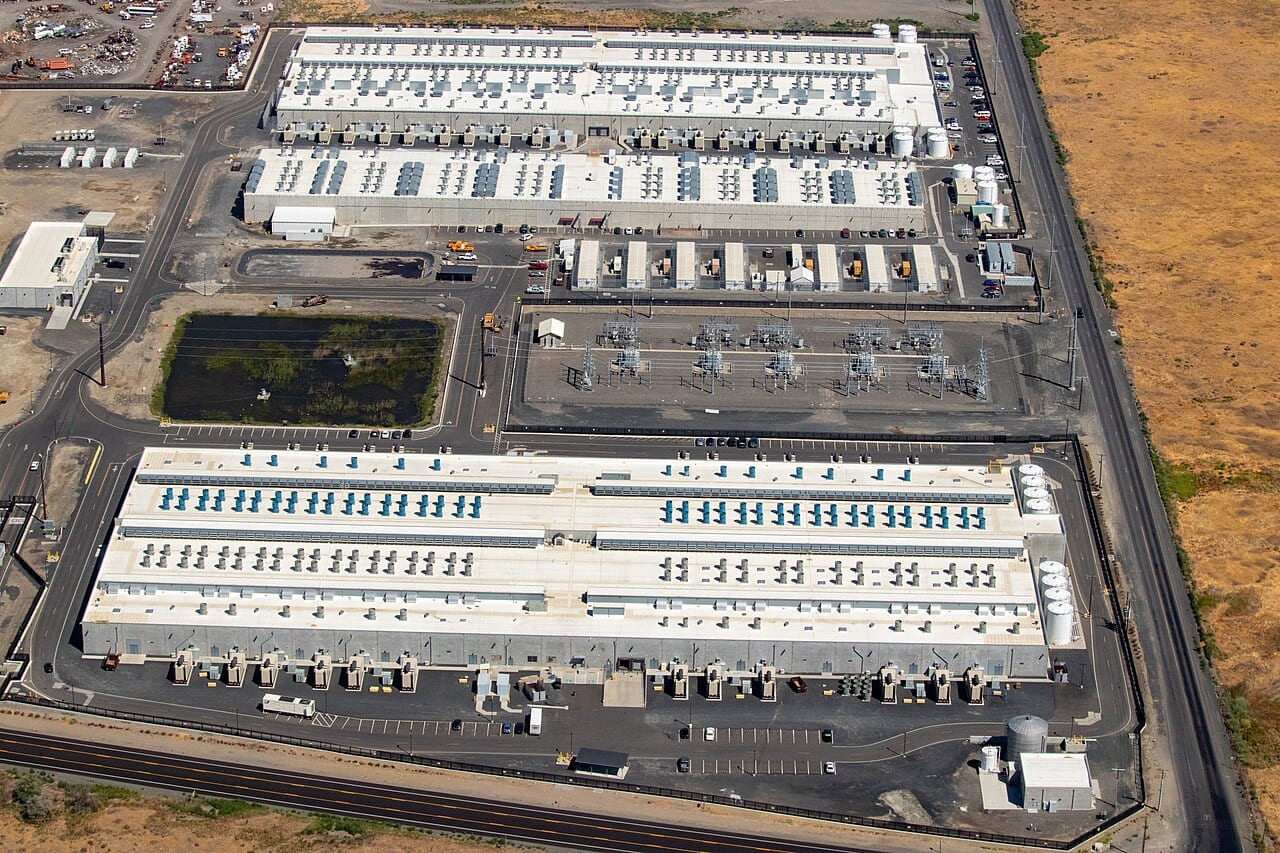
Alphabet held its range at $195 billion to $205 billion a day earlier14. Google Cloud sales rose 103 percent to $30.7 billion. Meta narrowed its target to between $135 billion and $145 billion on October 21, 202615.
Microsoft cut its calendar-2026 outlook to about $175 billion from $190 billion16. Its CFO, Amy Hood, explained why on a July 30, 2026 call. "Outside of this useful life impact, our calendar year 2026 CapEx investment expectations remain unchanged," Hood said.
That useful-life change stretched the assumed life of Microsoft's data centers and offices. Fifteen years became 2516. The new schedule shifts future data-center leases from finance leases into operating leases. Finance leases count toward capital spending, and operating leases stay out of the total.
Four Companies Guide to $735 Billion of AI Spending in 2026
Each company's own 2026 capital-expenditure guidance, reaffirmed on its own third-quarter 2026 earnings report, in billions of dollars
Each bar is one company's own stated 2026 capex guidance; the total adds the four, using the midpoint of Alphabet's and Meta's guided ranges.
Alphabet and Meta guide to a range; this chart uses each range's midpoint, so the real 2026 total could land anywhere from about $705 billion to $765 billion.
Sources: SiliconANGLE [13]; InsiderFinance [14]; letsdatascience.com [15]; CFO Dive [16]. Chart by Ryan Elliott Dennis.
The numbers behind this chart
| Item | Value | Note |
|---|---|---|
| Amazon | $220B | |
| Alphabet | $200B | Midpoint of $195-205B guidance |
| Microsoft | $175B | |
| Meta | $140B | Midpoint of $135-145B guidance |
| Combined total | $735B |
One Chip, Two Accounting Clocks
Several tech giants are setting their accounting clocks at different speeds. Useful-life rules set how fast a firm records hardware costs on its own books.
Stretching a server's life from four years to five or six years spreads the cost over more quarters. Reported profit rises today. Cash already left the building.
Investor Michael Burry called out this mismatch in November 20251. "Massively ramping capex through purchase of Nvidia chips/servers on a 2-3 yr product cycle should not result in the extension of useful lives of compute equipment," Burry wrote, according to CNBC.
Look at how Burry pairs two timelines: "a 2-3 yr product cycle" against "the extension of useful lives"1. Nvidia ships a faster chip design every two to three years.
Burry estimated that stretched useful lives pad 2028 profits by 27 percent at Oracle, and Meta's by 21 percent1. Across the sector, he projected understated depreciation of about $176 billion from 2026 through 2028.
CNBC called this an estimate Burry made himself, separate from the network's own reporting1.
Burry Says Stretched Depreciation Inflates Oracle's 2028 Profit by 27%
Michael Burry's estimate of how much extending server useful life overstates each company's 2028 profit, in percent
Each column is one company; the height is how much Burry estimates its reported 2028 profit will be overstated once the useful-life extension is counted.
CNBC reported this as Burry's own estimate from his public posts, separate from the network's own reporting.
Source: CNBC [1]. Chart by Ryan Elliott Dennis.
The numbers behind this chart
| Item | Value |
|---|---|
| Oracle | 27% |
| Meta | 21% |
Primary SEC filings show how two cloud giants treat the same hardware: Meta filed its annual 10-K report on January 30, 20252. "In January 2025, we completed an assessment of the useful lives of certain servers and network assets, which resulted in an increase in their estimated useful life to 5.5 years, effective beginning fiscal year 2025," Meta stated.
One line later, Meta gave the bottom-line effect2. "...we expect this change in accounting estimate will reduce our full-year 2025 depreciation expense by approximately $2.9 billion."
Eight days later, on February 7, 2025, Amazon filed its own 10-K. Its choice ran the opposite way: it changed the useful lives of "a subset of our servers and networking equipment" on January 1, 20253. The clock dropped "from six years to five years."
That cut had an immediate cost3. Amazon expected "a decrease in 2025 operating income of approximately $0.7 billion." Related faster write-offs cut 2025 operating income by another $0.6 billion. Combined, the two moves cost $1.3 billion.
Why did Amazon shorten its server clock when Meta stretched its own? Both buy Nvidia chips. The pair run the same massive cloud clusters and face the same hardware-aging curve.
Amazon cut 2025 operating income by $1.3 billion to reflect faster server turnover3. Meta booked a $2.9 billion gain by assuming its gear will last longer2. Two buyers of identical silicon reached opposite conclusions. That gap shows server life is a management choice more than a fact of physics.
Moving the Tab to Bondholders
Accounting choices shape the income statement. Debt structures shape the balance sheet.
Alphabet, Amazon, Microsoft, and Meta all carry debt-to-EBITDA ratios under 1 time, Reuters reported in August 20266. How do these firms fund a giant buildout and keep debt ratios that low? They put much of the debt elsewhere.
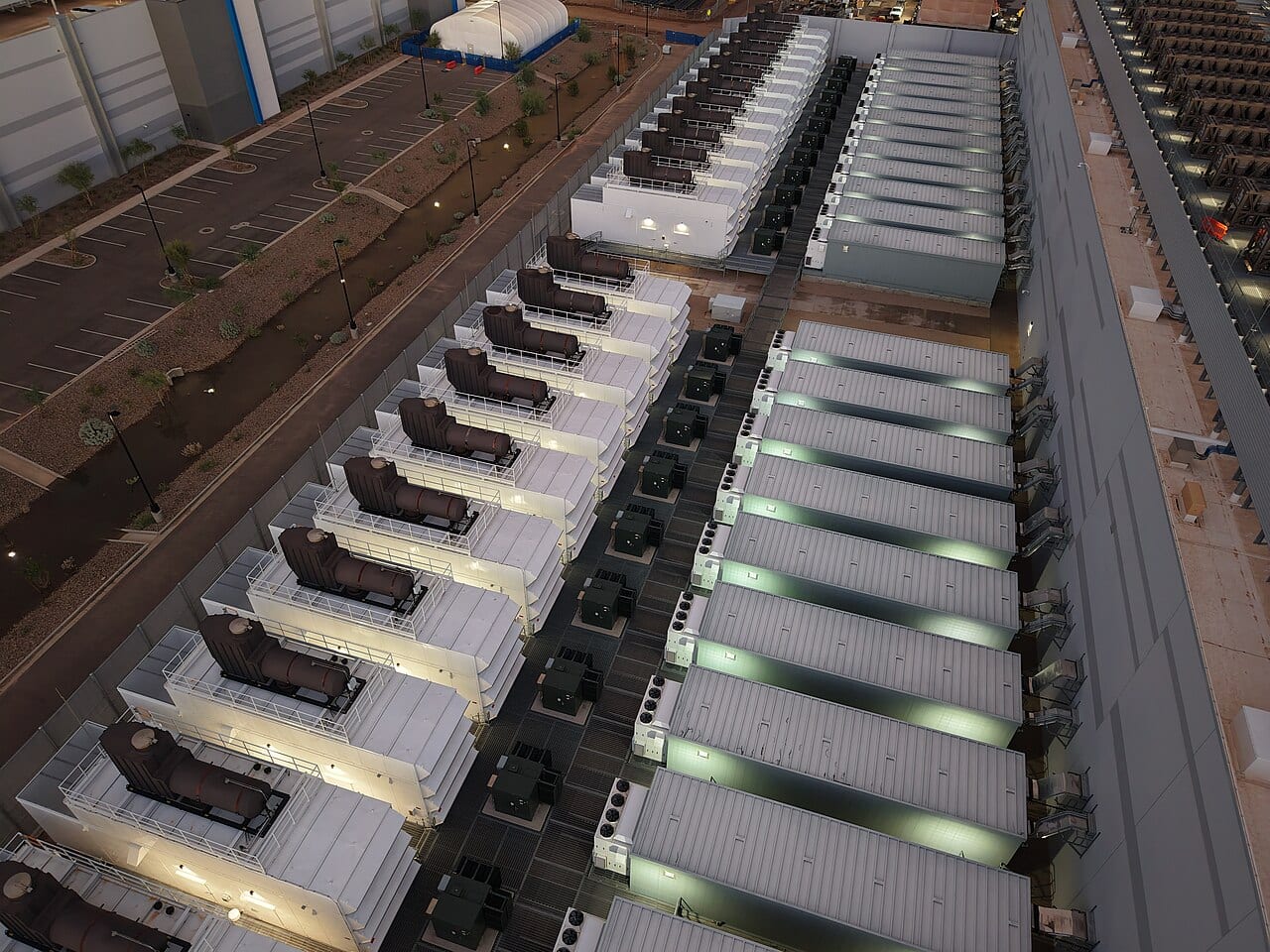
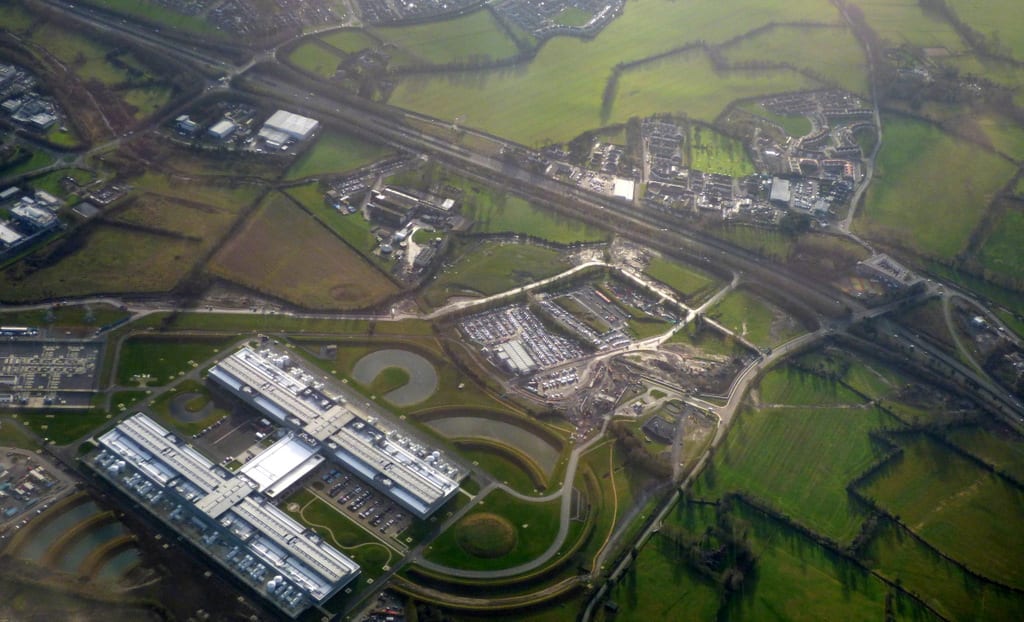
Meta formed a joint venture with Blue Owl Capital-managed funds on October 21, 20257. It builds the Hyperion data center in Louisiana. Blue Owl's funds own 80 percent of the partnership, and Meta owns 20 percent.
Total building costs sit near $27 billion7. Blue Owl's funds put in about $7 billion in cash. Meta collected a one-time payout of $3 billion.
Blue Owl sold debt to PIMCO and other bond buyers to fund part of its share7. Morgan Stanley arranged the sale. Meta signed operating leases with a four-year initial term and guaranteed the site's residual value for 16 years.
On July 13, 2026, Meta said it would grow Hyperion to 5 gigawatts7. Total spending now tops $50 billion.
Look at what that structure achieves. Meta gets a large AI campus and a $3 billion cash payout up front7. The $27 billion building bill stays off Meta's own debt ledger. Bondholders at PIMCO and the private-credit clients behind Blue Owl hold that debt instead.
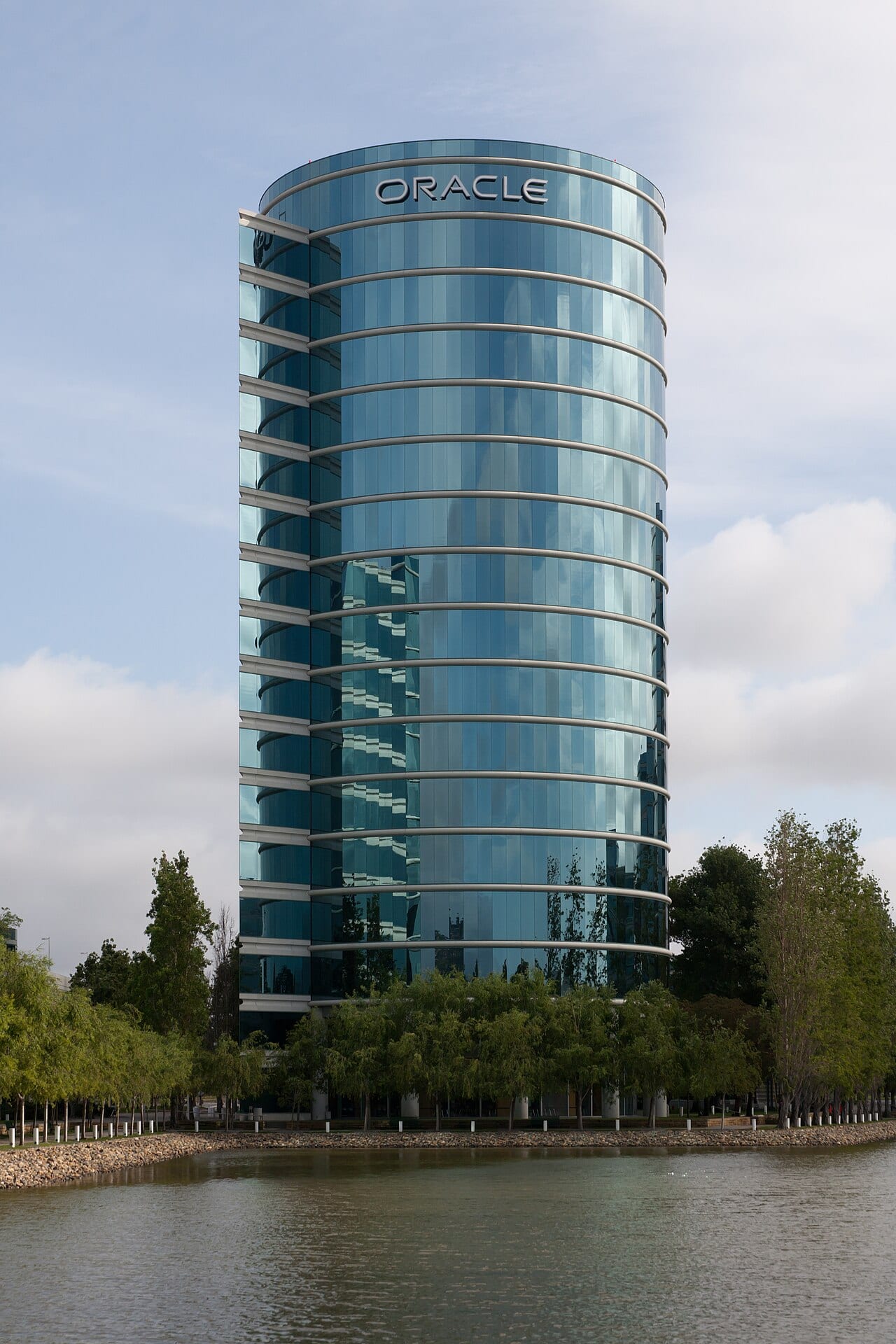
Oracle carries direct debt and single-buyer risk at the same time. The database giant holds roughly $300 billion in OpenAI-linked data-center deals, The Register reported in September 20255.
Moody's studied Oracle's plan and flagged the risk directly5. "Counterparty risk is always a key consideration in any type of project financing, particularly where there is a high reliance on revenue from a single counterparty," Moody's analysts wrote.
"A single counterparty" is the polite rating-agency phrase for OpenAI5. Oracle borrows billions today to build halls for a tenant whose 2025 operating loss reached $20.92 billion11.
Credit raters have started pricing that bet. In July 2026, S&P Global Ratings cut Oracle to BBB-, one notch above junk status, Reuters reported6.
S&P analyst Andrew Chang put Oracle's debt-to-EBITDA ratio at 3.6 times in May 20266. He projected a peak near 4.4 times over the next two fiscal years. Chang said a cut to junk could follow if Oracle keeps debt above 4.5 times.
Moody's senior analyst David Gonzales explained the reasoning in a February 2026 note6. The agency holds Oracle at Baa2 with a negative outlook. Gonzales warned that debt could approach 5 times earnings in the near term.
Even Nvidia paces its own cash risk with OpenAI. Fortune reported CEO Jensen Huang's remarks on a proposed $100 billion check on February 2, 20264.
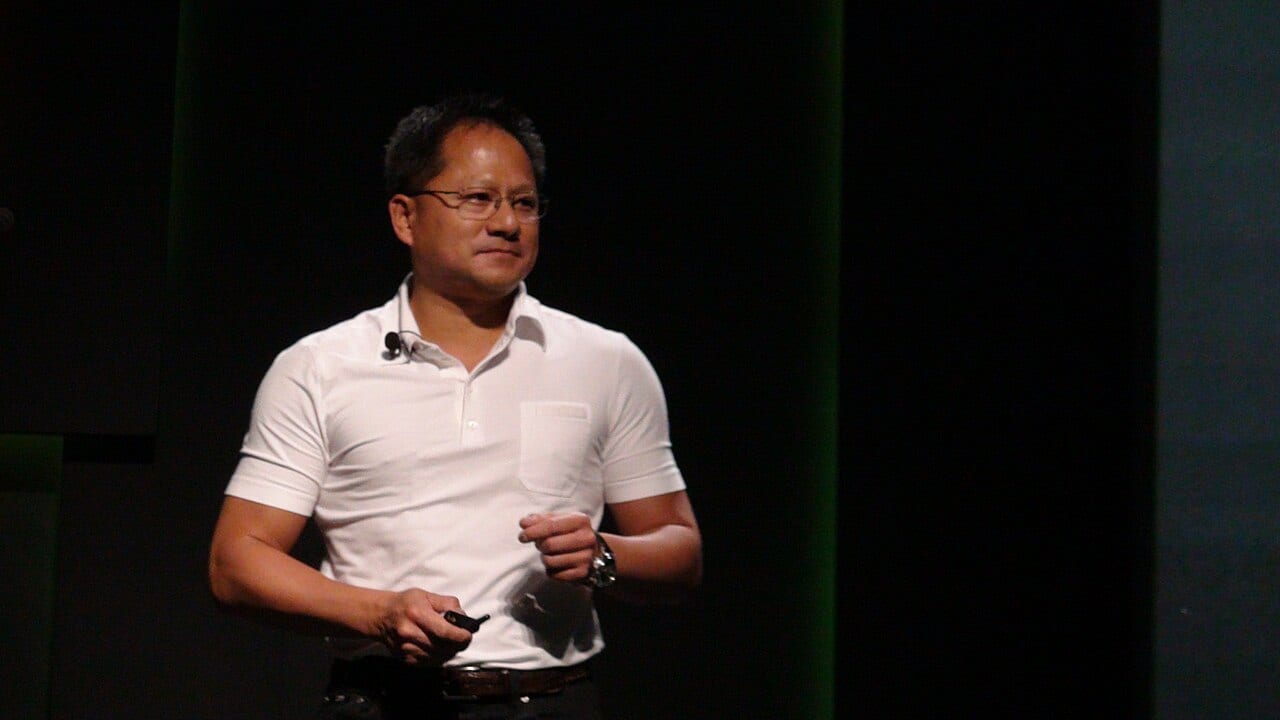
"They invited us to invest up to $100 billion and of course, we were, we were very happy and honored that they invited us, but we will invest one step at a time," Huang said4. He praised the partner in the same breath: "I believe in OpenAI. The work that they do is incredible. They're one of the most consequential companies of our time."
Repeating "we were, we were very happy" softens the pivot. Saying "They invited us" names who asked whom for the money. Nvidia collects cash upfront for its own chips. Huang, by contrast, commits to OpenAI "one step at a time," a pace slower than his own chips allow.
How the Credit Event Arrives
Backers of the buildout have two strong facts in their favor. Anthropic's $33.2 billion in nine-month revenue and OpenAI's $50 billion pace show real demand910. Oracle's projected debt peak of 4.4 times earnings sits below the ratios that preceded past corporate defaults6.
Those facts weigh against a year-2000-style stock wipeout. In 2000, upstart firms sold stock to lay fiber for buyers that barely existed. Today, established tech giants use leases and private debt to build for two large tenants whose revenue is real.
This piece's call is specific. The AI boom hits its first wall as a credit event, apart from any stock crash.
What starts it? A major AI lab misses a sales target or rewrites a cloud deal to cut its own cash burn.
When that deal gets marked down, the first losses land on bondholders and private-credit funds. Blue Owl's clients, PIMCO's bond funds, and Oracle's lenders absorb that loss first57. Public shareholders in Meta, Alphabet, Amazon, and Microsoft carry less exposure, protected by four-year leases and low debt ratios6.
Suppose every tenant pays on time and keeps its deals intact. The sector then locks in a $735-billion-a-year buildout funded by insurance and bond capital, operating as a regulated utility713. Four tech giants and their private lenders would control the grid, a different shape of concentrated risk than 2000. Either way, private debt decides how this AI cycle ends, apart from public stock.
What to do
-
Check server-life rules in your cloud holdings. Open the 10-K filings for the stocks you hold, and compare their server schedules against Amazon's five-year benchmark. Treat a profit boost from a schedule extension as a one-time accounting gain, apart from real growth.
-
Ask your bond manager about data-center debt. Find out how much yield comes from project debt tied to single AI tenants. Check exposure to four-year cloud lease renewals as well.
By the numbers
- $735 billion: Combined 2026 capital spending guidance across Amazon ($220B), Alphabet ($200B midpoint), Microsoft ($175B), and Meta ($140B midpoint)13.
- $33.2 billion: Anthropic's revenue for the nine months ended September 30, 2026, up 1,206 percent year over year9.
- $20.92 billion: OpenAI's 2025 full-year operating loss on $13.07 billion in revenue11.
- $2.9 billion: Cut to Meta's full-year 2025 depreciation expense after extending server useful lives to 5.5 years2.
- $27 billion: Development cost of Meta's Hyperion data-center joint venture with Blue Owl Capital, 80 percent owned by Blue Owl7.
- 3.6 times: Oracle's debt-to-EBITDA ratio in May 2026, projected by S&P to peak near 4.4 times within two years6.
- 5 percent: Share of corporate AI pilots reaching rapid revenue gains in MIT's 2025 NANDA report12.
What to watch
Watch S&P Global Ratings and Moody's over the next four quarters. Either agency could cut Oracle's BBB- or Baa2 rating further if its debt crosses 4.5 times earnings6.
Track Meta's, Alphabet's and Microsoft's annual filings in early 2027 for their next useful-life assumption, once Nvidia ships its next chip generation. Watch Amazon's five-year schedule as the industry's conservative benchmark. Lease-renewal terms on four-year deals such as Hyperion's deserve a look once their initial terms close7.
Sources
- Yun Li, "'Big Short' investor Michael Burry accuses AI hyperscalers of artificially boosting earnings," CNBC, Nov. 11, 2025, https://www.cnbc.com/2025/11/11/big-short-investor-michael-burry-accuses-ai-hyperscalers-of-artificially-boosting-earnings.html
- Meta Platforms Inc., "Form 10-K for the fiscal year ended Dec. 31, 2024," SEC EDGAR, Jan. 30, 2025, https://www.sec.gov/Archives/edgar/data/1326801/000132680125000017/meta-20241231.htm
- Amazon.com Inc., "Form 10-K for the fiscal year ended Dec. 31, 2024," SEC EDGAR, Feb. 7, 2025, https://www.sec.gov/Archives/edgar/data/1018724/000101872425000004/amzn-20241231.htm
- Debby Wu and Nick Lichtenberg, "Pledge to invest $100 billion in OpenAI was 'never a commitment,' says Nvidia's Huang," Fortune, Feb. 2, 2026, https://fortune.com/2026/02/02/jensen-huang-nvidia-ceo-on-openai-investment-never-a-commitment/
- Lindsay Clark, "Moody's raises Big Red flag over Oracle's AI datacenter buildout blueprint," The Register, Sept. 22, 2025, https://www.theregister.com/2025/09/22/moodys_raises_questions_over_oracles/
- Vidya Ranganathan, "Analysis-Oracle Corp goes for high-stakes ratings gamble in AI strategy," Reuters, via The Star, Aug. 5, 2026, https://www.thestar.com.my/tech/tech-news/2026/08/05/analysis-oracle-corp-goes-for-high-stakes-ratings-gamble-in-ai-strategy
- Meta Platforms Inc., "Meta Announces Joint Venture with Funds Managed by Blue Owl Capital to Develop Hyperion Data Center," Meta Newsroom, Oct. 21, 2025, https://about.fb.com/news/2025/10/meta-blue-owl-capital-develop-hyperion-data-center/
- Dave Smith, "Mark Zuckerberg says Meta is 'misspending' money if AI investments don't pay off," Fortune, via Yahoo Finance, Sept. 23, 2025, https://finance.yahoo.com/news/mark-zuckerberg-says-meta-misspending-100400585.html
- Anthropic PBC, "Form S-1/A," SEC EDGAR, Nov. 2, 2026, https://www.sec.gov/Archives/edgar/data/2130357/000162828026068676/anthropicpbc-sx1ax1.htm
- Rebecca Torrence and Shirin Ghaffary, "OpenAI's Annualized Revenue Nears $50 Billion, FT Says," Bloomberg News, Oct. 8, 2026, https://news.bgov.com/artificial-intelligence/openais-annualized-revenue-nears-50-billion-ft-says
- letsdatascience.com, "OpenAI's light balance sheet draws IPO scrutiny," June 22, 2026, https://letsdatascience.com/news/openais-light-balance-sheet-draws-ipo-scrutiny-dd6a4e8b
- Sheryl Estrada, "MIT report: 95% of generative AI pilots at companies are failing," Fortune, Aug. 18, 2025, https://fortune.com/2025/08/18/mit-report-95-percent-generative-ai-pilots-at-companies-failing-cfo/
- SiliconANGLE, "Amazon's stock falls after it posts disappointing earnings and revenue miss," Oct. 29, 2026, https://siliconangle.com/2026/10/29/amazons-stock-falls-after-posts-disappointing-earnings-and-revenue-miss/
- InsiderFinance, "Alphabet Q3 2026 Earnings Highlight AI Capex," Oct. 29, 2026, https://www.insiderfinance.io/news/alphabet-q3-2026-earnings-highlight-ai-capex
- letsdatascience.com, "Meta narrows 2026 capital-spending range to $135 billion-$145 billion after Q3 results," Oct. 21, 2026, https://letsdatascience.com/news/meta-narrows-2026-capital-spending-range-to-135-billion-145-46f12e07
- CFO Dive, "Microsoft holds line on AI spending plans," July 30, 2026, https://www.cfodive.com/news/microsoft-holds-line-ai-spending-plans/826648/