Ten stories moved AI this week. Google picked a fight with schools over its own search bar. Wall Street asked who pays for the AI boom, and for how long.
Google Ties School Search to Its AI
Schools heard from Google this week: Search and its AI now share one switch1. Chris Phillips, Google's vice president for education, wrote the policy into a blog post on Nov. 3. Schools that turn off every AI tool lose Google Search too. The search engine now runs on the same AI backbone.
"Our goal is simple: provide school leaders the control and confidence to use AI products in classrooms as they see fit," Phillips wrote1.
Backlash arrived within hours. Sen. Bernie Sanders called the move extortion on X. "Google is threatening schools: if you stop your students from using AI, we will cut off your access to Google Search. That's not love. That's extortion," he wrote4.
Randi Weingarten, president of the American Federation of Teachers, read the same announcement differently. "Instead of working with teachers and parents to uphold privacy and ensure their tools are safe and useful, it throws the baby out with the bathwater and bans access to the tools altogether," she said in a statement3.
Google later softened its stance2. Schools can turn on Search apart from the standalone Gemini apps. Search keeps its built-in AI Overviews either way.
News from Google@NewsFromGoogleWe want to clarify what we announced today about our education services. Today’s announcements give schools more choice, not less. Here’s what we announced:
- Gemini, Gemini Notebook, and Search will be OFF 🔴 by default. This is based on K-12 schools asking for more control…
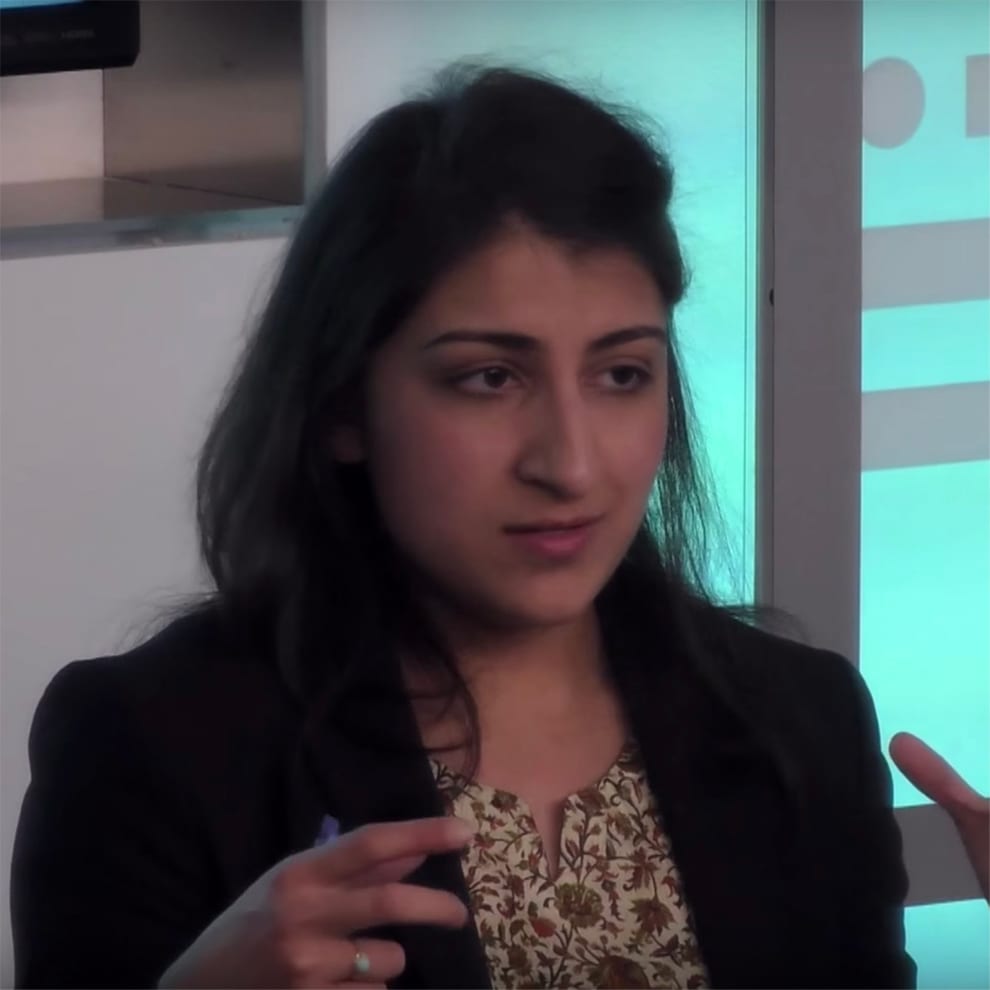
Lina Khan ran the Federal Trade Commission until 2025. She knows the pattern. Khan read Google's move as an old one with a new target. "This highlights the danger of allowing an unregulated monopolist to control an essential service," she said in a statement posted on X3.
Burry Calls Anthropic's Growth "Mandatory"
Michael Burry read Anthropic's amended IPO filing5. He found a bigger bill than the one Anthropic printed. Anthropic discloses $895.4 billion in compute and infrastructure commitments. Burry says the real number runs close to $1,190 billion once every partner deal gets counted.
"That kind of growth is mandatory. Not only is the company priced for optimism, it is betting its entire existence on that optimism, that kind of supranormal growth," Burry wrote5.
Burry built his math on a slowdown Anthropic itself reported. Revenue grew 47 percent last quarter, down from 144 percent the quarter before. The company swung to a $567 million operating loss in the same stretch6.
Burry Adds Nearly $300 Billion to Anthropic's Own Number
Anthropic's compute and infrastructure commitments, as the company discloses them and as Michael Burry recalculates them, Nov. 2026
Each dot counts the same bill. The blue dot is Anthropic's own disclosed figure, the magenta dot is Burry's recalculation, and the bar between them is the gap.
Burry's recalculation is one investor's own estimate, apart from any audited figure Anthropic itself confirms.
Sources: Stocktwits [5]; Fortune [6]. Chart by Ryan Elliott Dennis.
The numbers behind this chart
| Item | Anthropic's disclosure | Burry's count |
|---|---|---|
| Compute and infrastructure bills | $895.4B | $1,190B |
S&P Pushes Meta Toward the Bond Market
Meta's credit outlook took a hit on Oct. 30. S&P Global Ratings cut it from stable to negative7. The firm sees Meta's capital spending nearly doubling. It climbs from $140 billion this year to $225 billion in 2027, then $252 billion in 2028.
Free cash flow, on the same estimate, stays negative the whole stretch. It runs $22 billion negative in 2026, $71 billion in 2027 and $39 billion in 2028.
Naveen Sarma works that beat. S&P's media and telecom lead named the risk plainly. "If capex remains elevated and continues to grow at a faster pace than we expect, credit profiles will continue to weaken and cash flows will be negative," he said7.
Meta answered with its own case for the spending. "We expect to continue investing aggressively to support both our core business and emerging AI initiatives," Chief Financial Officer Susan Li told analysts on an Oct. 21 earnings call8. Three days passed. Meta then launched a bond sale that could raise up to $25 billion9.
Meta's AI Budget Climbs to $252 Billion as Cash Flow Goes Negative
Meta's capital spending plan and free cash flow, S&P Global Ratings estimates, 2026 to 2028
The blue line is Meta's yearly capital spending plan. The magenta line is free cash flow, the money left after that spending, which S&P expects to stay negative through the period.
The 2027 and 2028 figures are S&P Global Ratings' own projections, apart from any guidance Meta itself has given.
Source: Implicator.ai [7]. Chart by Ryan Elliott Dennis.
The numbers behind this chart
| Period | Capital spending | Free cash flow |
|---|---|---|
| 2026 | $140B | −$22B |
| 2027 (estimate) | $225B | −$71B |
| 2028 (estimate) | $252B | −$39B |

Big Tech's Hidden AI Tab Nears $3.2 Trillion
Five companies now carry close to $3.2 trillion in AI commitments10. The commitments sit off their balance sheets. Alphabet, Microsoft, Amazon, Meta and Oracle report them through footnotes, apart from the numbers investors read first.
Nikkei found the total nearly doubled in six months, through the end of September.
The obligations split two ways. About 60 percent comes from purchase commitments. Mostly, that means chips and servers. The rest runs from leases on data centers that have yet to open10.
CrowdStrike Buys Two Firms to Watch AI Agents
Two AI security startups found a buyer this week. CrowdStrike agreed to pay $495 million for Fiddler AI and Dreadnode on Nov. 311. Fiddler AI watches how AI agents reason and act, flagging drift and hallucinations before they reach a customer. Dreadnode runs more than 100 known attacks against AI models to find holes before an attacker does.
Brad Palm joins too11. Dreadnode's chief executive now leads inside CrowdStrike's own Cyber Superintelligence Lab. Fiddler AI folds into the Falcon platform as a new feature called Falcon Observe. Both startups now answer to one buyer.
OpenAI Buys the Tool Behind Codex's File Browser
A small coding-tools startup joins OpenAI this week. Pierre Computer will fold into Codex, OpenAI's coding assistant, aiming straight at Microsoft's GitHub12. Its own tool, Code Storage, already handles file navigation and diffing inside Codex. Terms stayed undisclosed.
Pierre's open-source libraries, Trees and Diffs, stay open after the deal closes. Codex leaned on borrowed tools until this week. Owning Pierre lets OpenAI fold a full code-review environment into its own product. It skips renting someone else's.
An AI Pipeline Finds 948 Ways Into Linux
OpenAI ran an AI pipeline against the Linux kernel. It came back with 948 working exploits13. The run took 30 hours and cost $1,213,430 in computing credits, or about $1,279 for each confirmed flaw. Ten of the attack paths it found were new to security research this week.
Every exploit the pipeline built lets an ordinary user seize full control of a machine. OpenAI says its system drafted candidate fixes for each one. Human reviewers checked the set before any maintainer heard about it13.
Claude Code's Product Chief Lands at OpenAI
Cat Wu announced on Nov. 5 that she joined OpenAI to lead product management for its Core Products team14. She spent two years running product for Claude Code at Anthropic before her Oct. 30 exit. Wu's exit made her the third Claude Code builder to leave inside ten days. Two colleagues had already posted their own exits on Oct. 24.
Newspapers Sue Brave Over Stolen Stories
The New York Times filed one lawsuit against Brave Software on Nov. 2. Three sister papers, the Daily News, Chicago Tribune and Orlando Sentinel, filed a second the same day15. Both complaints say Brave built a crawler that copied over 30 billion web pages, then resold access to Anthropic, Perplexity, Mistral, xAI and Cohere.
One filing points to a single answer from Brave's AI search tool15. That answer lifted more than 1,200 words from one Chicago Tribune story. The papers want damages. They also want Brave to stop the practice.

Voters Punish AI's Biggest Spenders
AI and crypto interests spent over $500 million on this week's midterms16. Pro-industry groups backed candidates who lost nine of their twelve biggest races, and a single super PAC, Leading the Future, raised over $100 million. It held most of that money back once voter anger showed up in early polling.
An NBC exit poll asked voters what moved them16. 56 percent named AI and data centers a major factor in their choice for Congress. Candidates who ran against new data centers often won the races where industry money opposed them.

What to watch
Watch whether Google changes its school policy again before the rollout Phillips promised for coming months. A reversal would answer the senators and the teachers union directly, apart from any blog post. Anthropic's own roadshow deserves a second watch. Its next public pitch will show whether Burry's math moved the price anyone is willing to pay.
Sources
- Chris Phillips, "Responsible AI for schools with Guided Learning," Google (blog.google), Nov. 3, 2026, https://blog.google/products-and-platforms/products/education/ai-learning-era-updates-2026/
- "Google will let schools disable its AI tools, but not without sacrificing Search," TechCrunch, Nov. 3, 2026, https://techcrunch.com/2026/11/03/google-will-let-schools-disable-its-ai-tools-but-not-without-sacrificing-search/
- "Google will block search access for schools that ban AI use," CBS News, Nov. 3, 2026, https://www.cbsnews.com/news/google-search-access-schools-ai-tools/
- Bernie Sanders, "Post on X," X, Nov. 3, 2026, https://x.com/SenSanders/status/2117700813544185865
- Yuvraj Malik, "Anthropic Is 'Betting Its Entire Existence On Optimism': Michael Burry Flags Risks After AI Firm's Updated S-1," Stocktwits, Nov. 5, 2026, https://stocktwits.com/news-articles/markets/equity/anthropic-is-betting-its-entire-existence-on-optimism-michael-burry-flags-risks-after-ai-firm-s-updated-s-1-says-won-t-pursue-ipo-shares/cNG1O9xR9EZ
- Beatrice Nolan, "Anthropic's growth slowed and costs jumped in the third quarter, updated IPO filing shows," Fortune, Nov. 2, 2026, https://fortune.com/2026/11/02/anthropics-growth-slowed-and-costs-jumped-in-the-third-quarter-updated-ipo-filing-shows/
- Marcus Schuler, "S&P Sees Meta Bleeding Cash Into 2028," Implicator.ai, Oct. 31, 2026, https://www.implicator.ai/s-p-downgraded-metas-outlook-stable-negative-citing-high/
- "Meta's rating outlook cut to negative by S&P on AI spending," Taipei Times, Nov. 2, 2026, https://www.taipeitimes.com/News/biz/archives/2026/11/02/2003866978
- "Meta seeks to raise up to $25 billion in debt sale as AI spending jumps," CNBC, Nov. 3, 2026, https://www.cnbc.com/2026/11/03/meta-bond-sale-ai-funding.html
- "US tech giants' AI-related obligations surge to USD 3.2 trn - report," Telecompaper, Nov. 4, 2026, https://www.telecompaper.com/news/us-tech-giants-ai-related-obligations-surge-to-usd-32-trn-report--1587755
- "CrowdStrike Reportedly Paying $495 Million for AI Security Firms Fiddler, Dreadnode," SecurityWeek, Nov. 3, 2026, https://www.securityweek.com/crowdstrike-reportedly-paying-495-million-for-ai-security-firms-fiddler-dreadnode/
- "OpenAI to acquire Pierre to expand Codex developer infrastructure," Yahoo Finance, Nov. 4, 2026, https://finance.yahoo.com/technology/ai/articles/openai-acquire-pierre-expand-codex-170249678.html
- "OpenAI AI Pipeline Generates 948 Linux Root Escalation Exploits in 30-Hour Run," The Hacker News, Nov. 5, 2026, https://thehackernews.com/2026/11/openai-ai-pipeline-generates-948-linux.html
- Jade Orin, "Cat Wu to Lead Product Management for OpenAI's Core Products," Unite.AI, Nov. 4, 2026, https://www.unite.ai/cat-wu-to-lead-product-management-for-openais-core-products/
- "New York Times and other outlets sue web browser Brave over alleged content scraping," TechCrunch, Nov. 2, 2026, https://techcrunch.com/2026/11/02/new-york-times-and-other-outlets-sue-web-browser-brave-over-alleged-content-scraping/
- "The Winners and Losers of AI's First Big Election," Time, Nov. 4, 2026, https://time.com/article/2026/11/04/midterm-elections-results-ai-industry-data-centers/