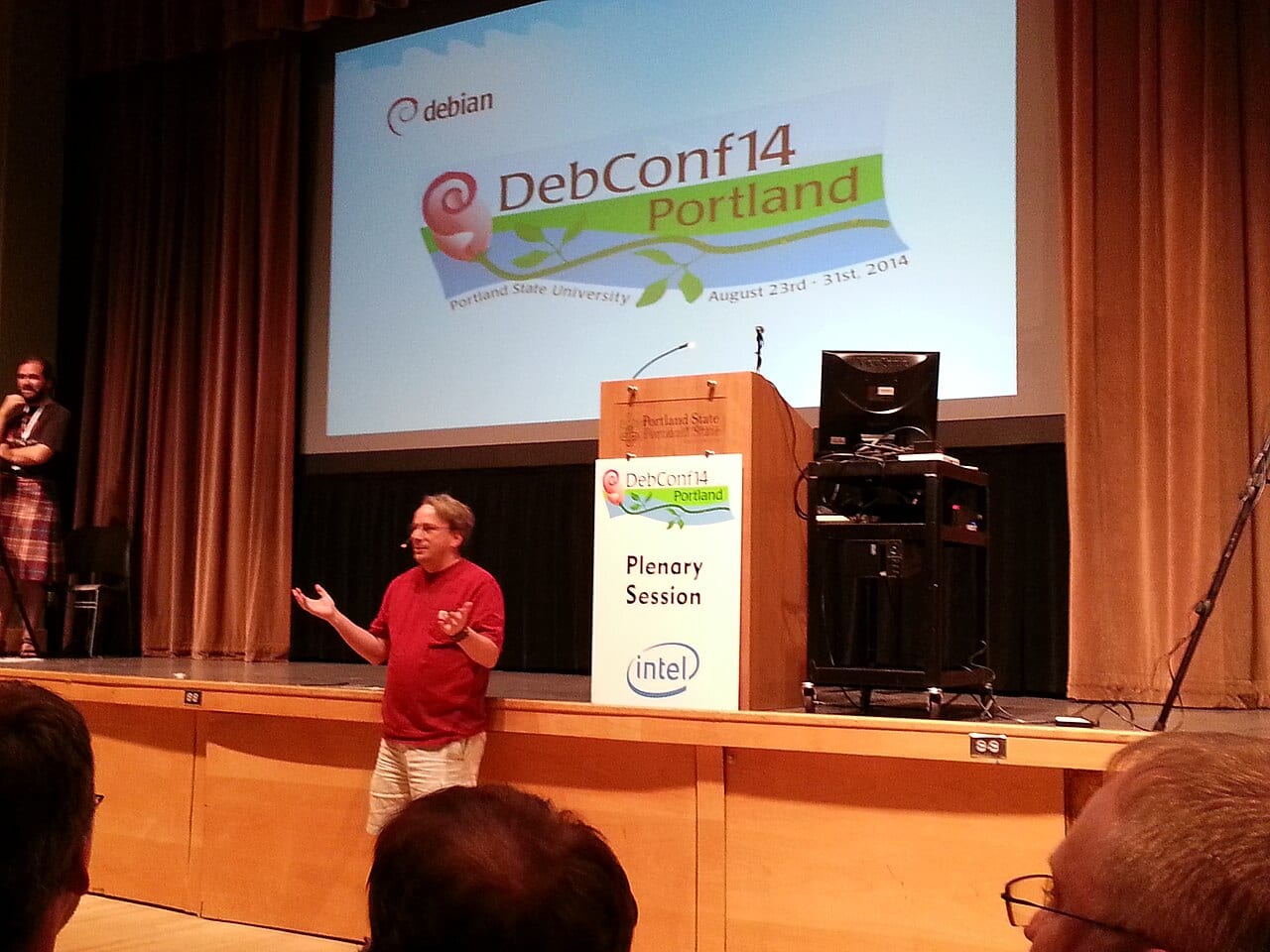
Linux's kernel maintainers met in Prague on Oct. 83. They dropped a rule that told contributors to flag patches a coding tool helped write210.

Sasha Levin, a kernel developer at Nvidia, posted the change to the kernel mailing list on Oct. 910. "The Maintainers Summit reached consensus to deprecate the Assisted-by tag," he wrote. "Remove the documentation requiring it"2.
Linus Torvalds, the kernel's creator, backed the change on the list. He expects people to understand what they submit, and says the tools they use matter little6.
Torvalds Draws the Line at Drive-By Code
The decision split reaction fast.
Roy Schestowitz edits the Linux news site Tux Machines. He titled his post on the summit "Linus Torvalds Turns to Slop, Creates More Problems in Linux"5. David Gerard writes the AI-skeptic site Pivot to AI. He ended his post by urging shame: "None of these people doing shameful things deserve a place in polite company. They should be shamed for their shameful choices"3.
Torvalds sorts AI users into two groups, and only one worries him. He welcomes the coder who studies what the chatbot hands back. The coder who ships a patch and runs draws his concern.
"I really think we want competent people to use AI as a tool," Torvalds wrote to The Register's Steven J. Vaughan-Nichols1. He drew a sharper line around the second group: "The 'clueless people using AI' problem is different. I do think we want to discourage that. Not discourage the people who use AI and truly want to learn and truly want to become useful members of the kernel community – but discourage the drive-by patches, and discourage people who just want to feel like they sent a patch and never really wanted to become anything more."
Read plainly, Torvalds sorts coders by effort, apart from the chatbot in front of them. His own term for the failure, drive-by, marks a coder who skips the work of learning the code.
He made the same case on the mailing list on Oct. 13. Laurent Pinchart, a kernel developer, had floated requiring commit messages to be written by hand8. Torvalds answered him directly6.
"Here's a new rule just for you: don't use compilers for any of your kernel submissions," Torvalds wrote. "Because if you can't show that you really understand what the machine is actually doing by writing your code in assembler, then I don't want to see your code contribution." He closed with a challenge. "Do you not see how UTTERLY STUPID those kinds of rules would be?" Torvalds asked.
The Tag Lasted Nine Months
Kernel documentation added the Assisted-by tag in January 2026, after the idea first circulated in July 202510. The text told contributors who used AI tools to add an Assisted-by line to the commit2.
Linux's AI Disclosure Tag Lived 9 Months Before Maintainers Dropped It
Key dates in the Assisted-by tag's life, from proposal to deprecation
Each pin marks one dated event on the tag's path from proposal to kernel documentation to deprecation.
Sources: Linux kernel mailing list [2]; Pivot to AI [3]; The Register [10]. Chart by Kelly Dennis.
The numbers behind this chart
| Date | Event |
|---|---|
| July 2025 | AI labeling proposal takes shape |
| Jan. 2026 | Assisted-by tag added to kernel docs |
| Oct. 8, 2026 | Maintainers Summit drops the tag |
| Oct. 9, 2026 | Levin posts the tag's deprecation |
Jeff Layton, a kernel developer, proposed killing the requirement on July 2, three months before the summit9. He gave three reasons.
First, compliance was uneven. Second, Layton wrote, the tag "basically serves as free advertising for proprietary LLM companies." Third, Layton said the purpose was murky: "it's not clear why we want to collect this info in the first place."
The Case for Keeping the Tag
One maintainer pushed back hardest. Laurent Pinchart, a kernel developer and the founder of Ideas on Board, objected on the mailing list on Oct. 13, after Levin's patch7. "I'm not happy removing the tag without adding another mechanism for required disclosure," he wrote.
Hours later Pinchart argued that the rule did a job beyond compliance8. "What this is about is setting our expectations, telling what we want and what we don't want. There's still value in that, and I'd argue there's even more value now. There will be people who won't care, there will be people who cheat. We've always had those, we'll keep having them, and we'll keep rejecting their contributions. I really don't get the unenforceable argument here."
Pinchart's complaint lands on a real gap. Torvalds's approach leans on a reviewer's eye to catch a drive-by patch, apart from any label.
Greg Kroah-Hartman, a longtime kernel maintainer, described in March how quickly the reports reaching maintainers had changed1. "Months ago, we were getting what we called 'AI slop,' AI-generated security reports that were obviously wrong or low quality," Kroah-Hartman told Vaughan-Nichols. Then, he said, "something happened a month ago, and the world switched. Now we have real reports," he said.
A Scanner Driver Shows Competent AI at Work
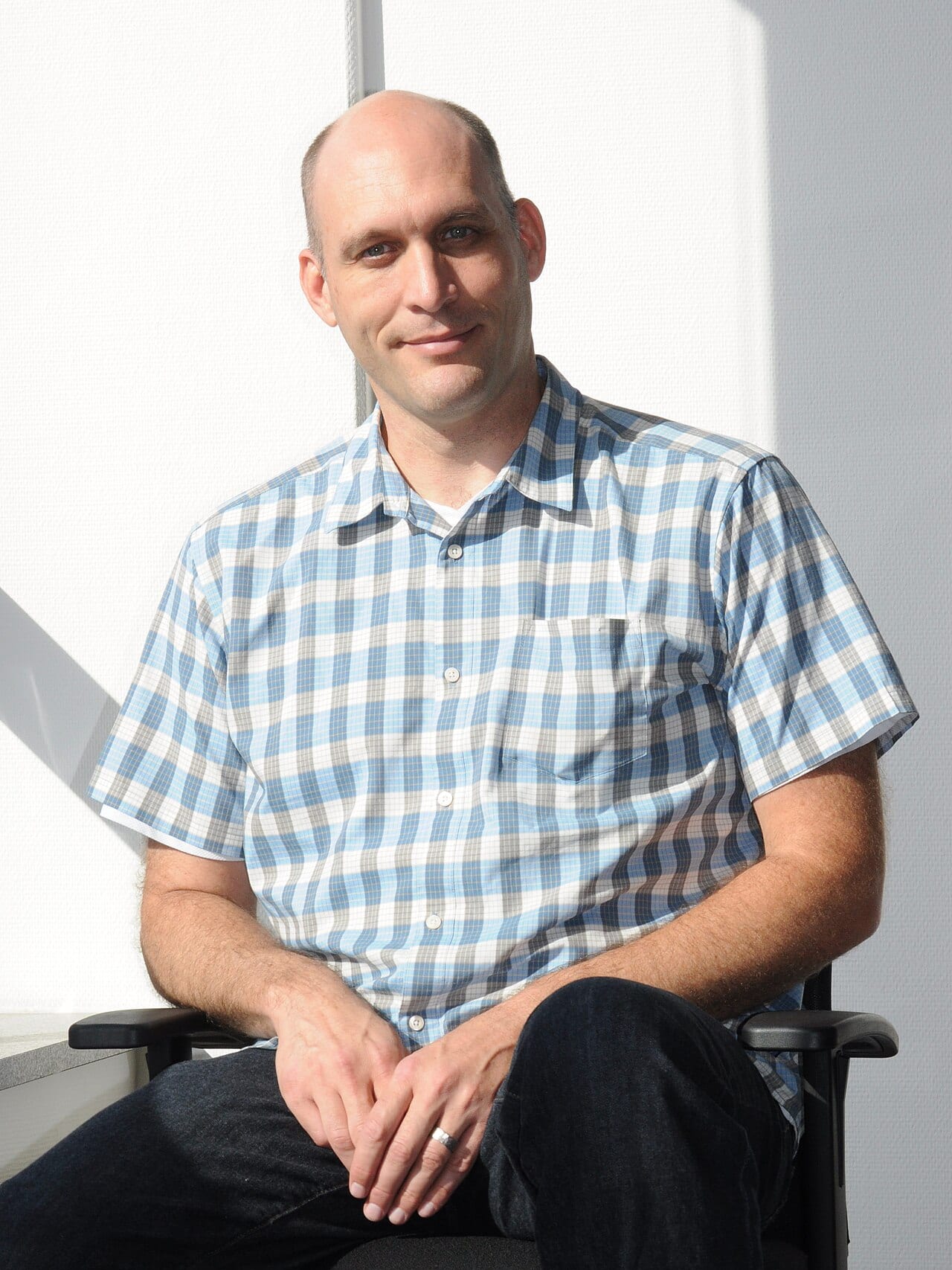
Christian Schaller, a Red Hat director, offers a worked example of AI used with care4. His mother died, and he inherited a box of old film negatives. The scanner he bought for them used a chip that Linux had dropped from its supported list.

Schaller ran the scanner's Windows driver inside a virtual machine and captured its USB traffic. An AI coding agent then got the job of matching that behavior in a new Linux driver. He wrote about the method on his own blog: "That kind of work suits an AI model well. It can read thousands of lines of USB capture, notice that a sequence repeats with one byte changing, and propose what that byte means. It can write the test to confirm it, and it doesn't get bored," Schaller wrote.
The approach became an open source project, hw-harness, so another coder could point a coding agent at a different unsupported device.
Schaller's AI-Built Driver Scans 20 Seconds Faster Than Upstream's
Full-resolution scan time, in seconds, Plustek OpticFilm 8200i at 3,600 dpi
Each column is one driver's scan time at the same resolution; the shorter column is the one Christian Schaller built with an AI coding agent.
Both times come from Schaller's own single-unit test on one scanner, so treat the gap as one data point, apart from a formal benchmark.
Source: Christian F.K. Schaller [4]. Chart by Kelly Dennis.
The numbers behind this chart
| Item | Value |
|---|---|
| Schaller's driver | 34.6s |
| Upstream driver | 54.4s |
His finished driver scans a negative in 34.6 seconds at full resolution. The SANE project's own upstream driver, which gained support for the same chip in September, takes 54.4 seconds. Schaller calls these single-unit results.
He ran the same method on his laptop's camera next. The agent traced a crop bug and a gain cap that held back its sensitivity. In a low-light test, frame brightness rose from 31.1 to 90.9 with his fixes in place.
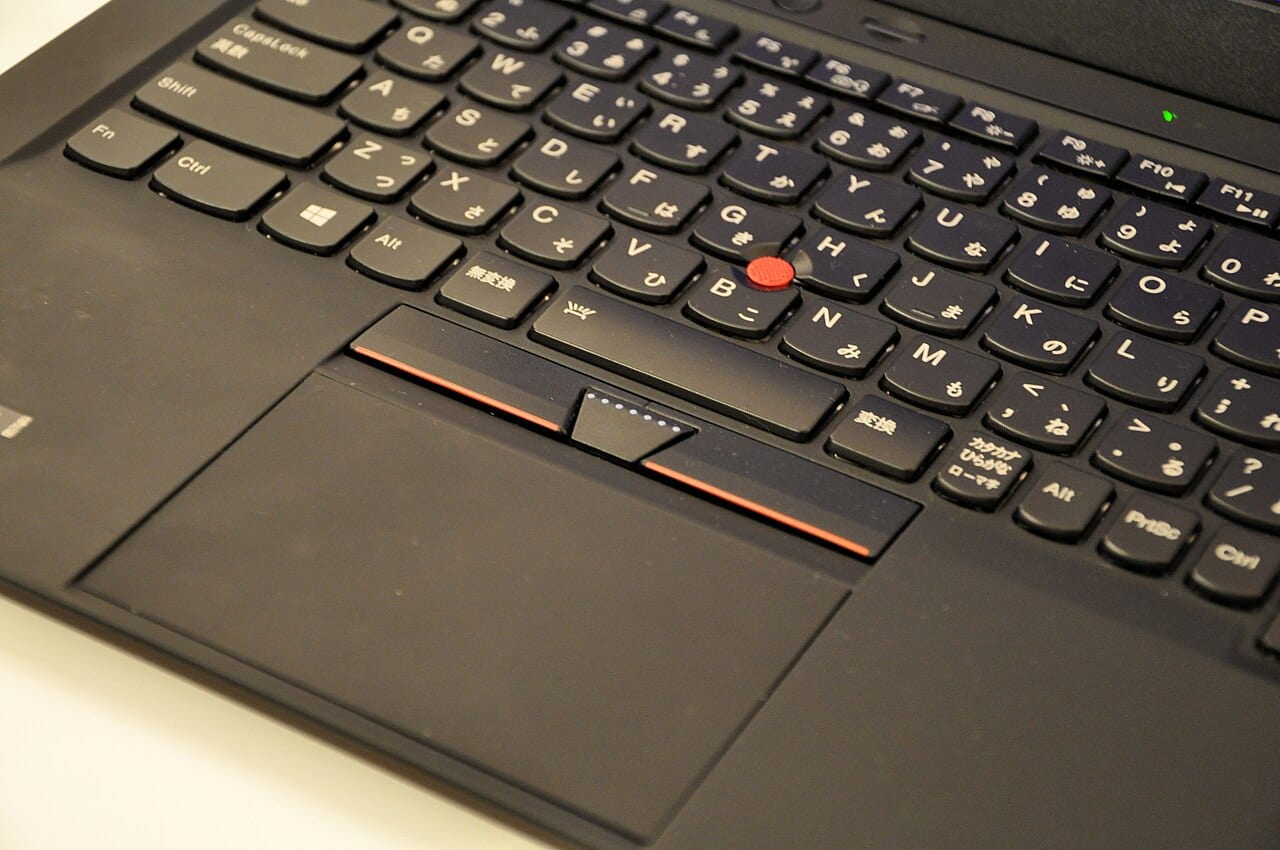
Schaller submitted the kernel patches to Kate Hsuan, and Wim Taymans is reviewing the camera software patches. That pending review is the kernel's own test of the work. A person checks the claim, apart from who or what wrote the first draft. Torvalds's rule leans on that check.
What to do
Borrow the kernel's new test for your own team's AI policy. Ask whether the person who submitted a change can defend it line by line. The label on how it was written matters less.
Build a check like Schaller's before you trust an AI-written change. Capture how the current system behaves, let the model propose a fix, then test the result on real hardware. The model speeds up the slog. A person still owns the result.
By the numbers
- Nine months: how long the Assisted-by tag stood in kernel documentation, from January to Oct. 8, 202610.
- Three: reasons Jeff Layton gave for dropping the tag, from uneven compliance to vendor advertising to an unclear purpose9.
- 34.6 seconds: full-resolution scan time for Christian Schaller's AI-built scanner driver, against 54.4 for the upstream driver4.
- 90.9: the frame-brightness score Schaller's camera fixes reached in a low-light test, up from 31.1 before them4.
- Two: the independent AI problems Torvalds names. AI finds real bugs, which add maintainer work, and some patches outrun their authors' understanding1.
What to watch
Watch whether the real bug reports Kroah-Hartman describes keep pace with the maintainers who must read them. Torvalds counts that load as one of the kernel's two AI problems1.
hw-harness is worth watching too. Schaller built it for strangers to reuse. A second working driver from someone other than him would show competent AI use spreading past one blog post4.
Sources
- Steven J. Vaughan-Nichols, "Torvalds: AI is fine for competent devs, but spare us the 'drive-by' patches," The Register, Oct. 23, 2026, https://www.theregister.com/columnists/2026/10/23/torvalds-ai-is-fine-for-competent-devs-but-spare-us-the-drive-by-patches/5304357/
- Sasha Levin, "[PATCH] docs: remove Assisted-by references," Linux kernel mailing list, Oct. 9, 2026, https://lore.kernel.org/all/20261009083137.3-1-sashal@kernel.org/
- David Gerard, "Linux kernel goes full AI slop code, hides chatbot commits," Pivot to AI, Oct. 14, 2026, https://pivot-to-ai.com/2026/10/14/linux-kernel-goes-full-ai-slop-code-hides-chatbot-commits/
- Christian Fredrik Kalager Schaller, "Using Artificial Intelligence to reverse engineer hardware," Oct. 15, 2026, https://blogs.gnome.org/uraeus/2026/10/15/aiandreverseengineerhardware/
- Roy Schestowitz, "Linus Torvalds Turns to Slop, Creates More Problems in Linux," Tux Machines, Oct. 15, 2026, https://news.tuxmachines.org/n/2026/10/15/Linus_Torvalds_Turns_to_Slop_Creates_More_Problems_in_Linux.shtml
- Linus Torvalds, "Re: [PATCH] docs: remove Assisted-by references," Linux kernel mailing list, Oct. 13, 2026, https://lore.kernel.org/all/CAHk-=whTs09_ozN+e09GU68N1wPP56MUzDjrg9rnKxQUa0A_4Q@mail.gmail.com/
- Laurent Pinchart, "Re: [PATCH] docs: remove Assisted-by references (12:31 UTC)," Linux kernel mailing list, Oct. 13, 2026, https://lore.kernel.org/all/20261013123132.GC4214@killaraus.ideasonboard.com/
- Laurent Pinchart, "Re: [PATCH] docs: remove Assisted-by references (20:16 UTC)," Linux kernel mailing list, Oct. 13, 2026, https://lore.kernel.org/all/20261013201628.GO4214@killaraus.ideasonboard.com/
- Jeff Layton, "[PATCH] Documentation: remove the requirement for LLM attribution," Linux kernel mailing list, July 2, 2026, https://lore.kernel.org/all/20260702-aidoc-v1-1-735572dfb995@kernel.org/
- Thomas Claburn, "Linux kernel devs drop obligatory confession of AI tool usage," The Register, Oct. 14, 2026, https://www.theregister.com/ai-and-ml/2026/10/14/linux-kernel-devs-drop-obligatory-confession-of-ai-tool-usage/5303140