
Xiaomi said on Nov. 3 that its humanoid prototype, nicknamed Tieda, held its first full shift at a car factory in Beijing. The robot worked eight hours straight, sorting center console side panels on its own12. Lei Jun, Xiaomi's founder, posted the same claim on Weibo that day3.
An eight-hour shift is a real test. It sits apart from the test behind Xiaomi's loudest number. The 98 percent success rate many reports repeated belongs to a different station. Tieda worked that station months earlier, on the same factory floor56.
The Shift That Actually Ran
Xiaomi's statement named the task plainly. Tieda spent eight hours at a center console side-cover sorting station. It corrected its own errors and kept pace with the production line's timing123. The company called it the robot's first full-day run on that job.
The same statement covered a second robot. A home robot built on Xiaomi's newer Robotics-1 model moved into a real flat inside Xiaomi's Youth Apartments complex. It ran a chain of more than 50 house tasks across three rooms, lasting over 30 minutes124.
That model trained on 100,000 hours of real footage. It topped two robot tests, RoboCasa 365 and RoboDojo, back in July.
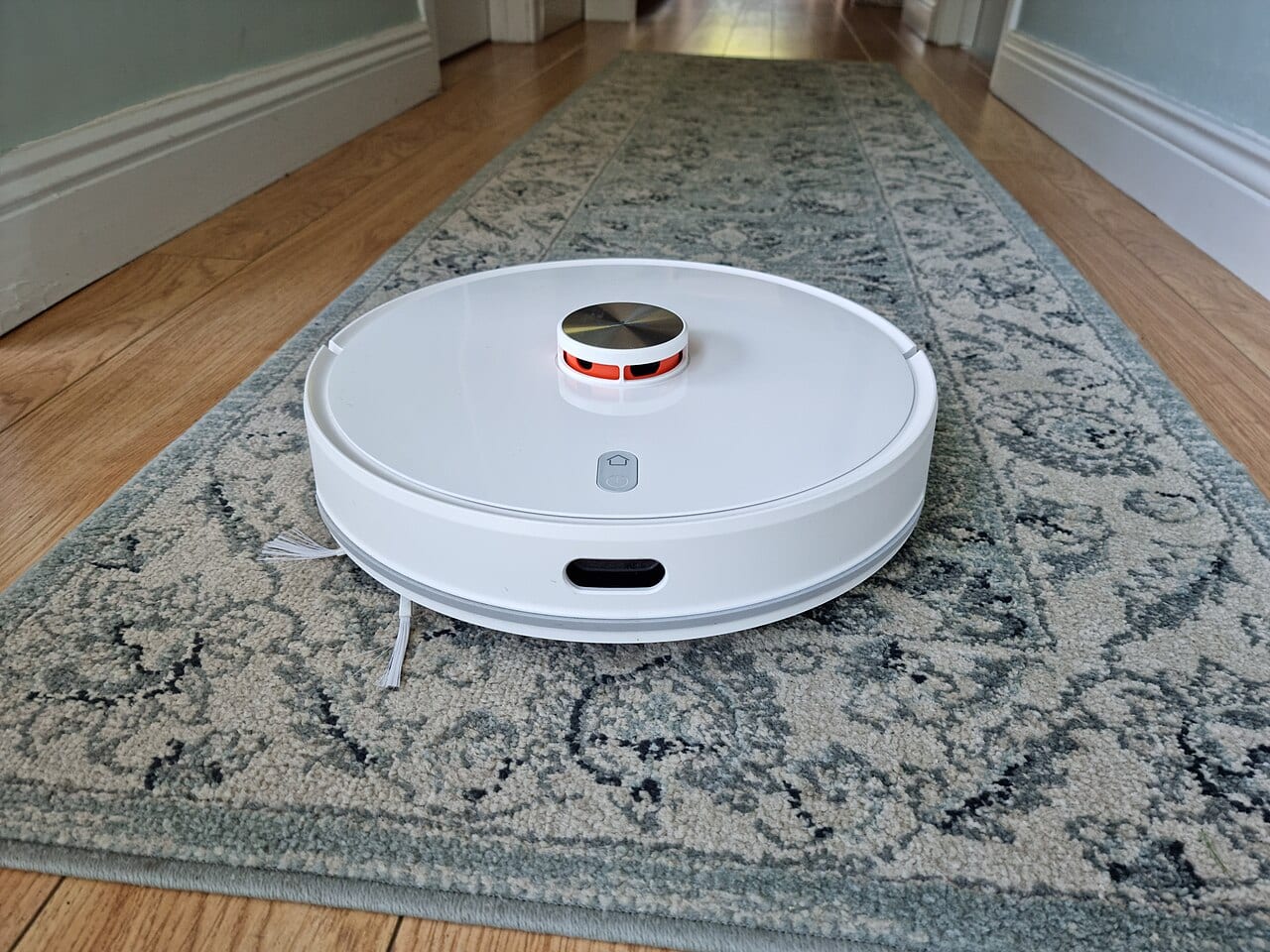
Xiaomi already sells a robot for the home. Its Lydsto line of vacuum-and-mop combos cleans floors and empties its own bin. The walking robot now training in that flat is a bigger step from the same company.
Xiaomi still calls both runs internal tests. Its own staff watched each one, inside its own buildings.
Two Numbers, Two Different Jobs
Xiaomi has trained Tieda on its car-factory floor since early 2026. Reports from that spring named its first task: tightening self-tapping nuts. One side of the fastener alone succeeded 90.2 percent of the time6.
By July, Tieda worked both sides of the same nut. The score rose to 98 percent, within one point of the plant's human workers5.
July's update added two more jobs. Sorting flexible center console covers and folding storage bins each landed at 90 percent56. The panel-sorting job is the one Tieda held for eight hours on Nov. 312.
Xiaomi's 8-Hour Shift Ran at Its 90 Percent Task, Apart From Its 98 Percent One
Tieda's success rate by task inside Xiaomi's auto factory, both-side nut installation, as of July 2026
Each column is one task Tieda trained on; the panel-sorting column, apart from the nut column, is the task behind the Nov. 3 eight-hour shift.
Sources: Singularity.kiwi [5]; TechNode [6]. Chart by Ryan Elliott Dennis.
The numbers behind this chart
| Item | Value |
|---|---|
| Nut station | 98% |
| Panel sorting | 90% |
| Bin folding | 90% |
RoboHub, an account that tracks humanoid-robot releases, posted on X the same day Xiaomi's July numbers came out. It named the harder control problem behind the newer tasks. Tieda now has to move both arms together and hold a loose panel in a steady grip9.
RoboHub@XRoboHubXiaomi’s robot just got handed two harder jobs at its EV factory. 🤖
It already hits 98% on self-tapping nut loading. Now it’s sorting large, flexible center-console panels and folding totes — both at 90%.
The bigger step isn’t the numbers. It’s the control stack: whole-body… https://t.co/ZM3dRXEM1u pic.twitter.com/MC8I77GmzE
Xiaomi's Nov. 3 statement stopped short of claiming the 98 percent figure applied to the eight-hour run. Outside summaries drew that line on their own, folding the plant's best score into its longest shift.
Lab Failures and Factory Days
Lei Jun introduced Tieda at the World Robot Conference in Beijing on Aug. 19. He drew a sharp line between testing and working. "A lab can pursue a success after ten thousand failures, while a factory must succeed on ten thousand straight tasks," Lei said5.
Four months of factory time back that line. Tieda trained on Xiaomi's own car line from roughly March through July, inside the die-casting shop where the nut station sits56.
Xiaomi's president, Lu Weibing, struck a more careful note the same week, on the company's earnings call. He told investors that humanoid robots still sit far from selling at scale. Their value today sits mostly in cutting factory costs and building know-how10.
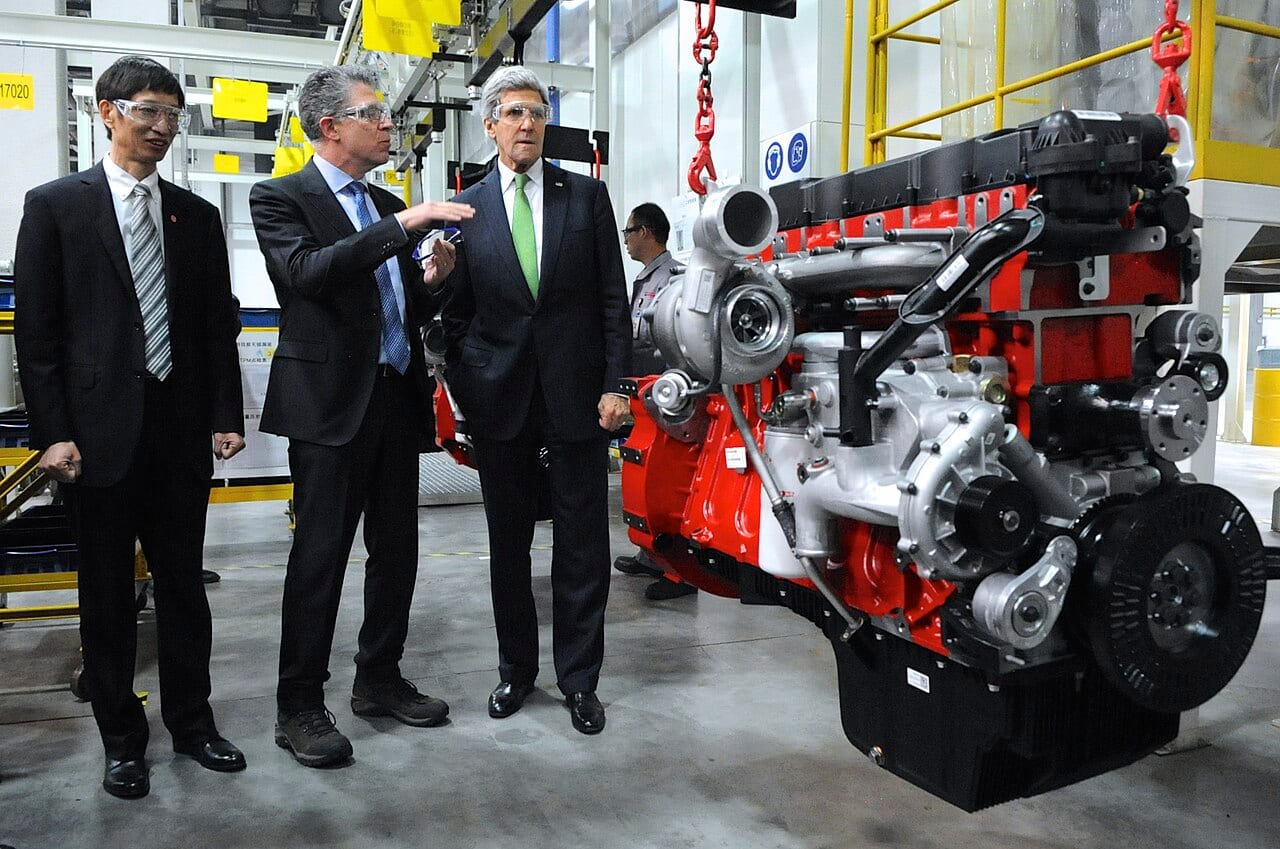
Both men work for the same company. One talked about the robot Xiaomi built. The other talked about the business it has yet to become.
A Single Score Covers One Task Alone
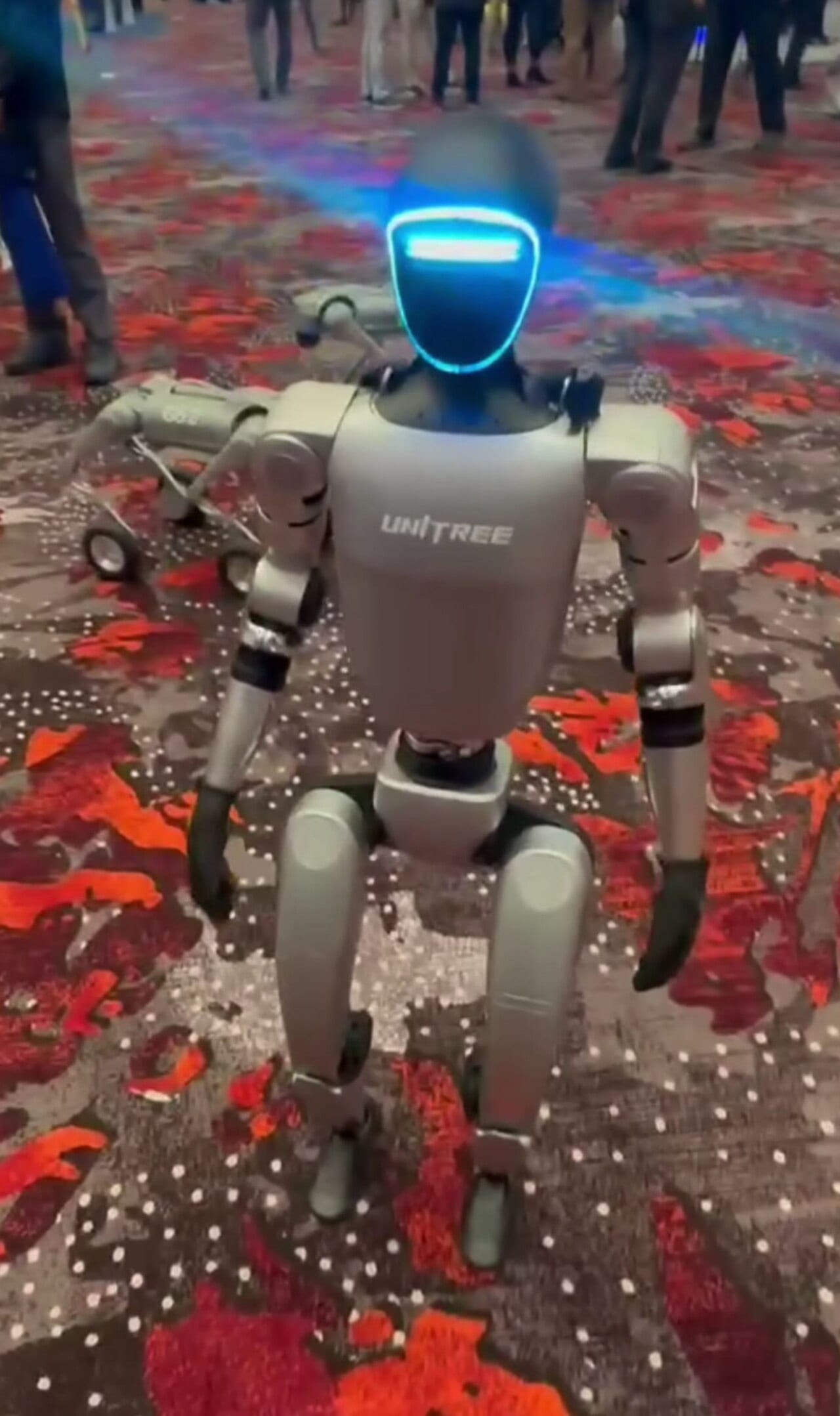
Wang Xingxing runs Unitree, a rival Chinese robot maker preparing its own machines for factories. He skipped Xiaomi's name entirely when he spoke at the same World Robot Conference, a day after Lei Jun, on Aug. 20. His point reached past any single company. "If sufficient collection and training are performed in a fixed scenario, the success rate can be close to 100%, but if the operated objects or the environment change slightly, the success rate will drop sharply," Wang said7.
That caution fits Tieda's own numbers. Four months separated 90.2 percent from 98 percent, and the gain came from one station the company trained again and again56. Xiaomi's Nov. 3 release stops short of saying how the robot performs on a station it has yet to meet.
China's wider robotics push carries the same caution at scale. The country is on pace to build more than 100,000 humanoid machines this year. Fewer than 5 percent of them reach a factory for production work, according to industry figures the trade outlet Robots Daily compiled8.
Fewer Than 1 in 20 of China's New Humanoid Robots Reach a Factory
Share of China's projected 2026 humanoid robot output reaching factory production work, per industry estimates Robots Daily compiled
The estimate blends several industry counts Robots Daily compiled, short of one audited figure.
Source: Robots Daily [8]. Chart by Ryan Elliott Dennis.
The numbers behind this chart
| Item | Value |
|---|---|
| Reaches a factory floor (estimate) | 5% |
| Whole | 100% |
Humanoid robots built part of their reputation on stage routines, long before any of them held a factory job. Sophia, a different kind of humanoid, drew conference crowds this way years before Tieda existed.

Tieda's eight hours moved past a stage routine. It still ran on one station, inside one factory, under conditions Xiaomi controlled from the start.
What to Do
Check any robot company's success-rate claim this week. Trace it to the one job the company actually measured, and ask whether that job matches the task making headlines.
Watch for a second number the next time Xiaomi reports. A score from a station Tieda has yet to touch would show whether its gains travel past one task.
By the Numbers
- 8 hours: the length of Tieda's first full shift at the panel-sorting station, announced Nov. 3, 202612.
- 98 percent: Tieda's dual-side success rate at the nut station, up from 90.2 percent for one side alone, as of July 202656.
- 50-plus tasks across 3 rooms: the home-agent trial Xiaomi ran the same day at its Youth Apartments124.
- 90 percent: Tieda's success rate at panel sorting and at bin folding, the same month56.
- 76 seconds: the nut station's production cadence Tieda matched during its three-hour test56.
- 100,000 hours: real-world footage used to train Xiaomi-Robotics-1, the model behind the home trial124.
- Under 5 percent: the share of China's 2026 humanoid robot output reaching a factory for production work, per Robots Daily's count8.
What to Watch
Watch whether Xiaomi names a new station the next time it reports progress. A fresh task, tested from a cold start, would say more about Tieda's range than a longer shift on a trained one.
Unitree's own factory trials carry the same test. Wang Xingxing's company is building toward the same kind of run. His warning about shifting conditions applies to his own machines, too, as much as it does to Xiaomi's78.
Sources
- KuCoin News, "Xiaomi Reveals 8-Hour Factory Operations and Long-Term Home Tasks for Humanoid Robots," Nov. 3, 2026, https://www.kucoin.com/news/flash/xiaomi-reveals-8-hour-factory-operations-and-long-term-home-tasks-for-humanoid-robots
- Sina Technology, "Xiaomi Robots' 'Two-Line Breakthrough': Factory 8-Hour Shift, Home Long-Horizon Tasks Both Challenged" [translated from Chinese], Nov. 3, 2026, https://finance.sina.com.cn/tech/digi/2026-11-03/doc-inixmswc8782987.shtml
- Lei Jun, Weibo post on Xiaomi's humanoid robot completing an 8-hour factory shift, Nov. 3, 2026, https://weibo.com/2/detail/5361175904650888
- Phemex, "Xiaomi Humanoid Robot: 8-Hour Shift & Home Task Milestone," Nov. 3, 2026, https://phemex.com/news/article/xiaomi-humanoid-robot-completes-8hour-factory-shift-home-agent-passes-50task-longhorizon-trial-102222
- Singularity.kiwi, "Xiaomi Trained a Humanoid Robot in a Real Factory for Four Months. Here Is What It Learned," Aug. 22, 2026, https://singularity.kiwi/xiaomi-humanoid-robot-factory-training-wrc-2026/
- TechNode, "Xiaomi updates progress on humanoid robots in auto factory, achieves 98% success rate in some tasks," July 15, 2026, https://technode.com/2026/07/15/xiaomi-updates-progress-on-humanoid-robots-in-auto-factory-achieves-98-success-rate-in-some-tasks/
- Su Yang, "Wang Xingxing Unveils the Full Story of Unitree's Remarkable Value Appreciation Journey," 36Kr, Aug. 20, 2026, https://eu.36kr.com/en/p/3947300822433158
- Jack Lee, "China's Humanoid Robots Ace the Demo Floor. The Factory Floor Is Another Story.," Robots Daily, Sept. 16, 2026, https://robots-daily.com/chinas-humanoid-robots-ace-the-demo-floor-the-factory-floor-is-another-story/
- RoboHub (@XRoboHub), post on X, July 14, 2026, https://x.com/XRoboHub/status/2076999254594494826
- KuCoin News, "Xiaomi Q2 2026 Revenue Falls 6.1% Amid High R&D and Capital Expenditure," Aug. 19, 2026, https://www.kucoin.com/news/flash/xiaomi-q2-2026-revenue-drops-6-1-amid-high-r-d-and-capital-expenditure