Joseph Briggs published a new forecast Thursday. He is an economist at Goldman Sachs1. Briggs says artificial intelligence could displace up to 15 million American workers over the next decade.
That is roughly one in 11 workers1. He built the number on a forecast that AI eventually lifts productivity 15 percent in the U.S. and other developed economies. Briggs counts gross job losses. Unemployment is a different measure, because some displaced workers find jobs quickly.
Airbus put out an opposite-sounding number, reported Oct. 20. The planemaker projects aviation will need 2.44 million new pilots, technicians and cabin crew worldwide by 20455. That breaks into 730,000 maintenance technicians, 660,000 pilots and 1,050,000 cabin crew. These are airline jobs, a separate group from factory jobs.
Set beside that count, Briggs' number can sound wrong, a warning aimed at workers already in demand.
The two forecasts measure different things. He tracked the share of Americans in routine jobs: clerks, secretaries, factory machine operators and mechanics. The data span four recessions, the early 1980s, 2001, 2008 and 20201.
That share held steady through healthy years. It fell sharply when each downturn arrived.
"A more concerning takeaway from our analysis is that a cyclical slowdown would likely accelerate AI-related automation and job losses, thereby amplifying the broader business cycle," Briggs wrote1. His sentence names the trigger a boom conceals. Growth only buys time.
Even Anthropic's chief executive softened his tone this year. Dario Amodei spent 2025 warning AI could erase half of junior office jobs1. By May, on stage with JPMorgan Chase's chief executive, he turned softer.
"And the 10% kind of expands to be 100% of what people do and kind of 10xs their productivity," Amodei said1. His caveat still stands: this technology moves faster than the ones before it, and that pace is what worries him.
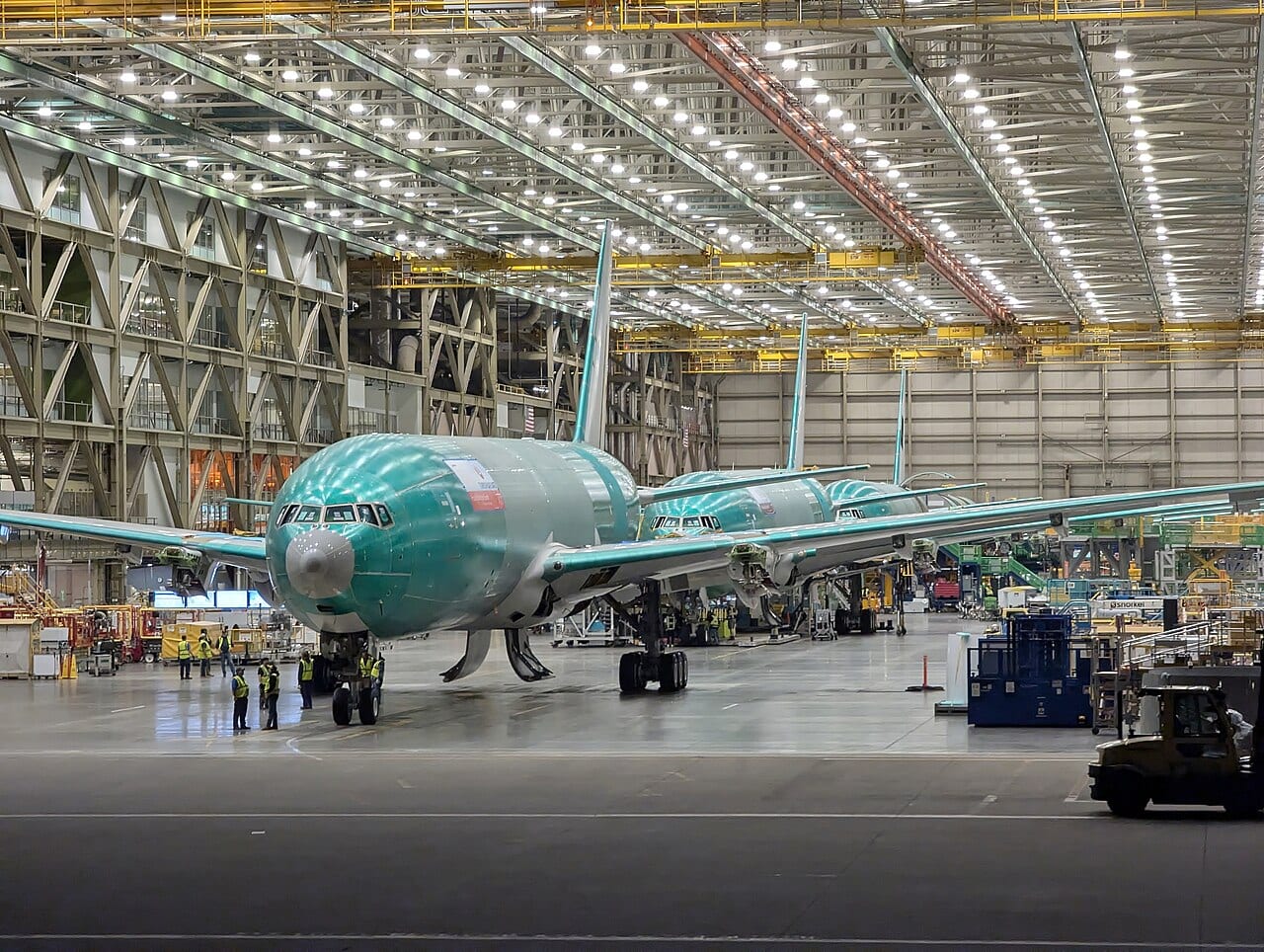
Boeing's Washington workforce shows a similar pattern. It fell by nearly half between mid-1998 and the end of 20043. Six years of aerospace decline did it, three of them in a general recession, and the 9/11 attacks sped up the slide.
That is 51,000 local jobs, cut. State analyst Alex Roubinchtein studied the damage in a January 2005 report.
He estimated that one-third of the decline was cyclical. The other two-thirds came from permanent structural changes, factors that include more imports and higher productivity3.
As many as two of every three cut jobs may be gone for good3.
A regional economist for the state tracked the same years. "Manufacturing has dropped to just slightly below 10 percent of the state's total employment, which is the lowest it's been going back decades and decades," said Scott Bailey, a regional economist with the state Employment Security Department3. "Nobody expects it to get back to 10 percent again," he added.
Up to Two-Thirds of Boeing's 51,000 Washington Cuts May Be Permanent
Boeing's Washington state workforce reduction, 1998 to 2004, split by a 2005 state analysis into cyclical and structural loss
The ring is the 51,000 jobs Boeing cut in Washington; the magenta arc is the two-thirds a state analyst estimated as structural, and the gray arc is the cyclical third.
A 2005 state analysis produced this estimate; Boeing's own public figures covered total headcount alone.
Source: The Seattle Times [3]. Chart by Ryan Elliott Dennis.
The numbers behind this chart
| Item | Value |
|---|---|
| Structural, may be permanent | 34,000 |
| Cyclical third | 17,000 |
| Whole | 51,000 |
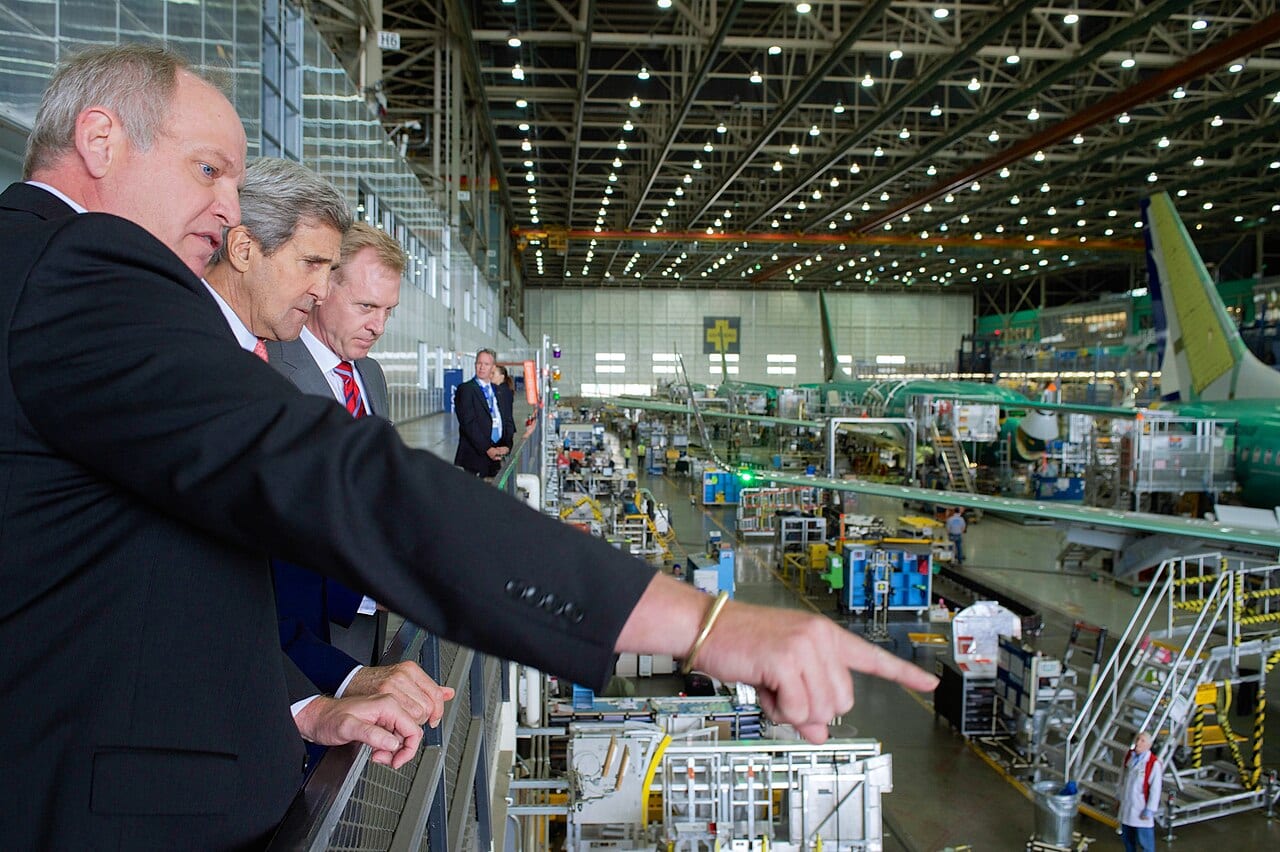
Two decades later, aerospace and defense manufacturers describe the opposite problem. Nearly 80 percent plan to add workers in 2027, according to a report from Xometry2. Half say automation operators are hard to hire, and manufacturers across industries rank them hardest to fill.
Vaidy Raghavan is chief technology officer at Xometry, a factory marketplace that published the report2. He reads the shortage as a sign AI is changing the expertise factories need. "The ability to do more work is only driving up more demand for the work," Raghavan added.
His sentence skips a detail. Xometry runs a marketplace that connects buyers with suppliers2. Read as interest, a busy factory floor is good for that business.
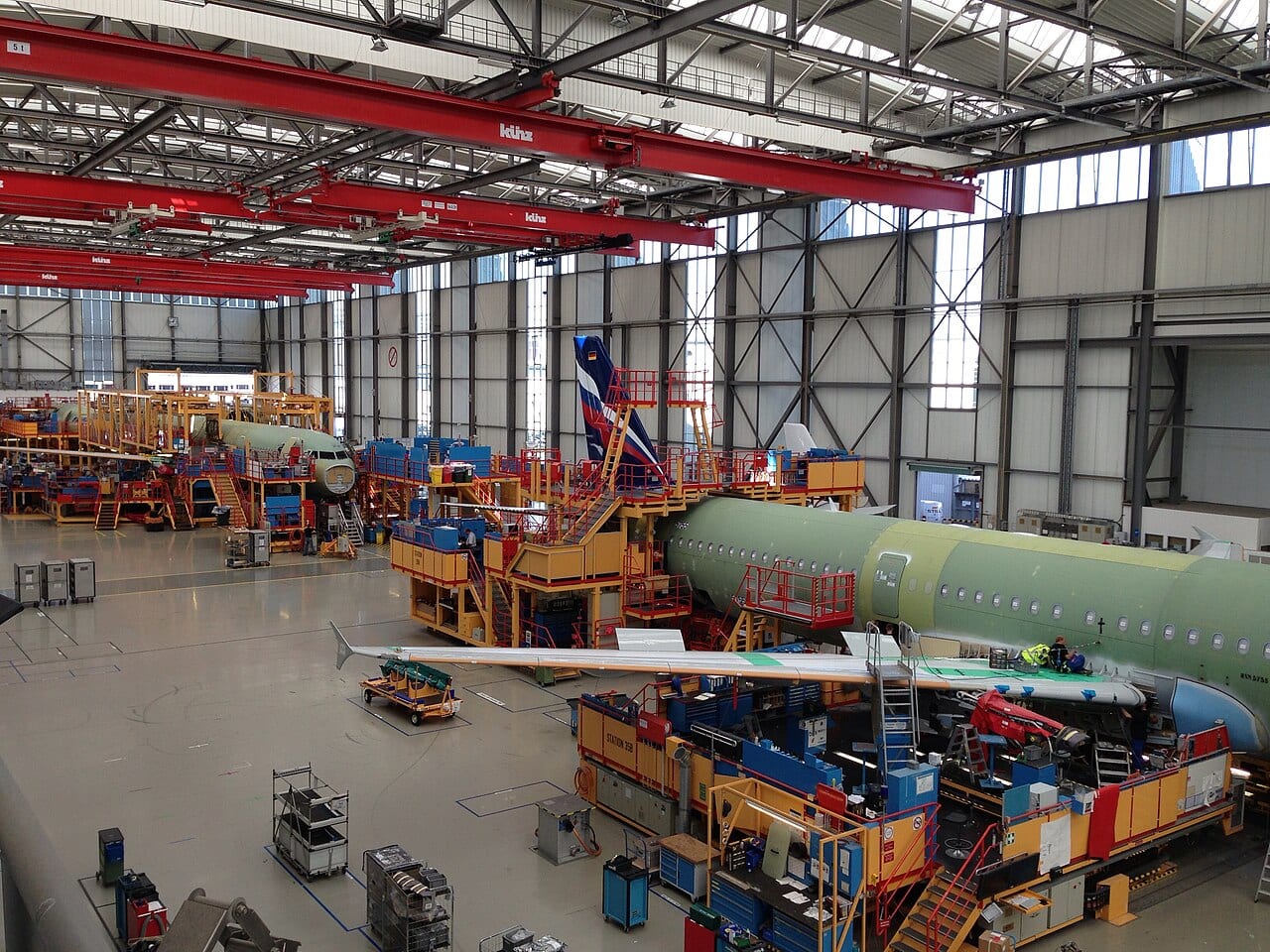
The 2020 downturn showed who carries that cost when the cycle turns. Boeing started that year with about 160,000 workers worldwide and expected about 130,000 by the end of 20214. That is about 30,000 jobs, as the pandemic grounded air travel.
"This moment is among the most difficult in our more than 100-year history," Chief Executive Dave Calhoun told employees4. Boeing hoped to reach some of the cuts through early retirement and attrition, with 7,000 more layoffs on top.
Boeing Cut 51,000 Washington Jobs by 2004, Then Planned 30,000 More in 2020
Boeing workforce reductions in two periods: Washington state, 1998 to 2004, and company-wide, 2020 to 2021
Each column is one period's job cuts: the first counts Washington state jobs, and the second counts Boeing's planned global cut.
The two counts measure different populations: Washington state jobs in the first downturn, Boeing's global workforce in the second.
Sources: The Seattle Times [3]; NPR [4]. Chart by Ryan Elliott Dennis.
The numbers behind this chart
| Item | Value |
|---|---|
| 1998-2004 (WA) | 51,000 jobs |
| 2020-21 (global) | 30,000 jobs |
History suggests a caution. Goldman's forecast stays abstract until the next recession lands on one factory floor. Boeing supplied two such downturns, years apart134. The hiring stopped both times, and many jobs stayed lost.
Workers inside today's boom deserve that history now. It beats reading it in a layoff notice. The Signal, AI Lately's daily email, tracks the hires, the cuts and the filings behind each one, sent free every morning. Subscribe, and read the next cycle while it opens.
Sources
- Nick Lichtenberg, "AI could displace one in 11 workers, Goldman says, but the layoffs are likely waiting for a recession," Fortune, Oct. 22, 2026, https://fortune.com/2026/10/22/goldman-sachs-forecast-how-many-jobs-lost-to-ai-9-percent/
- Tabitha Reeves, "Defense Firms Plan Big AI Investments Amid Labor Challenges, Report Says," National Defense Magazine, Oct. 1, 2026, https://www.nationaldefensemagazine.org/articles/2026/10/1/investments-in-automation-rise-while-labor-shortages-persist
- Dominic Gates, "The Decline of Boeing Jobs," The Seattle Times, Apr. 17, 2005, https://www.seattletimes.com/seattle-news/the-decline-of-boeing-jobs/
- David Schaper, "Citing 'Devastating' Pandemic Impact, Boeing To Lay Off 7,000 More Workers," NPR, Oct. 28, 2020, https://www.npr.org/sections/coronavirus-live-updates/2020/10/28/928884032/citing-devastating-pandemic-impact-boeing-to-lay-off-7-000-more-workers
- Frizz Flake, "Aviation Expects a Hiring Boom. AI Could Change the Jobs Behind It," Deseret News, Oct. 20, 2026, https://www.deseret.com/u-s-world/2026/10/20/airbus-announces-244-million-new-workers-needed-in-aviation-over-next-two-decades/