
Ramp and Revelio Labs tracked 21,559 U.S. companies for five years. The window ran from January 2021 through February 20261. Heavy spenders on AI tools grew headcount 10.2 percent over the next two years. They hired 12 percent more entry-level workers in that same span.
Light spenders stayed flat on both counts. Ramp's lead economist, Ara Kharazian, built the study. He worked with Ryan Stevens, also of Ramp, and Lisa Simon, Revelio Labs' chief economist1.
Their finding answers a question hanging over this year's AI budget meetings. Does spending more on AI mean fewer new hires? Or more?
Companies that spend the most on AI keep growing their staff. They add beginners faster than companies that dabble. A separate study of national payroll data complicates that picture.
It finds young workers losing ground inside AI-exposed jobs. The debate had already drawn national coverage before Ramp's paper landed3.
The Spending Line That Splits Winners from Also-Rans
A tip that circulated this summer got the line wrong. One widely shared write-up put the heavy-spender threshold at $100 a month per worker4.
Ramp's own paper sets that $100 figure differently. It is the bar for counting as an AI adopter at all. The paper measures it across the whole company, before anyone divides by headcount1.
Heavy AI Spenders Pay $33.67 a Worker, Light Spenders $2.78
Average monthly AI spend per employee in the first three months after adopting, U.S. firms on Ramp's card and bill-pay data
Each column is one group's average dollar spend per worker per month in its first three months of sustained AI use.
Source: Ramp Economics Lab [1]. Chart by Ryan Elliott Dennis.
The numbers behind this chart
| Item | Value |
|---|---|
| Light spenders | $2.78 |
| Heavy spenders | $33.67 |
The real split sits lower. Heavy spenders averaged $33.67 per worker per month. That was in their first three months of sustained AI use.
Light spenders averaged $2.78. That is about a twelfth as much1. Their total headcount slipped 0.6 percent and their entry-level hiring fell 1.7 percent, moves too small to count as real change.
Kharazian's team linked Ramp's card and bill-pay records to Revelio Labs' payroll data, a match covering all 21,559 firms1. Only firms above the higher line added headcount. "Firms making the largest AI investments grow employment by roughly 10% following adoption, while low-intensity adopters see no statistically significant change," the paper states.
Gains showed up slowly. Hiring stayed flat for six to twelve months after adoption. Then it compounded, as firms settled into using the tools1.
A firm that checked its headcount after one quarter saw a flat line. It would have given up too soon.
Who Grew, and Where
Growth touched every part of the company alike. Sales headcount at heavy spenders rose 10.3 percent, administrative staff grew 7.8 percent, and customer service added 6.3 percent1.

Heavy AI Spenders Grow Headcount 10 Points More Than Light Spenders
Two-year change in headcount after AI adoption, by spending group and category, same U.S. firms
Each row compares one measure of headcount: the blue dot is the light-spending group, the magenta dot is the heavy-spending group, and the rod is the gap between them.
Source: Ramp Economics Lab [1]. Chart by Ryan Elliott Dennis.
The numbers behind this chart
| Item | Light spenders | Heavy spenders |
|---|---|---|
| Total headcount | −0.6% | 10.2% |
| Entry-level headcount | −1.7% | 12% |
| Manager-plus headcount | 1% | 6.7% |
Engineering grew 7.3 percent. Entry-level engineering alone grew 6.3 percent.
Manager-level headcount at heavy spenders rose too, growing 6.7 percent, smaller than the entry-level jump1. Entry-level workers grew into a bigger share of the heavy-spending firms. At light spenders, the opposite happened.
One sector carried the clearest signal: heavy spenders in Information, which covers software, internet and media firms, grew headcount 13.4 percent1.
It was the only sector where the gain cleared a statistical bar on its own. Professional and technical services showed a smaller, shakier version of the same pattern.

Lisa Simon built the workforce side of the match. Revelio Labs' seven-point seniority scale let the paper split entry-level headcount from managers. Most payroll surveys skip that kind of detail1.
The Case Against the Good News
Kharazian and his co-authors raise their own flag first. Adopters already run bigger, more technical and faster-growing companies. That was true before they bought a single AI tool1. A simple count of adopters against holdouts would credit AI for growth the company already had.
Their design solved that problem: they compared heavy spenders against firms in the same tier that had yet to adopt1. The design leaves out firms that skipped AI altogether.
Three of eleven pre-adoption checks still flagged a gap for the heavy-spending group. Fewer checks flagged a gap for light spenders.
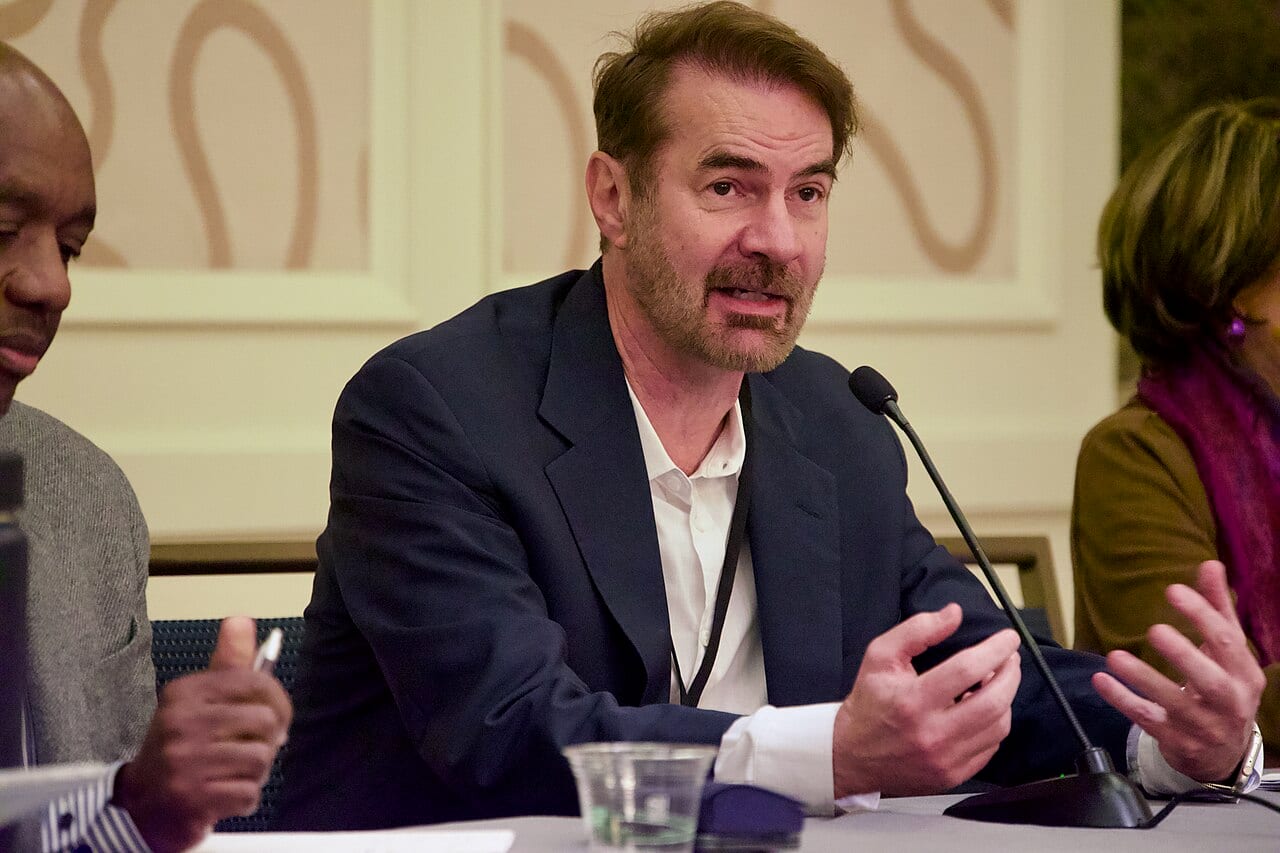
Erik Brynjolfsson reads the national numbers differently. The Stanford economist tracks ADP payroll records. They cover millions of workers5.
His team found a gap for workers 22 to 25 in the most AI-exposed jobs. Their employment sits 19 percent below where it would be, had it kept pace with less-exposed peers. That gap has widened steadily since the researchers first measured it in 20255.
"We are flying blind into one of the most consequential periods in world history," Brynjolfsson told Fortune2. His paper calls its own finding a descriptive pattern. It falls short of proof that AI causes the gap. Kharazian's team gives its own result the same caution5.
Both studies measure real companies rather than predictions about which jobs AI might touch. They disagree because they count different things. Ramp and Revelio Labs track firms that bought AI tools and kept growing. Brynjolfsson's team tracks young workers already inside jobs AI reaches, at adopters and holdouts alike.
What to Do
Check where your own company sits. Tally what it spent on AI last year and divide by headcount. Compare the result with $33.67 a month, the line in Ramp's data between firms that grew and firms that stayed flat.
Read entry-level hiring as a lagging signal, if you run a hiring plan. Heavy spenders took six to twelve months after adoption before beginner hiring picked up. A flat quarter right after rollout says little on its own.
Job seekers should ask how long a company has run its AI tools. That question matters more than whether it uses them at all. The months after rollout are where the beginner jobs showed up in Ramp's data.
By the Numbers
- $33.67: average monthly AI spend per employee among heavy spenders, in their first three months of sustained use1.
- $2.78: the same figure for light spenders, about a twelfth as much1.
- 21,559: U.S. firms Ramp and Revelio Labs tracked from January 2021 through February 20261.
- Entry-level headcount at heavy AI spenders rose 12 percent over two years, while light spenders held flat1.
- Heavy spenders in the Information sector grew headcount 13.4 percent, the only sector where the gain reached statistical significance on its own1.
- 19 percent: the employment gap for workers 22 to 25 in AI-exposed jobs nationwide, measured through ADP payroll records through June 20265.
What to Watch
Ramp's team plans to track later adoption cohorts1. Brynjolfsson's group updates its AI Economic Indicators dashboard every month. The 19 percent gap for young workers will move before this debate settles5. Watch whether entry-level gains spread past Information into sectors with lower adoption today, the spread that will decide how far this pattern travels.
Sources
- Ara Kharazian, Lisa Simon, Ryan Stevens, "A New Look at AI's Impact on Jobs: Firm-Level AI Spending and Workforce Adjustment," Ramp Economics Lab, June 30, 2026, https://ramp.com/data/ai-jobs-impact/paper
- Nick Lichtenberg, "'It's not going away': The Stanford economist who called the AI entry-level jobs crisis early has the receipts," Fortune, June 27, 2026, https://fortune.com/2026/06/27/what-is-ai-impact-entry-level-jobs-stanford-adp-canaries-brynjolfsson-richardson/
- Rebecca Bellan, "The AI jobs debate just got messier," TechCrunch, June 29, 2026, https://techcrunch.com/2026/06/29/the-ai-jobs-debate-just-got-messier/
- Nilesh Christopher, "Research Suggests Jobs May Be Safer at Companies That Embrace AI," CPA Practice Advisor (Los Angeles Times/TNS), July 7, 2026, https://www.cpapracticeadvisor.com/2026/07/07/research-suggests-jobs-may-be-safer-at-companies-that-embrace-ai/186281/
- Erik Brynjolfsson, Bharat Chandar, Ruyu Chen, "Canaries in the Coal Mine? Six Facts about the Recent Employment Effects of Artificial Intelligence," Stanford Digital Economy Lab, August 12, 2026, https://digitaleconomy.stanford.edu/publication/canaries-in-the-coal-mine-six-facts-about-the-recent-employment-effects-of-artificial-intelligence/