

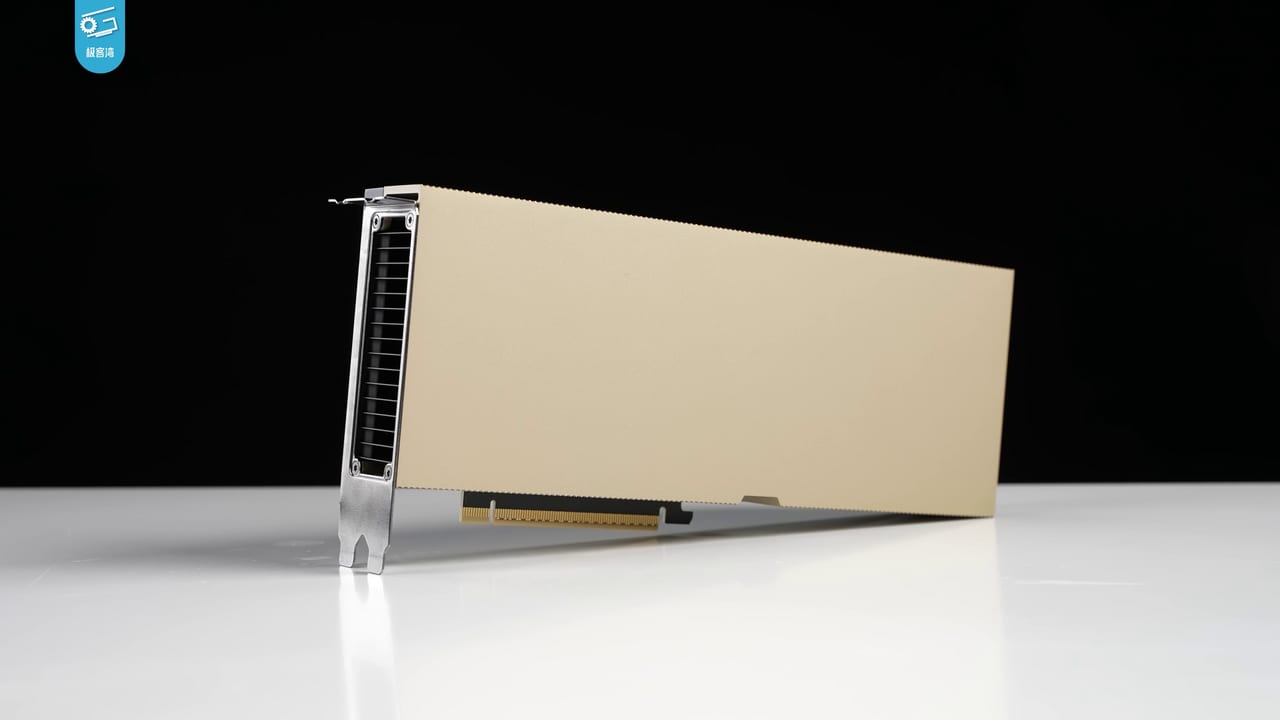
Inception Labs released a new coding model on Oct. 19, 2026, and named it Mercury 31. The company says it answers several times faster than Claude Haiku 5.5 or GPT-6 Luna, for a fraction of the price. Most chatbots write one word after another. Mercury 3 drafts a whole answer at once, then polishes every word together4.
The launch price undercuts rival models by a wide margin1. A new account also gets a free block of tokens, enough for a real test before paying anything5.
One day after launch, the speed claim carried only Inception's own measurement2. An independent coding test found a steeper problem. The new model falls behind once a job runs long3.
A Model That Drafts All at Once
Stefano Ermon, a Stanford professor, co-founded Inception Labs6. He serves as its chief executive. The company shipped its first diffusion model under the Mercury name the year before1.
A standard chatbot guesses the next word, checks it, then guesses the next one. Diffusion works differently. It starts with a rough, noisy draft of the whole reply. Then it cleans up every word together, a few passes at a time4.
Inception calls this its largest Mercury yet. The model's memory for a conversation grew sharply too1. [[photo:stanford-campus]]
Price, Access and a Catch
The new model answers through Inception's own interface, through OpenRouter, Baseten and Vercel1. An endpoint built to match a popular rival's means existing code plugs in as is5. A browser chat sits at chat.inceptionlabs.ai.
Short, fast turns in an agent loop suit it best. A tool calls the model several times inside one conversation4. One developer's test showed a connection and a full chat turn, each landing inside a couple of seconds.
Inception discounted the launch price steeply off its regular rate1. As of Oct. 20, 2026, that price still holds at ten cents and thirty-five cents per million tokens. Inception also cut the price of reused, cached text even further. [[photo:jensen-huang-stanford]]
A catch sits beside the discount. Existing customers on the two older Mercury versions keep access for a few more weeks5. Then they must move to the new model. The speed lead over rivals also rests on Inception's own test, run on hardware the company left unnamed2.
Waiting on an Outside Check
Gideon Frost, who writes OrcaRouter, checked Mercury 3's claims the day after launch2. He found gaps. "As of October 20, 2026, Artificial Analysis has no Mercury 3 page: its model index still lists Mercury 2.5 and Mercury 2, and the Mercury 3 URL returns nothing," Frost wrote.
Artificial Analysis runs public benchmarks that most labs submit their models to for an outside score. Frost's complaint sits beside that gap. Inception named the hardware only as "NVIDIA GPUs," leaving out the batch size and the effort setting2. Repeating the test, then, means guessing those settings.
Stefano Ermon, Inception's co-founder, stands behind the number. "Mercury 3 is over 40 times larger, significantly more capable, and still runs at over 1,000 tokens per second," Ermon said1. Inception's own post calls Mercury 3 an improvement on GPT-6 Luna and Claude Haiku 5.5 across many tests, leaving every one of them unnamed.
Frost drew a line between testing Mercury 3 and trusting it. "For a latency-bound workload with a human or an escalation path in the loop, that is enough to justify a week of evaluation. For anything where a wrong answer is expensive and unmonitored, it is not yet enough to justify a migration," he wrote2.
What an Outside Test Found
Bito, a code-review company, tested Mercury 3 against Claude Haiku 5.5 and Claude Opus 5.53. The test split tasks into two groups. One held quick, well-defined edits. The other held long jobs that run several steps in a row. [[photo:amodei]]
Quick edits favored the new model. Mercury 3 matched Claude Haiku 5.5's accuracy almost exactly3. It cost roughly a quarter of Haiku's price, and finished each task in under a minute.
Long, multi-step jobs told a different story. Mercury 3 solved the fewest of the three, cost the least, and finished the fastest3. Claude Opus 5.5 solved the most, cost the most by a wide margin, and took the longest to answer. Haiku 5.5 landed between the two on every measure. [[chart:mercury-long-task-accuracy]] [[chart:mercury-cost-vs-accuracy]]
Amar Goel, Bito's co-founder and chief executive, drew the line a reader should weigh. "For quick lookups and small, well-defined edits where a person is waiting on each answer, yes, the speed is real," Goel wrote3. He named the harder case too. "For multi-step coding where the model has to work out what's wrong, plan a change and get it right, not yet," Goel wrote.
Who Should Pick Mercury 3
Curiosity, a company that builds AI workspace tools, tested the new model the day it shipped4. Its engineering blog clocked the connection in under a second. A full chat turn with tool calls took a couple of seconds.
The post named three jobs for Mercury 3: a tool-calling assistant, a support reply while a customer waits, and a short-step agent loop4. It also named the limit. The model still awaited an independent test. So the post told readers to run their own prompts before switching a production assistant. [[photo:call-center]]
A reader choosing between the two faces a real trade. Claude Haiku 5.5 costs about the same on short tasks and solves slightly more of them3. On long tasks, Haiku 5.5 costs more, yet finishes noticeably more of the job.
What to do
Try Mercury 3 first on fast, low-stakes jobs3. Quick edits, chat replies, a tool-calling loop where a person checks the result all fit. A free block of tokens covers a real test before any purchase order5.
Keep a slower, more accurate model in the loop for long, multi-step work2. Wait on an outside lab to post its own score3. Check Artificial Analysis for a Mercury 3 page before trusting the speed number on its own.
Anyone still on the two older Mercury versions should plan the move soon5. Inception retires both on Nov. 15, 2026.
By the numbers
- 1,068 tokens a second: Mercury 3's claimed speed on Nvidia GPUs, unconfirmed by Artificial Analysis a day after launch12.
- $0.10 and $0.35: Mercury 3's launch price per million input and output tokens, half the regular $0.20 and $0.701.
- 65 percent and 87 percent: Mercury 3's and Claude Opus 5.5's accuracy on Bito's long coding test3.
- $0.48, $0.69 and $5.42: the cost of that same long task for Mercury 3, Claude Haiku 5.5 and Claude Opus 5.53.
- 76 percent and 79 percent: Mercury 3's and Claude Haiku 5.5's accuracy on Bito's short-task test, at $0.049 and $0.009 a task3.
- 5.8 minutes and 17.2 minutes: Mercury 3's and Claude Opus 5.5's time on the long task3.
- Nov. 15, 2026: the day Inception retires Mercury 2 and Mercury 2.55.
- 1 million tokens: Mercury 3's context window, up from 260,000 in Mercury 2.51.
What to watch
Watch Artificial Analysis and other public benchmark sites for the first outside Mercury 3 score2. Frost's gap closes the day one posts. A later version may close the accuracy gap too, the common pattern in a model's first weeks. The surest sign will be which price buyers choose to pay for real work.
Sources
- Inception Labs, "Diffusion at Scale: Introducing Mercury 3," Inception Labs, Oct. 19, 2026, https://www.inceptionlabs.ai/blog/introducing-mercury-3
- Gideon Frost, "Mercury 3: 1,068 Tokens a Second, and No Benchmarks," OrcaRouter, Oct. 19, 2026, https://www.orcarouter.ai/blog/inception-mercury-3
- Amar Goel, "Inception Mercury 3 Benchmark: How a Diffusion Language Model Does at Coding," Bito, Oct. 20, 2026, https://bito.ai/blog/inception-mercury-3-diffusion-model-coding-benchmark/
- Rafael, "What a Diffusion LLM Is, and What Mercury 3 Is Like to Run in a Workspace," Curiosity, Oct. 19, 2026, https://blog.curiosity.ai/blog/2026-10-mercury-3-diffusion-llm
- Jonas Reeve, "Inception Releases Mercury 3, Its Flagship Diffusion LLM," Unite.AI, Oct. 19, 2026, https://www.unite.ai/inception-releases-mercury-3-its-flagship-diffusion-llm/
- Dealroom, "Why Diffusion Models Could Win AI Inference — Inception's Stefano Ermon," Dealroom, Sept. 18, 2026, https://dealroom.co/news/talk-N1rjtDs8blY-why-diffusion-models-could-win-ai-inference-inceptions-stefano-ermon/