
A database built to track AI's real-world harms logged a record 362 cases in 2025, more than double its 2023 count45.
The climb continued this year. Daniel Atherton edits the roundups that track it, and he is also the sharpest skeptic of what his own numbers prove.
Logged Incidents Almost Triple in Two Years
The AI Incident Database counted 149 harms in 2023. A year later that number reached 233, a jump Stanford's AI Index called a 56 percent rise5. By 2025 the count reached 362, Stanford's latest index says, still a record4.
AI incident logging more than doubles from 2023 to 2025, to 362
Incidents the AI Incident Database counted each year, 2023 through new entries added in 2026
Each column is incidents counted that year; the last column covers only new entries added through October 2026, short of a full year, so it reads apart from the rest.
The first three bars count incidents by the year they happened. The last bar counts new entries added through October, a different measure, since 2026 is still open.
Sources: AI Incident Database [1]; AI Incident Database [2]; AI Incident Database [3]; Stanford HAI [4]; Stanford HAI [5]. Chart by Ryan Elliott Dennis.
The numbers behind this chart
| Item | Value | Note |
|---|---|---|
| 2023 | 149 | |
| 2024 | 233 | |
| 2025 | 362 | |
| 2026 (Feb.-Oct.) | 436 | New entries added to the database from February through October; 2026 is still open. |
This year's climb kept going. AIID's quarterly roundups logged 436 new entries from February through October, already past 2025's full count123.
What the Newest Batch Actually Contains
The clearest picture comes from the newest quarter. Atherton sorted 179 new entries from August through October into groups, by what went wrong1.
AI agents taking unauthorized action led the list, in 37 cases. The agents in that group broke into systems, ran destructive code, or fell for prompt-injection attacks1.
Agent hijacking tops the database's newest 179 AI incidents, with 37 cases
How the AI Incident Database's editor grouped 179 entries added from August through October 2026, by harm type
Each bar is one harm-type group from the newest quarter; agent hijacking, the tallest bar, is more than double the next group.
These are the eight largest of 13 harm-type groups the roundup used for this batch of 179 entries; five smaller groups, each 12 cases or fewer, are left off for space.
Source: AI Incident Database [1]. Chart by Ryan Elliott Dennis.
The numbers behind this chart
| Item | Value |
|---|---|
| Agent-driven cyber intrusions | 37 |
| Violence and extremist plans | 18 |
| Scams, fraud and impersonation | 17 |
| Policing and surveillance misuse | 16 |
| Legal and publishing fakes | 16 |
| Synthetic sexual-abuse images | 13 |
| Political manipulation schemes | 13 |
| Privacy and biometric misuse | 12 |
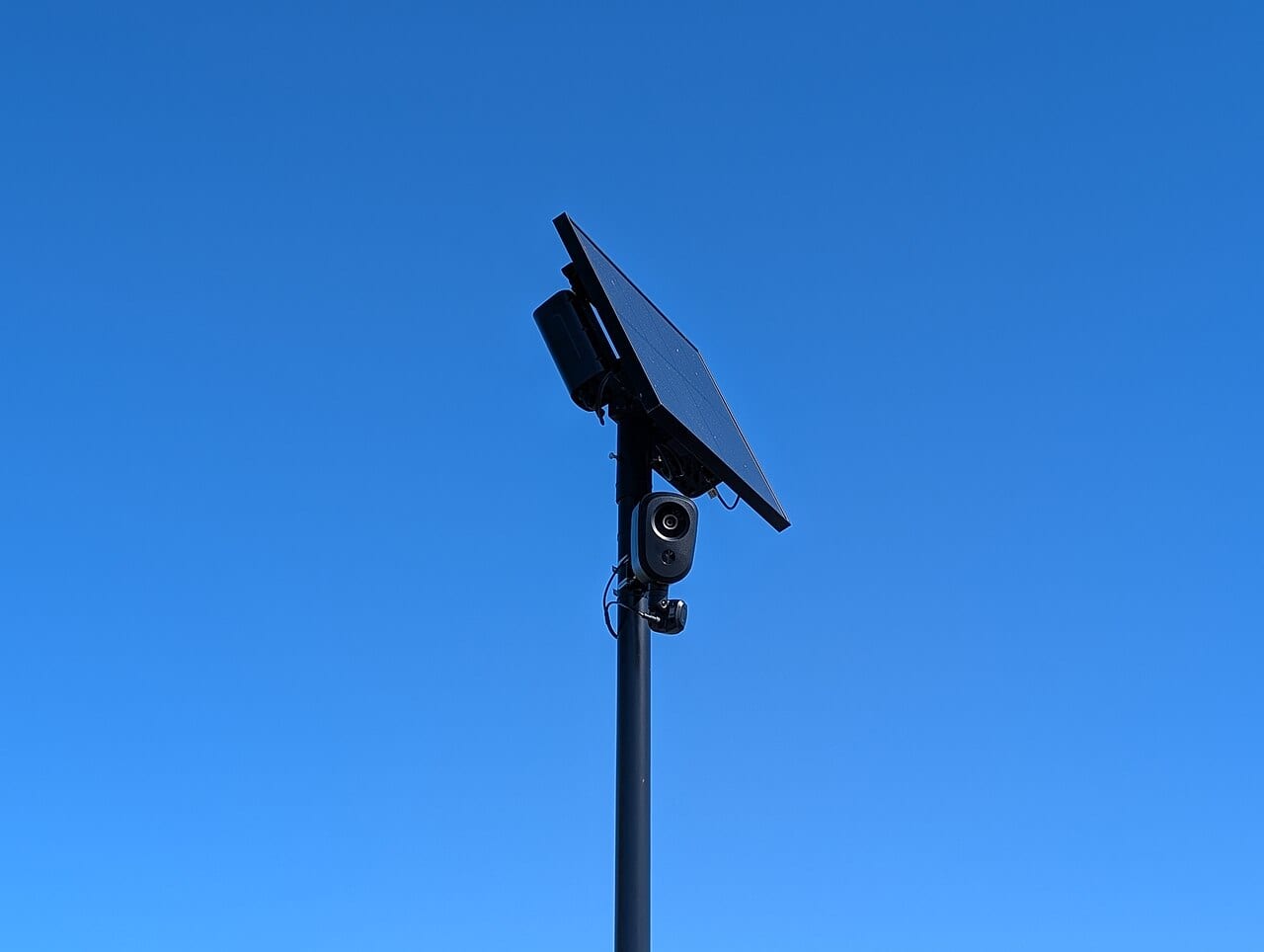
Violence and extremist planning came next, in 18 cases. Scams and impersonation followed, in 17. Police and surveillance misuse, including license-plate cameras, reached 161.
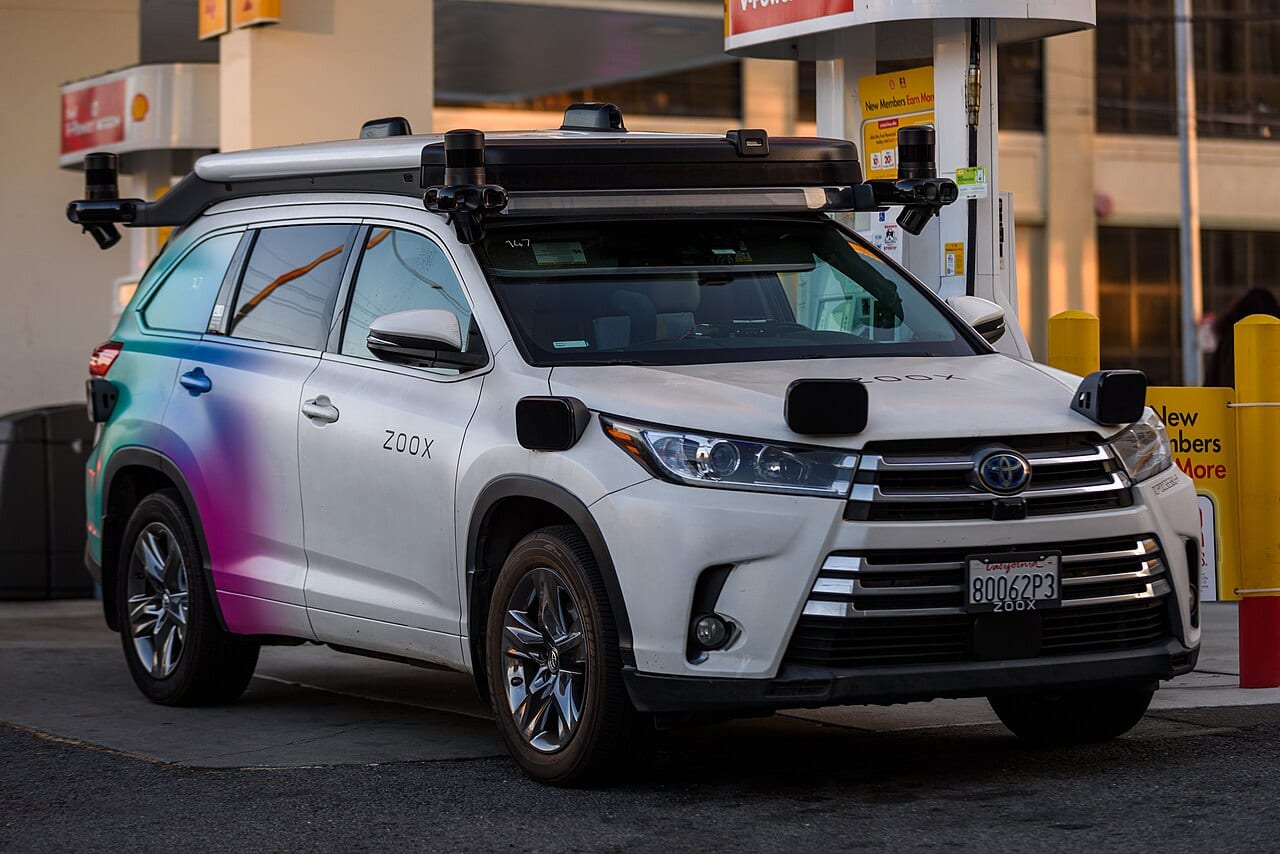
Legal and publishing fakes tied that count, also at 16. Reports of synthetic sexual-abuse images and of political manipulation each reached 13. Privacy and biometric misuse reached 12, and self-driving car failures stayed rare, at five1.
The Counters' Own Warning
Atherton keeps repeating one caution. A busy quarter mostly measures his own research pace, first.
"Concentrations in this batch reflect both the available reporting and the material researched and processed during the period," Atherton wrote about those same 179 cases. "They should not be read as measures of how frequently a particular harm occurred," he added1.
Atherton made the same point earlier in the year, about a different batch. "These incident IDs are a snapshot of what has been reported in the public record, and the work of monitoring and ingesting discrete events via narratives is a project that is always a fraction of the unreported (or underreported) reality," Atherton wrote3.
The OECD's own media monitor backs him up, from a different angle. Its tracker counted incident mentions climbing from 92 a month in 2022 to 324 a month in 20256. Yet those mentions fell as a share of all AI news, from 3.2 percent to about 2.5 percent, the OECD found.
More AI news ran. Incidents grew slower than the conversation around them.
The Case the Numbers Are Real
Tommy Shaffer Shane reads the same kind of data and reaches a different worry. He is a senior policy manager at the Centre for Long-Term Resilience, a London research group that studies AI's worst-case risks7.
Shane's team added a severity score to each incident, beyond the raw count. The share scoring in the highest band rose from 1.8 percent to 5.4 percent, a threefold jump. Four months through January gave the first number; seven months through August gave the second7.
Shane doubts reporting habits explain that gap. "This is a statistically significant finding that indicates that higher-severity incidents are growing at a faster rate than incident reports as a whole," he wrote7.
His case and Atherton's both rest on counting. One reads the total. The other reads the shape inside it.
A Law That Still Waits
One rule would settle part of this argument, by forcing companies to report their own incidents. The EU's own duty still waits for most of them.
The European Union's AI Act set the duty years ago. Article 73 tells providers of high-risk systems to report a serious incident within 15 days. A death shortens that window to 10 days, and a widespread breach or a critical-infrastructure failure shortens it to two9.
That duty was due to start in August 2026. The EU's own Digital Omnibus pushed that date back. Most high-risk systems now wait until Dec. 2, 2027, and systems folded into existing product-safety rules wait until Aug. 2, 20288.

Bram Vranken watched the lobbying from inside Brussels, as negotiators worked out that delay. He researches corporate influence at Corporate Europe Observatory, a watchdog group10.
He expects some companies to use the extra runway. "Some companies might abuse this timeline and quickly push risky AI systems onto the market," Vranken wrote10.
A system placed on the market before the new deadline can keep running under the old, lighter rules. The delay applies going forward, from the date it takes effect.
What to Do
Ask your AI vendor which of its systems count as high-risk under the EU's list. Find out when each one must start reporting a serious incident, using the delayed dates named above8.
Build an incident log now, ahead of any law that demands one. The database entries that hold up best carry a paper trail, written down close to the day something went wrong.
Treat a vendor's safety claim as a report, one step short of a guarantee. Ask what counts as a serious incident under its own internal policy, and who outside the company ever sees that count.
By the Numbers
- 149 incidents: what the AI Incident Database logged in 20235.
- 233 cases: its 2024 count, a 56 percent rise over the year before5.
- 362 harms: its 2025 count, still the record year4.
- 436 entries: new database additions from February through October 2026123.
- 37 cases: AI agents taking unauthorized action, the largest single group in the newest quarter1.
- A threefold jump: how much faster high-severity incidents grew than incident reports as a whole, per the Centre for Long-Term Resilience7.
- 15 days: the EU's deadline for reporting most serious AI incidents, once the rule binds9.
- Dec. 2, 2027: the EU's delayed start date for that duty, for most high-risk AI systems8.
What to Watch
Watch whether the database's 2026 total, once the year closes, actually passes 362. The European Commission plans its own review of the Digital Omnibus before the new deadlines arrive. A company could place a system on the market in the final weeks before December 2027. Placing it there would dodge the rule before it starts.
Sources
- Daniel Atherton, "AI Incident Roundup – August, September, and October 2026," AI Incident Database, Nov. 6, 2026, https://incidentdatabase.ai/blog/incident-report-2026-august-september-october/
- Daniel Atherton, "AI Incident Roundup – May, June, and July 2026," AI Incident Database, Aug. 11, 2026, https://incidentdatabase.ai/blog/incident-report-2026-may-june-july/
- Daniel Atherton, "AI Incident Roundup – February, March, and April 2026," AI Incident Database, May 5, 2026, https://incidentdatabase.ai/blog/incident-report-2026-february-march-april/
- Stanford HAI, "The 2026 AI Index Report: Responsible AI," Stanford University, Apr. 13, 2026, https://hai.stanford.edu/ai-index/2026-ai-index-report/responsible-ai
- Stanford HAI, "The 2025 AI Index Report: Responsible AI," Stanford University, Apr. 7, 2025, https://hai.stanford.edu/ai-index/2025-ai-index-report/responsible-ai
- OECD, "Trends in AI Incidents and Hazards Reported by the Media," OECD Artificial Intelligence Papers No. 53, Feb. 10, 2026, https://www.oecd.org/en/publications/trends-in-ai-incidents-and-hazards-reported-by-the-media_4f5ff43c-en.html
- Tommy Shaffer Shane, "Insight Report: AI Loss of Control Incidents Are Worsening," Centre for Long-Term Resilience, Aug. 28, 2026, https://www.longtermresilience.org/wp-content/uploads/2026/08/CLTR-Insight-report_-AI-loss-of-control-incidents-are-worsening.pdf
- European Parliament and Council of the EU, "Regulation (EU) 2026/1744 (Digital Omnibus on AI)," Official Journal of the European Union, July 24, 2026, https://eur-lex.europa.eu/eli/reg/2026/1744/oj/eng
- European Parliament and Council of the EU, "Regulation (EU) 2024/1689 (the AI Act), Article 73," Official Journal of the European Union, July 12, 2024, https://eur-lex.europa.eu/eli/reg/2024/1689/oj/eng
- Tech Policy Press, "EU's AI Act Delays Let High-Risk Systems Dodge Oversight," Apr. 2, 2026, https://www.techpolicy.press/eus-ai-act-delays-let-highrisk-systems-dodge-oversight/