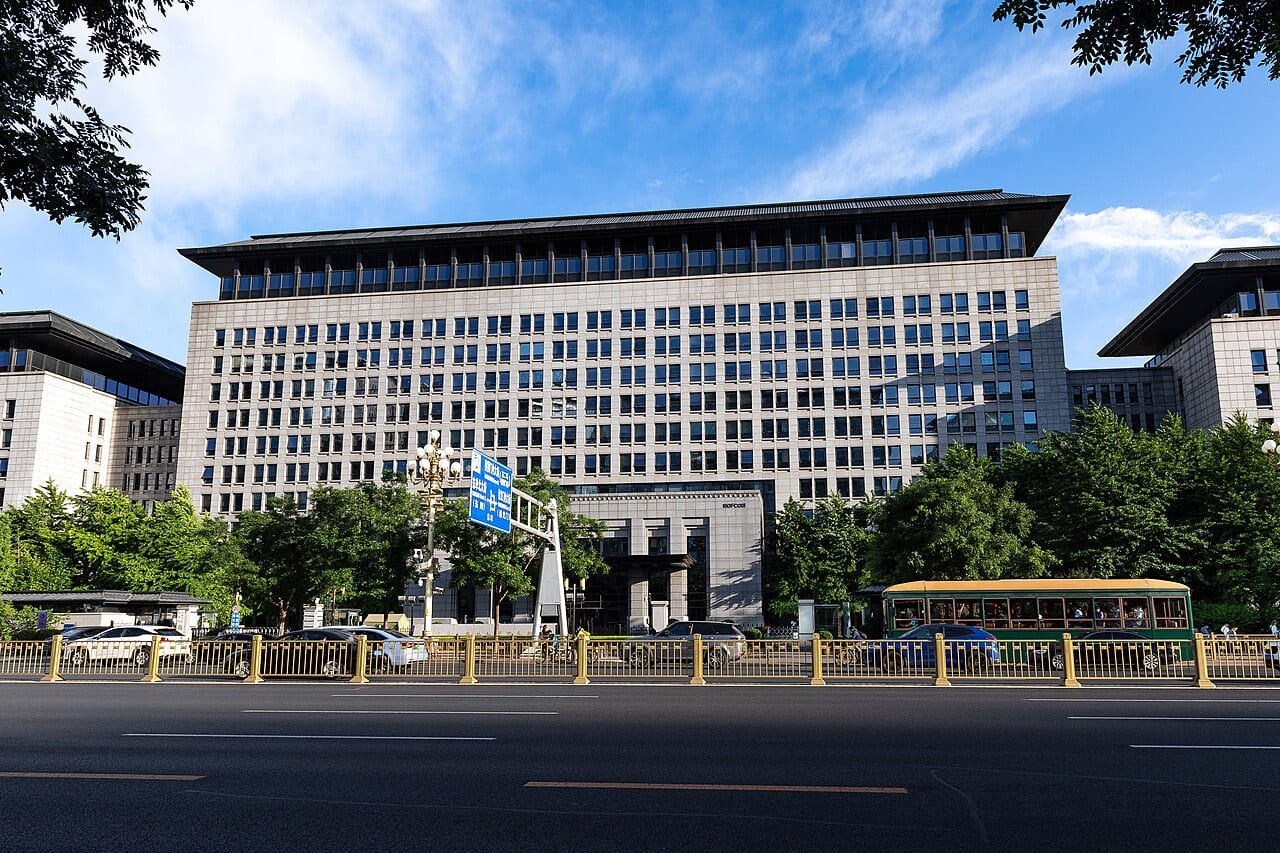
If your company buys, licenses or hosts an AI model built in China, a new rule already covers that deal. China's commerce and science ministries began requiring registration on Oct. 16, 2026. That rule covers 23 AI technologies1. Today, Nov. 15, closes the public window to comment on its final wording.
Exporters must move before that final text even exists. Interim registration applies right now. It covers deals that started before the Oct. 16 announcement1.
DeepSeek and MiniMax already registered under it. Both won clearance to keep selling their models abroad, weeks before today's deadline arrived5. Zhipu, the third firm in the talks, now calls itself Z.ai4.
What counts as a controlled AI export
China first wrote this catalogue in 2001. It has revised the list many times since then2.
The newest draft adds 40 technologies to the catalogue of items prohibited or restricted from export. Artificial intelligence claims 23 of them, the largest share by far. Solar takes 12. Biopharma takes the remaining five1.
Across all three fields, 14 technologies face an outright ban. Another 26 need a license instead.
AI takes 23 of the 40 technologies China adds to its export list
Technologies proposed for China's catalogue of prohibited and restricted exports, by field, announced Oct. 16, 2026
Each block is one field in the draft catalogue, sized by its count of technologies. The magenta block, artificial intelligence, is the largest of the three.
Source: China's Ministry of Commerce [1]. Chart by Ryan Elliott Dennis.
The numbers behind this chart
| Item | Value |
|---|---|
| Artificial intelligence | 23 technologies |
| Photovoltaics | 12 technologies |
| Biopharmaceuticals | 5 technologies |
| Whole | 40 technologies |
Three tests can push an AI model into the "restricted" category. A model trained with at least 10 to the 26th power floating-point operations qualifies. Two trillion parameters trigger it too. A top-ten rank on named benchmarks counts as well6.
Other carve-outs matter just as much. Each one narrows who the rule actually hits. Technology published through open-source release or an academic paper stays outside the rules1. Ordinary access through an API, a web app or software sold as a service stays outside it too2.
A Chinese company can also keep running its own computing centers overseas under an automatic license2.
中华人民共和国商务部MOFCOM@MOFCOM_ChinaMOFCOM Spokesperson’s Remarks on the Revision of the Catalogue of Technologies Prohibited and Restricted from Export
On October 16, 2026, MOFCOM and the Ministry of Science and Technology issued Announcement No. 48 of 2026, soliciting public comments on the revision of the…
Who already felt the registration bite
China's Ministry of Commerce says it consulted Alibaba, ByteDance and Zhipu before publishing the draft. The talks covered limits on overseas model weights and training data4. Officials changed some of the control points after firms raised concerns in that first round. A second round of public comment, the one closing today, followed.
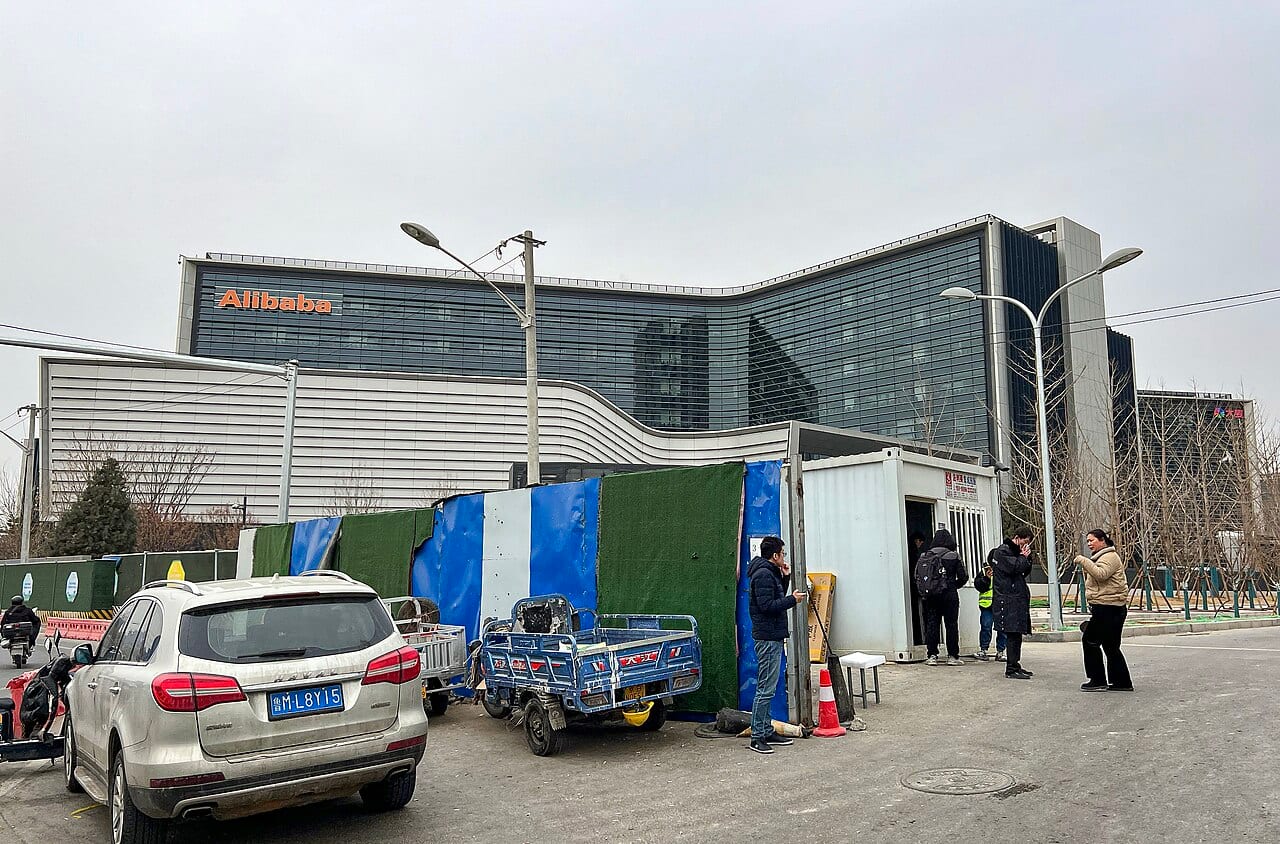
Two companies moved first. State media reported on Oct. 25 that DeepSeek and MiniMax had both completed registration. Each company received clearance to keep operating abroad5. DeepSeek works out of Hangzhou, the same city as Alibaba's headquarters, and MiniMax works out of Shanghai.
China's registration mandate ran 30 days before its own comment period closed
Dated events in China's draft AI export-control catalogue, Oct. 16 to Nov. 15, 2026
Each pin is a dated event. Registration started on announcement day, weeks before today's deadline for public comment.
Sources: China's Ministry of Commerce [1]; TheNextWeb [5]. Chart by Ryan Elliott Dennis.
The numbers behind this chart
| Date | Event |
|---|---|
| Oct. 16, 2026 | Registration begins. MOFCOM and the Ministry of Science and Technology publish the draft catalogue |
| Oct. 25, 2026 | Two labs register. State media reports DeepSeek and MiniMax cleared for overseas use |
| Nov. 15, 2026 | Comment period closes. MOFCOM reviews input before finishing the catalogue |
The two readings of one rule
Gary Ng is a senior economist at the French bank Natixis. He reads the rule as a cost that reaches past China's own borders. "The world is getting more fragmented in trade and investment, but also in access to technologies," he told the AP the day the draft landed3.
Lian Jye Su, a chief analyst at the research firm Omdia, places the move inside a wider pattern. He said it "can be seen as a response to Western countries posting sovereignty requirements on AI, robotics, telecommunications, and other key technologies"3.
China's Ministry of Commerce argues the opposite case: that the rule leaves most firms untouched. "After the relevant measures are formally implemented, the vast majority of AI technologies can still be exported freely," its spokesperson said in the statement the ministry posted on Oct. 282.
Lawyers inside the process read the thresholds with more doubt. Yang Jingru, a partner at the firm Jincheng Tongda & Neal, frames the rule as China finally managing its own exit door. "The US controls the inflow of computing power, hardware and capital, while China is beginning to systematically manage the outflow of models and technological assets," she wrote4.
Liu Jing, a partner at Beijing Dacheng Law Offices, sat in those talks too4. She told Reuters that firms still wanted clearer rules for deciding which models the thresholds actually catch. Alfredo Montufar-Helu, a managing director at the advisory firm Ankura, sees the draft as writing down a shift under way. "The structure the leadership prefers, with IP and R&D kept onshore, and operations and access sold abroad, is the one the market was already converging on," he told Reuters.
What to do
Check every Chinese-origin AI model, chip design or training dataset you use. Match each one against the three thresholds above. A model under two trillion parameters likely stays clear. The same holds below the compute threshold, or outside the global top ten on named benchmarks.
Register now if your deal moves ownership, licenses technology abroad or hands control of a Chinese entity to a foreign owner. MOFCOM's own notice covers a transaction under way exactly as it covers a brand-new one1.
Submit your own comment before the window closes today if your company's deal depends on a threshold the draft leaves unclear. The lawyers who flagged that ambiguity in earlier rounds already got some language changed4.
By the numbers
- 23 of 40: AI items in China's draft catalogue, the largest of three fields covered1.
- Two trillion parameters: one threshold that can push a model into the "restricted" category6.
- 10 to the 26th power: the compute threshold, measured in floating-point operations, that can trigger the same label6.
- 30 days: the gap between the rule's start and today's deadline to comment on it1.
- Two companies: DeepSeek and MiniMax, both registered and cleared for overseas use before the deadline arrived5.
- Three companies: Alibaba, ByteDance and Zhipu, named by the ministry as taking part in those talks4.
What to watch
MOFCOM says it will review every comment before finishing the catalogue2. Watch for the final thresholds it publishes after today. A looser compute or parameter test would pull more foreign deals into scope. Tightening either threshold would shrink the list lawyers are still arguing over.
Watch whether more Chinese labs follow DeepSeek and MiniMax and file before the final rule lands. Their early clearance suggests Beijing wants its biggest AI exporters cleared and selling well ahead of that final text.
Sources
- MOFCOM and the Ministry of Science and Technology, "商务部 科技部公告2026年第48号 就修订《中国禁止出口限制出口技术目录》公开征求意见并对相关技术出口实施临时登记管理," China's Ministry of Commerce, Oct. 16, 2026, https://www.mofcom.gov.cn/zwgk/zcfb/art/2026/art_0a31a3c9ac404f7a9b0e917ce3412997.html
- China's Ministry of Commerce, "MOFCOM Spokesperson's Remarks on the Revision of the Catalogue of Technologies Prohibited and Restricted from Export," posted via X, Oct. 28, 2026, https://x.com/MOFCOM_China/status/2115365345099968569
- Chan Ho-him, "China says it will curb tech exports, including AI, citing national security risks," The Associated Press, Oct. 16, 2026, https://www.pbs.org/newshour/world/china-says-it-will-curb-tech-exports-including-ai-citing-national-security-risks
- Claire Fu, Eduardo Baptista and Laurie Chen, "China's new export curbs draw a line around its AI crown jewels," Reuters, via Taipei Times, Oct. 31, 2026, https://www.taipeitimes.com/News/editorials/archives/2026/10/31/2003866899
- Alina Maria Stan, "DeepSeek and MiniMax cleared to take AI models abroad, state media says," TheNextWeb, Oct. 25, 2026, https://thenextweb.com/news/deepseek-minimax-china-ai-export-controls-overseas
- Chia-Feng Lu, Dawn (Dan) Zhang, Hong Zhang and Sonali Dohale, "China's Proposed Biopharma and AI Technology Export Controls: Pre-Export Registration Already Applies," Greenberg Traurig, Oct. 29, 2026, https://www.gtlaw.com/en/insights/2026/10/chinas-proposed-biopharma-and-ai-technology-export-controls-pre-export-registration-already-applies