Outside investors are pushing a price on Cognition past what the company itself sought. They want to pay $70 billion to $80 billion for the maker of Devin, the AI coding agent. Business Insider reported the offers Oct. 301. Cognition closed its last funding round at $48 billion only six weeks earlier, and talks on the new one remain in an early stage.
Scott Wu, Steven Hao and Walden Yan founded Cognition in San Francisco in 2023. They built Devin to write and test software with little human help. Three years in, investors want to hand their company a price that has climbed three times already this year1.
The Price Six Weeks Can Buy
Cognition's valuation has moved four times in fourteen months. Investors priced the company at $10 billion in September 2025. Devin's revenue ran near $400 million a year back then3.
By May 2026, that figure reached $26 billion. Lux Capital, General Catalyst and 8VC led the round3. September brought a $48 billion round, led this time by Andreessen Horowitz and Accel. Run-rate revenue climbed from $492 million to nearly $900 million in the months between the two raises1.
Cognition's price climbs from $10 billion to as high as $80 billion in 14 months
Cognition's valuation at each funding round or offer, September 2025 to October 2026
Each point is one priced round or reported offer. The October point is an estimate, the midpoint of the $70 billion to $80 billion range investors offered.
The first three points are closed, priced rounds. The October point is an offer Business Insider reported, still short of a completed raise.
Sources: The Next Web [1]; The Decoder [3]; TechCrunch [4]. Chart by Ryan Elliott Dennis.
The numbers behind this chart
| Period | Value |
|---|---|
| Sept. 2025 | $10B |
| May 2026 | $26B |
| Sept. 2026 | $48B |
| Oct. 2026 (estimate) | $75B |
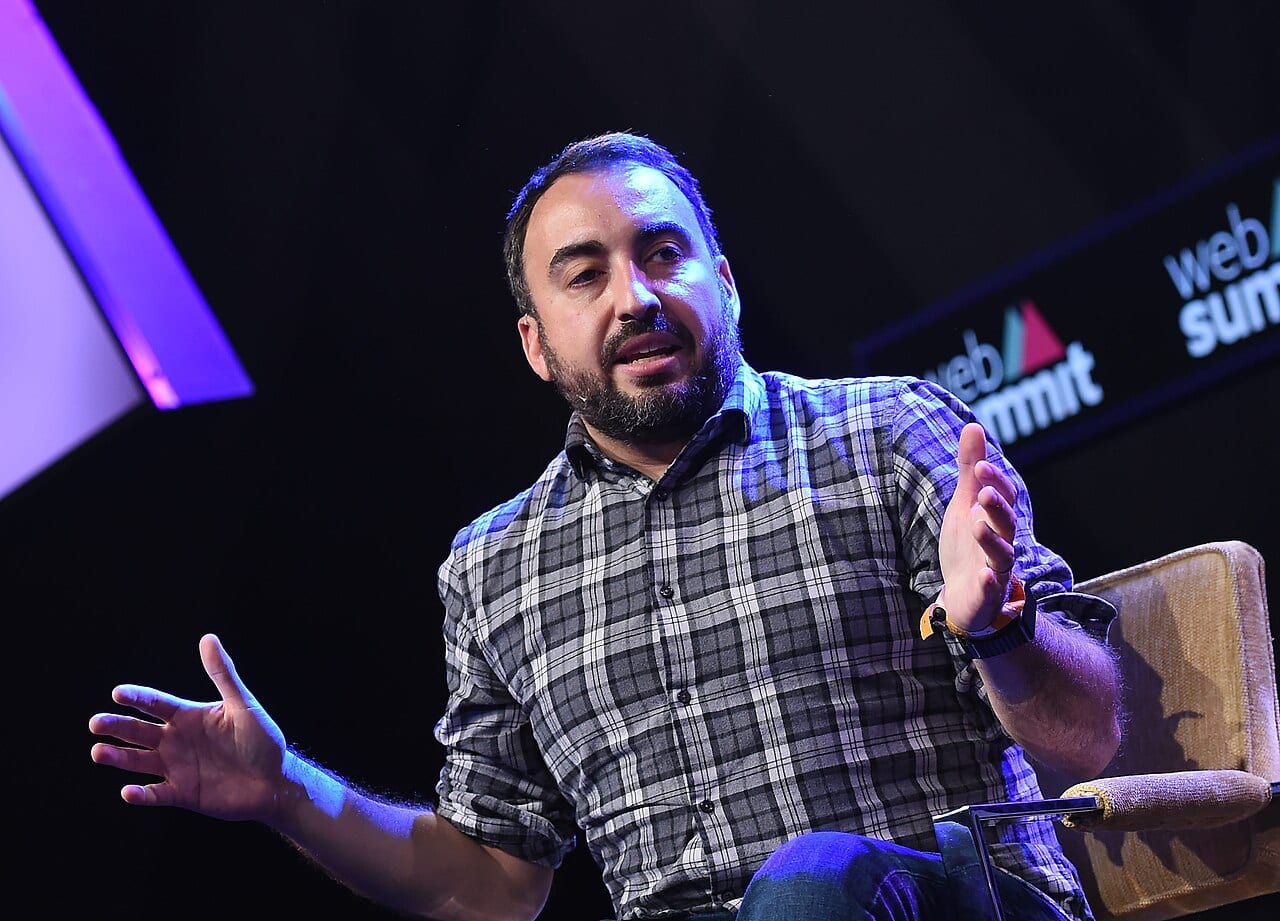
Cognition hired Alex Stamos as chief information security officer the same September month. Stamos once held the top security job at Meta and at Yahoo1. A security hire of that rank reads as a bet on enterprise buyers, the customers who ask hardest about data risk before they sign.
The President's Own Caveat
Russell Kaplan is Cognition's president and a co-founder. He wrote something plainer than a pitch deck this October. Many coding tasks, he said, are "intelligence saturated"2.
"Once any model can do the task well, cost and speed are all that matter," Kaplan wrote2. Read plainly, a smarter model stops winning customers once a model good enough already exists.
That claim cuts against the story that has funded Cognition three times over since last September. Each prior round leaned on a model getting sharper. Kaplan's own words now say that argument runs out of room first.
Kaplan joined Cognition from Scale AI, where he led machine learning and its infrastructure8. He had co-founded a company called Helia and worked in machine learning at Tesla before that. His résumé reads as a believer in capability gains, which gives his caveat extra weight.
The Skeptic's Case
Scott Wu frames Devin as a partner more than a replacement. "When we started building Devin, it's kind of a funny thing, but we really just thought of it as: this is your buddy who helps you build more," Wu said5. He keeps a stuffed animal on his desk as a stand-in for the product.
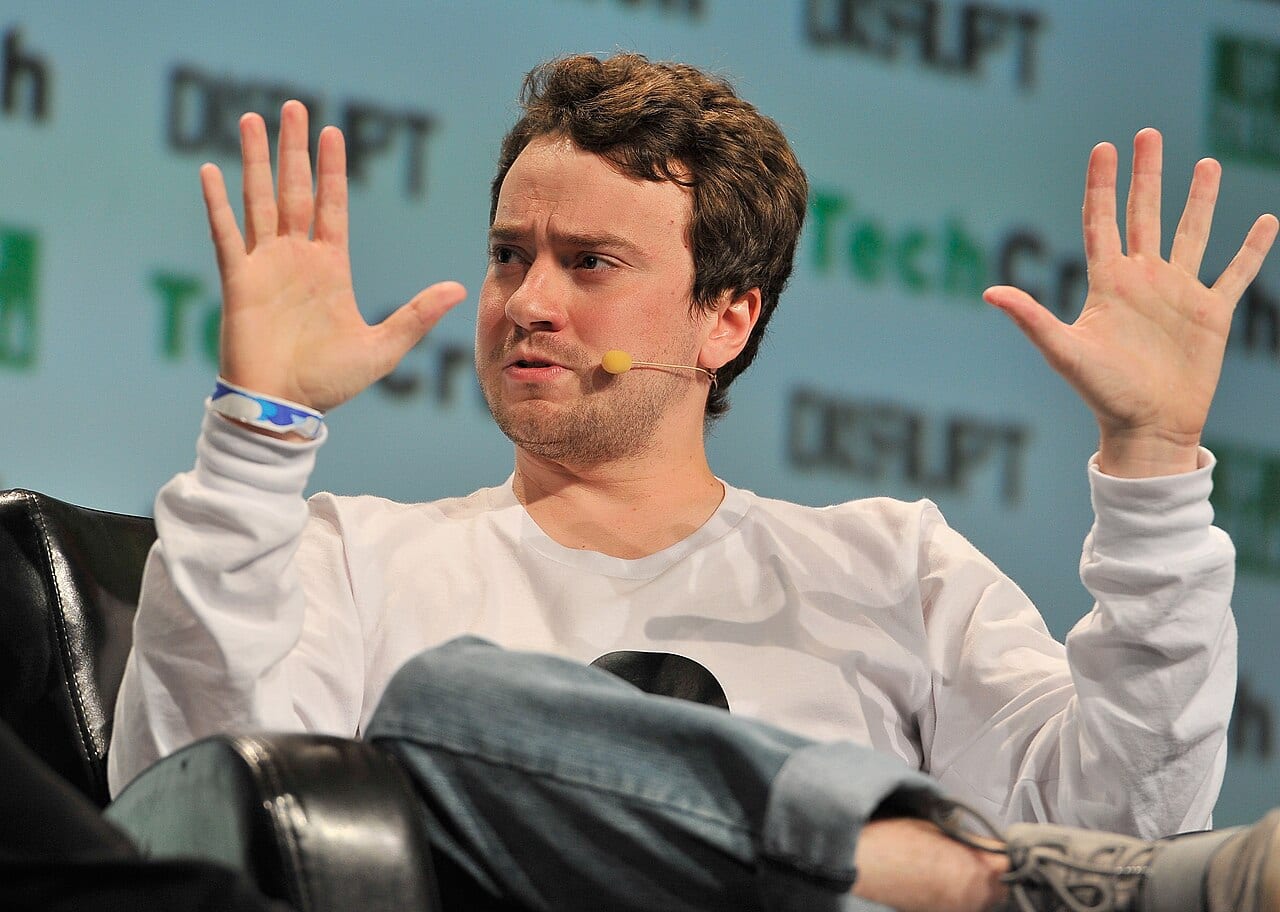
George Hotz reads the same category of product as a trap. The founder of the self-driving company comma.ai spent six months running coding agents on real projects before he wrote his verdict. "I'm calling it now, the adoption of AI agents into software development will be one of the most costly mistakes in the field's history," Hotz wrote6.
Hotz aims his complaint past Cognition alone. It reaches every company selling an agent that writes code, Cognition's rivals included. Anysphere's Cursor sold to SpaceX for $60 billion in June. Cursor's own revenue ran near $4 billion that year7.

Cognition's price runs 53 times revenue, 3.5 times Cursor's multiple at sale
Valuation divided by annualized revenue, each company's most recent priced deal
Each column is one company's price divided by its own revenue. Cognition's bar stands far taller than Cursor's.
Cognition's figure uses its September venture round. Cursor's uses the price SpaceX paid in its June acquisition, an outright sale.
Sources: The Next Web [1]; The Motley Fool [7]. Chart by Ryan Elliott Dennis.
The numbers behind this chart
| Item | Value |
|---|---|
| Cognition at $48B | 53x |
| Cursor at sale | 15x |
Cognition's multiple runs higher than Cursor's did. Revenue of $900 million against a $48 billion price works out near 53 times sales. Cursor sold at 15 times. Investors are paying more per dollar of Cognition's revenue than SpaceX paid for its biggest rival.
What Both Sides Would Need to Be True
Wu's case holds if Devin keeps winning customers on something other than raw model intelligence. Kaplan's own argument says customers now choose that way. Cost, speed and the security hire would need to be doing the work the smartest model once did alone.
Hotz's case holds if the agents themselves keep producing work good engineers still have to rewrite. His own six months of testing found exactly that pattern. This month's reporting stops short of saying Cognition's agent broke it.
A third reading sits between the two. Devin's revenue could keep climbing on cost and speed, the way Kaplan argues. Hotz's quality complaint could stay true at the same time, for the hardest tasks a buyer keeps away from an agent anyway. Both readings survive if customers now sort their own work that way, a split each man's public argument skips past.
What to do
Read any AI coding vendor's pitch for the argument it is actually making. A pitch built on "our model is smarter" answers a question Kaplan says customers stopped asking. Another pitch, built on cost, speed or security, answers the one that remains.
By the numbers
- Cognition's valuation in September 2025 reached $10 billion, against roughly $400 million in annual revenue then3.
- By May 2026 that climbed to $26 billion, in a round led by Lux Capital, General Catalyst and 8VC3.
- September's round priced the company at $48 billion, as revenue neared $900 million1.
- Business Insider reported Oct. 30 offers of $70 billion to $80 billion, weeks after that round closed1.
- That $48 billion price against $900 million in revenue works out near 53 times sales1.
- Anysphere's multiple ran far lower, 15 times, when SpaceX paid $60 billion against $4 billion in revenue7.
- Six months is how long George Hotz tested coding agents on real projects before he published his verdict6.
What to watch
Watch whether Cognition's new round actually closes before the year ends, and at what price. A deal struck nearer $70 billion than $80 billion would say investors heard Kaplan's caveat.
Devin's enterprise customer count matters too. Growth built on cost and speed should show up as more paying companies, beyond a bigger bill from the ones already signed.
Sources
- Katie Roof (Business Insider), "Cognition weighs funding at up to $80bn valuation, Business Insider reports," The Next Web, Oct. 30, 2026, https://thenextweb.com/news/cognition-funding-talks-80bn-valuation-business-insider
- Simon Yoon, "Cognition Co-Founder Says Many Software Engineering Tasks Are 'Intelligence Saturated'," TokenPost, Oct. 20, 2026, https://www.tokenpost.com/news/technology/36306
- Matthias Bastian, "AI coding agent Devin maker Cognition more than doubles its valuation to $26 billion in under nine months," The Decoder, May 27, 2026, https://the-decoder.com/ai-coding-agent-devin-maker-cognition-more-than-doubles-its-valuation-to-26-billion-in-under-nine-months/
- Marina Temkin, "Cognition hits $48B valuation, signaling investors believe AI coding is far from a winner-take-all market," TechCrunch, Sept. 8, 2026, https://techcrunch.com/2026/09/08/cognition-hits-48b-valuation-signaling-investors-believe-ai-coding-is-far-from-a-winner-take-all-market/
- Julie Bort, "Cognition's Scott Wu says AI coding agents shouldn't replace humans," TechCrunch, May 29, 2026, https://techcrunch.com/2026/05/29/cognitions-scott-wu-says-ai-coding-agents-shouldnt-replace-humans/
- George Hotz, "The Eternal Sloptember," George Hotz's blog, May 24, 2026, https://geohot.github.io/blog/jekyll/update/2026/05/24/the-eternal-sloptember.html
- "SpaceX's $60 Billion Cursor Acquisition Changes Everything. Here's Why.," The Motley Fool, June 29, 2026, https://www.fool.com/investing/2026/06/29/spacexs-60-billion-cursor-deal-changes-everything/
- Cognition, "Cognition announces Russell Kaplan joining as President," Cognition on X, Aug. 5, 2024, https://x.com/cognition/status/1820461604586283089