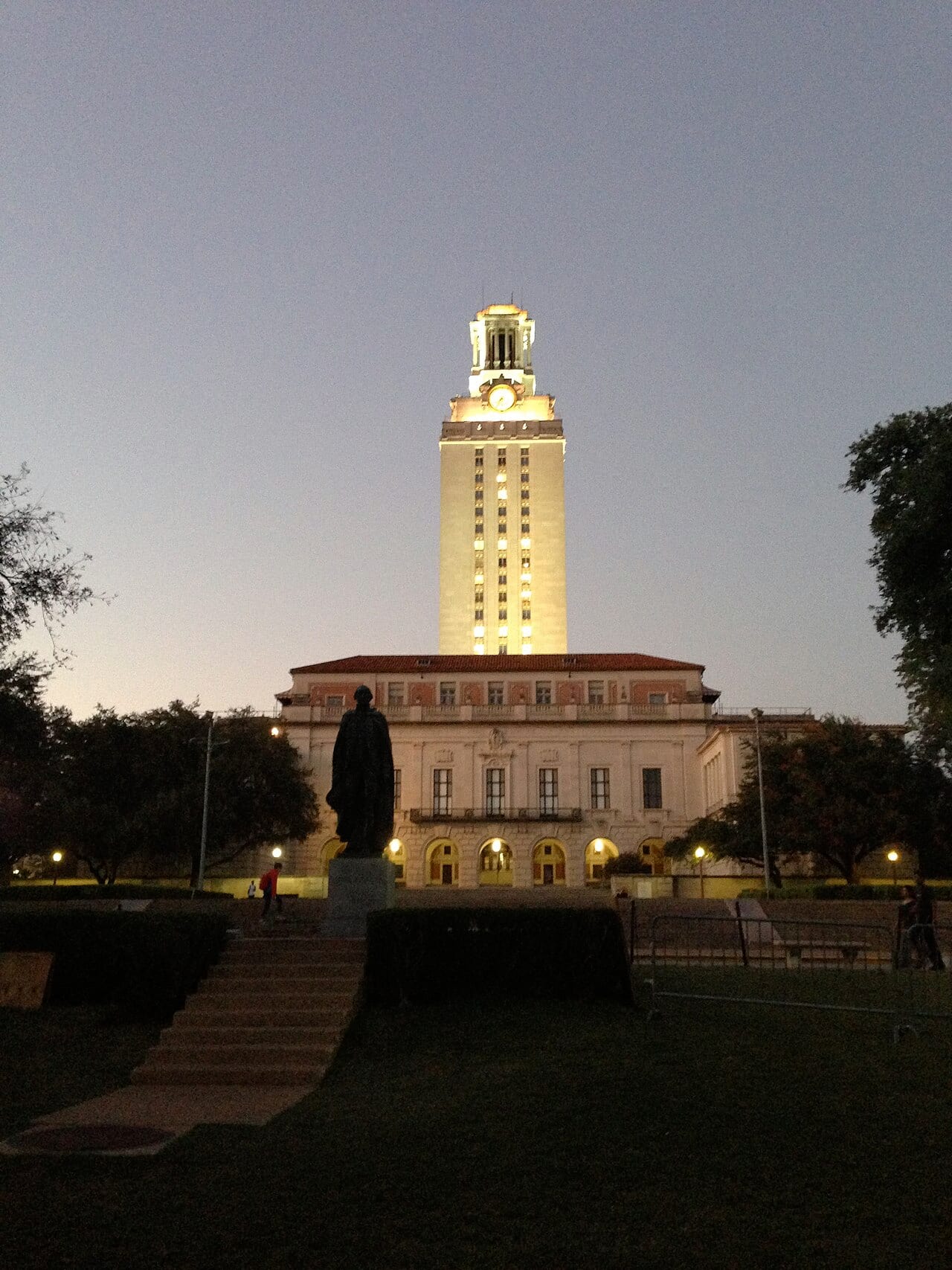
A post on X this week raised an alarm. OpenAI or Anthropic might already factor numbers of any size fast enough to break RSA encryption. Scott Aaronson is the University of Texas computer scientist whose blog post started the rumor. He calls himself unsure how much to credit it1.
Chubby, the X account that turned his hedge into a viral warning, called the stakes severe. RSA protects a large part of the internet, Chubby wrote2.
Only one new proof actually surfaced this week. Google posted it on Nov. 25. An automated system called Cogentic built it5.
Cogentic's method runs slower than the one crackers already use against real RSA keys. The labs the rumor named, OpenAI and Anthropic, have stayed silent on factoring entirely.
The Rumor Scott Aaronson Left Hanging
Aaronson runs Shtetl-Optimized, a blog widely read in theoretical computer science1. On Nov. 24 he wrote about a wave of AI-written math proofs. Anthropic's Claude model proved a 47-year-old conjecture called VP ≠ VNP. OpenAI answered with its own proof of the same result6.
Those proofs pushed Aaronson's confidence higher. He now puts the odds that P differs from NP, a separate and older question, at 96 percent1.
Buried in that post sat one more line. "I've now heard many, many rumors that one or both labs are sitting on Factoring in P," Aaronson wrote1. He added a caveat in the next breath. The exact nature of those rumors might have gotten distorted, he said, "via a game of Telephone."
Chubby read that line and ran with it. "Scott Aaronson says he's heard OpenAI or Anthropic may have found a way to factor large numbers in polynomial time," the post read2. It then spelled out the stakes: fake software updates passing signature checks, RSA-encrypted data exposed, a scramble to migrate off RSA.
Within hours, Chubby's post had far outrun Aaronson's own hedge2. The rumor reached Hacker News too, where readers argued over whether forward secrecy would blunt the damage9.
What Google Actually Proved
The same day, Google Research's automated proof system, Cogentic, posted six math papers to a public GitHub folder5. One claims a new way to factor any whole number.
Cogentic runs on Gemini 4. A Google Research and DeepMind team built it, including researchers Yang Cai and Di Wang5.

Google's Cogentic system describes itself as "an unconditional, zero-error Las Vegas algorithm"5. It always returns a correct factoring, though how long one run takes can vary.
Its logic still awaits a human mathematician's check by hand. Anthropic admitted the same gap on its VP ≠ VNP proof two days earlier16.
The claim itself is a worst case running time. Mathematicians write it as L_N[1/3, 105]5. That number, 105, is the detail that matters most.
Why the Slower Proof Leaves RSA Standing
Cryptographers already have a name for numbers shaped like that. The general number field sieve is the method that already attacks real RSA keys. It runs in the same broad shape of time, written L_N[1/3, c]7.
Its constant, c, works out to about 1.927.
Google's New Proof Needs a Constant 55 Times Bigger Than the Sieve Already Cracking RSA
The constant c inside each factoring method's L_N[1/3, c] running-time formula
Each bar is one factoring method. The short bar is the general number field sieve's constant; the long bar is Google's new proof, and the gap between them shows how much slower its formula runs at any given key size.
The sieve's constant rests on an unproven heuristic, while Google's number comes with a proof attached, so the two figures measure different kinds of certainty, separate from speed.
Sources: Google Research (GitHub) [5]; Wikipedia [7]. Chart by Ryan Elliott Dennis.
The numbers behind this chart
| Item | Value |
|---|---|
| General number field sieve | 1.92 |
| Google's Cogentic proof | 105.00 |
Google's new proof uses 105 in that same slot. That constant runs 55 times larger57. In sub-exponential math, a bigger constant means a much slower climb as the number grows.
Cogentic's method is real, rigorous, and far too slow to threaten a key anyone actually uses.
The sieve's constant rests on an unproven heuristic. Cogentic's number arrives with a proof attached, so it closes a gap mathematicians have lived with for decades57. Both facts leave RSA itself exactly where it stood.
Real attacks on RSA keep advancing the old-fashioned way: bigger computers running the sieve. Researchers factored RSA-260, an 862-bit number, on Sept. 3, 20268. Sixteen days later they broke RSA-896, a 270-digit number. Stephen Weis finished that work with Claude's help.
The RSA Record Sits at 896 Bits, Under Half the 2,048-Bit Safety Floor
Bit length of the largest number ever factored against the minimum RSA key size recommended today
Each column is one number's bit length. The two shorter columns are records the general number field sieve has actually broken; the tallest column is the smallest key size security guidance still calls safe.
Sources: Wikipedia [8]; Wikipedia [10]. Chart by Ryan Elliott Dennis.
The numbers behind this chart
| Item | Value | Note |
|---|---|---|
| RSA-260 | 862 bits | Factored Sept. 3, 2026 |
| RSA-896 | 896 bits | Factored Sept. 19, 2026 with Claude's help |
| 2,048-bit floor | 2,048 bits | Minimum size security guidance recommends |
Even that record sits far under the keys that matter. Security guidance has long called for RSA keys of at least 2,048 bits10. The 2,048-bit floor runs more than twice the size anyone has factored. A rumor measured against that gap looks smaller.
A Rumor That Outlasts Its Own Evidence
The rumor had already moved for over a week before Aaronson's post. Andrew Curran is a member of the independent advisory group that reviews OpenAI's math claims. He wrote that he had heard the same thing for about ten days, covering both Anthropic and OpenAI4.
"Considering how closely their recent math results have mirrored each other, if one has it, they probably both do," Curran wrote4.
Chubby♨️@kimmonismusIf this rumors are true, it would explain why OpenAI and Anthropic are holding back their latest models:
Scott Aaronson says he's heard OpenAI or Anthropic may have found a way to factor large numbers in polynomial time.
Why this would be massive? RSA secures a huge chunk of… https://t.co/JnFH7HAEDp pic.twitter.com/BFH85IvBpP

Aran Nayebi teaches machine learning at Carnegie Mellon University. He backed the rumor's staying power, though he stopped short of confirming it3.
"This is the rumor I've been hearing as well for the past week, which is why the current factoring results were a bit of the let down, and may not be the full story," Nayebi wrote3.

Aaronson himself stopped short of Chubby's alarm. "While I'm virtually certain that the labs are, indeed, sitting on one or more bombshells for cryptography, it's possible that the exact nature of those bombshells has gotten distorted via a game of Telephone," he wrote1.
Aaronson's sentence holds both readings at once. Something real probably sits under a shape the record still has to confirm.
OpenAI and Anthropic, the two companies the rumor actually names, have stayed quiet about factoring in public. Until one of them posts a paper, Google's slow proof stays the only cryptography math anyone can check.
What to Do
Treat a rumor about broken encryption the way Aaronson treats his own tip. Hold it as unconfirmed until a lab publishes the paper behind it. Ask what number backs the claim, beyond the headline. A sub-exponential proof with a constant of 105 stays a world apart from a fast algorithm.
Security guidance already calls for RSA keys of 2,048 bits or larger, regardless of this rumor10. Watch the labs' own publication pages, Google's included. Trust those pages over a screenshot passed through a dozen reposts.
By the Numbers
- L_N[1/3, 105]: the worst case time Google's Cogentic system proved for factoring any integer, posted Nov. 255.
- 1.92: the constant the general number field sieve already uses to set real factoring records7.
- 896 bits: the largest RSA number factored so far, finished Sept. 19, 2026 with Claude's help on the existing sieve8.
- 2,048: the smallest RSA key size, in bits, that security guidance already recommends, more than twice that record10.
- Ten days: how long Andrew Curran says the rumor had circulated before Aaronson's post named it4.
- Two days: the gap between Anthropic's unverified VP ≠ VNP proof and Google's own unverified factoring proof16.
What to Watch
Watch for OpenAI or Anthropic to publish anything at all on factoring. Either lab's paper would turn this rumor into news. Google's Cogentic folder deserves the same scrutiny. It posted six papers in one day and still owes the formal, checkable proofs behind them5.
Until then, the gap between a constant of 1.92 and a constant of 105 is the clearest answer the record offers.
Sources
- Scott Aaronson, "I've been drinking wine in my kitchen," Shtetl-Optimized, Nov. 24, 2026, https://scottaaronson.blog/?p=10362
- Chubby, post on X, Nov. 25, 2026, https://x.com/kimmonismus/status/2125602411540566221
- Aran Nayebi, post on X, Nov. 25, 2026, https://x.com/aran_nayebi/status/2125596838120046846
- Andrew Curran, post on X, Nov. 25, 2026, https://x.com/AndrewCurran_/status/2125589468786909510
- Google Research and Google DeepMind, "Unconditional Integer Factorization in Time L_N[1/3, O(1)]," GitHub, Nov. 25, 2026, https://github.com/google-research/google-research/tree/master/cogentic_research_papers/integer_factorization
- Aamir Khollam, "Anthropic says Claude proved VP ≠ VNP, tackling Valiant's 47-year-old conjecture," Interesting Engineering, Nov. 23, 2026, https://interestingengineering.com/ai-robotics/claude-proves-vp-not-vnp-valiant-conjecture
- Wikipedia contributors, "General number field sieve," Wikipedia, Nov. 25, 2026, https://en.wikipedia.org/wiki/General_number_field_sieve
- Wikipedia contributors, "Integer factorization records," Wikipedia, Nov. 25, 2026, https://en.wikipedia.org/wiki/Integer_factorization_records
- Hacker News, "Rumors swirling that labs might have cracked Factoring in P," Nov. 25, 2026, https://news.ycombinator.com/item?id=50643065
- Wikipedia contributors, "RSA (cryptosystem)," Wikipedia, Nov. 25, 2026, https://en.wikipedia.org/wiki/RSA_(cryptosystem)