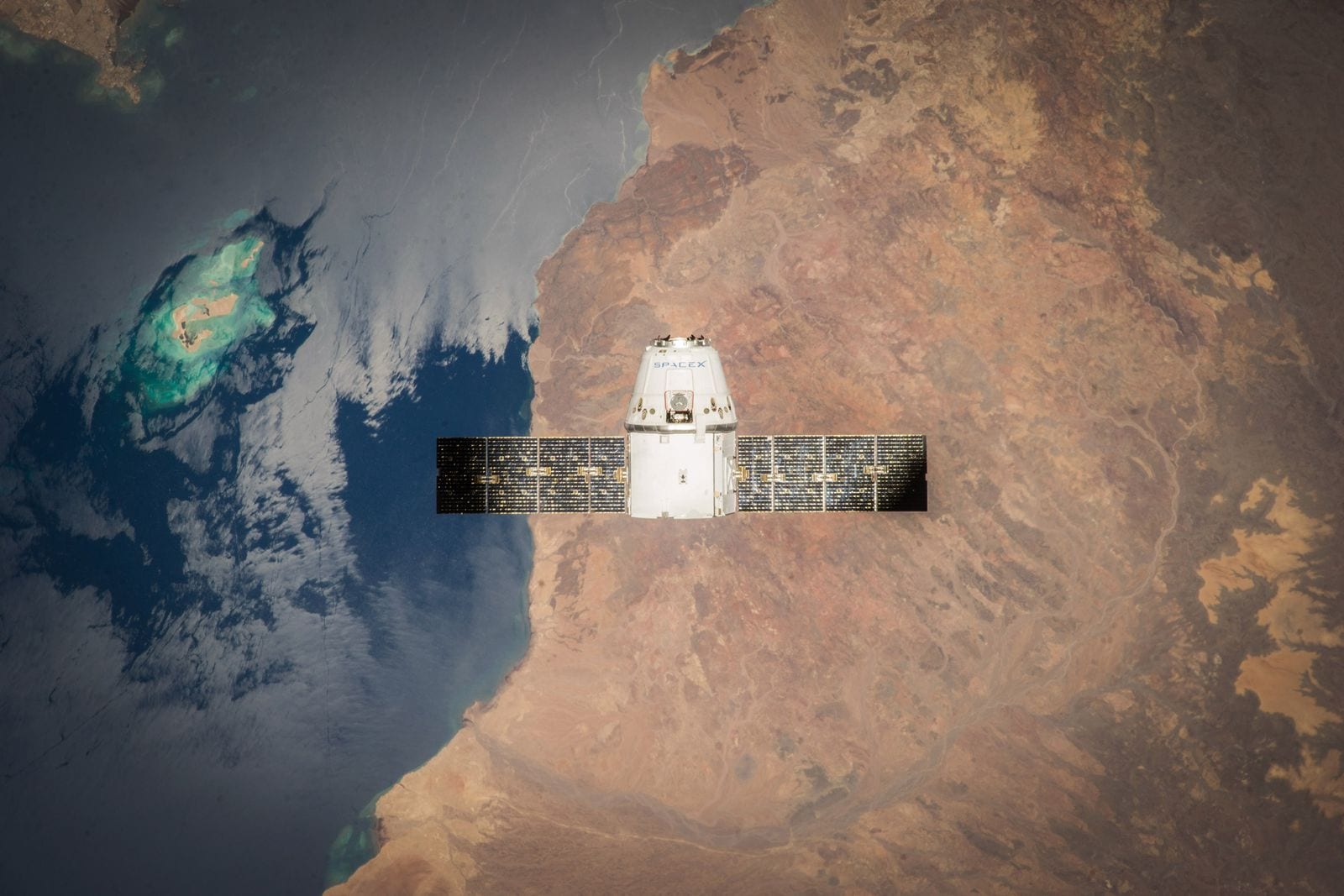
Google's satellite answered back on Oct. 30. A Google chip, orbiting 650 kilometers up, ran an open model called Gemma 4. The team asked it for a haiku about being in space1.
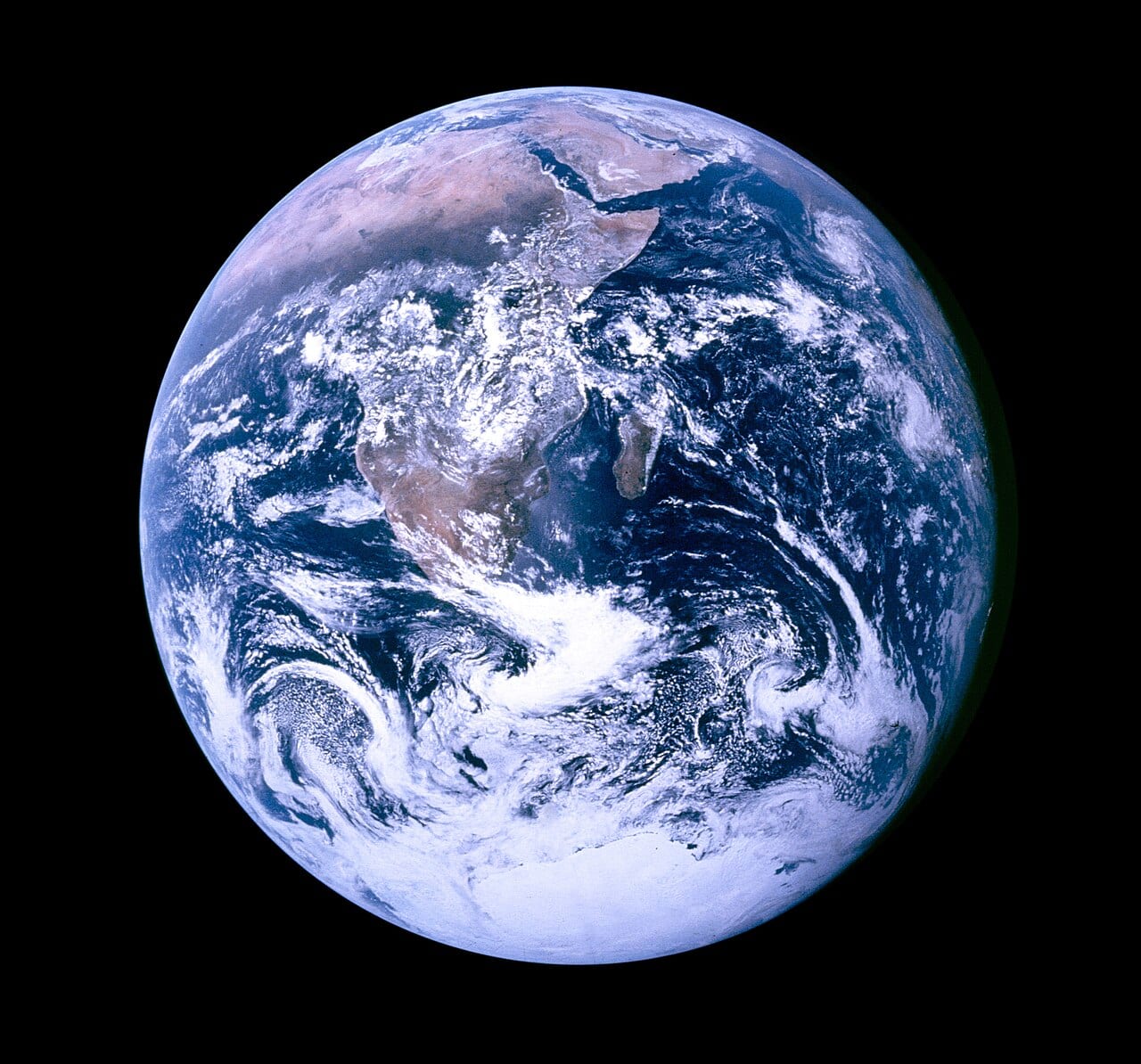
The model answered: "Blue marble below, Data streams in silent grace, Starlight feeds my core." Travis Beals leads Project Suncatcher at Google. "This week, we reached our 'Hello World' milestone: the first-ever AI response from a data center class TPU in orbit," Beals wrote1.
A Satellite Answers Back
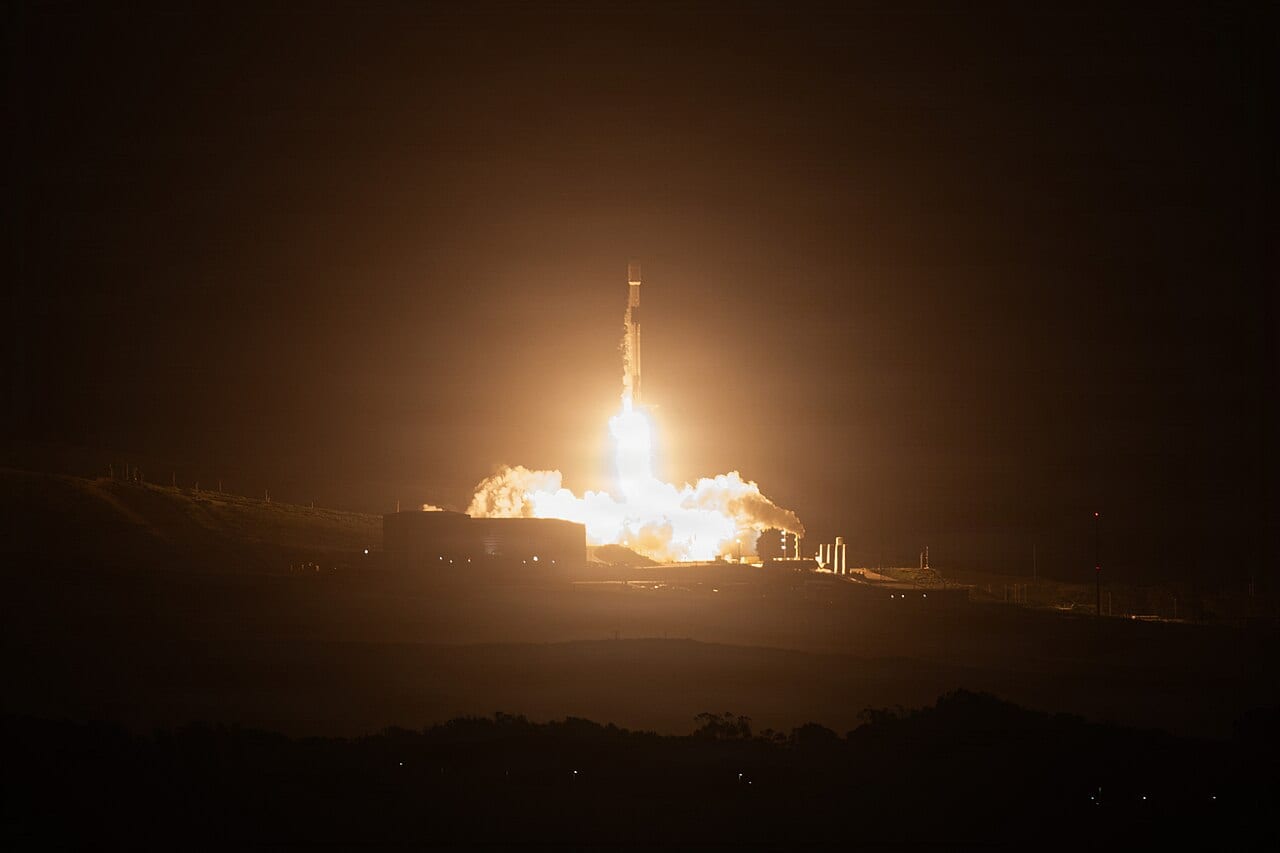
Google calls the satellite MVP. Planet Labs built it alongside Google. It launched Oct. 1 on a SpaceX Falcon 9, from Vandenberg Space Force Base in California4.
MVP is about the size of a refrigerator. It carries four Tensor Processing Units, the same chip family Google already runs in its own data centers on Earth2.
James Manyika, a Google vice president, says the chips should handle basic AI queries from orbit, once the hardware proves itself4.
Engineers tested MVP inside a thermal vacuum chamber first. The chamber mimics the wide temperature swings a satellite meets once it leaves Earth's atmosphere for good2.

Sundar Pichai runs Google as chief executive. He posted the news himself the same day. "We've now successfully sent a command up to orbit, booted up the TPU, ran the prompt, and received our first complete response back on earth - a haiku!" Pichai wrote8.
Sundar Pichai@sundarpichaiA ‘hello world’ milestone for Project Suncatcher 🚀
After launching our prototype satellite a few weeks ago, we’ve now successfully sent a command up to orbit, booted up the TPU, ran the prompt, and received our first complete response back on earth - a haiku! pic.twitter.com/kOFmETUskm
Why Chips Go to Orbit
Gemma 4 is Google's open model. Anyone can download its weights and run them today, free of a Google contract2.
Sunlight is the pitch for running that model in orbit instead. A solar panel in the right orbit can be "up to 8 times more productive than on earth," Google's own research says. Orbit skips clouds and nightfall entirely5.
A satellite orbits inside vacuum. Heat stays trapped near the chip that made it there. The satellite needs its own radiator, because vacuum traps heat instead of carrying it away2.
Brandon Lucia studies satellite computing at Carnegie Mellon University. He has weighed exactly this tradeoff before. "Those all have their cost and complexity amplified by a factor of 10, maybe a factor of 100," Lucia told NPR2.

The Math That Still Falls Short
Numbers disagree here. Google admits the gap itself.
Travis Beals leads the project, and he has put a number on the gap. Matching one gigawatt of data center capacity on Earth would take about 10,000 satellites, he says4. Google's own illustrative design today reaches 81 satellites, spread across a cluster about a kilometer wide5.
Google's 81 Planned Satellites Fall Short of the 10,000 Needed
Satellites in Google's planned cluster against the count one 1-gigawatt data center on Earth would need
The lit wedge is Google's planned 81-satellite cluster; the rest of the ring marks the distance to the 10,000 satellites Travis Beals says one data center that size would take.
Google's 81-satellite design comes from its 2025 research paper; the 10,000-satellite comparison is Travis Beals's September 2026 estimate.
Sources: the-decoder.com [4]; Google Research [5]. Chart by Kelly Dennis.
The numbers behind this chart
| Item | Value |
|---|---|
| Google's planned cluster | 81 |
| Whole | 10,000 |
Orbit costs more today. Launch price is the other half of the gap. The Register estimates MVP cost close to $7,000 a kilogram to launch, based on a weight near 500 kilograms3.
Google's own research sets $200 a kilogram as the price space computing needs. Only then does its yearly cost per kilowatt match a data center on the ground. Google puts that date in the mid-2030s at the earliest5.
Google's Satellite Launched Near 35 Times Its Own 2035 Target Price
Estimated launch cost per kilogram, Google's MVP satellite in October 2026 against the price Google's research says space computing needs
Each column is a launch price per kilogram; magenta marks The Register's estimate for this flight, and blue marks the price Google's own research sets as its target, both marked as estimates.
The Register estimated MVP's launch price from a satellite weight near 500 kilograms; Google keeps the mission's actual cost private.
Sources: The Register [3]; Google Research [5]. Chart by Kelly Dennis.
The numbers behind this chart
| Item | Value |
|---|---|
| This launch (estimate) | $7,000/kg |
| 2035 target (estimate) | $200/kg |
Reaching that price takes volume. Google's own paper calls $200 a kilogram "plausible under reasonable assumptions"6.
That assumes SpaceX flies the equivalent of about 1,800 more Starship launches, and reuses its parts 100 times over, The Register reports. SpaceX earns a 20 percent discount each time its total launched mass doubles. Google's math leans on that same pattern holding up.
Several Labs Chase the Same Orbit
Will Marshall runs Planet Labs, the company that built MVP with Google. He calls the whole push toward orbit "a longer-term project, but an exciting one, too"7.
Starcloud, backed by Nvidia, chases the same prize from outside Google. The startup has already flown its own test chip to orbit, a separate bet on the same idea7.
Blue Origin filed its own plan with federal regulators in March. The company wants to launch 51,600 data center satellites under a project it calls Sunrise7.
Jeff Bezos founded Blue Origin. He calls the whole idea "very realistic," yet doubts the boldest timelines people float for it. Some rivals talk about two or three years. "That's probably a little ambitious," Bezos said7.
Mark Weinzierl studies the space economy at Harvard. He doubts the basic math has shifted yet. "One of the biggest questions is, are you sure that we can't just do that cheaper on Earth?" Weinzierl said7.
What to do
Treat this week's haiku as a research update. Call it early. Shopping for orbital compute still waits years away. Every cloud vendor sold today still runs its chips on the ground.
Watch Google's 2027 satellite pair instead of this one. The 2027 test targets the problem Lucia raised: whether two chips can cool themselves and trade data over open space5. A roadmap stretching past 2030 earns orbital compute one line in the risk register. Shorter horizons keep this quarter's real choice earthbound.
Download Gemma 4 yourself if the model itself interests you. The satellite around it stays Google's research project. Its open model remains a separate, ordinary download anyone can pull today2.
By the numbers
- 4 TPUs ride aboard Google's refrigerator-sized MVP satellite, launched Oct. 1, 20264.
- 81 satellites make up Google's full illustrative cluster design, spread across roughly 1 kilometer5.
- 1 kilowatt of solar power runs MVP's panels in orbit5.
- Eight times more power is what a solar panel makes in the right orbit than on Earth, Google says5.
- Matching one 1-gigawatt data center on Earth would take about 10,000 satellites, Beals has said4.
- $200 a kilogram is the launch price Google's research says space computing needs, by the mid-2030s at the earliest5.
- The Register pegs MVP's own launch cost near $7,000 a kilogram3.
- About 1,800 Starship launches, The Register says, would close that gap6.
What to watch
Watch Google's 2027 satellite pair next5. It tests whether orbiting chips can cool themselves and trade data over laser links.
Launch prices are the second signal. Google's $200 target still sits years past today's prices6. Starcloud, backed by Nvidia, will test the same bet from outside Google7.
Sources
- Travis Beals, "We've received our first response from the Project Suncatcher prototype satellite," Google, Oct. 30, 2026, https://blog.google/innovation-and-ai/models-and-research/google-research/project-suncatcher-satellite-response/
- "Google launches Project Suncatcher, a step towards AI data centers in space," NPR, Oct. 1, 2026, https://www.npr.org/2026/10/01/nx-s1-5983697/project-suncatcher-google-ai-data-center-space
- Thomas Claburn, "Google's AI satellite sends a very expensive haiku to Earth," The Register, Oct. 31, 2026, https://www.theregister.com/ai-and-ml/2026/10/31/googles-ai-satellite-sends-a-very-expensive-haiku-to-earth/5306818
- Matthias Bastian, "Google's Suncatcher project aims to put AI data centers in orbit powered by solar energy," the-decoder.com, Sept. 24, 2026, https://the-decoder.com/googles-suncatcher-project-aims-to-put-ai-data-centers-in-orbit-powered-by-solar-energy/
- "Exploring a space-based, scalable AI infrastructure system design," Google Research, Nov. 4, 2025, https://research.google/blog/exploring-a-space-based-scalable-ai-infrastructure-system-design/
- Simon Sharwood, "Google launches first datacenter satellite and research that finds orbiting bit barns can work," The Register, Oct. 2, 2026, https://www.theregister.com/systems/2026/10/02/google-launches-first-datacenter-satellite-and-research-that-finds-orbiting-bit-barns-can-work/5300721
- "No one wants AI data centers on Earth. Do they make sense in space?" CNBC, June 21, 2026, https://www.cnbc.com/2026/06/21/do-space-based-ai-data-centers-make-economic-sense.html
- Sundar Pichai (@sundarpichai), post announcing Project Suncatcher's "Hello World" milestone, X, Oct. 30, 2026, https://x.com/sundarpichai/status/2116214866444943853