Nineteen jurors for the 2027 Independent Games Festival said on Nov. 9 they will skip any game built with generative AI1. They posted the pledge on Bluesky. Austin Walker, a critic who signed it, put a number on the room he was addressing.
He called it "the 50-or-so IGF Jurors"5. Nineteen signers out of about fifty is more than a third of the group that actually picks IGF's winners.
House House's indie hit Big Walk set off the fight. The Melbourne studio disclosed on Nov. 10 that a chatbot helped fix one bug, touching well under 0.1 percent of its code6. A bigger target sat inside the jurors' own statement, though. They pointed to "a significant increase in the number of submitted games developed with generative AI tools," across the whole festival1.
A jury smaller than the crowd that screens it
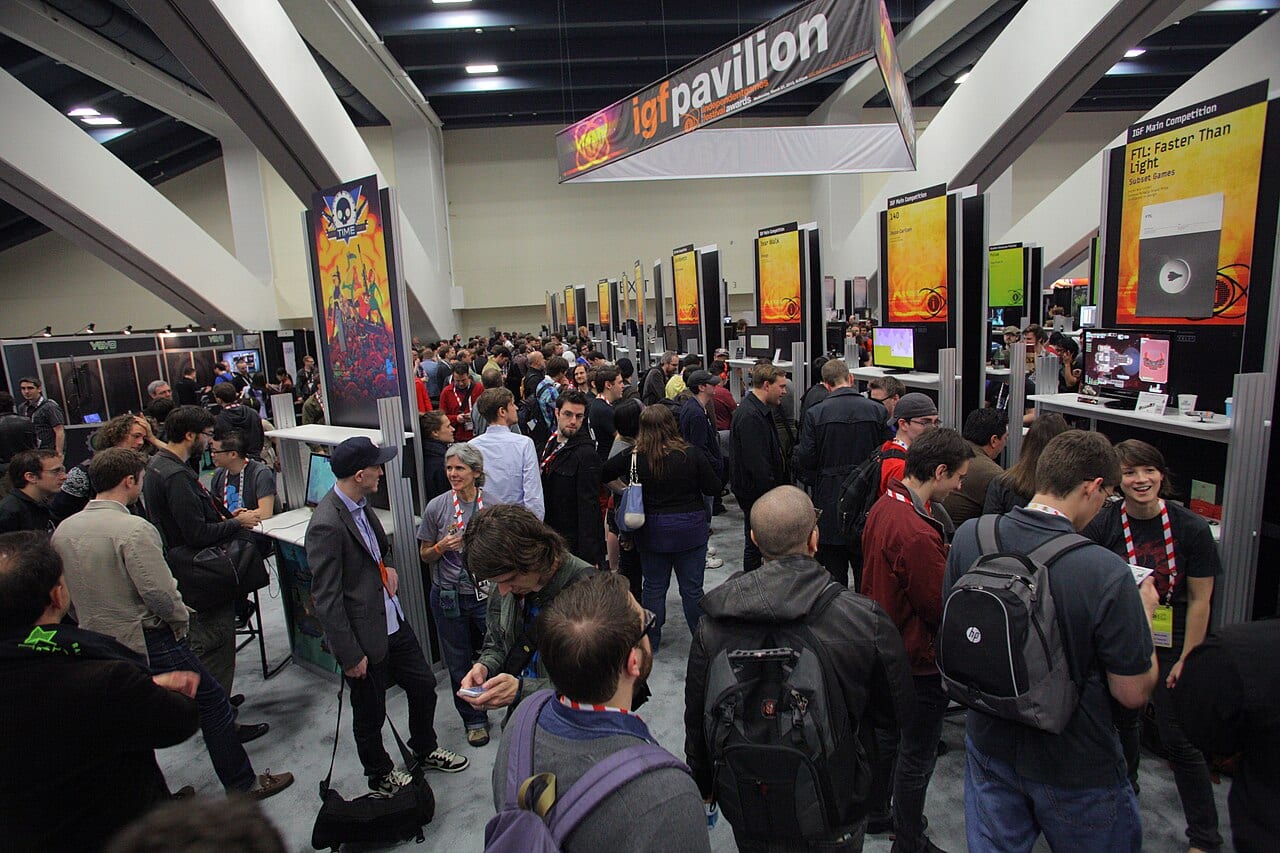
IGF runs two separate juries2. The festival's own rules name a Nominating Committee first. It runs 250 to 300 people, who read every entry and flag favorites in each category.
A second, smaller group decides the winners. IGF calls it the Finalist Committee: seven to ten jurors per category, across eight juried categories2. Multiply that out and the seats could run as high as 80.
Many people sit on more than one category's jury, though, so the real headcount runs smaller. Walker has judged the Excellence in Narrative category three years running, and he put the true number at "the 50-or-so IGF Jurors"5.
IGF's 19 AI Objectors Sit Inside a 50-Person Jury, Separate From a 275-Person Screening Pool
People at each stage of the Independent Games Festival's 2027 judging process, by estimated headcount
Each bar is a group in IGF's own process: the first screens every entry, the second casts the actual votes, and the smallest bar signed the Nov. 9 statement.
IGF gives the screening committee as a range, 250 to 300; this bar shows the midpoint. The 50 figure is Walker's own estimate, apart from any IGF tally.
Sources: Posted via Bluesky by Austin Walker [1]; Independent Games Festival (Informa) [2]; Clockwork Worlds [5]. Chart by Ryan Elliott Dennis.
The numbers behind this chart
| Item | Value |
|---|---|
| Screening committee | 275 |
| Voting jurors | 50 |
| Signed the AI statement | 19 |
Nineteen names on a fifty-person list reads differently than 19 names on a three-hundred-person one. Walker and the 18 other signers wrote that their statement speaks for a minority, apart from the full jury. "Many jurors had differing perspectives and significant reservations about this statement," they wrote, and some stayed off the list over fear of "professional blowback" at work1.
The fifty-or-so figure comes from one juror's own count, apart from any tally IGF itself has published. That gap is worth watching.
The statement was about more than one game
Big Walk was the spark6. Brendan Keogh, writing the day after the statement, pointed to a second case.
Molleindustria made a game called "Future? No Thanks!" It disclosed AI-made voice lines and a music loop during the same stretch, past Big Walk alone3. Walker said the dispute had built inside IGF's own process for weeks before Big Walk's Steam page said a word. Jurors opened "a dedicated Slack channel for deliberation around this AI" once that year's judging began, and that channel produced the Nov. 9 statement5.
Walker and the 18 other signers wrote that their pledge reaches past people who chose this fight freely. "We stand in solidarity not only with those developers who have the freedom to unilaterally reject them, but also with those who have been compelled by their employers to adopt their use, those working to establish or improve their workplace policies, and especially with those in positions of precarity who are so often those most pressured to abandon their values," they wrote1.
House House's FAQ shows why its own disclosure read as small next to that. Company engineers spent weeks on a shadow-rendering bug, consulted a Unity engineer directly, and only then asked a chatbot for help. The fix it suggested ran about 10 lines of code6.
The case for drawing the line
Walker argues the awards give jurors a rare chance to act, free of consequence. "This is not a place where you'll be fired for choosing to draw a line," he wrote the day he signed5. He had decided his own vote months before Big Walk's disclosure became public.

His stance treats the question as simple on purpose. "I believe 'was this game developed with the help of LLMs and does it include AI' to be a totally valid criterion for our votes," Walker wrote5. He is careful, though, to deny the group speaks for the whole jury. "I do not want to represent that message as 'a majority' position among jurists, let alone one from the IGF itself," he wrote in the same post.
The case against one line for everything
Brendan Keogh reads the same record and reaches a different rule. He is an associate professor at Queensland University of Technology, in Brisbane, and studies video games for a living4.

He wrote the day after the statement shipped. His target was the rule's shape, more than Walker's reasons for signing it. "If the only generative AI disclosure statement that is considered morally acceptable is 'No generative AI was used in making this game' then there's no point in having any generative AI disclosure statements at all," Keogh wrote3.
Nineteen of About 50 IGF Jurors Will Skip Any Game That Used AI
Signers of the Nov. 9 statement, as a share of the juror pool Austin Walker counts at "about 50"
The filled part of the ring is the 19 jurors who signed; the open part is everyone else in the juror pool who stayed off the statement.
The 50-person total is one juror's own estimate, apart from any official IGF count.
Sources: Posted via Bluesky by Austin Walker [1]; Clockwork Worlds [5]. Chart by Ryan Elliott Dennis.
The numbers behind this chart
| Item | Value |
|---|---|
| Signed the statement | 19 |
| Whole | 50 |
Keogh still grants the 19 a real point. "It's probably critical for a vanguard of people to indeed have that view and to be pulling in that direction," he wrote the same day3.
His complaint runs narrower. A rule that treats a small fix the same as an AI game teaches a lesson. Developers learn to hide their tools, instead of naming them.
What to do
Ask how big a jury actually is before treating a public statement as an industry's verdict. IGF's own rules describe a 250-to-300-person committee that only screens games2. A far smaller group, "50-or-so" by a sitting juror's count, casts the actual votes5.
Read a studio's own disclosure page before judging the scale of its AI use. House House's FAQ names the exact bug, the exact fix, and the Unity engineer it asked first6.
Watch where critics draw the line between disclosure and a ban. The current fight sits there, past the question of whether studios should say what tools they used at all13.
By the numbers
- 19: jurors who signed the Nov. 9 statement refusing to vote for any game using generative AI1.
- About 50: Austin Walker's own count of IGF's full juror pool, across every award category5.
- Well under 0.1 percent: the share of Big Walk's code House House traces to a chatbot's suggestion6.
- 250 to 300: people on IGF's separate Nominating Committee screen every entry. A different, smaller committee casts the vote for a winner2.
- 3: years Walker has judged IGF's Excellence in Narrative category running5.
- 7 to 10: jurors IGF assigns to each of its eight voting categories2.
What to watch
Watch whether IGF's leadership turns the 19 jurors' pledge into a rule for every category. The festival's own competition page stays silent on generative AI for now2. Watch whether more studios follow Molleindustria's small-AI disclosure, past House House's own. Keogh says the current mood punishes that choice, instead of rewarding it3.
Sources
- Austin Walker and 18 other IGF jurors, IGF jurors' statement on generative AI, posted via Bluesky, Nov. 9, 2026, https://bsky.app/profile/austinwalker.bsky.social/post/3mzvyqaxnzc2w
- Independent Games Festival, "2027 IGF Competition Rules," igf.com, Aug. 10, 2026, https://igf.com/igf-competition-rules/
- Brendan Keogh, "AI is history," brkeogh.com, Nov. 11, 2026, https://brkeogh.com/2026/11/11/ai-is-history/
- Brendan Keogh, "About," brkeogh.com, https://brkeogh.com/about/
- Austin Walker, "A Couple of Posts about AI and the IGF Awards," Clockwork Worlds, Nov. 10, 2026, https://www.clockworkworlds.com/a-couple-of-posts-about-ai-and-the-igf-awards/
- House House, "Was AI used to make Big Walk?" Big Walk FAQ, Nov. 10, 2026, https://bigwalk.game/faq/