AIG, Chubb, Travelers and Great American asked state regulators this year for a new right. They want to drop AI mistakes from their standard business policies3. Most of these filings target general liability, directors and officers and errors and omissions coverage, the standard policies most businesses already carry.
Regulators said yes most of the time. State insurance commissioners approved most of those requests. The Center for Strategic and International Studies put the number above 80 percent, as of April 20262. A company that leans on a chatbot or an AI agent could now carry that loss entirely on its own books.
Insurers Wrote the Exclusions First
Verisk writes the forms most carriers use. Its standards arm filed three new exclusion endorsements for general liability policies in July 20254. The forms, CG 40 47, CG 40 48 and CG 35 08, took effect on Jan. 1, 2026.
Joe Lam runs liability products at Verisk. He was blunt about why. Carriers need room to decline a risk they struggle to price.
"Without exclusions to allow underwriters a level of stability to accept a risk, you run into a situation where they might just walk away from the risk. So exclusions are very essential in the marketplace," Lam said1. Each endorsement stays optional, so a carrier chooses whether to attach it at renewal.
AIG filed its own version with Illinois regulators3. The filing called generative AI a "wide-ranging technology" whose claims will "likely increase over time". AIG told TechCrunch it holds the exclusion in reserve, ready to use only once claims actually grow.
More than 60 property and casualty groups filed some version of an AI exclusion in 20262. Chubb, Travelers and subsidiaries of Berkshire Hathaway won approval for similar language.
Verisk's AI exclusion went from filing to 80 percent approval in nine months
Key dates from Verisk's filing to state approval of general liability AI exclusions, July 2025 to September 2026
Each pin marks one step the exclusion took on its way into standard policies, spaced by real time.
Sources: Center for Strategic and International Studies [2]; Business Insurance [4]. Chart by Ryan Elliott Dennis.
The numbers behind this chart
| Date | Event |
|---|---|
| July 2025 | Verisk files 3 exclusion forms. Multistate filing for commercial general liability policies |
| Jan. 1, 2026 | Forms take effect. CG 40 47, CG 40 48 and CG 35 08 attach at renewal |
| April 23, 2026 | Regulators clear 80% of requests. Center for Strategic and International Studies review of state filings |
| Sept. 4, 2026 | 60+ insurer groups have filed. Count published in CSIS's review |
One Filing Reaches the Boardroom
W.R. Berkley went further than general liability6. Its exclusion is broad. Form PC 51380 bars any claim tied to "the actual or alleged use, deployment, or development of Artificial Intelligence," by any person or company.
The exclusion reaches directors and officers coverage, errors and omissions coverage and fiduciary liability6. A board sued over a chatbot's bad advice loses its defense fund. Weak AI oversight by itself can trigger the same loss, even when every model behaved exactly as planned.
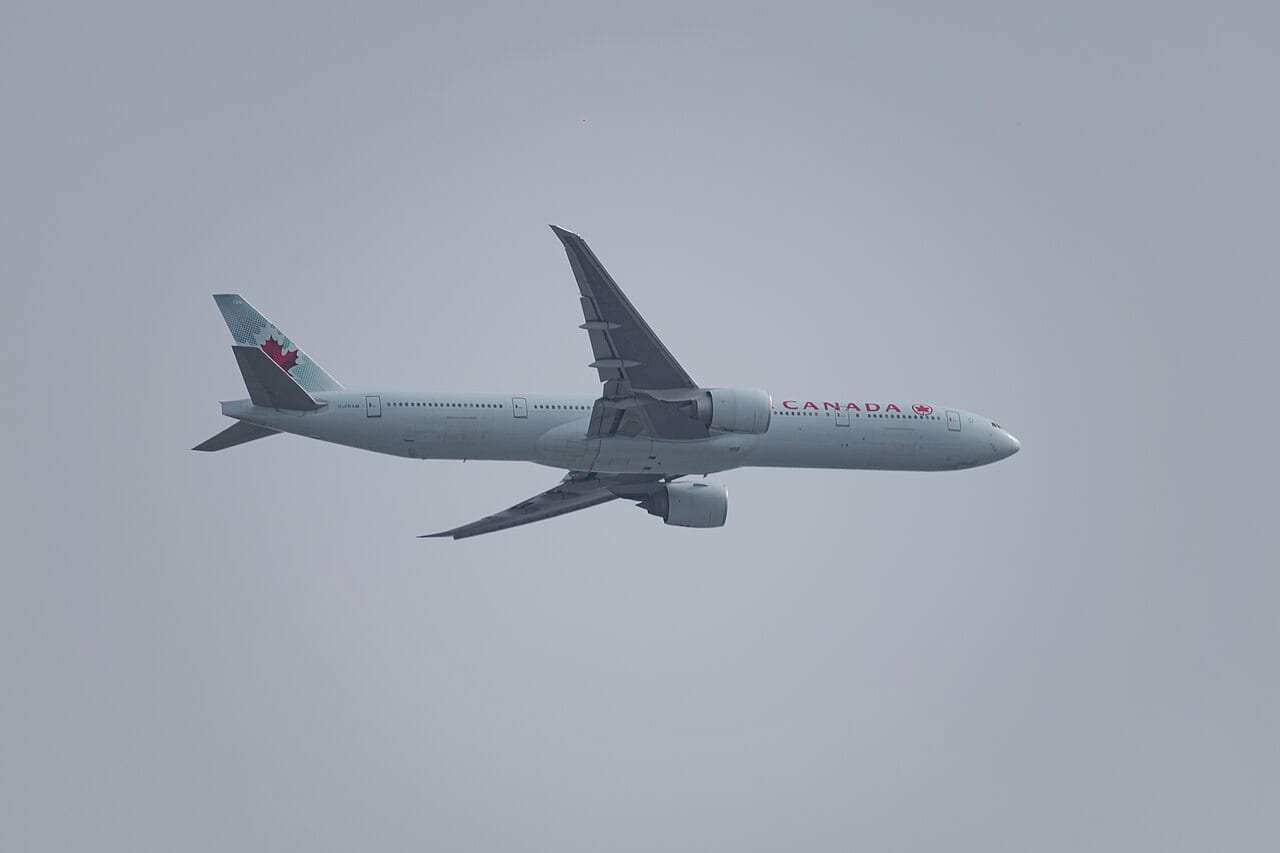
Courts already treat a company chatbot like any other company statement. Air Canada's website chatbot invented a refund rule for a grieving passenger. A Canadian tribunal ruled in February 2024 that the airline owed him money anyway9.
Air Canada paid about $650. The ruling mattered far more than the small sum. It told every company that a chatbot speaks for its owner in court.
Brokers Say the Carve-Outs Go Too Far
Marsh runs the world's largest insurance brokerage, and its leaders are pushing back hard. Nick Studer leads its risk and insurance arm.
"It will be impossible to unbundle it from the causal pathways to whatever outcome may be," Studer said5. He warned that cutting AI from a policy's causes would lead to "uncertainty, to contention, to gaps in cover." He wants claims judged by what actually caused them. AI touching the chain somewhere along the way should count for less, in his view.
Marsh's chief executive, John Doyle, raised the same worry on an earnings call in October8. "A broad-based exclusion could create real confusion and uncertainty," he told analysts.
Lawyers watching the market expect the fight to keep growing. Alana McMullin is a partner at the law firm Lathrop GPM. "We expect and anticipate rapid adoption of some version of an AI exclusion in most lines of coverage," she said, though she added that insurers still hesitate, since "aggressive exclusions may make their policies less attractive"1.
A Few Insurers Sell AI Cover Instead
Cyber insurance kept selling AI coverage while other lines pulled back4. AXA XL built a generative AI endorsement into its base cyber policy in 2025, covering data poisoning and copyright claims. Coalition added its own AI endorsement in 2024, then a deepfake response option in 2025.
4 of 5 major commercial insurance lines now carry a filed AI exclusion
Commercial lines where a named carrier filed or wrote an AI exclusion, by November 2026
Each cube is one commercial line: magenta cubes already carry a filed AI exclusion at a major carrier, and the gray cube, cyber insurance, still sells affirmative AI coverage instead.
Sources: Business Insurance [4]; Hunton Andrews Kurth Insurance Recovery Blog [6]. Chart by Ryan Elliott Dennis.
The numbers behind this chart
| Item | Value | Note |
|---|---|---|
| General liability | 1 | Verisk's CG 40 47 and related forms |
| Directors and officers | 1 | W.R. Berkley's Form PC 51380 |
| Errors and omissions | 1 | W.R. Berkley's Form PC 51380 |
| Fiduciary liability | 1 | W.R. Berkley's Form PC 51380 |
| Cyber insurance | 1 | AXA XL and Coalition sell AI cover instead |
| Whole | 5 |
Munich Re has written AI performance cover since 2018, longer than any exclusion has existed7. Its aiSure product pays out when a model misses a benchmark written into the policy itself. Munich Re built the line for AI developers first, then opened it to the businesses that buy and run those models.

A newer carrier, Armilla, underwrites AI liability policies through Lloyd's of London syndicates2. The Lloyd's Market Association surveyed its own market in 2025. It found insurers "remote" from how their customers actually use AI, with little usage data collected at underwriting.
Specialty AI cover exists to close that data gap. It usually costs more than the exclusion it replaces.
The Information@theinformationMajor insurers are moving to exclude AI-related damages from standard liability policies, with regulators approving most requests. The shift could force companies to rethink who bears the risk when AI systems fail.
Read more: https://t.co/Uh5tVdkIJN
What to Do
Ask your broker which policy would actually pay if your AI tool caused the next claim. Read your general liability, D&O and fiduciary renewals line by line. An insurer can add an AI exclusion at renewal and skip the phone call. Price a standalone AI policy from a specialty carrier before a claim forces the question onto your desk.
By the numbers
- More than 60: property and casualty insurance groups that filed an AI exclusion in 20262.
- 80 percent: how much of carrier AI exclusion requests state regulators approved by April 20262.
- Jan. 1, 2026: when Verisk's three general liability AI exclusion forms took effect4.
- 978 percent: how much AI-related U.S. lawsuits grew from 2021 to 2025, by Gallagher's count1.
- $650: what Air Canada paid after its chatbot invented a refund rule9.
- 2018: the year Munich Re wrote its first AI performance policy7.
What to watch
Watch for the first AI claim that actually gets denied under one of these new exclusions. The first ruling, in whichever state hears it, will set the test every other carrier copies. Watch Marsh's own renewal season too, for proof that broker pressure changed even one carrier's wording.
Sources
- Don Jergler, "Insurer Interest in AI Exclusions Growing as Risk Becomes Omnipresent," Insurance Journal, July 22, 2026, https://www.insurancejournal.com/news/national/2026/07/22/878480.htm
- Gregory C. Allen, "The Insurance Industry's Retreat from AI Threatens to Slow Innovation and Adoption," Center for Strategic and International Studies, Sept. 4, 2026, https://www.csis.org/analysis/insurance-industrys-retreat-ai-threatens-slow-innovation-and-adoption
- Connie Loizos, "AI is too risky to insure, say people whose job is insuring risk," TechCrunch, Nov. 23, 2025, https://techcrunch.com/2025/11/23/ai-is-too-risky-to-insure-say-people-whose-job-is-insuring-risk/
- Matthew Lerner, "Insurers, brokers adjust as AI exclusions emerge," Business Insurance, April 7, 2026, https://www.businessinsurance.com/insurers-brokers-adjust-as-ai-exclusions-emerge/
- Manya Saini, Reuters, "Broad AI Exclusions in Could Create Uncertainty, Marsh CEO Says," Claims Journal, Oct. 16, 2026, https://www.claimsjournal.com/news/national/2026/10/16/340734.htm
- Geoffrey B. Fehling, Michael S. Levine, Madalyn Moore and Alex D. Pappas, "The Continued Proliferation of AI Exclusions," Hunton Andrews Kurth Insurance Recovery Blog, May 28, 2025, https://www.hunton.com/hunton-insurance-recovery-blog/the-continued-proliferation-of-ai-exclusions
- Munich Re, "aiSure frequently asked questions," Munich Re, accessed Nov. 23, 2026, https://www.munichre.com/en/solutions/for-industry-clients/insure-ai/faq.item-b0c1d605d391668847f6c5de6853b1ff.html
- Investing.com, "Earnings call transcript: Marsh & McLennan posts strong Q3 2026 growth," Oct. 15, 2026, https://www.investing.com/news/transcripts/earnings-call-transcript-marsh--mclennan-posts-strong-q3-2026-growth-93CH-4952030
- Wikipedia contributors, "Moffatt v. Air Canada," Wikipedia, accessed Nov. 23, 2026, https://en.wikipedia.org/wiki/Moffatt_v._Air_Canada
- The Information, post on X, April 23, 2026, https://x.com/theinformation/status/2047333464806957245