Nick Mermiges spent early November bolting eight old Nvidia chips into one machine. The South Carolina trial lawyer wanted a computer that drafts legal memos and keeps every client file inside his own office. He published every measurement from the build himself, under his own name2.
Search interest in that build spiked on Google this week. Many readers are meeting the term "V100 chip" for the first time, drawn by a story that reads as a stunt. The story runs on real, published numbers.
Eight Chips a Data Center Retired
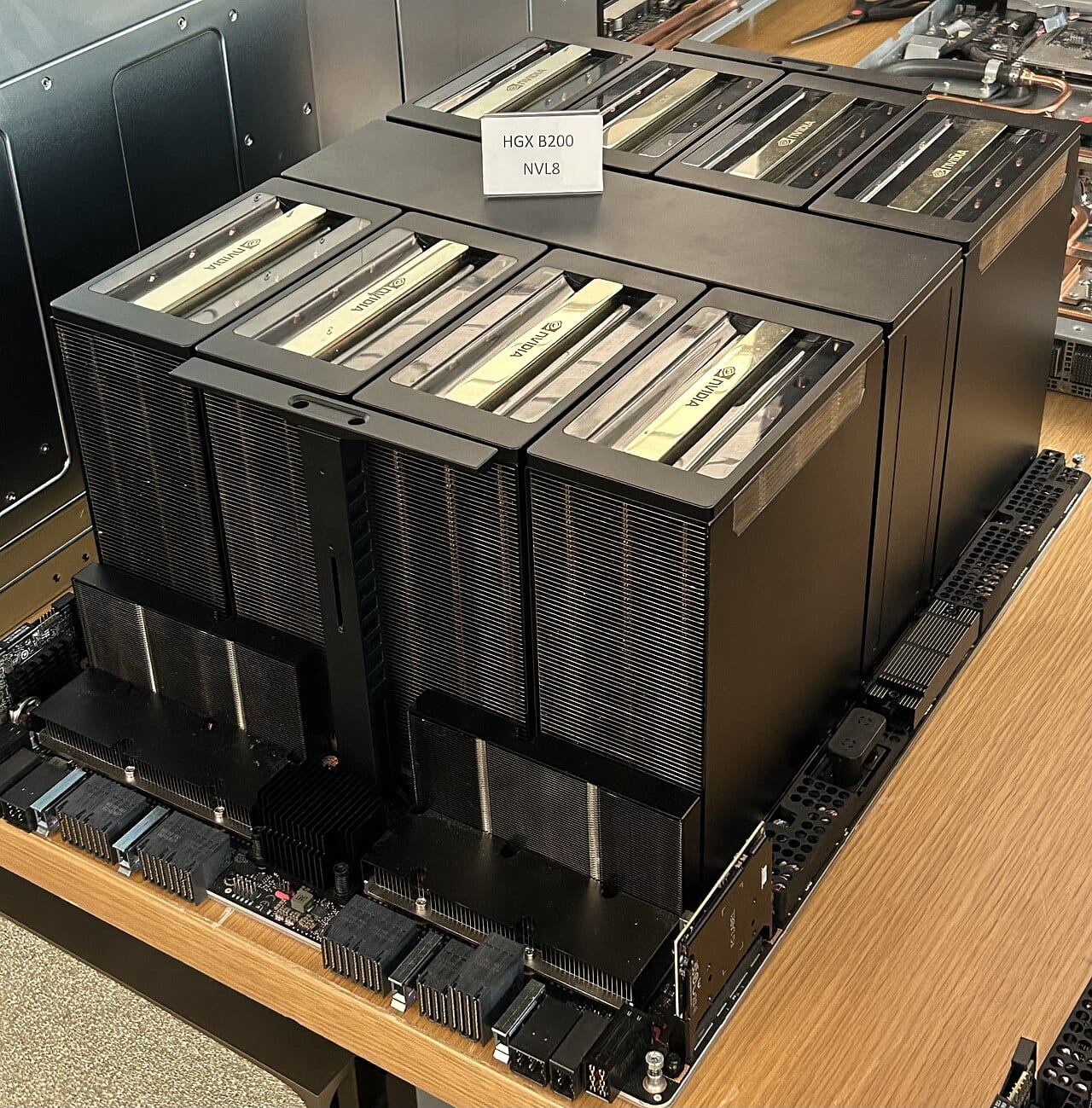
Mermiges founded Proprietary Legal Intelligence3. It is a Columbia, South Carolina consultancy that builds AI tools around a law firm's own documents. For this project, he and PLI Labs, the company's research arm, bought two four-GPU boards of Nvidia's V100-SXM2 chips. Data centers first installed that hardware around 20182.
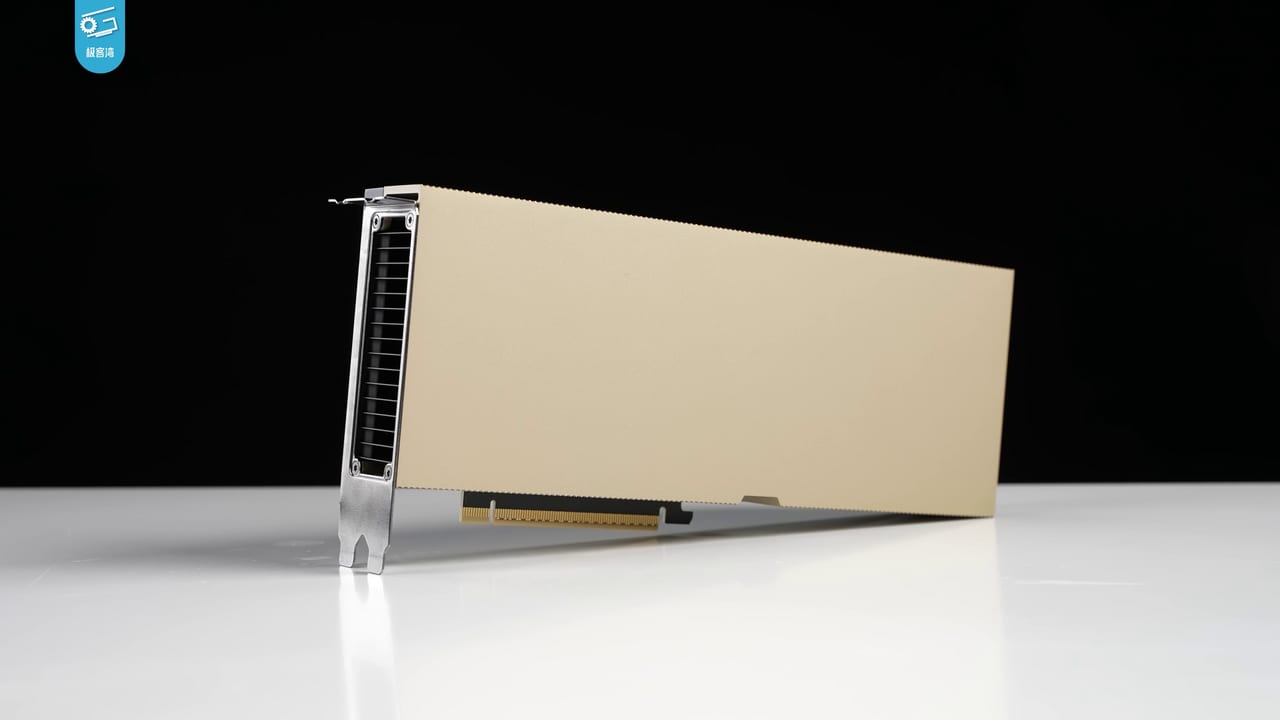
Tom's Hardware found the going price for one board runs about $2,4001. The board price alone sits short of a full server budget. Each V100 card carries 32 gigabytes of memory. Eight of them together hold 256 gigabytes, enough room to fit an entire language model on the chips at once2.
How Fast a Retired Chip Can Draft
Mermiges loaded the server with DeepSeek-V4.1-Flash-1017, an open-weight model with 551.9 billion parameters. He squeezed it down to about 249 gigabytes through heavy compression2. Tokens per second, the measure he used throughout, counts how many word pieces the model writes each second. A higher number means less waiting.
His published tests show the server writing code at up to 215 tokens a second on a short prompt. Structured data moves nearly as fast, at up to 203. Legal writing, the task Mermiges actually built the machine for, decodes at up to 118 tokens a second. Prose and chat sit even lower, near 89 to 952.
This Server Decodes Code 82% Faster Than Legal Text
Decode speed by task, DeepSeek-V4.1-Flash-1017 on eight Nvidia V100 GPUs, 1,024-token prompt, measured Nov. 5, 2026
Each column is one kind of writing the server was asked to produce; code and structured data decode fastest because the model predicts them well, and legal writing decodes slowest.
Source: GitHub [2]. Chart by Ryan Elliott Dennis.
The numbers behind this chart
| Item | Value |
|---|---|
| Code | 215 tok/s |
| Structured | 203 tok/s |
| Legal | 118 tok/s |
| Chat | 95 tok/s |
| Prose | 89 tok/s |
The gap comes from how predictable each kind of writing is. Code follows patterns the model guesses well, so it drafts five tokens at a time and keeps most of its guesses. Legal prose surprises the model more often, so it accepts fewer guesses per round and writes more slowly2.
Four Days That Changed the Speed
The server ran slow on its first try. Mermiges's first build on these same eight chips finished Nov. 1. It decoded at 42 to 46 tokens a second, depending on the task2.
This Server Goes From 44 to 135 Tokens a Second in 4 Days
Decode speed with reasoning off, same eight V100 chips, three dates in Nov. 2026
Each point is one measured build on the same hardware; the line rises as Mermiges rewrote how the model splits work across the server's two GPU boards.
The Nov. 1 figure is the midpoint of Mermiges's reported 42-to-46 range, and the Nov. 5 figure is his own estimate, ahead of a full paired test isolating that last change.
Source: GitHub [2]. Chart by Ryan Elliott Dennis.
The numbers behind this chart
| Period | Value |
|---|---|
| Nov. 1 | 44 tok/s |
| Nov. 3 | 99.2 tok/s |
| Nov. 5 (estimate) | 135 tok/s |
Four days of tuning changed that. Mermiges rewrote how the model splits work across the two four-GPU boards. A first working port of that new layout reached 99.2 tokens a second by Nov. 32.
Then he chased latency one setting at a time: a faster routing step here, a shorter wait between boards there. By the Nov. 5 checkpoint, the same hardware decoded at roughly 135 tokens a second, about three times its first-day speed.
Mermiges also ran quality tests most hobbyist builds skip. His server scored 0.716 balanced accuracy on LegalBench, a 22-task legal reasoning exam2. It also matched the uncompressed model's top word choice 92.5 percent of the time, on a legal-text sample.

The Case for Building Your Own
Proprietary Legal Intelligence argues the bigger risk sits with tools closed to any outside check. "Lawyers are asked to trust AI systems they cannot inspect," the company says on its research site. "We think the profession is better served by work it can download, examine, and run"3.
Mermiges's own description of his firm's mission echoes that philosophy: "Your proprietary work product is your proprietary intelligence"4. Published, testable numbers, in his telling, beat a vendor's word about what happens to a client's file once it leaves the building.
The Case Against It
Michael D.J. Eisenberg, a Washington, D.C. legal technology writer, doubts most firms are ready to run that risk themselves. "If your firm cannot realistically manage updates, patches, access controls, and backups for a dedicated AI machine, a reputable cloud provider with strong security and clear contractual commitments may be a safer option," he wrote5.

Eisenberg's sharper warning concerns confidence more than chips: a machine in your own office can feel safer than it is. The American Bar Association's Formal Opinion 512 backs that concern with a rule that applies to any setup, homemade or hosted: "the lawyer is fully responsible for the work on behalf of the client"6. Mermiges answers that exact point. His company builds attorney review into the workflow around the model, past the hardware alone3.
What to Do
Read the speed numbers before the hardware catalog. Mermiges's own server decodes legal text at 118 tokens a second on a short brief. That drops to 103 on a 256,000-token case file2. Match that ceiling against your biggest file before buying a single chip.
Formal Opinion 512 is the second read. It asks for client consent before certain AI uses, and it holds the lawyer responsible for every output, whoever built the machine6.
Treat Proprietary Legal Intelligence's answer as the real lesson here. Review and source-checking, more than the chips, make this kind of machine worth trusting3.
By the Numbers
- Eight: discontinued Nvidia V100-SXM2-32GB chips inside Mermiges's server2.
- $2,400: the going price Tom's Hardware found for one of the server's two four-GPU boards1.
- 256 gigabytes: the combined memory across all eight chips, enough to hold the model whole2.
- 118 tokens a second: the server's top speed drafting legal writing from a short prompt2.
- Code, at 215 tokens a second: its top speed from the same prompt length, the fastest task measured2.
- 0.716: the server's balanced accuracy on LegalBench, a 22-task legal reasoning exam2.
- 1,200 watts: the power the eight chips draw alone, at 150 watts each2.
- About three times: roughly how much faster the server ran on Nov. 5 than on its first day, Nov. 12.
What to Watch
Watch whether other firms publish numbers the way Mermiges did. A private server that skips outside review is still a closed box, just a smaller one. Watch, too, for a state bar opinion that names home-built hardware directly. Right now, lawyers only have Formal Opinion 512's general duties to go on6.
Sources
- "Lawyer builds private AI server with eight used Nvidia V100 GPUs — up to 215 tokens per second to keep legal files offline, costing about $2,400 per four-GPU board," Tom's Hardware, Nov. 9, 2026, https://www.tomshardware.com/tech-industry/artificial-intelligence/lawyer-builds-private-ai-server-with-eight-used-nvidia-v100-gpus-up-to-215-tokens-per-second-to-keep-legal-files-offline-costing-about-usd2-400-per-four-gpu-board
- Nick Mermiges, "Volta sPLIt: DeepSeek-V4.1-Flash-1017 on 8x V100-SXM2, split PP2 x TP4," GitHub, Nov. 5, 2026, https://github.com/ProprietaryLegal/Volta-sPLIt-DeepSeek-V4.1-Flash-1017-8xV100-SXM2-PP2xTP4
- Proprietary Legal Intelligence, "PLI Labs," proprietarylegal.ai, accessed Nov. 10, 2026, https://proprietarylegal.ai/labs.html
- Proprietary Legal Intelligence, "AI built on your firm's own knowledge," proprietarylegal.ai, accessed Nov. 10, 2026, https://proprietarylegal.ai
- Michael D.J. Eisenberg, "MTC: Should Lawyers Host Their Own AI (or Hybrid AI)?," The Tech-Savvy Lawyer.Page, May 4, 2026, https://www.thetechsavvylawyer.page/blog/2026/5/4/mtc-should-lawyers-host-their-own-ai-or-hybrid-ai
- "ABA Formal Opinion 512 on Generative AI: What It Actually Says, Rule by Rule (2026)," TheLegalPrompts, Oct. 10, 2026, https://thelegalprompts.com/blog/aba-formal-opinion-512-generative-ai