Micron Technology spent $27.37 billion building chip factories and buying equipment in fiscal 20265. Its own finance chief had promised investors a smaller number, months earlier. The gap was real money.
Mark Murphy is Micron's chief financial officer. On a March earnings call, he raised the company's spending plan for the year. "We expect fiscal 2026 capex to be above $25 billion," Murphy told investors. "We project our fiscal 2027 capex to step up meaningfully to support HBM and DRAM-related investments"1.
The Transcript@TheTranscript_$MU Micron CFO: "We expect fiscal 2026 capex (capital expenditures) to be above $25B. ...We project our fiscal 2027 capex to step up meaningfully to support HBM- and DRAM-related investments. We expect construction-related capex to increase by over $10B year-over-year in fiscal… pic.twitter.com/vXOhnK7x2D

Micron beat even that raised number. Capex is short for capital expenditures: the money a company spends on new buildings and machines it will use for years1.
Buyers like Framework Computer are still feeling that spending today, in what a laptop's memory now costs6. The same chips moved from ordinary laptops toward AI data centers all year long, and J.P. Morgan tracked the price everywhere they went7.
The Promise, and the Bill
Micron's spending climbed every single quarter of fiscal 20262. It kept climbing all the way to the end.
The first quarter alone cost $4.5 billion in net capital spending2. A second quarter added $5.0 billion3. By the fourth, alone, spending reached $10.77 billion, more than double the first5.
Micron's Quarterly Chip Spending Triples to $10.8 Billion
Micron's net capital expenditures by fiscal quarter, fiscal 2026, ended Sept. 3, 2026
Each column is one fiscal quarter's net capital spending; the bars climb every quarter as Micron built new memory capacity.
Sources: Micron Technology, Inc. [2]; Micron Technology, Inc. [3]; Micron Technology, Inc. [4]; Micron Technology, Inc. [5]. Chart by Kelly Dennis.
The numbers behind this chart
| Item | Value |
|---|---|
| Q1 | $4.5B |
| Q2 | $5.0B |
| Q3 | $7.1B |
| Q4 | $10.8B |
Add up all four quarters, and the total lands at $27.37 billion for the year that ended Sept. 35. Revenue grew just as fast, climbing from $13.64 billion in the first quarter to $54.23 billion in the fourth2.
Micron also locked in buyers ahead of time. The company signed strategic customer agreements meant to make its future revenue more predictable, alongside the spending4. It guided fourth-quarter earnings to $30.73 a share, a figure most chipmakers struggle to match across a full year.
Why Micron Is Spending This Much
Micron makes the memory chips that let AI systems store and recall information fast. High bandwidth memory, or HBM, stacks many memory chips together so one chip can move far more data each second4.
Micron's lead customer already runs its newest version, called HBM4, at full volume4. A second version, HBM4E, should reach full production in 2027. Micron also began shipping sample versions of a 256-gigabyte memory module built for AI servers that same quarter.
Sanjay Mehrotra is Micron's chief executive. He tied the spending straight to artificial intelligence. "AI is becoming Super Intelligence, and memory enhances this intelligence and the competitiveness of our customers' platforms," Mehrotra said5.
Micron's own cloud memory unit already shows what that spending buys. It brought in $13.77 billion in revenue in the third quarter alone, at an 83 percent gross margin4.
The Price Buyers Pay
Framework Computer builds laptops that owners can open and repair themselves. Its founder, Nirav Patel, posts a running account of what memory actually costs his company6.
In December, Framework priced ordinary DDR5 memory at $10 a gigabyte6. By February, its top price had climbed to $16 a gigabyte. One month later, that same top price hit $18.
Framework's Top DDR5 Price Climbs to $18 a Gigabyte
Framework Computer's listed DDR5 SO-DIMM price, top of its stated range per gigabyte, December 2025 to March 2026
The line follows the highest price per gigabyte Framework listed for DDR5 memory at each update; it climbed every time the company repriced.
Framework quotes a range by memory capacity at each update; the line follows the top of that range.
Source: Framework Computer [6]. Chart by Kelly Dennis.
The numbers behind this chart
| Period | Value |
|---|---|
| Dec. | $10/GB |
| Feb. | $16/GB |
| Mar. | $18/GB |
Patel explained why chipmakers let a shortage run so long before building more capacity. "The memory industry since its inception decades ago has gone through repeated boom and bust cycles, making the three main surviving memory die makers Micron, SK Hynix, and Samsung hesitant to speculatively invest the billions of dollars needed for fabrication capacity expansion," Patel wrote6.
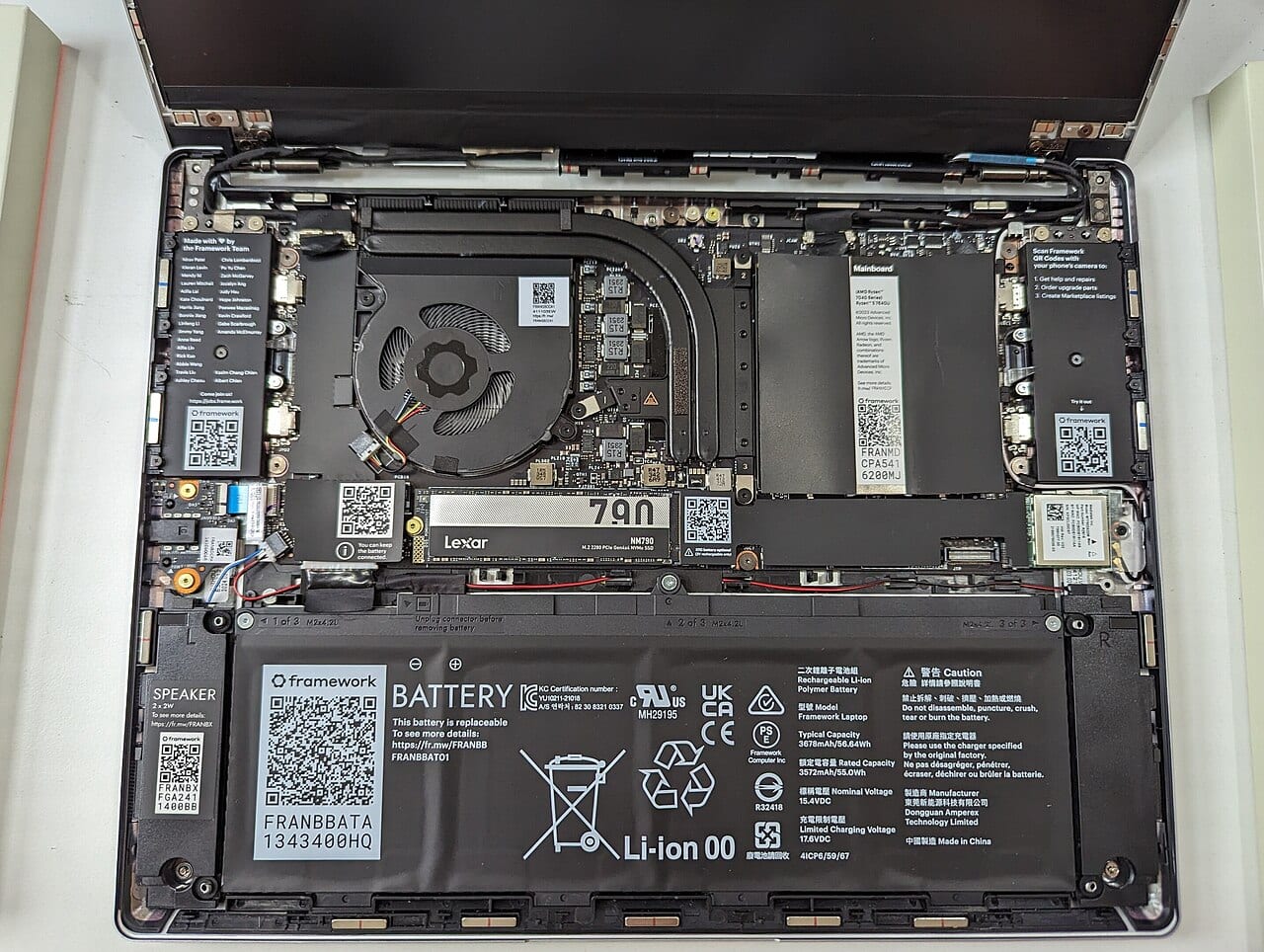
A pricier memory format, called LPCAMM2, told a sharper version of the same story. Framework's price for it more than doubled in July. On Sept. 8, the company found "a limited quantity of Micron" modules at a lower cost, and passed the savings straight to buyers6.
The Case Against Betting This Big
Jay Kwon covers memory chips for J.P. Morgan, and his own forecast runs longer than Micron's spending alone can fix. His view takes the long road. Kwon set a clock that outlasts any one company's factory plans.
"It is not a secret that the industry will stay in shortage for multiple years," Kwon wrote, pointing to surging demand from AI computing workloads7.
Framework's own account supports him more than it hurts him. Patel called his September relief a "limited quantity," short of a full price rollback6. A shortage that lasts years and one buyer's lucky week can both be true.
Micron's own guidance leaves room for both readings, too. Its gross margin guidance for the fourth quarter ran near 86 percent, rich enough to invite rivals into the same business4.
What to do
Budget for memory prices to stay high well into 2027. Expect the biggest hit on any laptop, desktop or server with 32 gigabytes of RAM or more. Check a build's memory cost against Framework's own public log before buying6.
Ask any vendor quoting a flat price whether that price already includes a recent chip increase. Micron's own numbers show the increases kept climbing all year5.
By the numbers
- $4.5 billion: Micron's net capital spending in the first quarter of fiscal 20262.
- Its fourth-quarter spending alone reached $10.77 billion, the year's biggest quarter5.
- $27.37 billion: Micron's total net capital spending for the full fiscal year5.
- Mark Murphy set the floor at $25 billion for that year's spending back in March1.
- $18: the top price per gigabyte Framework charged for DDR5 memory in March, up from $10 in December6.
- More than 400 percent: how far J.P. Morgan says DRAM prices climbed from the start of 2024 to the end of 20267.
- $5.0 billion: Micron's net capital spending in the second quarter3.
- Its third-quarter spending came to $7.1 billion4.
What to watch
Watch Micron's first fiscal 2027 report for whether its promised "meaningfully" higher spending shows up on schedule1. A miss would suggest supply stays tighter for longer.
Framework's own blog deserves a repeat check, too. Another price cut tied to new Micron supply would show the spending reaching buyers as well as backers6.
Sources
- "Micron (MU) Q2 2026 Earnings Call Transcript," The Motley Fool, March 18, 2026, https://www.fool.com/earnings/call-transcripts/2026/03/18/micron-mu-q2-2026-earnings-call-transcript/
- First-quarter fiscal 2026 results, Micron Technology, Inc., Dec. 17, 2025, https://www.sec.gov/Archives/edgar/data/723125/000072312525000044/a2026q1ex991-pressrelease.htm
- Second-quarter fiscal 2026 results, Micron Technology, Inc., March 18, 2026, https://www.sec.gov/Archives/edgar/data/723125/000072312526000004/a2026q2ex991-pressrelease.htm
- Third-quarter fiscal 2026 results, Micron Technology, Inc., June 24, 2026, https://www.sec.gov/Archives/edgar/data/0000723125/000072312526000013/a2026q3ex991-pressrelease.htm
- Fourth-quarter and full-year fiscal 2026 results, Micron Technology, Inc., Sept. 30, 2026, https://www.sec.gov/Archives/edgar/data/723125/000072312526000018/a2026q4ex991-pressrelease.htm
- Nirav Patel, "Updates on memory pricing and navigating the volatile memory market," Framework Computer, Sept. 29, 2026, https://frame.work/blog/updates-on-memory-pricing-and-navigating-the-volatile-memory-market
- Jay Kwon, "The AI-Driven Memory Shortage: DRAM Prices, Inflation and Market Risks," J.P. Morgan, Aug. 6, 2026, https://www.jpmorgan.com/insights/global-research/artificial-intelligence/dram-memory-shortage-from-ai
- The Transcript (@TheTranscript_), "$MU Micron CFO: "We expect fiscal 2026 capex (capital expenditures) to be above $25B..."," X, March 18, 2026, https://x.com/TheTranscript_/status/2034370426382725331