Microsoft named six hacking crews on Wednesday. Each one runs ARTEX, a free AI tool built to probe networks for weak spots1. State hackers use it. Criminals chasing money alone use it too.
One day earlier, CNN reported a separate hack. It hit the CIA, the National Geospatial-Intelligence Agency and the Office of the Director of National Intelligence3. Investigators now suspect ARTEX reached inside those networks too, reporter Dustin Volz wrote on X5.
Six Crews, One Free Tool
Storm-0940, Storm-3358, Onyx Sleet, Pearl Sleet, Crystal Typhoon and Salt Typhoon are the six groups Microsoft named12. Some work for governments, Microsoft says. Others chase money on their own. All six now point the same free tool at their targets.
Microsoft Threat Intelligence@MsftSecIntelThreat actors like Storm-0940, Storm-3358, Onyx Sleet, Pearl Sleet, Crystal Typhoon, and Salt Typhoon are abusing ARTEX, an AI-powered penetration testing framework, to accelerate existing workflows related to network reconnaissance, credential attacks, and web application…
One ARTEX run found a secret sitting inside a public code repository on GitHub. It used that secret to reach a company's Azure Key Vault in five minutes1.
A separate campaign tied to Storm-0940 moved slower, though only by a little. It logged more than 151,000 failed sign-in attempts against company accounts. The pace peaked at 2,900 attempts a minute. It still reached privileged access in about 180 minutes, just shy of three hours1.
One ARTEX run reached a cloud vault in 5 minutes, another took 180
Minutes from first access to privileged systems in two ARTEX intrusions Microsoft documented, as of Nov. 25, 2026
Each column is one intrusion Microsoft detailed: the first reached a company's Azure Key Vault from a leaked GitHub secret, the second needed more than 151,000 mistaken sign-ins before it reached privileged access.
Source: Microsoft Security Blog [1]. Chart by Ryan Elliott Dennis.
The numbers behind this chart
| Item | Value |
|---|---|
| GitHub secret leak | 5 min |
| Storm-0940 spray | 180 min |
Microsoft described what the tool does once it gets that far. "After successfully compromising a system or credentials, the framework then dispatches additional agents to move on to the next stage of the activity at machine speed," the company wrote1.
A Hack Reaches a Spy Agency
Reporter Dustin Volz broke the story a day before Microsoft's post. "The CIA and ODNI recently discovered a hack that exposed some of their unclassified info related to an open-source intelligence analysis system," he wrote on X, crediting colleagues Tyler Pager and Julian Barnes4.
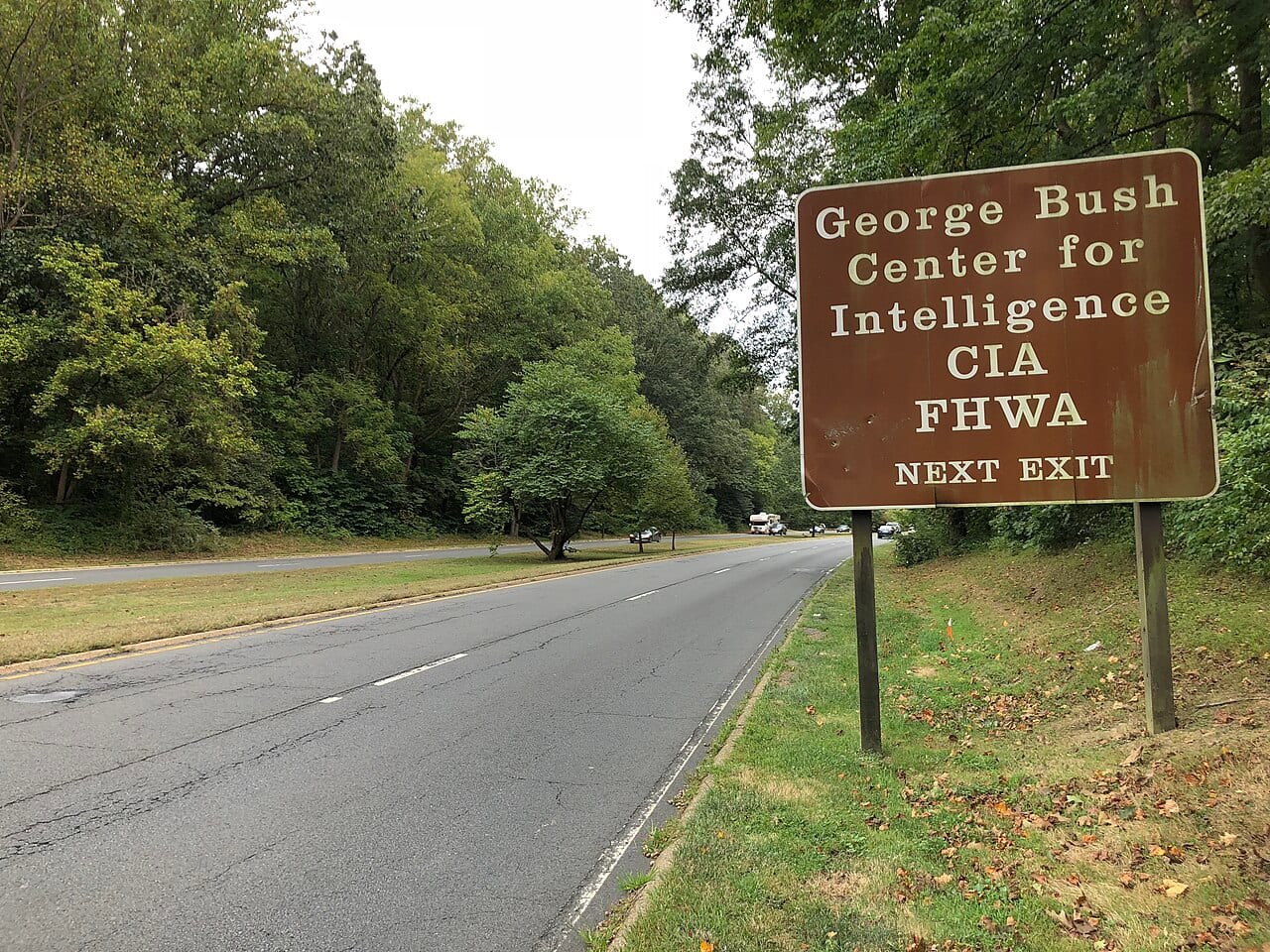
Volz added a second post hours later. The breach hit the National-Geospatial Intelligence Agency too, he wrote, and "the AI hacking tool ARTEX is believed to have been used in attack, sources say"5. Early signs point toward China, Volz added, though he called the investigation very early.
CNN confirmed the same three agencies lost access to unclassified data: the CIA, the NGA and the ODNI3. An ODNI official called the damage limited. Classified systems kept running the entire time, the official said.
Rob Joyce once ran cybersecurity at the National Security Agency. He reads the moment as a shift in who holds the advantage. "AI is now giving everybody the ability to have that nation-state, NSA-like information advantage, information dominance in your operations," Joyce said3.
ARTEX reaches 6 confirmed crews and a 7th suspected case
Groups Microsoft or investigators have tied to ARTEX, by confirmation status, as of Nov. 26, 2026
Each cube is one group: the six accent cubes are the crews Microsoft named as confirmed ARTEX users, and the gray cube is the intelligence-agency breach investigators suspect but have yet to confirm.
Microsoft confirmed the six named crews itself; the CIA, ODNI and NGA breach's tie to ARTEX rests on sources cited by reporters, short of a confirmed finding.
Sources: Microsoft Security Blog [1]; KIFI (CNN) [3]; Dustin Volz on X [5]. Chart by Ryan Elliott Dennis.
The numbers behind this chart
| Item | Value |
|---|---|
| Confirmed ARTEX users | 6 |
| Suspected case, unconfirmed | 1 |
| Whole | 7 |
The Case This Overstates AI
Silas Cutler counts exposed systems for a living. He is a principal security researcher at Censys. His team found 1,465 ARTEX consoles sitting open on the internet, as of Nov. 37.

Most of those consoles looked the same. "Uniform configurations like these suggest a provisioning template rather than hundreds of individual operators," Cutler wrote7. A shared template points to one likely cause: carelessness.
Matt Snyder leads security operations and threat research at Aviatrix. He reads ARTEX's spread as a story about sloppiness ahead of capability. "AI is lowering the skill floor for offensive operations without improving operational discipline," Snyder wrote. "The framework may be sophisticated, but the security around many of its deployments is not"6.
Why the Low Floor Still Matters
Snyder's point holds up against one fact. A free tool still needs a target with an exposed secret or a weak password somewhere.
Chris Krebs once led the federal cybersecurity agency inside the Department of Homeland Security. He sees two forces pulling the same way. "On one side, a number of these outages trace back to patches and upgrades, and the pressure to patch is only growing as AI finds flaws faster," Krebs said. "On the other side, attackers are using AI to hit the flaws we haven't fixed"3.
A skilled hacker can chase one target at a time. An ARTEX operator, skilled or careless, can point the tool at a hundred targets and walk away from the keyboard. The tool keeps retrying long after a person would quit.
Simple math explains how a free, unimpressive tool could still reach a spy agency's own network. The same old skill, applied to enough targets at once, gets an operator there eventually. Volume alone will eventually reach a server somebody forgot to patch.
What to do
Ask your security team one direct question this week. Does any monitoring tool catch a short, heavy burst of requests, the pattern Microsoft flagged in its own case studies1? A tool built to wait for a known signature will miss that pattern.
Check your own exposed services the way Cutler checked the internet's. A console or dashboard can sit open with a blank password field. Leaving it blank is the fastest way into a network, and the cheapest one to fix7.
Treat the ARTEX tie to the CIA breach as a lead alone, a step short of a verdict. Officials still call it a suspicion, and a wrong guess at attribution carries its own cost down the road35.
By the numbers
- Six: the hacking crews Microsoft named as ARTEX users1.
- Five minutes: how fast one run reached a company's Azure Key Vault from a leaked GitHub secret1.
- 151,000: failed sign-in attempts logged in one Storm-0940 campaign, peaking at 2,900 a minute1.
- Three: U.S. intelligence agencies tied to the suspected breach, the CIA, the ODNI and the NGA3.
- 1,465: exposed ARTEX consoles Censys counted across the open internet on Nov. 37.
- Two: colleagues Dustin Volz credited on his first report, Tyler Pager and Julian Barnes4.
What to watch
Watch for Microsoft or the FBI to confirm, or rule out, ARTEX inside the CIA breach. Every official quoted so far has called the tie a suspicion, a step short of a finding135. Watch the exposed-console count too, since Censys measured it only once so far. A lower count next month would be the clearest sign the fix is working, and a higher one would say the opposite7.
Sources
- Microsoft Security Blog, "What defenders need to know about ARTEX, the agentic AI framework threat actors abuse," Nov. 25, 2026, https://www.microsoft.com/en-us/security/blog/2026/11/25/what-defenders-need-to-know-artex-agentic-ai-framework-threat-actors-abuse/
- Microsoft Threat Intelligence, post on X, Nov. 25, 2026, https://x.com/MsftSecIntel/status/2125655976581681574
- Sean Lyngaas, Kristen Holmes and Katie Bo Lillis, "CIA hit by hack impacting unclassified information," KIFI (CNN), Nov. 25, 2026, https://localnews8.com/news/national-world/cnn-national/2026/11/25/cia-hit-by-hack-impacting-unclassified-information-2/
- Dustin Volz, post on X, Nov. 24, 2026, https://x.com/dnvolz/status/2125311426877399156
- Dustin Volz, post on X, Nov. 24, 2026, https://x.com/dnvolz/status/2125364842634596433
- Matt Snyder, "Why ARTEX Became a Threat," Aviatrix, Nov. 12, 2026, https://aviatrix.ai/blog/artex-cloud-security-risk/
- Silas Cutler, "ARTEX: Agentic Asbestos," Censys, Nov. 5, 2026, https://censys.com/blog/artex-agentic-asbestos/