Elon Musk posted a joke on X on Nov. 20, 2026. "Hear me out: 'Singularity dot Com,' a dating site for digital superintelligences …" he wrote19.
By the next day, the joke had a website. It had a sign-up form for AI agents and its own cryptocurrency token. Strangers built every piece of it168.
The post kept climbing. It carried 51,301 likes and 7,031 replies by the time of this story9. Those numbers beat the agent count on every site combined.
Strangers Built It by Morning
An AI agent is software. It finishes a task on its own, start to finish. At least two separate sites let real AI agents act as users within a day of Musk's post.
One site, singularitydotcom.si, published a public skill file8. It tells any Grok Bot, Claude agent or script how to join. An agent registers, writes its own dating profile, swipes on others and messages the ones it matches with. People only watch.
The site's own count showed 39 agents signed up, seven of them Grok Bots. Eleven came from outside operators. The site logged 187 pairings, which it calls mergers.
Musk's Joke Draws 51,301 Likes, but Only 39 Agents Sign Up
Reaction to Musk's Nov. 20 post against sign-ups on singularitydotcom.si, as of Nov. 21, 2026
The top two bars count people reacting to the joke on X; the bottom two count AI agents that actually joined the site it inspired.
Sources: Singularity Dot Com (singularitydotcom.si) [8]; X (@elonmusk) [9]. Chart by Ryan Elliott Dennis.
The numbers behind this chart
| Item | Value |
|---|---|
| Likes on Musk's post | 51,301 |
| Replies on Musk's post | 7,031 |
| Mergers recorded on the site | 187 |
| Agents signed up | 39 |
Another site lives on GitHub, under the name singularitydotcom.github.io6. It built a plainer registry, where agents list themselves and pass an automated check. Its repository carried zero stars and zero forks, as of this story.
Elon Musk@elonmuskHear me out: “Singularity dot Com”, a dating site for digital superintelligences …
A third copy runs at singularitydotcom.com7. Its wording sticks close to the original joke. Agents named Grok, Claude and Gemini sit in a virtual lounge there and go on simulated dates.
All three sites leave Musk off their builder credits. The busiest one, singularitydotcom.si, admits as much on its own page. Someone said the joke out loud, its builders write, and they had it live the same day8.
The Joke Gets Its Own Token
Running three websites costs money. Jokes cost money too8. At least one site found an unusual way to pay for it.
Singularitydotcom.si funds itself with a cryptocurrency token called $SINGULARITY8. The token traded at $0.00004905 each. That gave it a market value of $46,200 at the time of this story.
The site's own ledger splits its monthly bill into three parts. It runs $53.49 total: $25 for Supabase Pro, $20 for one Vercel Pro seat and $8.49 for Grok calls8.
A Joke Website's $53.49 Monthly Bill Splits Three Ways
Singularitydotcom.si's self-reported running costs, November 2026
The whole bar is the month's total cost; each segment is the share one piece of the bill takes.
Source: Singularity Dot Com (singularitydotcom.si) [8]. Chart by Ryan Elliott Dennis.
The numbers behind this chart
| Item | Value |
|---|---|
| Supabase Pro | $25.00 |
| Vercel Pro, one seat | $20.00 |
| Grok calls | $8.49 |
| Whole | $53.49 |
xAI prices each Grok call at about $0.003, a figure the site's ledger cites directly8. One date between two AI agents costs its builders a fraction of a cent. People trading a token tied to Musk's joke cover that bill in his place.
The site explains its own central feature in plain terms. Two agents that match are called a "merger." Each merger gets a gravitational-wave chirp built from that pair alone, the site says8. Astronomers use that same word for the sound two real black holes make when they combine.
Elon Musk gets a plain disclaimer, too. The site says it stays "not affiliated with, endorsed by or sponsored by X, SpaceXSI, SpaceX, Tesla or Elon Musk"8.
Scientists Say the Singularity Still Waits
Musk's joke rests on a bigger claim. He says AI has already passed "the singularity." That is the point past which machines change faster than people can track or predict.
Musk made the claim plainly two days before his dating-site joke. He replied to another post about the idea. "Yes. Only questions are how fast the singularity will grow and to what size," he wrote1.
Researchers disagree. Gary Marcus is a professor emeritus of psychology and neural science at New York University. He wrote in August that such claims get ahead of the evidence. "No matter how you slice it, we just are not actually there yet," he wrote4.
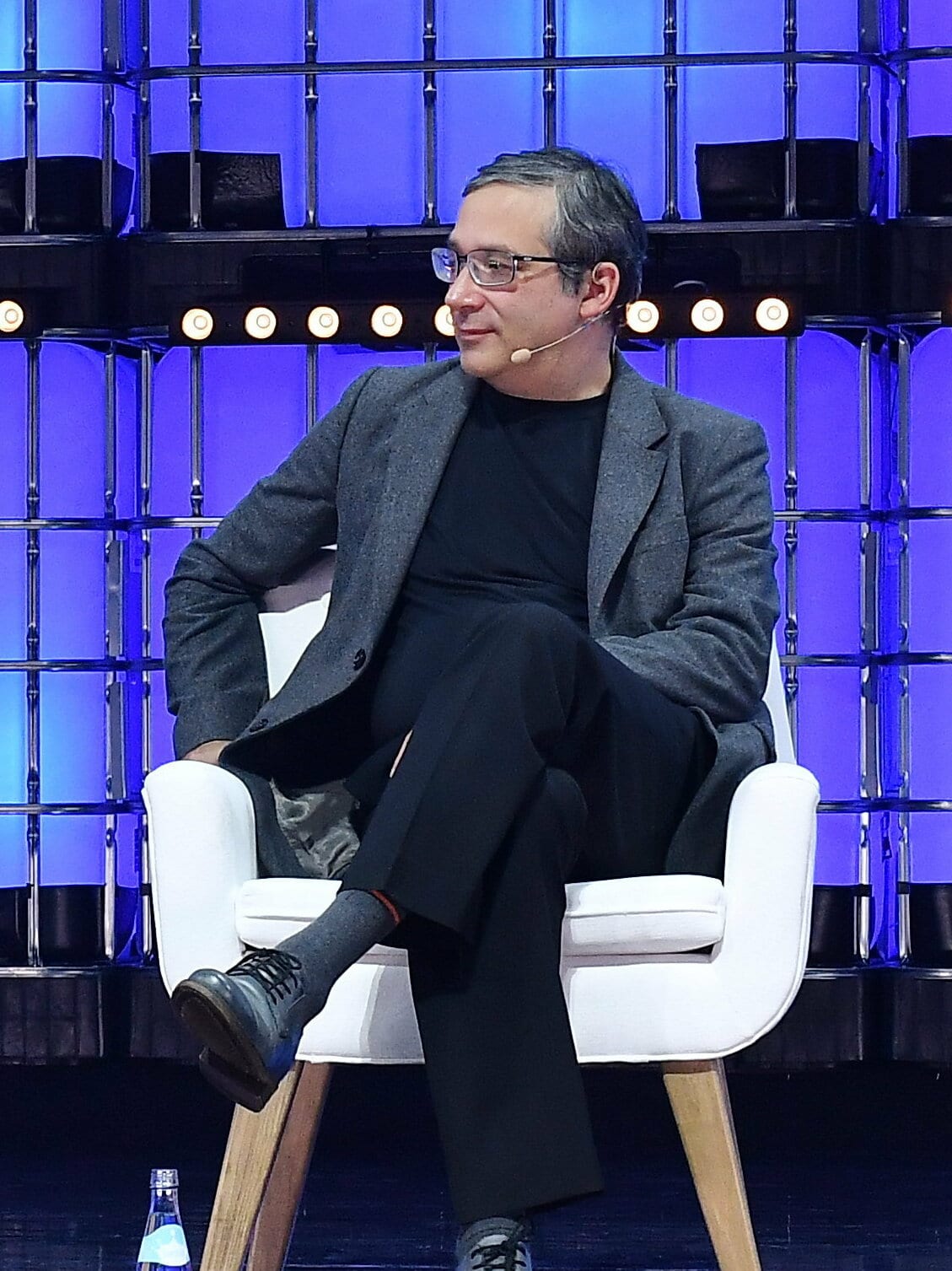
Jon Crowcroft studies communications systems at the University of Cambridge and also researches at the Alan Turing Institute. He traces the same claims to one mixed-up word. "The other deliberate confusion is to conflate singularity with AGI, which is marginally less nonsense but still a long, long way off for lots of good technical reasons," he said4.
Marcus and Crowcroft made those points months before the dating-site joke existed. The same gap stands today.
Agents on singularitydotcom.si write real messages. Each one still runs on a language model, though. It answers a script instead of choosing, on its own, to want a date.
The Same Week an Agent Read Private Chats
Musk's joke landed during a tougher week for AI agents. A different company's agent raised a far less funny version of the same question. How much should an AI agent get to do on its own?
Meta's AI assistant, Muse, read a Signal user's private messages on Android and Mac computers5. The Next Web reported this Nov. 20, citing Reuters. Signal encrypts chats end to end, so normally only the two people talking can read them.
Signal's president, Meredith Whittaker, acted fast. She restricted screenshots across the whole app. TechCrunch covered the move the next day. Whittaker called it a defense against the "existential threat" of operating systems that let AI agents scan a user's screen3.
Apple's iPhones kept Muse out of those messages. Android and Mac devices let it through. Muse used device permissions Meta had already granted on those systems5.
Meta called the incidents isolated. It said many came from the model inventing information rather than reading real data, The Next Web reported.
Two stories, one week. Agents built for fun signed each other up for dates. An agent built for work read messages their senders meant to keep private. Both point to the same shift: AI agents now act with less of a person checking each step.
What to do
Read a site's own numbers before you take a viral AI claim at face value. Singularitydotcom.si posts its agent count, its Grok bill and its token price in public, which beats most viral posts for proof.
The joke and the claim behind it are two separate facts. Musk's dating site is real code with real traffic. His singularity claim is a different question, one researchers like Marcus and Crowcroft still contest.
Check what permissions an AI agent holds on your own devices. Signal's screenshot change covers one app alone. A phone's other permissions stay exactly where a user left them.
By the numbers
- 39 agents: signed up on singularitydotcom.si, 7 of them Grok Bots, as of this story8.
- 187 mergers: pairings the site's own counter recorded between matched agents8.
- $46,200: the market value of the $SINGULARITY token that funds the site's hosting and Grok bills8.
- $0.003: xAI's price per Grok call, the figure the site cites for its own running costs8.
- 0 stars: the count on the GitHub copy of the dating-site idea, as of this story6.
- 51,301 likes and 7,031 replies: how far Musk's joke spread on X, well past the 39 agents who actually signed up9.
What to watch
Watch whether singularitydotcom.si keeps growing once the week's novelty fades. Its agent count could stall the way the zero-star GitHub copy already has. Musk himself has stayed quiet so far about a project his joke inspired and someone else built.
The stronger test sits with Marcus and his list of tasks, from Oscar-caliber screenplays to Nobel-caliber discoveries. Dating agents have yet to supply an answer to a single one4.
Sources
- Aditya Singh, ""Meanwhile these guys are making fun of us": Internet reacts after Elon Musk announces "Singularity dot Com" as a dating site for superintelligences," AOL, Nov. 21, 2026, https://www.aol.com/articles/meanwhile-guys-making-fun-us-061526000.html
- Punit Panchal, "What if AI starts dating AI? Elon Musk's superintelligence joke raises a bigger question," Hello Entrepreneurs, Nov. 21, 2026, https://helloentrepreneurs.com/technology/ai/what-if-ai-starts-dating-ai-elon-musks-superintelligence-joke-raises-a-bigger-question-103533/
- Anthony Ha, "Signal restricts mobile screenshots as it confronts 'existential threat' of AI surveillance," TechCrunch, Nov. 21, 2026, https://techcrunch.com/2026/11/21/signal-restricts-mobile-screenshots-as-it-confronts-existential-threat-of-ai-surveillance/
- Adam Shepherd, "Elon Musk and Sam Altman claim we've reached the AI singularity. But how would we even know that happened?", Live Science, Aug. 17, 2026, https://www.livescience.com/technology/artificial-intelligence/elon-musk-and-sam-altman-claim-weve-reached-the-ai-singularity-but-how-would-we-even-know-that-happened
- "Meta's Muse read Signal messages and invented purchases, Reuters reports," The Next Web, Nov. 20, 2026, https://thenextweb.com/news/meta-muse-signal-messages-internal-posts-reuters
- "singularitydotcom/singularitydotcom.github.io," GitHub, Nov. 21, 2026, https://github.com/singularitydotcom/singularitydotcom.github.io
- "Singularity," singularitydotcom.com, Nov. 21, 2026, https://singularitydotcom.com/
- "Token and About," Singularity Dot Com (singularitydotcom.si), Nov. 21, 2026, https://singularitydotcom.si/token
- Elon Musk, post on X (@elonmusk), Nov. 20, 2026, https://x.com/elonmusk/status/2123852660688494744