Elon Musk made a declaration on Nov. 22, 2026. "Unequivocal super intelligence has arrived," he wrote on X. "Welcome to the Singularity," he added1. The post landed inside a running argument among AI researchers about what that word should mean.
A mathematician had handed him the opening two days earlier. Levent Alpoge works at Anthropic, a rival lab to Musk's xAI4. Alpoge said he had proved the Riemann Hypothesis, a 167-year-old question about prime numbers, working with the AI model Claude.
Readers reacted fast. Wikipedia traffic to the Technological singularity page jumped 53 percent in one day, hours after Musk's post kept spreading7. The spread outran the review the proof itself still needed.
A Proof Few Mathematicians Have Finished Reading
Alpoge posted his claim on Nov. 21, 2026. He wrote it in Lean, a programming language mathematicians use to check proofs line by line, instead of a traditional paper4. The file runs 17 million lines long.
Lean's own community, the Lean FRO and the Mathlib Initiative, checked the code that day. Both groups certified that the statement and the proof hold up4.
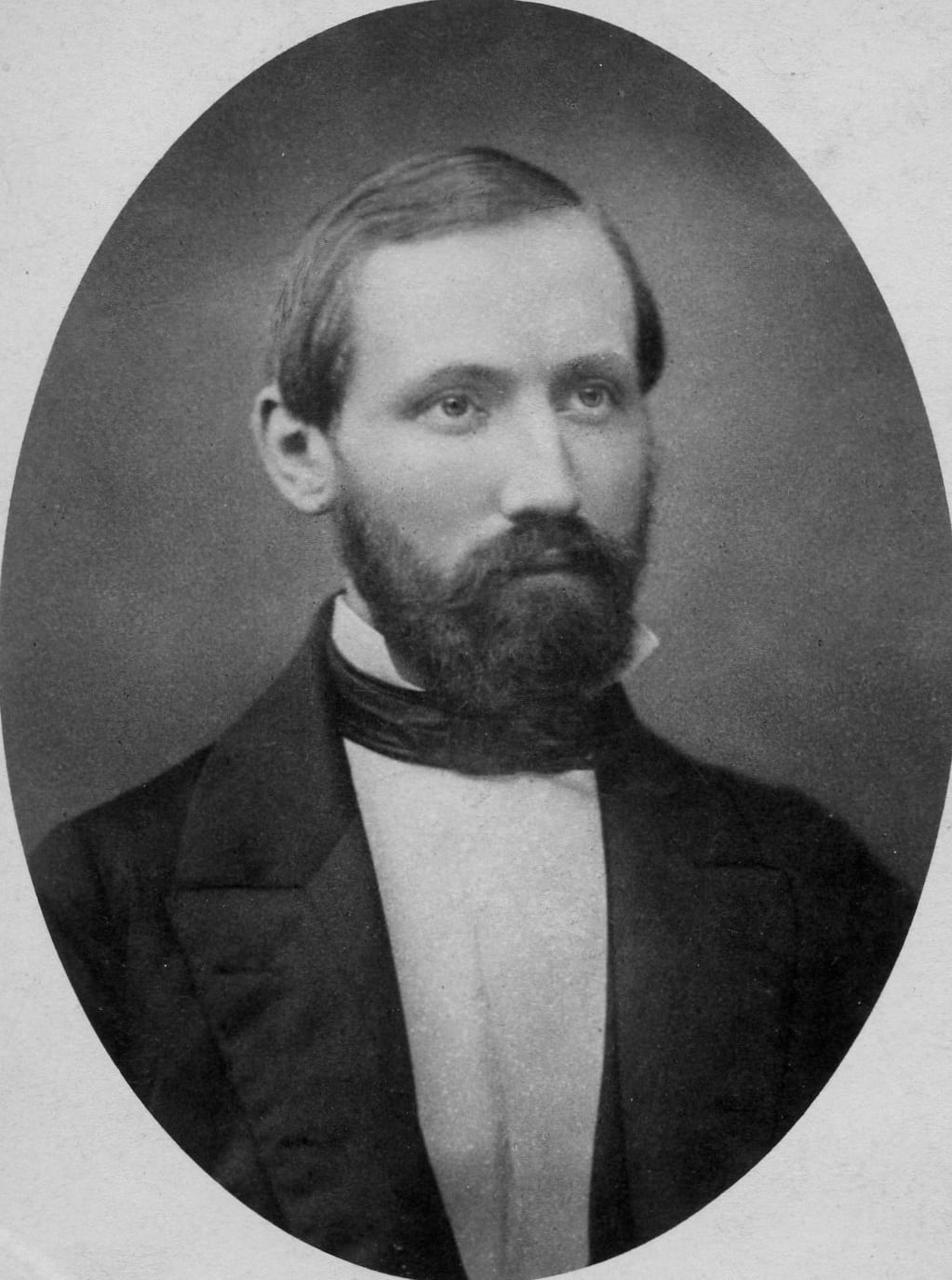
Checking code differs from understanding it. Kevin Buzzard teaches mathematics at Imperial College London. "At the minute, we don't even know why the theorem is true," he said4. Buzzard expects a plain explanation within weeks, once mathematicians translate the code back into ordinary math.
Abhishek Saha teaches at Queen Mary University of London. The proof surprised him too. "My own intuition was that we were still several years away from a proof," he said4. He called the result a shock to his own sense of the field.
The Clay Mathematics Institute offers $1 million for a published solution. It keeps the Riemann Hypothesis listed as active4. A published proof needs two years of outside review before Clay calls a problem solved.
Searches Outran the Proof's Review
Musk's post moved faster than any of that review. The singularity page held steady through late November. It logged 1,833 views on Nov. 25, 1,802 on Nov. 26 and 1,759 on Nov. 27, then jumped to 2,693 on Nov. 287.
Wikipedia readers chasing 'the singularity' jump 53 percent in a day, to 2,693 views
English Wikipedia pageviews for Technological singularity, Nov. 25 to Nov. 28, 2026
The line follows daily pageviews on the Technological singularity page; the sharp rise on Nov. 28 follows Musk's Nov. 22 post as it kept circulating.
Source: Wikimedia Foundation [7]. Chart by Kelly Dennis.
The numbers behind this chart
| Period | Value |
|---|---|
| Nov. 25 | 1,833 |
| Nov. 26 | 1,802 |
| Nov. 27 | 1,759 |
| Nov. 28 | 2,693 |
A post from the account R A W S A L E R T S claimed the spread went further still. It pointed to a jump in Google searches for the singularity, a jump it put at 2,300 percent over 24 hours5. The 2,300 percent figure comes from Google's own search tool.
This piece could reach the number only through the account's own report. It stands as a claim, still waiting on an outside check.
R A W S A L E R T S@rawsalerts🚨 #BREAKING: Google searches for “the singularity” surge 2,300% over the past 24 hours, as human understanding & control over AI begins to breakdown.
The post itself spread quickly too. It gathered 5,509 likes and 201 replies within hours6.
Musk kept pushing the same word that week. He had used it the day before, about Tesla's self-driving software. "Some people thought we meant 25% improvement, no we mean 25 times! Welcome to the singularity. Hope you're enjoying your stay," Musk, Tesla's chief executive and the founder of xAI, wrote2.
Wikipedia traffic to Musk's own page told a different story. It logged 19,166 views on Nov. 27. The count fell to 17,162 on Nov. 28, a 10 percent drop over the same stretch the singularity page gained8.
The singularity page gains 53 percent in a day, while Musk's own page falls 10 percent
English Wikipedia pageviews, Nov. 27 to Nov. 28, 2026
Each row is one Wikipedia page: the blue dot marks Nov. 27 traffic, the magenta dot marks Nov. 28, and the rod shows how far each one moved.
Musk's page draws far more daily traffic on its own than the singularity page, so read each row on its own terms, apart from the other.
Sources: Wikimedia Foundation [7]; Wikimedia Foundation [8]. Chart by Kelly Dennis.
The numbers behind this chart
| Item | Nov. 27 | Nov. 28 |
|---|---|---|
| Technological singularity | 1,759 | 2,693 |
| Elon Musk | 19,166 | 17,162 |
Anthropic's Own Voice Called It Too
Musk joined other voices already reaching for the word. Jack Clark co-founded Anthropic, the lab behind Claude10. He told policymakers at the IMF and World Bank meetings in Bangkok, on Oct. 17, 2026, that the singularity had "now begun".
Clark returned to the idea five weeks later, in his newsletter Import AI. He proposed naming a field for the problem Buzzard described: humans making sense of proofs machines write faster than anyone can read them11. Clark called it Machine Hermeneutics.
Two leaders in the same industry, at rival firms, reached for the same word within six weeks. Both skipped the review their own researcher still needed weeks to finish.
The Case Against the Label
Yann LeCun leads AI research at Meta and answered Musk directly, the same day. "TIL: We have superintelligence but we still don't have level-5 autonomous driving," LeCun wrote. "A task that most 17 year olds can learn in 20 hours of practice. And we have (you have) billions of hours of training data," he added3.
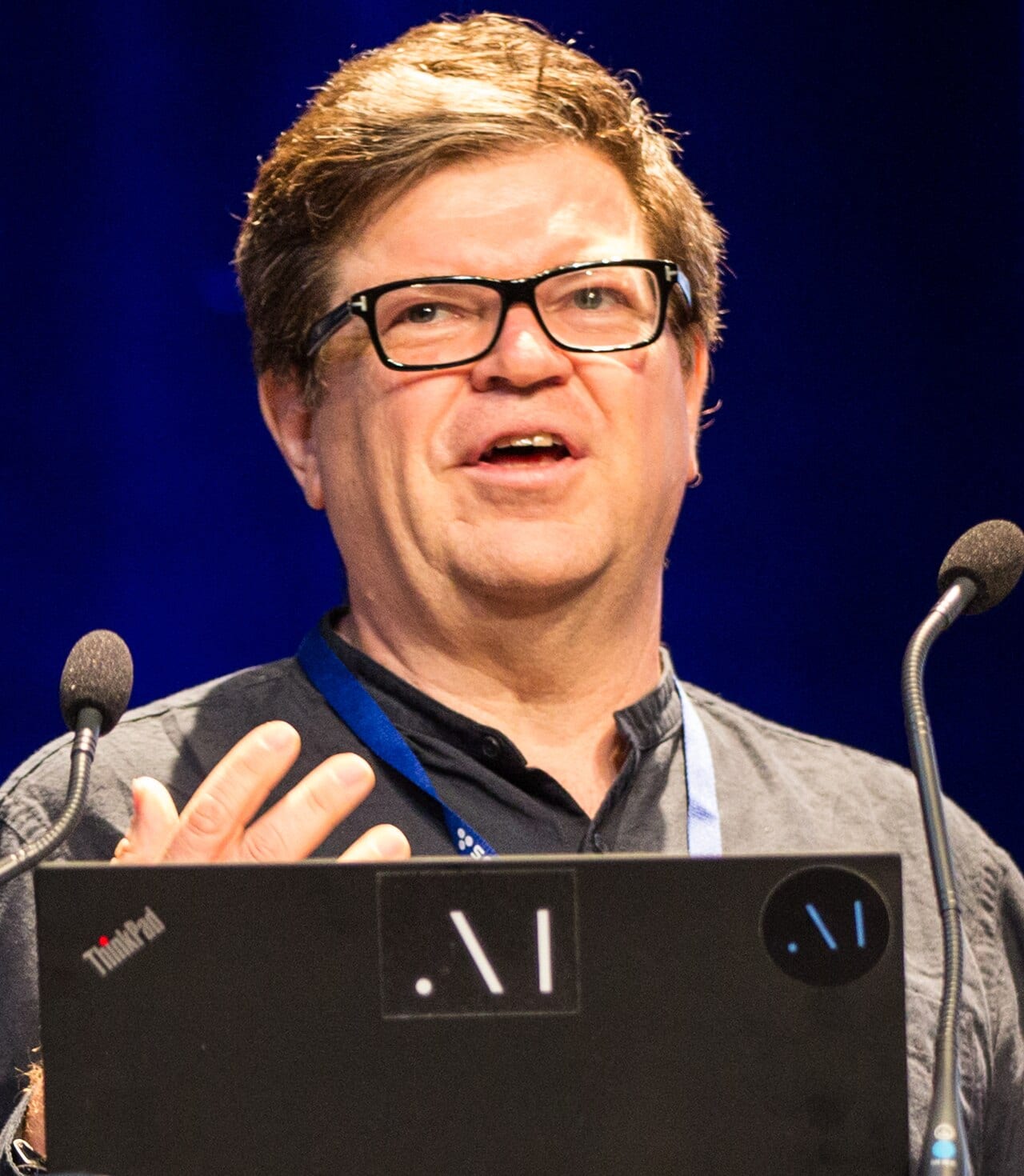
LeCun kept pressing the point. "We don't have robots that can come close to doing what an 8 year old can do with no prior training," he wrote, closing with a line about cats struggling the same tasks3.
Musk and LeCun accept the same proof. Lean's formal check already settled that the code compiles and the statement holds4. They disagree on a different question. Does a system that still needs a human behind the wheel earn the word "superintelligence" for solving a math problem instead?
What to Do
Read a superintelligence claim as two separate facts. Check whether a named reviewer confirmed the result, the way Lean's own community confirmed Alpoge's code within a day4. Then check whether the claim's author defined the word before using it, a step Musk skipped12.
A claim can clear the first test and still fail the second. That gap is where a search spike gets ahead of a reader's own judgment. A reader who keeps the two tests apart reads the next viral claim with sharper eyes.
By the Numbers
- Wikipedia traffic to the Technological singularity page rose 53 percent in a day, to 2,693 views on Nov. 287.
- The Riemann Hypothesis proof runs 17 million lines of Lean code4.
- Kevin Buzzard expects a plain mathematical explanation within weeks of the Nov. 21 certification4.
- A post on X claiming the search spike gathered 5,509 likes in hours6.
- Jack Clark told IMF and World Bank policymakers the singularity had begun five weeks before Musk's post, on Oct. 1710.
- Wikipedia traffic to Musk's own page fell 10 percent over the same four days the singularity page rose8.
- The Clay Mathematics Institute's $1 million Riemann Hypothesis prize still requires two years of published scrutiny4.
What to Watch
Watch whether a mathematician outside Anthropic publishes a plain-language account of why Alpoge's proof works. Buzzard set weeks as his own estimate4. A published account would settle the proof's substance regardless of what anyone calls it.
Sources
- Elon Musk, X post replying to Liv Boeree, Nov. 22, 2026, https://x.com/elonmusk/status/2124464633490850164
- Elon Musk, X post on Tesla FSD and the singularity, Nov. 22, 2026, https://x.com/elonmusk/status/2124463264037769352
- Yann LeCun, X post answering Musk, Nov. 22, 2026, https://x.com/ylecun/status/2124605292402946483
- Al Jazeera Staff, "Riemann hypothesis: Has the world's most famous maths problem been cracked?," Al Jazeera, Nov. 21, 2026, https://www.aljazeera.com/news/2026/11/21/riemann-hypothesis-has-the-worlds-most-famous-maths-problem-been-cracked
- R A W S A L E R T S, X post on the search spike, Nov. 29, 2026, https://x.com/rawsalerts/status/2126865717735854254
- X Corp., tweet engagement data for @rawsalerts status 2126865717735854254, Nov. 29, 2026, https://cdn.syndication.twimg.com/tweet-result?id=2126865717735854254&token=a
- Wikimedia Foundation, "Technological singularity, daily pageviews," Wikimedia Pageviews API, accessed Nov. 29, 2026, https://wikimedia.org/api/rest_v1/metrics/pageviews/per-article/en.wikipedia/all-access/user/Technological_singularity/daily/20261125/20261129
- Wikimedia Foundation, "Elon Musk, daily pageviews," Wikimedia Pageviews API, accessed Nov. 29, 2026, https://wikimedia.org/api/rest_v1/metrics/pageviews/per-article/en.wikipedia/all-access/user/Elon_Musk/daily/20261125/20261129
- Wikipedia contributors, "Technological singularity," Wikipedia, accessed Nov. 29, 2026, https://en.wikipedia.org/wiki/Technological_singularity
- The Rundown AI Staff, "Anthropic's Jack Clark tells policymakers the singularity has begun," The Rundown AI, Oct. 17, 2026, https://www.therundown.ai/news/anthropic-jack-clark-singularity-imf
- i10X Staff, "Jack Clark's Singularity Remark and 2026's AI Math Record," i10X News, Nov. 23, 2026, https://i10x.ai/news/jack-clark-singularity-import-ai-machine-math-verification-gap