OpenAI turned its own staff into a case study this year. Six company economists published the results on June 25, 20261. Recruiters and founders watching AI adoption now get a rare look at the ceiling. It shows how a company behaves once every worker has the tool on hand.
The paper tracks three groups: OpenAI's own staff, its business customers, and its individual customers. A wide gap between the first group and the other two is the story. Inside OpenAI, Codex use is close to universal. Among outside customers, it barely registers.
"Almost all active OpenAI workers use Codex each week," the paper's authors wrote1. The Register's Thomas Claburn reports that staff adoption climbed from roughly 40 percent in August 2025 to near that level by June 20263. Just 17.3 percent of the businesses that pay for Codex opened it in the last 28 days. Individual customers who buy it for themselves cleared fewer than 1 percent in that same window.
The gap in OpenAI's own data
Codex and ChatGPT split the work by habit, more than by task. As of June 11, 2026, Codex carried 99.8 percent of the output tokens OpenAI's own staff produced across both tools1. Business customers split closer to the middle, with Codex carrying 63.3 percent of their output. Individual customers still leaned on ChatGPT, giving Codex just 16.5 percent of theirs.
OpenAI Staff Send 6 Times More Output Through Codex Than Customers
Share of combined Codex-and-ChatGPT output tokens that ran through Codex, by group, as of June 11, 2026
Source: arXiv [1]. Chart by Ryan Elliott Dennis.
The numbers behind this chart
| Item | Value |
|---|---|
| OpenAI staff | 99.8% |
| Business customers | 63.3% |
| Individual customers | 16.5% |
Staff produced six times the Codex share that individual customers did. The six-to-one ratio is the plainest reading of the gap. A business customer sits between the two, closer to staff than to a person paying for Codex alone.
Legal and research teams moved fastest
The surge hit some teams harder than others. One group stands out. The median OpenAI employee in a legal role generated 13 times more output tokens in June 2026 than in November 20251. Legal's tokens span both Codex and ChatGPT.
A second group moved even faster. The median researcher generated more than 50 times as many output tokens over that same stretch1. Legal and research staff spend their days on contracts and papers instead of code.
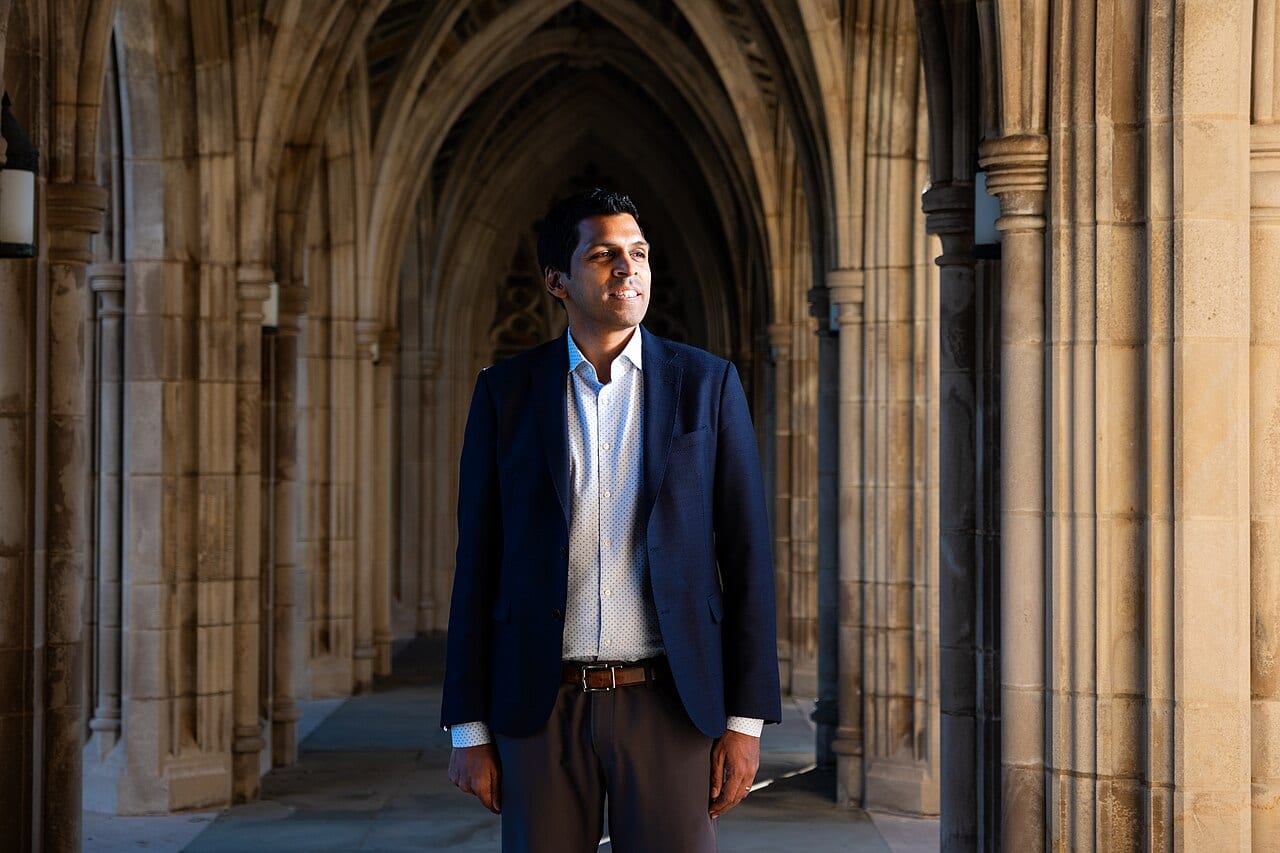
Aaron Chatterji helped build that data. OpenAI hired him as its first chief economist in October 2024, pulled from Duke University's Fuqua School of Business7. He had already spent years in government, as chief economist at the Commerce Department under President Biden.

"My career has focused on studying how innovation and entrepreneurship shape our economy and society, and I am excited to apply my skills to support OpenAI's mission to ensure that the benefits of artificial intelligence are widely distributed," Chatterji said when OpenAI hired him7.
Customer-facing teams climbed fast too. OpenAI's own account of the data put Customer Support's median use 32 times higher in June 2026 than in November 20252. Research climbed even more, 56 times higher over the same stretch. Engineering, the group that built Codex in the first place, grew a modest 27 times.

Research Teams Multiply Codex and ChatGPT Use 56 Times Since November
Growth in median OpenAI employee use by department, November 2025 to June 2026
Each column is one OpenAI department; the height is how many times higher its median use ran in June 2026 than in November 2025.
Source: OpenAI [2]. Chart by Ryan Elliott Dennis.
The numbers behind this chart
| Item | Value |
|---|---|
| Research | 56x |
| Customer Support | 32x |
| Engineering | 27x |
| Legal | 13x |
Individual customers ask Codex to do harder work too, even though adoption among them stays rare. In December 2025, just 2.1 percent of active individual users sent Codex a task that would take a skilled person eight hours1. By May 2026, 25.6 percent did. The customers who do show up are asking for more.
A preview, or just one office
Ethan Mollick reads the numbers as a forecast. The Wharton professor studies how companies adopt AI tools for a living. "This is a fascinating and important set of data which shows us where things are going," he wrote the day the paper posted6. "The chatbot era is over, and agentic systems are coming to tasks beyond engineering," he added.

Gergely Orosz sees the same gap another way. He writes the Pragmatic Engineer newsletter and has tracked OpenAI's build process since Codex launched. "OpenAI's internal version of Codex is a lot more advanced than its external counterpart because it's plugged into pretty much every OpenAI system," Orosz wrote in September5. His point: a customer's tool and an OpenAI employee's daily tool can differ in ways a usage chart skips.
Ana Maria Constantin raises a related concern for TheNextWeb. Every figure in the paper comes from OpenAI itself, a company with a clear stake in Codex's success4.
Johnston and his coauthors concede the same limit in their own paper. "OpenAI usage is therefore not representative of the typical organization today," they wrote. "However, it provides a view of what agentic AI use may look like in the future, when adoption frictions are minimal"1. Unlimited access and in-house coaching from Codex's own builders are the frictions the paper expects to fade, over time.
David Holtz@daveholtz🚨 New research alert! For the past few months, I've been a part-time visiting economics researcher at OpenAI. Excited to share the first public piece of work to come out of this, which uses data from Codex to document the ongoing and rapid shift to agentic AI.
Details below 👇 pic.twitter.com/FVgEHlVeQZ

What to do
Ask your own AI vendor for its internal numbers before you read its customer pitch. A tool a company's own staff barely touch is a weaker signal than Codex's 99.8 percent share inside OpenAI.
Track adoption and depth as two separate questions. OpenAI's business customers already clear 17.3 percent adoption. The harder test for your own rollout is depth, beyond access. OpenAI's legal and research teams grew their use 13 and 50 times over, in seven months.
By the numbers
- 99.8 percent: share of output tokens OpenAI's own staff sent through Codex, versus ChatGPT, in June 20261.
- Just 17.3 percent: share of OpenAI's business customers who opened Codex at all in the last 28 days1.
- Fewer than 1 percent: share of individual customers who opened Codex in the same 28-day window1.
- 63.3 and 16.5 percent: Codex's share of output tokens among business and individual customers1.
- 13 times and 50 times: growth in monthly output tokens for OpenAI's legal and research staff, Nov. 2025 to June 20261.
- Fivefold: growth in Codex's active users across the first half of 20261.
- 2.1 to 25.6 percent: growth in the share of individual customers sending Codex an eight-hour task, December 2025 to May 20261.
What to watch
Watch for OpenAI's next usage update, likely built on the same three-group split; a shrinking gap would weaken the insiders-only objection. Anthropic and Google might publish, or decline to publish, a similar staff-versus-customer breakdown of their own coding agents. A rival's silence on its own adoption gap would say as much as OpenAI's disclosure did. Business-customer adoption climbing past 17.3 percent, tracked over a full year beyond 28 days, would settle whether the frictions Johnston named are fading.
Sources
- Drew Johnston, David Holtz, Alex Martin Richmond, Christopher Ong, Prasanna Tambe and Aaron Chatterji, "The Shift to Agentic AI: Evidence from Codex," arXiv, June 25, 2026, https://arxiv.org/abs/2606.26959
- OpenAI, "How agents are transforming work," OpenAI, June 25, 2026, https://openai.com/index/how-agents-are-transforming-work/
- Thomas Claburn, "OpenAI says 97.9 percent of its employees are now using agents," The Register, June 25, 2026, https://www.theregister.com/ai-and-ml/2026/06/25/openai-says-979-percent-of-its-employees-are-now-using-agents/5262499
- Ana Maria Constantin, "OpenAI says nearly all its employees have switched from chatbots to Codex agents, but every number comes from OpenAI itself," TheNextWeb, June 25, 2026, https://thenextweb.com/news/openai-codex-agents-shift-employees-non-developers
- Gergely Orosz, "Inside OpenAI's agentic software factory," The Pragmatic Engineer, Sept. 15, 2026, https://newsletter.pragmaticengineer.com/p/openai-software-factory
- Ethan Mollick, post on X, June 25, 2026, https://x.com/emollick/status/2070171580030656744
- Cheyenne DeVon, "OpenAI hires first chief economist," CNBC, Oct. 28, 2024, https://www.cnbc.com/2024/10/28/openai-hires-first-chief-economist.html