Physical Superintelligence says its hidden Anthropic model proved a quantum puzzle that stumped researchers for 18 years1. The Cambridge, Massachusetts lab calls the system a virtual physicist. PSI built it to search mathematics, apart from its usual work on atoms3. Two days later, the crowd watching the claim has grown much faster than the circle checking it.
David Turturean, the PSI staff researcher who ran the system, scoped the problem himself and watched it search for three days1. He then prompted the model to draft the paper and reviewed it himself. Turturean says he stands behind the paper's correctness, even though a model wrote its first version.
Lean, a proof assistant that checks each logical step by machine, rechecked the work twice before PSI called it done4. The two mathematicians whose names sit on the conjecture have kept their verdict to themselves since.
The Puzzle PSI Says It Closed
Quantum computers read their input in one step that an ordinary computer needs many steps to match. Peter Shor used that gap in 1994 to factor huge numbers fast2. His trick needs a hidden pattern inside the number. A quantum computer finds that pattern in far fewer steps than any classical method.
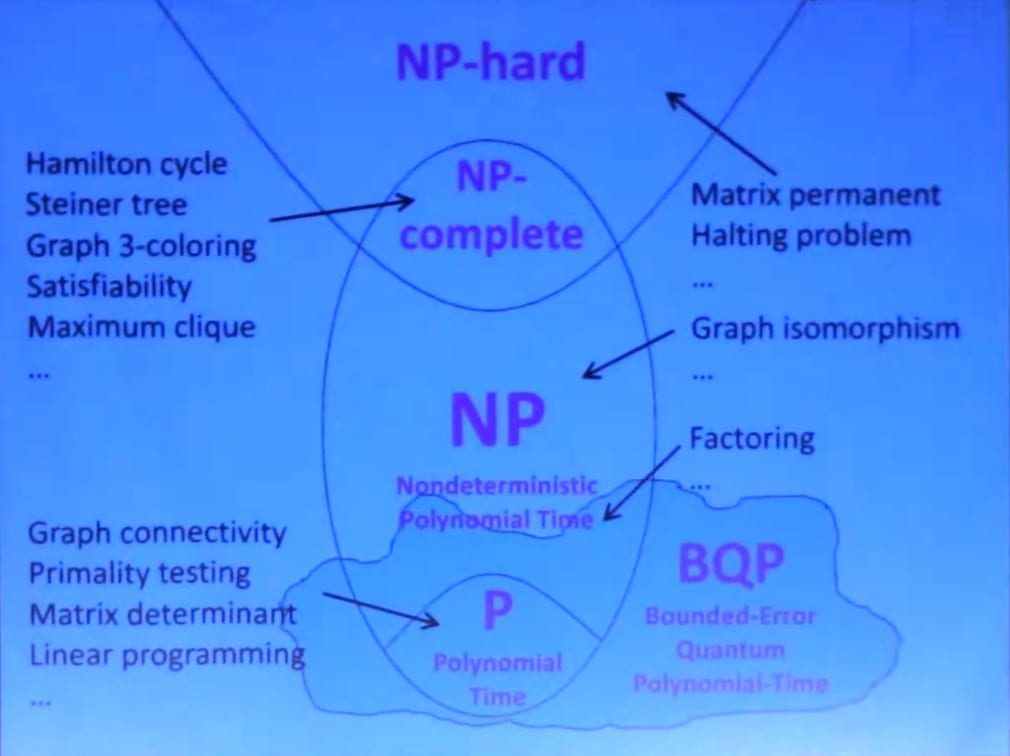
Scott Aaronson and Andris Ambainis posed a harder puzzle in 2008. Could a quantum computer still win on a single true-or-false question, asked about a string picked completely at random1? The question stood open for 18 years.
PSI's proof finds the two machines run about even there1. An ordinary computer can match a quantum one using only a few more reads, far short of Shor's exponential jump2. Shor's algorithm still stands apart, because factoring hides a pattern most random strings lack.
The proof builds on work by two other mathematicians, Shachar Lovett and Jiapeng Zhang1. They studied how much a function's value swings when one input bit flips.
Applause Outpaces the Audit
PSI announced the proof on Nov. 61. Two days later, the numbers around it tell two different stories. The public story keeps climbing. Scrutiny crawls behind it.
Favorites on PSI's X post climbed from 1,718 to 3,853 between Nov. 6 and Nov. 816. Replies on the same thread reached 151. Stars on PSI's GitHub repository climbed from 13 to 46 in the same two days, with six people forking the code4.
PSI's GitHub Stars Triple From 13 to 46 in Two Days
X favorites and GitHub stars on Physical Superintelligence's Aaronson-Ambainis proof, Nov. 6 to Nov. 8, 2026
Each rod runs from the count at PSI's Nov. 6 announcement to the count on Nov. 8; GitHub stars more than tripled while X favorites a little more than doubled.
X favorites and GitHub stars are each that platform's own measure, so the gap is a difference in kind as well as scale.
Sources: PSI [1]; GitHub [4]; Physical Superintelligence on X [6]. Chart by Kelly Dennis.
The numbers behind this chart
| Item | Nov. 6 | Nov. 8 |
|---|---|---|
| X favorites, PSI's post | 1,718 | 3,853 |
| GitHub stars, proof code | 13 | 46 |
A star on GitHub means a working coder or mathematician opened the proof's code and judged it worth a bookmark. One tap earns a favorite on X. The ratio between them, 84 favorites for every star, shows most of the attention sits outside anyone checking the work146.
Runtime Wire framed what is still open3. A verified proof gives PSI's system a result the field can check in Lean. Trust alone would settle for less. Two days in, that outside check remains the open part.
Who Backs It, and Who Still Waits
PSI launched to the public in September 20262. It calls itself a physics research company that builds automated systems for scientific discovery. PSI's proof followed about two months later.
Four Stanford researchers read PSI's full proof before it posted. Guy Blanc, Jordan Docter, Carmen Strassle and Li-Yang Tan had already proved a narrower version of the same claim in August1. PSI sent them a draft, and they wrote back in detail.
"This is a huge result," they wrote. "It resolves a decades-old conjecture with important implications for the nature of problems that admit quantum speedups"1. Tan teaches at Stanford, where his own research already touches the functions this proof extends.
Andris Ambainis, the conjecture's quieter co-namesake, has offered the public silence on PSI's claim so far. He teaches at the University of Latvia, in Riga, and posed the original 2008 question together with Aaronson1.
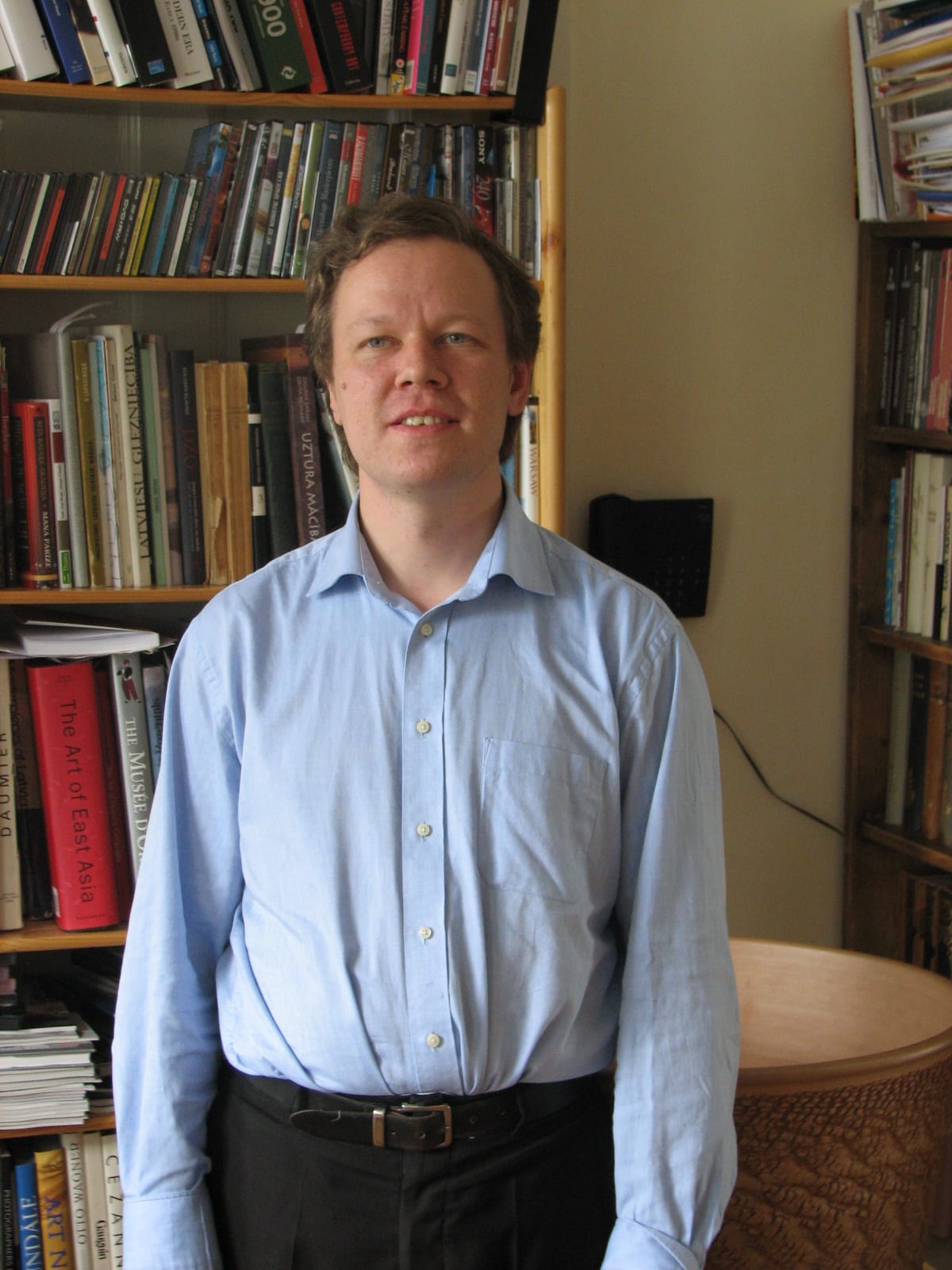
Scott Aaronson has stayed quiet on this specific claim too. In October, writing about a separate Anthropic proof, he warned that "the 'Anthropic model' puts a private company in the position of picking and choosing which human mathematicians get to be the emissaries of the AI"5. He teaches complexity theory at the University of Texas at Austin.
Two Days of Silence Follow PSI's Nov. 6 Claim
Dated milestones from the 2008 question to Nov. 8, 2026
Each pin marks one dated event; the rail breaks across the gap between 2008 and this October's warning about hidden AI models in math.
Sources: PSI [1]; Shtetl-Optimized [5]. Chart by Kelly Dennis.
The numbers behind this chart
| Date | Event |
|---|---|
| 2008 | The 2008 question. Aaronson and Ambainis frame the conjecture in a lecture |
| Oct. 7, 2026 | Aaronson's warning. The Mathocalypse, written about a separate proof |
| Nov. 6, 2026 | PSI claims the proof. Found on day three of a run |
| Nov. 8, 2026 | Two days of quiet. Both mathematicians stay quiet |
PSI's own repository marks out one step that still waits on a person. Confirming that falls to a reader, the documentation says, apart from Lean's own check4. A reader has to check that its formal statement matches the conjecture Aaronson and Ambainis posed in 2008. Two days after the announcement, the two readers best placed to take that step have let the time pass in silence.
Physical Superintelligence@psipbcToday Physical Superintelligence PBC is announcing a proof of the Aaronson-Ambainis conjecture, one of the central open problems in quantum complexity, with major implications for quantum computing speedup.https://t.co/sAewkKdSOu
Thread 👇
What to Do
Treat PSI's two claims apart from each other. The search for the proof is one claim, and Lean's mechanical check of the formal steps is a second, separate claim4. Both can be true at once, and each stands apart from the other.
Read the proof's own limits before passing the headline along. PSI's GitHub page lists exactly which assumptions it trusts, including Lean's kernel and a short list of standard axioms4. Treat the Stanford letter as a strong early signal. The four Stanford mathematicians read the proof before anyone outside PSI saw it1.
Watch for a written verdict from Aaronson or Ambainis before calling the question closed. A reply from either man would carry more weight than another thousand favorites on X.
By the Numbers
- 3,853: X favorites on PSI's announcement as of Nov. 8, 2026, up from 1,718 on Nov. 616.
- 151: replies to that same X post as of Nov. 8, 20266.
- 46: stars on PSI's GitHub proof repository, up from 13 on Nov. 64.
- 6: forks of that repository as of Nov. 8, 20264.
- 84: X favorites for each GitHub star the proof has drawn so far146.
- 18 years: the span from Aaronson and Ambainis's 2008 question to PSI's claimed proof1.
- 2 days: the stretch of silence from Aaronson and Ambainis since PSI's Nov. 6 announcement5.
What to Watch
A written verdict from Aaronson or Ambainis would settle the biggest open question on its own. Peer review at a journal would add a check beyond Lean's reach. Watch PSI's own repository too, since a rising star count is the clearest public sign that mathematicians have begun to look4.
Stanford's Li-Yang Tan or Riga's Andris Ambainis could move the story forward with a comment at length.
Sources
- Physical Superintelligence, "A proof of the Aaronson‑Ambainis conjecture," PSI, Nov. 6, 2026, https://psi.inc/research/aaronson-ambainis/
- Neetika Walter, "Major quantum computing conjecture solved in three days after 18 years of uncertainty," Interesting Engineering, Nov. 6, 2026, https://interestingengineering.com/culture/psi-research-system-aaronson-ambainis-quantum-conjecture
- Ryan Merket, "Physical Superintelligence says its AI system proved the Aaronson-Ambainis conjecture," Runtime Wire, Nov. 6, 2026, https://runtimewire.com/article/physical-superintelligence-aaronson-ambainis-proof
- David Turturean, "physical-superintelligence/aaronson-ambainis," GitHub, Nov. 6, 2026, https://github.com/physical-superintelligence/aaronson-ambainis
- Scott Aaronson, "The Mathocalypse," Shtetl-Optimized, Oct. 7, 2026, https://scottaaronson.blog/?p=10169
- Physical Superintelligence (@psipbc), post on X, Nov. 6, 2026, https://x.com/psipbc/status/2118706269506949152