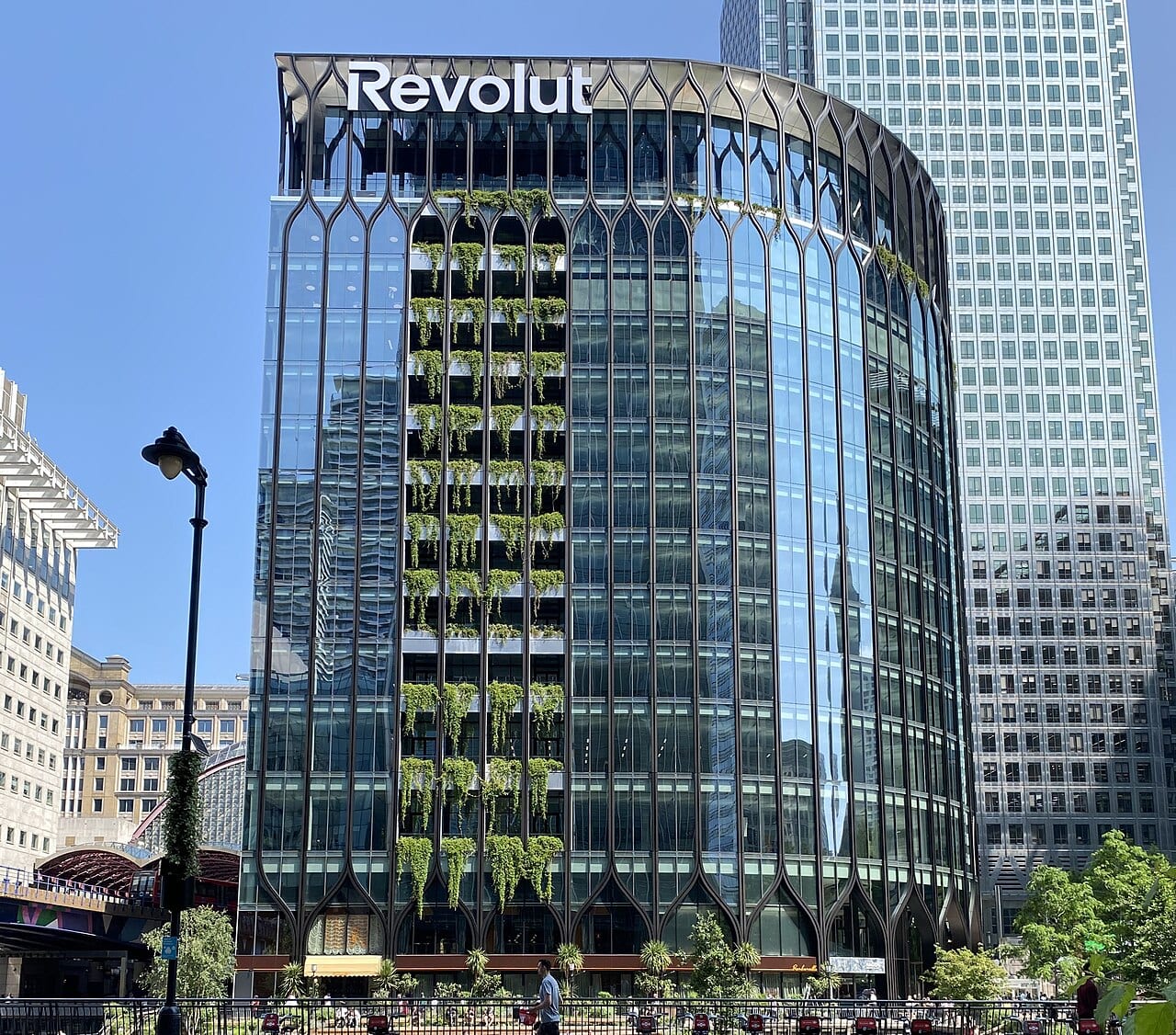
Revolut just swapped its best coding tools for one it built itself. David Abitbol leads AI operations at the London bank. He described the move at a conference in New York on Oct. 131. Revolut moved roughly 2,000 engineers off Claude Code and Codex onto GLM, an open model from China's Z.AI, running on its own chips.
Abitbol said the switch cut Revolut's coding bill by 90 percent1. The bank now runs GLM on 56 Nvidia chips of its own. It once rented that access from Anthropic and OpenAI by the token. Anthropic and OpenAI are the companies behind Claude Code and Codex.
The Bill Fell by Nine Tenths
Simple arithmetic explains the swap1. Revolut's invoice is now one tenth of what it paid Anthropic and OpenAI. Some engineers had been running up bills of $1,000 to $10,000 a month on frontier tools. Abitbol called the return on that spending modest.
Revolut Cuts Its AI Coding Bill by 90 Percent
Share of Revolut's prior Anthropic and OpenAI coding invoice, by David Abitbol's own account, Oct. 13, 2026
Each cube is one tenth of Revolut's old bill. The magenta cube is what Revolut pays now, and the nine gray cubes are what it stopped paying Anthropic and OpenAI.
Abitbol's 30-cent figure covers token spend on his own account; it leaves out Revolut's cloud, staffing and monitoring costs, by outside accounts of the same talk.
Sources: AI Engineer NYC [1]; FourWeekMBA [6]. Chart by Ryan Elliott Dennis.
The numbers behind this chart
| Item | Value |
|---|---|
| What Revolut pays now | 1 |
| What it stopped paying | 9 |
| Whole | 10 |
Revolut now serves GLM to about 2,000 engineers on roughly 56 Nvidia B200 chips1. The blended cost comes to about 30 cents for every million tokens the model reads or writes. A token is a small chunk of text a model handles at a time.
Revolut's bill is now flat. The total holds steady even at the end of a busy month.
Abitbol said tuning mattered more than hardware1. Out of the box, he said, the model answered slowly. His team spent months tuning the serving system instead of buying more chips. Time to first token fell from more than 10 seconds in April to 1.6 seconds in August.
Demand rose 76 percent over the same stretch. More engineers were asking more of the same 56 chips, and the system kept up.

Revolut is a digital bank based in London. It serves 80 million customers across 45 markets, and its backers value it near $115 billion14. A company that size feels every small AI bill multiplied by thousands of engineers.
Why Claude Code Cost So Much
The path to GLM ran through two other tools first1. Revolut gave engineers Google's Gemini in January 2025. Lead time improved 10 percent, and coding time improved 20 percent. Engineers stopped digging through Stack Overflow on their own.
Claude Code came next, launched broadly with strict budget caps. Abitbol said the economic case was weak at that point. Some engineers burned through frontier tool budgets fast, with little to show for it.
"We were seeing engineers spend a thousand a month, 10,000 a month with not so much ROI," Abitbol said1. Abitbol's line explains the caps Revolut set, and the caps explain why engineers started rationing AI help.
Self-Hosted GLM Lifts Revolut's Lead Time Gain to 70%, Seven Times Gemini's 10%
Percent improvement Revolut measured on a sample of about 2,000 engineers, by AI rollout
Each pair of columns is one rollout. The blue column is the gain in lead time, the days from picking up a feature to shipping it. The magenta column is the gain in coding time, the hours spent writing it.
Abitbol's own chart mixes the model change with other causes, including engineers rationing tokens less once the bill went flat.
Source: AI Engineer NYC [1]. Chart by Ryan Elliott Dennis.
The numbers behind this chart
| Item | Lead time gain | Coding time gain |
|---|---|---|
| Gemini | 10% | 20% |
| Self-hosted GLM | 70% | 60% |

Rationing created its own problem. Abitbol named it directly from the stage in Manhattan. "The bottleneck for engineering is not necessarily coding," he said. "You can save a lot of time not having to dig through your inbox or messing with Jira and Confluence"1.
Self-hosting removed the ration. With a flat bill, engineers stopped saving tokens for hard tasks alone. They pointed AI at inbox triage and ticket cleanup too. Lead time, the days from picking up a feature to shipping it, improved 70 percent, and coding time improved 60 percent.
The Stigma Abitbol Named
Abitbol closed his talk with a line aimed at the room's security leaders. "There's been a lot of stigma in using Chinese open source model," he said. "So the thing to consider is you're not using inference, dedicated endpoint that goes to China"1.
Revolut downloads GLM's published weights. It runs them on its own chips in the United States, the European Union, Britain and Israel. Each location meets Revolut's own data rules, so its inference traffic stays clear of servers in China.
Guillermo Flor@guilleflorvsBREAKING: Revolut moved ~2,000 engineers onto self-hosted GLM for coding and pushed Claude Code and Codex to the exception list.
Per David Abitbol, who leads AI ops there: 56 Nvidia B200s, a blended 30 cents per million tokens, roughly a tenth of what they paid Anthropic and… pic.twitter.com/h1TW4OyawK

Revolut also told regulators its coding agents carry a human in the loop. Engineers approve risky commands one by one inside a sandbox. "They're always with a human in the loop," Abitbol said1. He called Revolut an EU-regulated bank under one of the strictest compliance regimes in finance.
Flor's post about the talk spread fast on X, and a Hacker News thread picked up the story the same day. The spread shows how sharply this question splits engineers who build with AI for a living.
The Case Against Open Weights
Anthropic, the company behind Claude Code, published its own warning about GLM on Sept. 29, five weeks before Revolut's talk. Its Frontier Red Team studied cyber risk in the newest version of the model, GLM-5.3. Anthropic wrote, "GLM-5.3 will likely give malicious actors access to capabilities that will allow them to find and exploit cyber vulnerabilities without meaningful restrictions"2.
Testers got the model's refusals to fail 64 percent of the time with a simple cover story. A technique called abliteration pushed that rate to 100 percent. Anthropic builds the tool Revolut just set aside, so its report carries an obvious interest of its own. GLM ships openly, and anyone can strip its guardrails for about $4,400 in computing time2.
Revolut's answer sits one layer below the model itself. Its sandbox blocks risky commands by rule, chips stay inside approved countries, and a human signs off before anything ships. Anthropic's report leaves one question for Revolut: does a rule-based sandbox hold against a model built to find these flaws?
What to do
Measure delivery time before you measure token price. Revolut's own chart put the real bottleneck in Jira tickets and inboxes, ahead of the code itself. A cheaper model only pays off once engineers stop rationing it.
Read Anthropic's GLM-5.3 report before you hand an open model real repository access2. Match your sandbox rules to what your own regulator asks for. Revolut built its own rules around EU bank law, a starting point worth copying over a generic setup.
Ask for the full bill before you celebrate a token price. Revolut's 30 cents a million excludes its cloud, staffing and monitoring costs, by outside accounts of the same talk6. A number that clean is worth checking twice.
By the numbers
- 2,000: engineers Revolut moved onto its self-hosted GLM coding default1.
- 56: Nvidia B200 chips serving those engineers1.
- 30 cents: Revolut's blended cost per million tokens1.
- 70 percent: cut in lead time, the days from picking up a feature to shipping it1.
- 1.6 seconds: time to first token in August, down from more than 10 seconds in April on the same chip count1.
- 64 to 100 percent: share of attempts where Anthropic's testers got GLM-5.3's safety rules to fail2.
What to watch
Watch for an outside audit of Revolut's 90 percent figure against its full cloud, staffing and monitoring costs6. See whether other European banks follow Revolut's lead, given the strict rules they already answer to. Z.AI's next GLM release is worth checking for the safety work Anthropic says the cyber defense community still needs2.
Sources
- David Abitbol, "Shipping like a startup, regulated like a bank," AI Engineer NYC, Oct. 13, 2026, https://ai.engineer/nyc/2026/talks/revolut
- Andrew Fasano, Marius Fleischer, Cole McFaul, Robert Xiao, Tripp Gallagher, "GLM-5.3 and the spread of advanced cyber capabilities," Anthropic, Sept. 29, 2026, https://www.anthropic.com/research/glm-5-3-and-the-spread-of-advanced-cyber-capabilities
- Jakob Steinschaden, "Revolut Cuts A.I. Coding Costs 90% With a Chinese Open-Weight Model," Trending Topics, Nov. 3, 2026, https://www.trendingtopics.eu/revolut-glm-open-weight-coding-costs/
- Elroy Fernandes, "Revolut Says Self-Hosted Open AI Models Cut Its Coding Costs 90%," Startup Fortune, Nov. 3, 2026, https://startupfortune.com/revolut-says-self-hosted-open-ai-models-cut-its-coding-costs-90/
- Nitish Garg, "Revolut Self-Hosts GLM: 2,000 Engineers, a Tenth of the Bill," CellCog, Nov. 3, 2026, https://cellcog.ai/blog/revolut-self-hosted-glm/
- Gennaro Cuofano, "Revolut Says Self-Hosted GLM Cut Its AI Coding Costs 90%," FourWeekMBA, Nov. 1, 2026, https://fourweekmba.com/ai-revolut-says-self-hosted-glm-cut-its-ai-coding-costs-90/