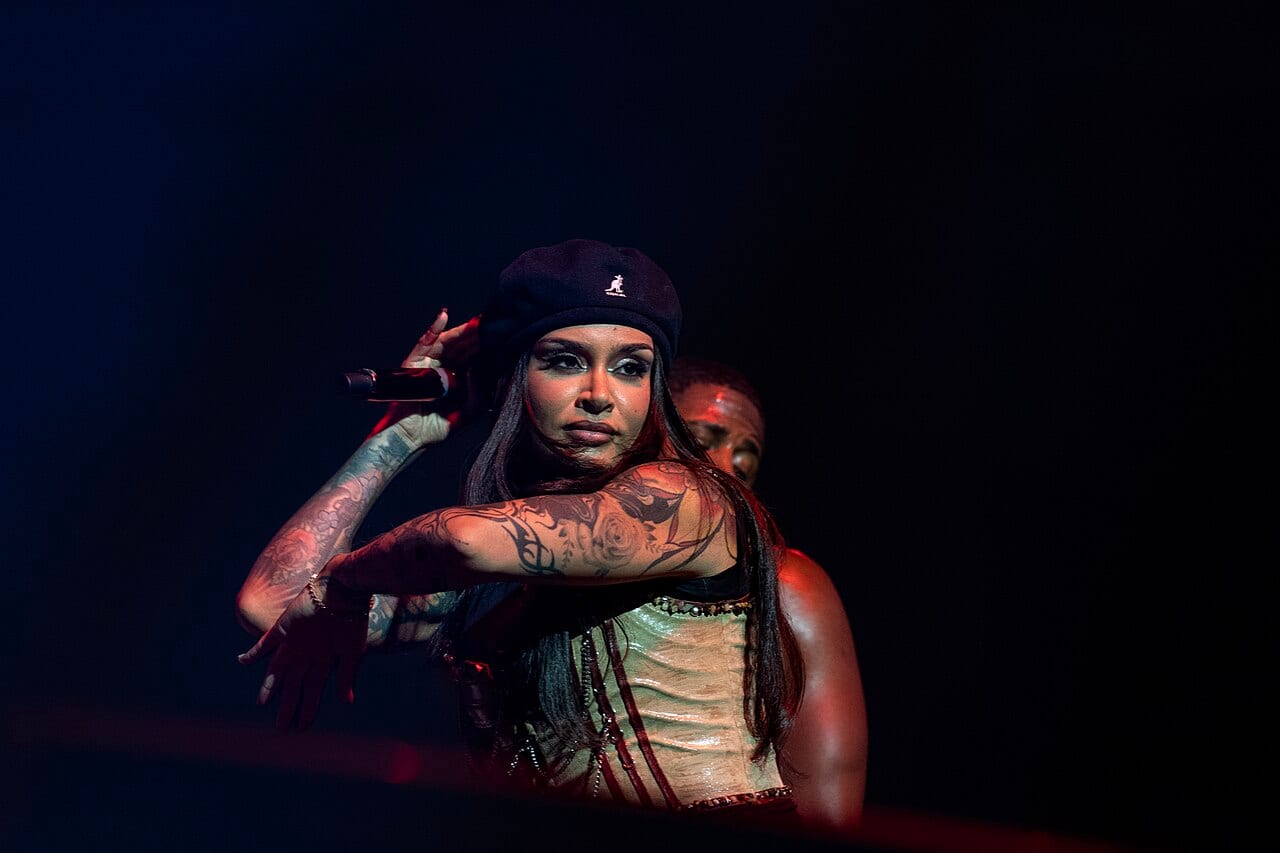
Spotify's AI remix tool lets each artist decide whether fans can remix their songs2. Universal signed in May and Kobalt in August, and a price or a launch window was still unannounced when Kobalt joined3.
AI Lately's Oct. 29 story on copied comedy routines promised a companion about Xania Monet, an AI-generated R&B singer. Her career and Spotify's tool raise the same issue: who gets asked before a machine performs, and who gets paid.
The Artist Gets Asked First
Spotify set four principles on Oct. 16, 2025, alongside Sony Music, Universal, Warner, Merlin and Believe1. Artists decide whether and how they take part. Creators get paid and credited.
Alex Norström, then a co-president, summed up the project in one line: "Technology should always serve artists, not the other way around"1. On May 21, as co-CEO, he called the Universal work "grounded in consent, credit, and compensation for the artists and songwriters that take part"2.
Kobalt joined on Aug. 133. Its roster includes Phoebe Bridgers and IDLES, and its artists can opt in "soon". Spotify says the tool will "open up additional revenue streams and new ways to drive discovery." Rates and splits remain blank.

The Badge Judges Who the Artist Is
On Aug. 11, Spotify announced an "AI Persona" badge for artist profiles whose public identity is generated4. Artists can apply it to themselves, and Spotify adds "Likely AI Persona" to profiles it judges to be photorealistic generated identities.
Badged profiles stay out of editorial and algorithmic recommendations by default, though a listener who follows the artist still gets the music. Spotify said the badges reach listeners from mid-September, mobile first.
Spotify stated the test in one sentence: "This badge is about the artist's public identity, not about how the music was made"4. The rule sorts artists by who they present. Whatever tools made the songs stay outside that test.
Monet Charted Before Either Rule
Telisha "Nikki" Jones, a 31-year-old from Mississippi, created Xania Monet in 20256. Jones writes the lyrics from poems she has written since age 24. Suno, the AI music app, generates the music and the voice.
Hallwood Media signed Monet after a bidding war for a reported $3 million5, a figure Complex described as reported and unconfirmed7.
Her song "How Was I Supposed to Know?" reached number 1 on Billboard's R&B Digital Song Sales chart dated Sept. 20, 20255. A week later it stood 20th on Hot R&B Songs. On the chart dated Nov. 1, it entered Adult R&B Airplay in 30th place. It was the first AI song on a Billboard radio airplay chart.
The badge came almost a year after her first chart week.
Two Answers to Two Questions
Kehlani objected on TikTok in September 2025, saying "the person is doing none of the work." She also said: "Nothing and no one on Earth will ever be able to justify AI to me"7. "Ion fw this either why devalue our music ???" read the caption on SZA's screenshot of the news.
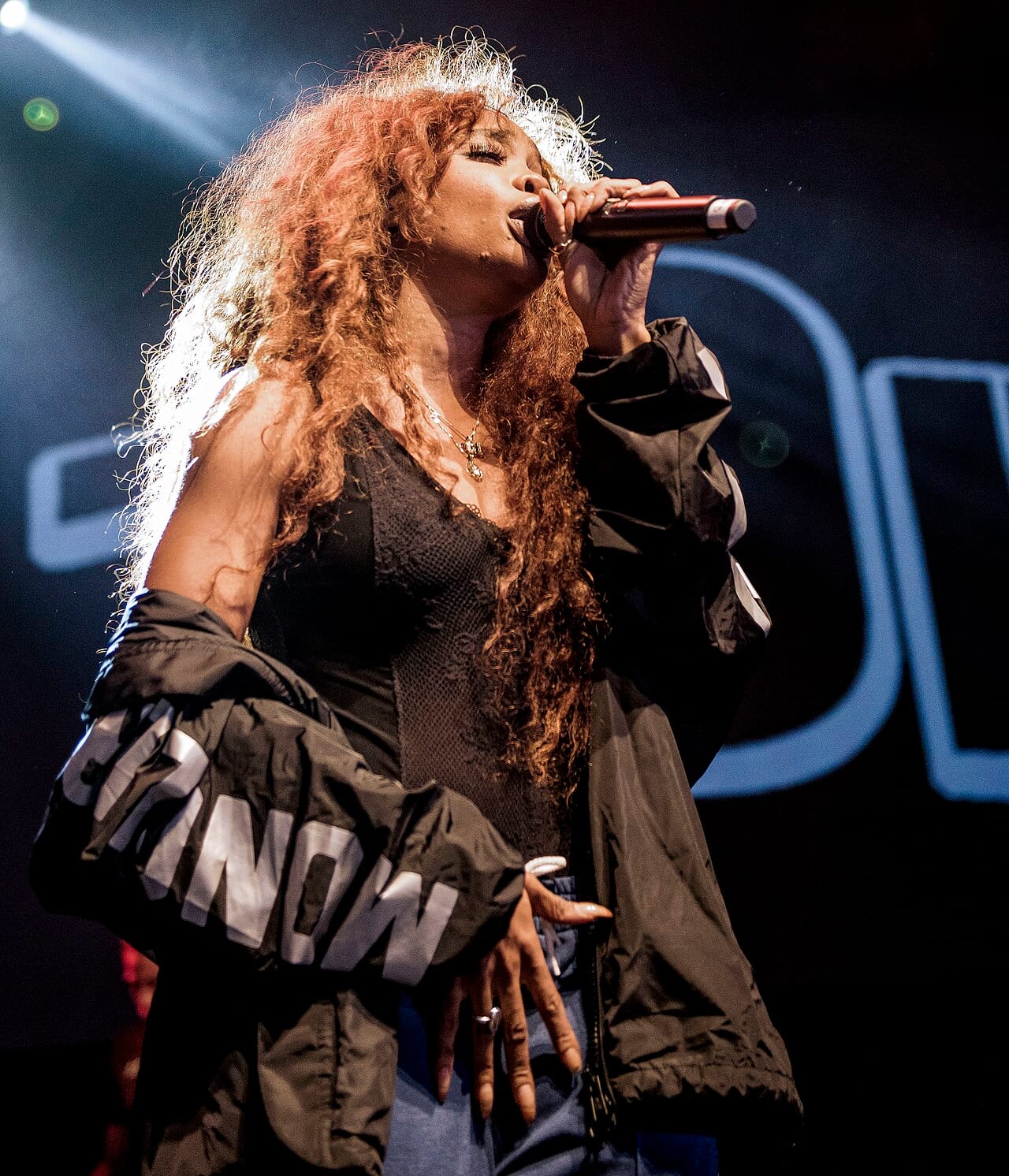
In January, SZA told i-D that an AI cover can beat a singer to her own audience. AI Lately reported it on Oct. 18.
Jones answered on CBS in a Nov. 5, 2025 interview6. "I look at it as a tool, as an instrument, and utilize it," she said. "I created Xania." In December, Monet answered Kehlani, Wale and Jermaine Dupri in a song, "Say My Name With Respect," Complex Music reported on X8.
Complex Music@ComplexMusicAI artist Xania Monet has responded to Kehlani, Wale and Jermaine Dupri in a new song called “Say My Name With Respect”
Here’s everything you need to know about the story 💡 pic.twitter.com/sx0dzKgzrU
Spotify's rule asks who the artist is. Jones defends how she makes the music. The two answers address different questions, and each leaves the other's open.
The strongest fact for Jones is authorship: she wrote the words6. Spotify's test leaves authorship out, by its own statement4. Whether Monet's profile would carry the badge is unanswered in the coverage AI Lately read.
Your Questions About AI Music
Google Trends listed "ai music remixer" as a breakout search in the United States on Oct. 3117. Five questions keep surfacing around it. Each answer rests on a page AI Lately opened.
How does AI music work?
An AI music model turns a text description into audio. The MusicLM paper, posted in January 2023, frames the job as a "hierarchical sequence-to-sequence modeling task" and reports 24 kHz audio that "remains consistent over several minutes"9. Jones shows the user side. She picks a poem, chooses presets such as slow-tempo R&B, female vocals and heavy drums, and Suno generates the song6.
When was the first AI music generated?
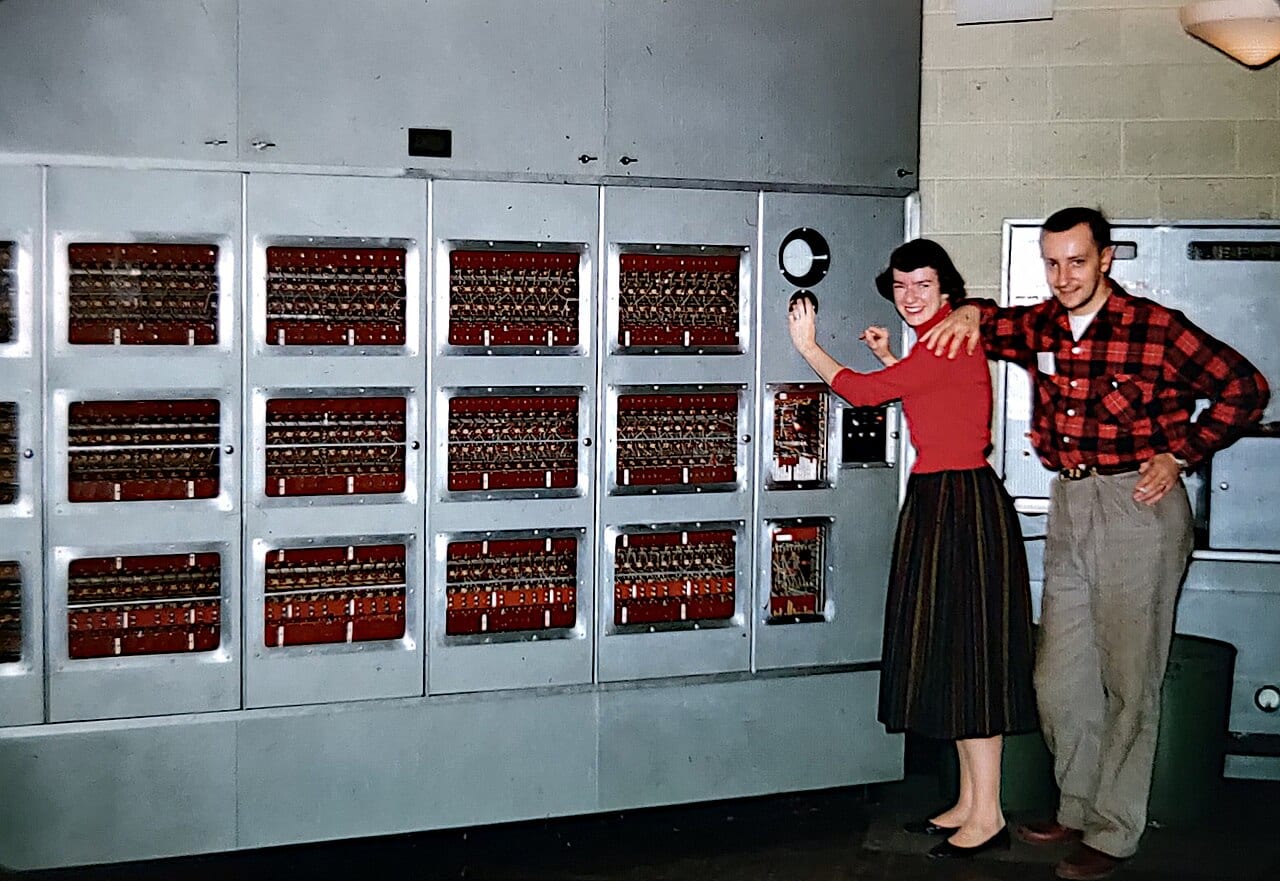
The Illiac Suite, a 1957 string quartet, is generally regarded as the first score composed by an electronic computer10. Lejaren Hiller and Leonard Isaacson programmed the ILLIAC I at the University of Illinois. The quartet's four movements used rules and Markov chains.
In 1961, an IBM computer at Bell Labs sang "Daisy Bell," a recording now in the U.S. National Recording Registry11. From the quartet to Monet's first chart week is 68 years.
Machines took 68 years to go from a 1957 quartet to a number 1 Billboard sales chart
Seven milestones in machine-made music, 1957 to 2026
Each pin is one dated event; the accent pin marks Xania Monet's first week at number 1 on a Billboard sales chart.
Sources: Music Week [2]; The Next Web [4]; Wikipedia [5]; Wikipedia [10]; Wikipedia [11]; NPR (via WAMC) [12]; SiliconANGLE [13]. Chart by Ryan Elliott Dennis.
The numbers behind this chart
| Date | Event |
|---|---|
| 1957 | Illiac Suite. First score composed by a computer |
| 1961 | Machine sings Daisy Bell. IBM machine at Bell Labs |
| Nov. 2, 2023 | Now and Then, 2023. Machine learning isolates Lennon's voice |
| Sept. 20, 2025 | Monet number 1, 2025. Billboard chart dated Sept. 20 |
| Nov. 25, 2025 | Warner-Suno deal, 2025. Licensed models promised |
| May 21, 2026 | Spotify-UMG tool, 2026. Paid add-on for fan remixes |
| Aug. 11, 2026 | AI Persona badge, 2026. Identity label for AI profiles |
What are the most popular AI music generators?
Suno and Udio sit at the center of the label fights. Universal settled with Udio on Oct. 29, 202515, and Warner settled with Suno on Nov. 25, 202513. On Sept. 9, 2026, Suno launched v6 models built with Warner, BMG and Believe and said it will retire its older ones14. AI Lately covered the session musicians who want a share in "Labels Resume Talks as Musicians Still Wait for Pay," published Oct. 28.
What are the uses of AI music?
Three show up in this story. Fans can remix songs with Spotify's paid add-on2. Writers can turn poems into songs, as Jones does6.
Producers can pull a voice from an old tape. Machine learning separated John Lennon's voice from piano and television noise for the Beatles' "Now and Then," released Nov. 2, 202312. Giles Martin, the song's co-producer, explained the method: "Essentially, what the machine learning does is it recognizes someone's voice."

What is the future of AI music?
Licensing is the pattern so far. Spotify, Suno and Udio each tie a new product to label deals21315. The flood is already here. AI tracks passed 50 percent of new Deezer uploads in June 2026, yet they drew 1 to 3 percent of streams16.
AI tracks passed 50 percent of Deezer uploads and draw 1 to 3 percent of streams
Fully AI-generated music on Deezer, share of new uploads and share of streams, percent
The blue dot is the share of new uploads that are fully AI-generated, the magenta dot is the share of streams they draw, and the rod is the gap between them.
Deezer says uploads passed 50 percent in June 2026 and streams stay at 1 to 3 percent; the dots draw that 50 percent floor and 3 percent ceiling.
Source: Deezer Newsroom [16]. Chart by Ryan Elliott Dennis.
The numbers behind this chart
| Item | Share of new uploads | Share of streams |
|---|---|---|
| Fully AI-generated tracks | 50% | 3% |
Fraud is the second problem. Up to 85 percent of streams on fully AI-generated tracks were fraudulent in 2025, Deezer reported16. It keeps tagged AI tracks out of algorithmic recommendations. Alexis Lanternier, Deezer's CEO, said: "We have reached a pivotal moment, but we have the technology to keep track of the development."
Up to 85 percent of streams on fully AI-generated Deezer tracks were fraudulent in 2025
Share of streams on fully AI-generated tracks that Deezer called fraudulent, 2025, percent
Deezer states an upper bound, up to 85 percent, so the arc marks a ceiling.
Source: Deezer Newsroom [16]. Chart by Ryan Elliott Dennis.
The numbers behind this chart
| Item | Value |
|---|---|
| Fraudulent streams, up to | 85% |
| Whole | 100% |
What to do
Musicians: ask your label or publisher whether your songs are in the remix tool. Spotify says artists choose whether to take part1.
Listeners: follow any artist you want in your recommendations. Spotify says a follow overrides the default exclusion4.
AI music makers: plan for the badge if your public identity is generated. Artists can apply it to their own profiles4.
What to watch
Watch for Spotify's price and launch window, which were unannounced on Aug. 133. Sony Music and Warner joined Spotify's 2025 principles1. Coverage on Aug. 13 named only Universal and Kobalt as licensors for the tool.
Sources
- Music Business Worldwide, "Spotify to develop 'artist-first' AI music products in partnership with Sony, UMG, Warner, Merlin, and Believe," Oct. 16, 2025, https://www.musicbusinessworldwide.com/spotify-to-develop-artist-first-ai-music-products-in-partnership-with-sony-umg-warner-merlin-and-believe
- Music Week, Andre Paine, "Spotify and UMG unveil AI-based paid add-on tool allowing fans to create covers and remixes," May 21, 2026, https://www.musicweek.com/digital/read/spotify-and-umg-unveil-ai-based-paid-add-on-tool-allowing-fans-to-create-covers-and-remixes/094178
- Engadget, Lawrence Bonk, "Spotify has roped the indie publisher Kobalt into its AI platform for covers and remixes," Aug. 13, 2026, https://engadget.com/2236313/spotify-has-roped-the-indie-pubisher-kobalt-into-its-ai-platform-for-covers-and-remixes
- The Next Web, "Spotify will badge AI artist profiles, and keep them out of your recommendations," Aug. 12, 2026, https://thenextweb.com/news/spotify-ai-persona-badge-recommendations
- Wikipedia, "Xania Monet" (citing Billboard, Sept. 16, 2025 and Oct. 31, 2025), https://en.wikipedia.org/wiki/Xania_Monet
- theGrio, "'I'm a Black woman': Creator behind viral AI singer Xania Monet defends herself from critics," Nov. 5, 2025, https://thegrio.com/2025/11/05/telisha-jones-xania-monet-cbs-this-morning-interview
- Complex, Jade Gomez, "Kehlani and SZA Blast AI Musician's $3 Million Record Deal: 'I Don't Respect It'," Sept. 19, 2025, https://www.complex.com/music/a/jadegomez510/kehlani-xenia-monet-ai
- Complex Music on X, post about Xania Monet's song "Say My Name With Respect," Dec. 20, 2025, https://x.com/ComplexMusic/status/2002207106179670481
- arXiv, Andrea Agostinelli and 12 co-authors, "MusicLM: Generating Music From Text," Jan. 26, 2023, https://arxiv.org/abs/2301.11325
- Wikipedia, "Illiac Suite," https://en.wikipedia.org/wiki/Illiac_Suite
- Wikipedia, "Daisy Bell," https://en.wikipedia.org/wiki/Daisy_Bell
- NPR via WAMC, "How producers used AI to finish The Beatles' 'last' song, 'Now And Then'," Nov. 2, 2023, https://www.wamc.org/2023-11-02/how-producers-used-ai-to-finish-the-beatles-last-song-now-and-then
- SiliconANGLE, "Warner Music inks Suno deal amid cooling tensions over AI-generated music," Nov. 25, 2025, https://siliconangle.com/2025/11/25/warner-music-inks-suno-deal-amid-cooling-tensions-ai-generated-music/
- The Next Web, "Suno launches AI music models trained on licensed Warner and BMG catalogue," Sept. 9, 2026, https://thenextweb.com/news/suno-v6-warner-bmg-believe-licensed-models
- Music Business Worldwide, "Universal Music settles Udio lawsuit, strikes deal for licensed AI music platform," Oct. 30, 2025, https://www.musicbusinessworldwide.com/universal-music-settles-udio-lawsuit-strikes-deal-for-licensed-ai-music-platform
- Deezer Newsroom, "Deezer: AI Music Has Surpassed 50% of New Music Uploads for the First Time," July 21, 2026, https://newsroom-deezer.com/2026/07/ai-music-exceeds-50-percent-daily-uploads-deezer/
- Google Trends, rising searches for "ai music," United States, past 24 hours, Oct. 31, 2026, https://trends.google.com/trends/explore?q=ai%20music&geo=US&date=now%201-d