A search term broke out in the United States this week: "ai impact on mathematics careers"10. Two things pushed it there. The Academy for the Mathematical Sciences, a British charity, published a report on Oct. 31 about how artificial intelligence changes mathematical work2. Terence Tao, the UCLA mathematician who won the Fields Medal, posted it to his own blog the same day.
The report says human mathematicians stay essential, even as AI drafts and checks proofs. Tao disagrees about what counts as the emergency. He wants the field to redesign training before AI outruns it.
What the Report Promises
Britain's Academy for the Mathematical Sciences is young. UK mathematicians founded it in September 2023 to speak for the field in public policy6. Its new report studies how AI changes mathematical research, verification and teaching2.
The Academy for the Mathematical Sciences states its central line plainly: "As AI becomes increasingly capable of carrying out technical mathematical work, human expertise will be crucial to direct advances"1. Picking good questions, judging AI's answers and teaching the next generation stay human jobs, the report argues. The report's promise is exactly what a reader searching this week wants checked against the record.
Five priorities follow that promise. Education, verification, fair access to AI tools, new ways to judge research, and the infrastructure behind mathematical knowledge make the list2. The report names a goal. It skips a number for how many graduate seats, postdoc contracts or lecturer jobs would survive a bad transition.
A reader weighing a career, a hire or a grant application gets a direction from that list, beyond a forecast. The Academy writes for policy, so its report reads as a charter, beyond a budget line. Tao's own writing fills that particular gap.
The Crisis Tao Ranks First
Tao went beyond sharing the report. He spent 2026 ranking AI's threats to his own field out loud, on his blog and on Mastodon3.
UCLA has employed him since 1996, and in 2006 he won the Fields Medal, math's highest honor7. He gave the International Congress of Mathematicians its AI lecture on July 24, 14 weeks before the Academy's report3. On Oct. 9, Tao stood on a Caltech stage and gave a talk he called "Math 2.0". "We have to slow down. It's insane, the pace," he said there.
In October, OpenAI added hundreds of AI-written proofs to a public catalogue3. Tao called the batch "toxic waste" at first, then "maybe treated waste". Two days later he named a cost the moment had skipped: "None of the humans involved in these proofs are available to take questions, give talks, attend conferences, submit papers to journals, train students, or otherwise participate in the subsequent development of these results".
Tao's AI Math Reckoning Spans 14 Weeks
Four public dates in Terence Tao's 2026 argument about AI and mathematical training, July to November
Each pin marks one public moment in the debate: a lecture, a talk, a published report and a magazine profile, read left to right by date.
Sources: Academy for the Mathematical Sciences [2]; teorth.github.io [3]. Chart by Ryan Elliott Dennis.
The numbers behind this chart
| Date | Event |
|---|---|
| July 24, 2026 | ICM lecture on AI |
| Oct. 9, 2026 | Tao's "Math 2.0" talk |
| Oct. 31, 2026 | Academy publishes report |
| Nov. 1, 2026 | New Yorker profile runs |
Tao's sharpest line about the Academy's own report goes further than anything printed in it: "the most urgent one is, How are we going to train our graduate students?"3.
Whether the Pipeline Holds
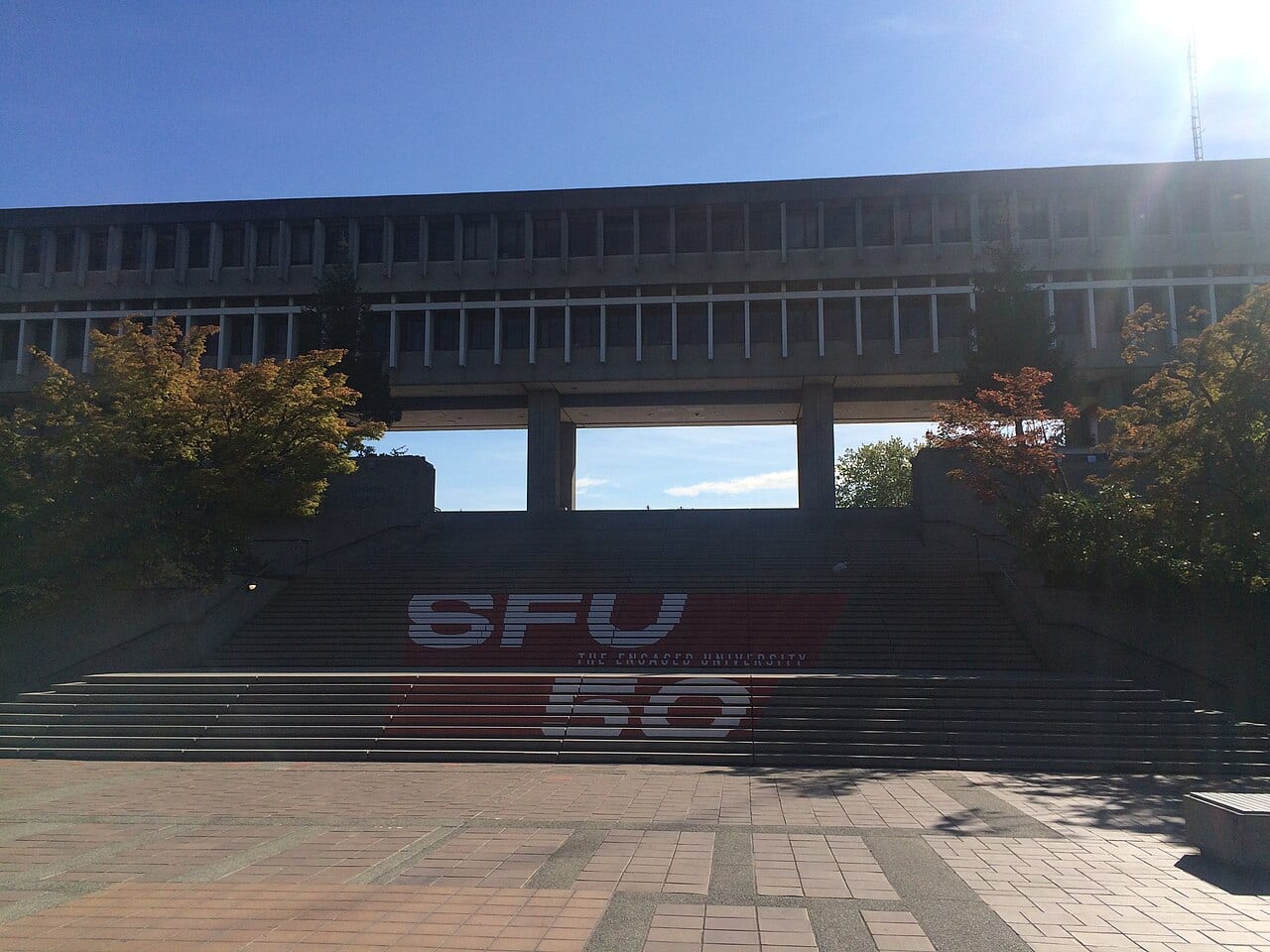
Nigam read the report too, in the comments under Tao's post1. She teaches mathematics at Simon Fraser University8. Her question cut past the report's confidence: "are there existing strong channels of communication between mathematical societies and employers, through which one may persuade firms to hire young mathematical scientists?".
The thread left her question hanging. Education and skills come first among the report's five priorities, ahead of verification, access, research assessment and infrastructure2. A priority is a plan, still short of a placement number, a hiring rate or one graduate's actual job.
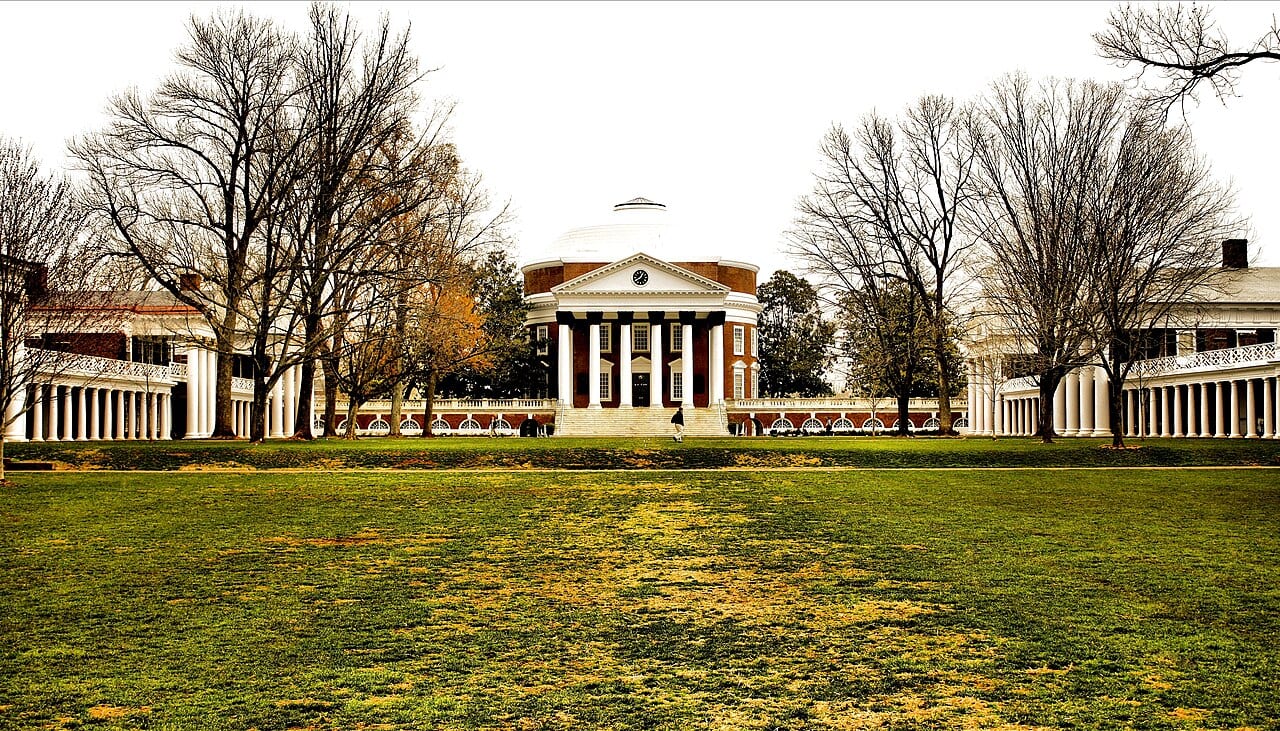
Thomas Koberda, who has taught mathematics at the University of Virginia since 2015, makes the deeper case9. A finished proof used to prove a student had learned to reason the way a mathematician does. That test, Koberda argues, now fails: "The production of an original theorem or a polished dissertation can no longer, by itself, certify the intellectual formation of its nominal author"4.
He wants departments to grade a student's judgment at the dissertation defense, the oral exam a thesis still requires4. A separate study backs the same split. Yang Ding compared AI and human accounts of 11 hard math problems, drawing on 58 human papers to build 31 side-by-side comparisons5.
One Study Built 31 Comparisons From 58 Papers on 11 Problems
A plain count of problems, papers and comparisons in Yang Ding's study, posted to arXiv Sept. 15, 2026
Each column counts one stage of the same study: the problems both sides tackled, the human papers gathered about them, then the paired comparisons built from that material.
Each column counts a different stage of one study: the problems chosen, the papers gathered and the comparisons built are three separate kinds of count.
Source: arXiv [5]. Chart by Ryan Elliott Dennis.
The numbers behind this chart
| Item | Value |
|---|---|
| Shared problems | 11 |
| Human papers | 58 |
| Comparisons built | 31 |
Ding found a pattern5. AI accounts close a problem and move on. Human papers write down the method, the limits and the next question. Those details turn one answer into a field's shared knowledge.
What to Do
Treat the Academy's report as a starting plan. Ask any math-heavy hire how they learned to judge an AI's work, beyond how fast they finish a task.
Watch for a hiring number, beyond a training promise. A department that changes its PhD defense, as Koberda proposes, still needs a market that pays for the judgment it protects.
Give researchers who use AI math tools Tao's own test. Let them use a result only when they can defend it alone, in a room, unaided.
By the Numbers
- Oct. 31, 2026: the date Britain's Academy for the Mathematical Sciences published its AI report2.
- 14 weeks: the span from Tao's Congress lecture on AI to the Academy's report3.
- Five priorities: education, verification, access, research assessment and infrastructure, in the report's own order2.
- 11 problems: the shared set Yang Ding used to compare AI and human math writing5.
- 58 human papers: gathered around those same 11 problems for the comparison5.
- 31 comparisons: built from that material, pairing one AI account against the human record5.
- 2006: Tao won the Fields Medal, math's highest honor, that year7.
- 2015: Koberda joined the University of Virginia's faculty that year9.
What to Watch
Watch whether the Academy turns its five priorities into a number. How many PhD places, postdoc grants or lecturer posts would one math department commit to keep? Koberda's proposal offers a second test: watch for one department that changes how it grades a thesis and says so in public. A public change in grading would show whether judgment-based training becomes real policy, past a line in a report.
Sources
- Terence Tao, "The mathematical sciences in an AI-enabled world," Terence Tao's blog (What's new), Oct. 31, 2026, https://terrytao.wordpress.com/2026/10/31/the-mathematical-sciences-in-an-ai-enabled-world/
- Academy for the Mathematical Sciences, "The mathematical sciences in an AI-enabled world: opportunities, risks and community needs," Oct. 31, 2026, https://www.acadmathsci.org.uk/wp-content/uploads/2026/10/Mathematical_Sciences_AI_AcadMathsSci_Oct2026_preprint_final.docx.pdf
- Terence Tao, "Terence Tao on AI in mathematics (and beyond)," teorth.github.io, updated Nov. 1, 2026, https://teorth.github.io/tao-web/ai-views.html
- Thomas Koberda, "Training Mathematicians in the Age of AI: Intellectual Agency, Cognitive Offloading, and the PhD Thesis," arXiv, Sept. 23, 2026, https://arxiv.org/abs/2609.28140
- Yang Ding, "AI and Human Approaches to Mathematical Problem Solving," arXiv, Sept. 15, 2026, https://arxiv.org/abs/2609.17779
- Wikipedia contributors, "Academy for the Mathematical Sciences," Wikipedia, accessed Nov. 2, 2026, https://en.wikipedia.org/wiki/Academy_for_the_Mathematical_Sciences
- Wikipedia contributors, "Terence Tao," Wikipedia, accessed Nov. 2, 2026, https://en.wikipedia.org/wiki/Terence_Tao
- Wikipedia contributors, "Nilima Nigam," Wikipedia, accessed Nov. 2, 2026, https://en.wikipedia.org/wiki/Nilima_Nigam
- University of Virginia, "Thomas Koberda Elected Fellow of the American Mathematical Society," College and Graduate School of Arts & Sciences, Nov. 1, 2024, https://as.virginia.edu/news/thomas-koberda-elected-fellow-american-mathematical-society
- Google, "Google Trends: ai impact on mathematics careers," accessed Nov. 2, 2026, https://trends.google.com/trends/explore?q=ai+impact+on+mathematics+careers&date=now+1-d&geo=US