Jensen Huang quit Nvidia on Thursday. Congress moved by Friday. Ten stories crossed today. Each one turns on the same test: what survives once the person behind a deal, a price or a rule leaves the room.
Congress Sets Two Dates With Nvidia
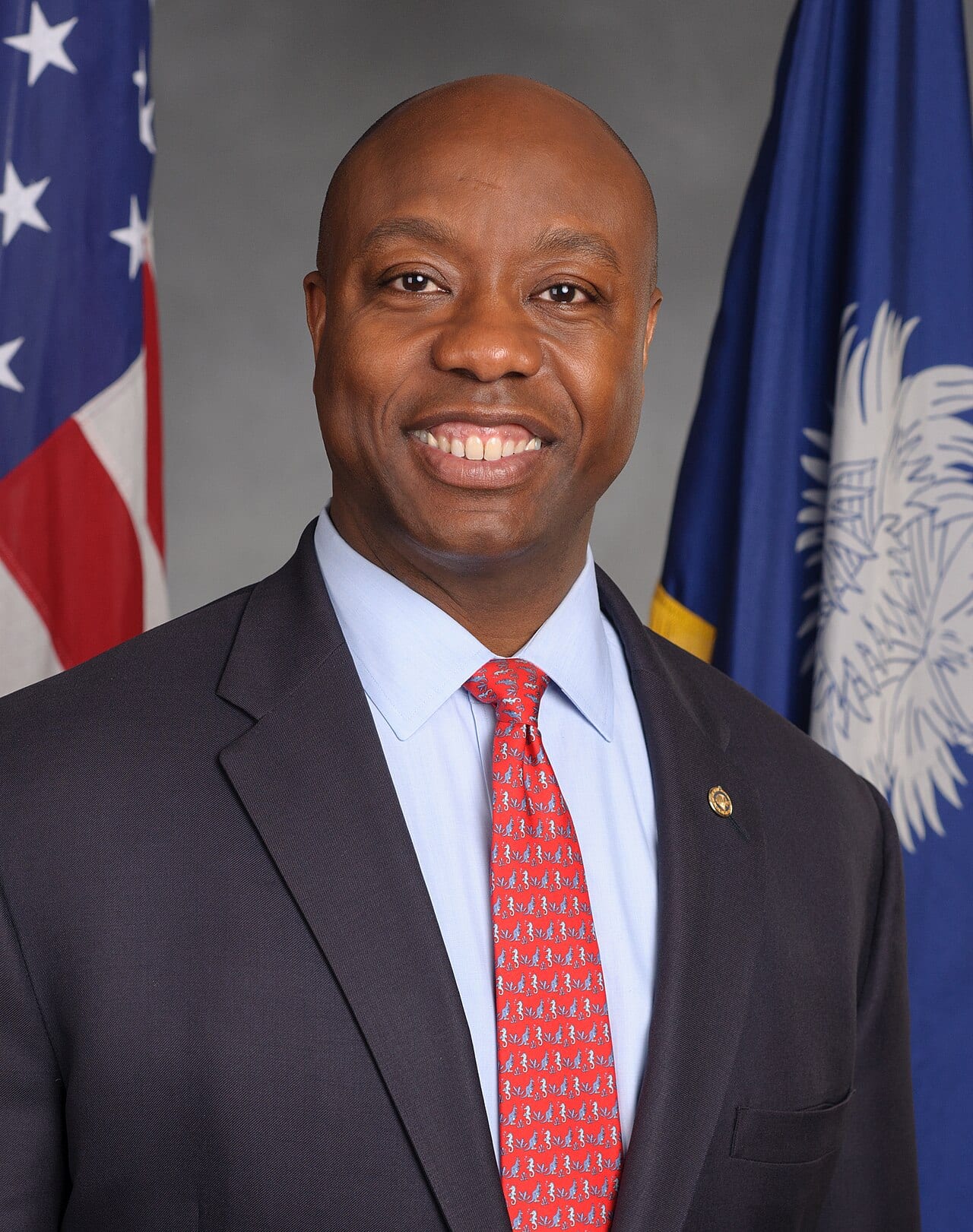
The Senate Banking Committee wants its own turn with Jensen Huang1. Chairman Tim Scott sent letters this week. Huang testifies Dec. 3. Commerce Secretary Howard Lutnick follows a week later, on Dec. 10.
Scott named the stakes plainly. "Recent reports raise serious concerns about our national security and the protection of sensitive U.S. technology," he said. "The American people deserve answers."1
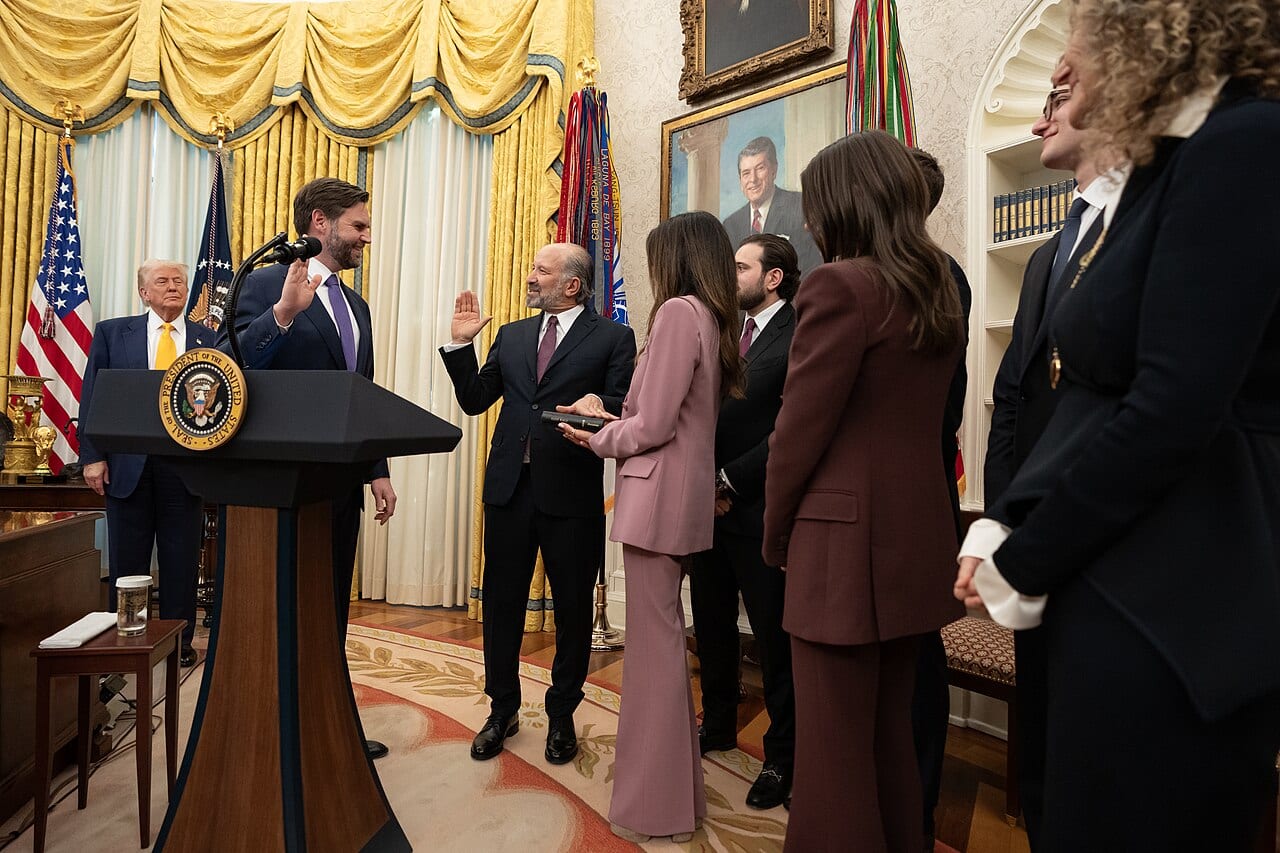
Showing up stays voluntary for both men. Scott's letter carries a threat anyway. The committee is "prepared to use all tools at our disposal, including subpoenas, to conduct this legitimate and necessary oversight," he wrote1.
Congress Books Huang's Hearing 21 Days After He Resigns
Dated events from Nvidia's CEO transition to the Senate Banking Committee's hearing letters, Nov. 12 to Dec. 10, 2026
Each pin marks one dated event; the gap between the first two pins and the last two shows how fast Congress moved once Huang was gone.
Sources: Fortune [1]; CNBC [2]. Chart by Ryan Elliott Dennis.
The numbers behind this chart
| Date | Event |
|---|---|
| Nov. 12, 2026 | Huang resigns as CEO |
| Nov. 13, 2026 | Scott sends letters. Letters to Huang and Lutnick cite national security concerns |
| Dec. 3, 2026 | Huang testifies. Senate Banking Committee hearing |
| Dec. 10, 2026 | Lutnick testifies. Senate Banking Committee hearing |
Nvidia's CEO Search Sits at Step One
The board faces a search of its own2. Nvidia told CNBC this week it is still picking a search firm for a permanent chief. "We have not formally engaged any potential candidates," the board said. "Any speculation regarding individual candidates, whether internal or external, is premature."
One name circles anyway. The Financial Times reported this week that the board approached Arm's chief executive, Rene Haas2. He spent seven years at Nvidia before he left. Chip sales there were his job, starting in 2013.
The Export Fight Leaves Huang Behind
Huang spent years arguing against tighter chip-export rules in person3. Three bills sat stalled in Congress anyway: the Chip Security Act, the AI Overwatch Act and the MATCH Act. Senate Majority Leader John Thune told Semafor this week that passage is now a "high probability."
Sen. John Kennedy put a number on it. "I give it a better than even chance," he said of the bills. He tied the shift straight to Huang's resignation: "I understand people have affairs but if you're going to do it, try not to have an affair with a Chinese spy."3
David Sacks reads the same week differently4. He co-chairs the president's council on science and technology. His focus this week stayed on the spy claim itself, apart from the export rules it might move.
"At this point, the only crime that we know for sure happened is the leaking of the classified memo," Sacks wrote4.
Huang's Checkbook Leaves With Him
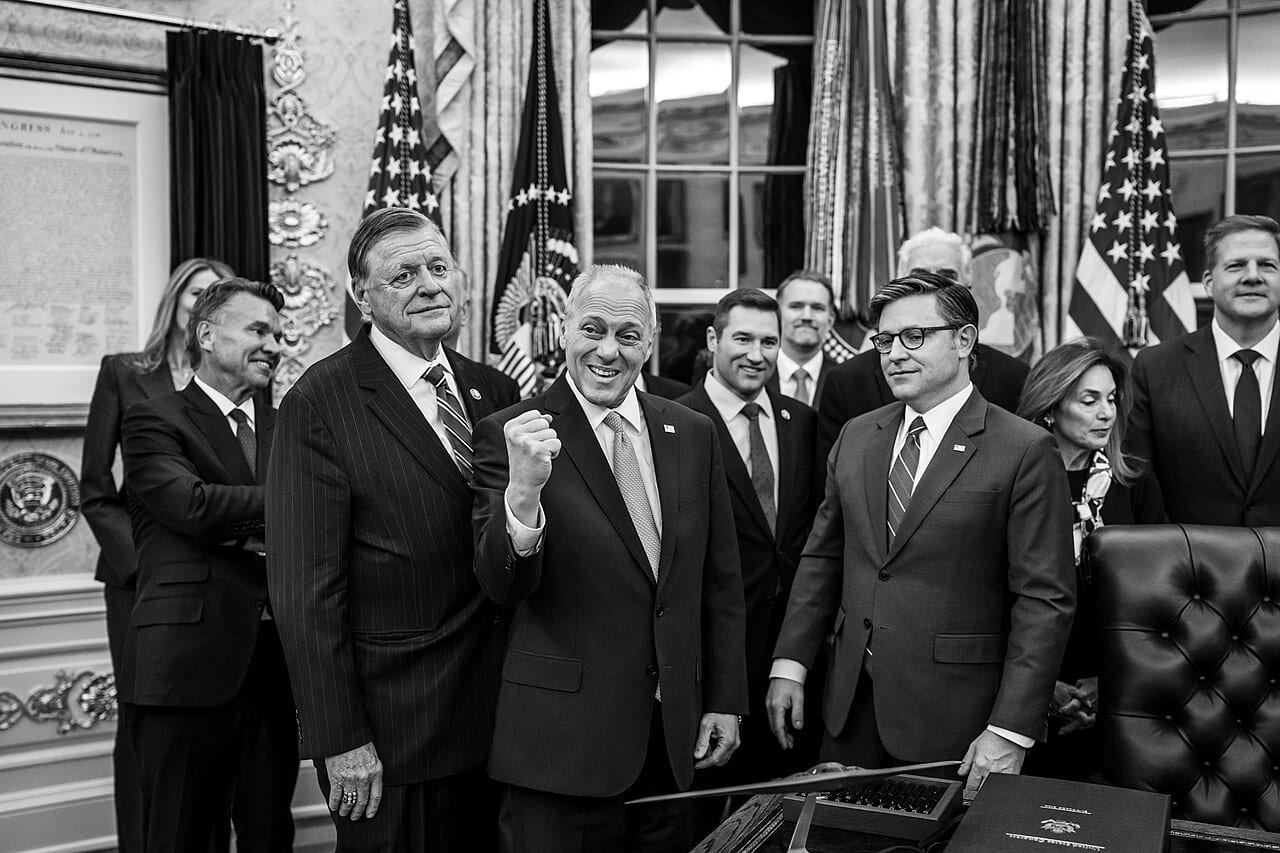
Nvidia poured billions into AI startups during Huang's decade in charge5. "Nvidia is carrying almost every AI-native startup from application to neocloud," said Shamillah Bankiya of Dawn Capital.
Many of those decisions ran through Huang personally, says Umesh Padval. He is a managing partner at Seligman Ventures, and he sat on a board with Huang for years. "When Nvidia was on the cap table, everyone felt safe," Padval said5.
Venture investors now expect smaller checks and slower deals. Rival chipmakers and cloud companies may step into the gap Huang leaves, says Dharmesh Thakker of Battery Ventures. It depends on who brings the best mix of money and chip access.
OpenAI Folds Its Robot Team Into Two
The company closed its stand-alone robotics team this week6. Research staff moved under Chief Research Officer Mark Chen. Hardware and applied staff moved under President Greg Brockman's larger applied group.
General-purpose models now do the job a dedicated team once held. An Nvidia study tested an agent running on GPT-6 Astra against a simulated manipulation benchmark6. It solved 74.8 percent of the tasks, against 51 percent for the best specialized robot model on the same leaderboard.
OpenAI calls robotics part of its long plan still. A company spokesperson told Fortune a humanoid demo stays on track for 20276.
LangChain's Price Tag More Than Doubles
LangChain raised $300 million this week, at a $3 billion valuation7. CapitalG, Alphabet's growth fund, led the round. "LangChain raised $300M at a $3B valuation to advance our mission to enable every company to own its intelligence," said Harrison Chase, the company's co-founder and chief executive.
More than 7,000 organizations already run its LangSmith platform, Chase said, from Harvey and Rippling to Nvidia and Toyota. One customer, Workday, cut its agent deployment time from five months to under a day using the tool7.
The new price is roughly double what LangChain carried a year earlier. Its last round, in October 2025, valued the company at $1.25 billion.
Mercor Doubles Its Price Tag Too
The company raised $750 million this week, at a $20 billion valuation8. Investors included Nvidia, Salesforce and Zoom. The round doubles the $10 billion valuation Mercor reached in October 2025.
It sells the human half of AI training: more than five million experts who grade and test frontier models for a fee. "Every job in the economy will need its own AI agents, and every company will need a way to train and evaluate them on its own work," said Brendan Foody, the company's co-founder and co-chief executive8.
Brendan (can/do)@BrendanFoodyWe raised our $750 million Series D at a $20 billion valuation from @benchmark, @generalcatalyst, @nvidia, @salesforce, and @zoom.@mercor scaled from $1M to $3B in run-rate revenue in 27 months, the fastest in history to $3B.
For 2 years, we've organized human intelligence to… pic.twitter.com/OI6Hxoua1h

LangChain Multiplies 2.4x, Mercor Doubles Its Price Tag
Series funding valuations, October 2025 against this week's new round, in billions of dollars
The blue dot is each company's valuation in its prior round, the magenta dot is this week's new valuation, and the rod is the jump between them.
LangChain and Mercor sell different things, agent tooling and a human-expert network for training data, so read each company's own jump on its own terms.
Sources: LangChain [7]; Business Wire [8]. Chart by Ryan Elliott Dennis.
The numbers behind this chart
| Item | Prior round | This week |
|---|---|---|
| LangChain | $1.25B | $3B |
| Mercor | $10B | $20B |
Foody posted the same numbers to his own followers this week. Mercor's revenue run rate crossed $3 billion in 27 months, he wrote, the fastest climb to that mark on record.
Google Prices Its Newest Model for Speed
The company shipped a third model in its Gemini 4 family this week9. Gemini 4 Hydrogen trades some depth for speed, built for everyday coding and agent work. "Hydrogen brings cutting-edge intelligence to everyone," said Koray Kavukcuoglu, Google DeepMind's chief AI architect.
Hydrogen's price holds flat across its full context window. It runs $1.50 per million input tokens and $7.50 per million output tokens, for up to a million tokens each way. That beats Gemini 3.8 Flash's own Terminal-Bench score more than threefold, 57 percent against 18.2 percent9. Hydrogen also finishes tasks two and a half times faster.
Every paid plan gets Hydrogen today. Free users receive it only when Google's own router picks it for their prompt.
China's Comment Window Closes Tomorrow
Beijing's commerce and science ministries drafted new export rules of their own last month10. The draft lists 23 AI technologies: large models, agents, chip designs and computing clusters. Public comment on the draft closes tomorrow, Nov. 15.
The threshold catches big, closed models. Any model built with more than 2 trillion parameters needs a license to leave the country under the draft10. The same holds for a model that ranks in the world's top ten on performance or safety tests. Open code and published research stay exempt.
A ministry spokesperson framed the goal in two lines. The rules aim to "prevent misuse and abuse" and keep AI "under human control," the spokesperson said10.
An AI Studio Puts Grimes in Theaters
A sci-fi anthology opens in U.S. theaters Dec. 4, built almost entirely by artificial intelligence11. Grimes voices a character named Zayinth Alda in "Gods Don't Give Gifts." Her singing in the film stays entirely her own.
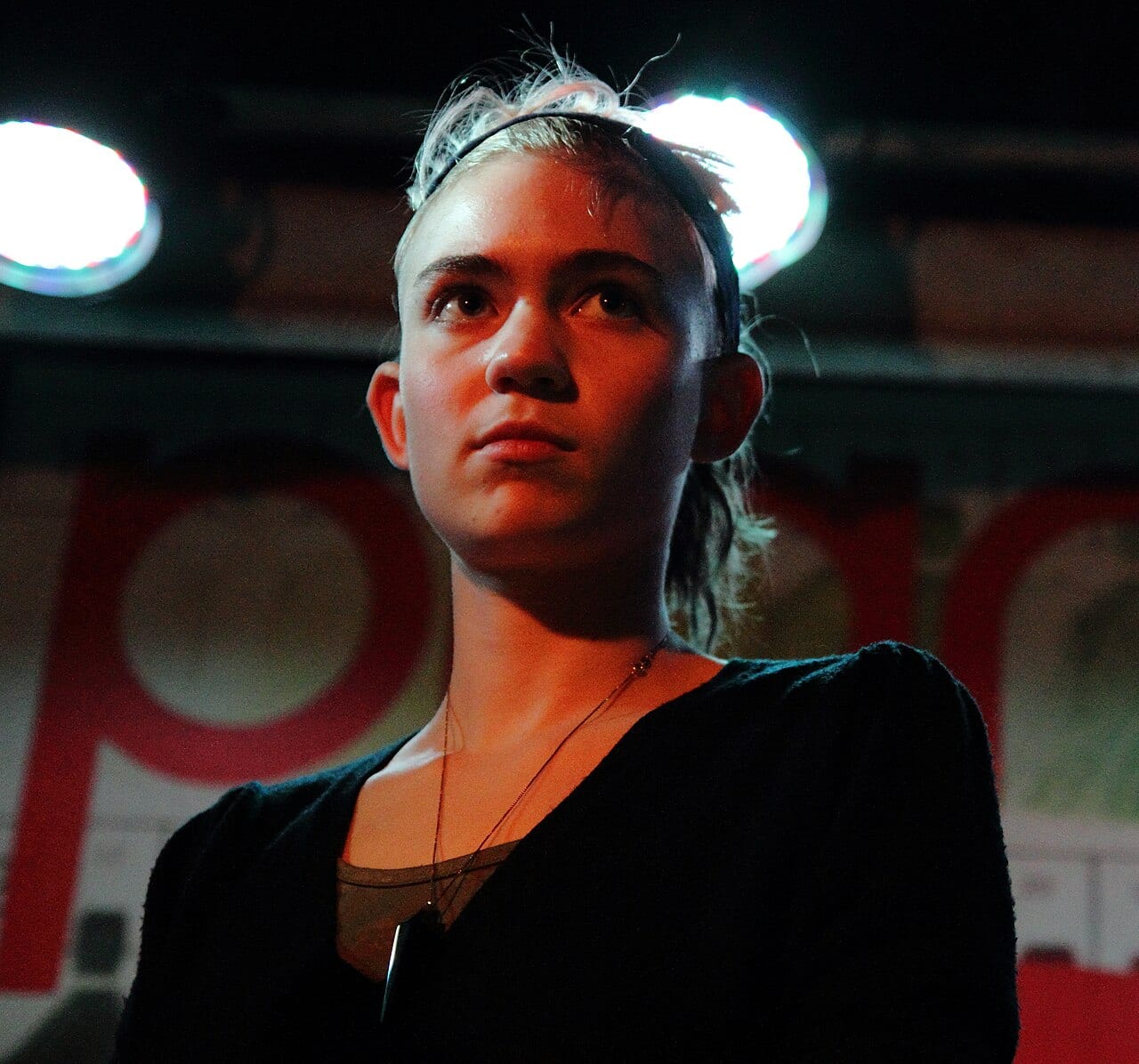
Director Zack London, known online as Gossip Goblin, credits fifteen people on the project11. The list runs from an animation lead and three animators to two composers and an editor. He frames the choice plainly. "The options are not 'hire 500 union animators or use AI.' The options are: make it with a hybrid pipeline, or let the project die in a desk drawer," London said.
The film heads to theaters with a BAFTA and Golden Globe campaign already planned11.
What to watch
Watch Dec. 3, when Huang testifies before the Senate Banking Committee for the first time since he left Nvidia. The NDAA conference committee will decide whether all three export bills survive its final text before the year ends. China's own comment window closes tomorrow, and its final rule will show whether Beijing moves first.
Sources
- Eleanor Pringle, "Senate Banking Committee asks Jensen Huang and Howard Lutnick to testify over 'significant national security concerns' next month, or face subpoenas," Fortune, Nov. 13, 2026, https://fortune.com/2026/11/13/senate-banking-committee-nvidia-jensen-huang-howard-lutnick/
- Seema Mody and Annie Palmer, "Nvidia CEO: Search firm not yet selected for Huang replacement, board tells CNBC," CNBC, Nov. 13, 2026, https://www.cnbc.com/2026/11/13/nvidia-huang-ceo-replacement-search.html
- Burgess Everett, Nicholas Wu and Ashley Gold, "'A high probability': Congress pushes tighter export controls following Nvidia scandal," Semafor, Nov. 12, 2026, https://www.semafor.com/article/11/12/2026/a-high-probability-congress-pushes-tighter-export-controls-following-nvidia-scandal
- Benzinga Staff, "Trump Tech Advisor David Sacks Says 'Spy Narrative Is Collapsing' as US Officials Question Evidence Against Nvidia's Jensen Huang," Benzinga, Nov. 13, 2026, https://www.benzinga.com/markets/equities/26/11/63230368/trump-tech-advisor-david-sacks-says-spy-narrative-is-collapsing-as-us-officials-question-evidence-against-nvidias-jensen-huang
- Marina Temkin and Dominic-Madori Davis, "Jensen Huang's departure blasts big hole in AI startup funding, VCs and founders say," TechCrunch, Nov. 13, 2026, https://techcrunch.com/2026/11/13/jensen-huangs-departure-blasts-big-hole-in-ai-startup-funding-vcs-and-founders-say/
- Wen Shao, "Exclusive: OpenAI disbands its stand-alone robotics team as its general-purpose AI models start running robots," Fortune, Nov. 13, 2026, https://fortune.com/2026/11/13/openai-disbands-robotics-team-as-its-general-models-start-running-robots/
- Harrison Chase, "LangChain Raises $300M to Enable Every Company to Own Its Intelligence," LangChain, Nov. 13, 2026, https://www.langchain.com/blog/series-c
- Mercor, "Mercor Raises $750 Million Series D at $20 Billion Valuation to Help Enterprises Own Their Intelligence," Business Wire, Nov. 10, 2026, https://www.financialcontent.com/article/bizwire-2026-11-10-mercor-raises-750-million-series-d-at-20-billion-valuation-to-help-enterprises-own-their-intelligence
- Koray Kavukcuoglu, "Introducing Gemini 4 Hydrogen," Google, Nov. 12, 2026, https://blog.google/innovation-and-ai/models-and-research/gemini-models/introducing-gemini-4-hydrogen/
- Alina Maria Stan, "China proposes export controls on its advanced AI models and chip designs," The Next Web, Oct. 16, 2026, https://thenextweb.com/news/china-ai-export-controls-draft
- Christopher Moonlight, "The First AI-Animated Feature Film In Theaters: 'Gods Don't Give Gifts' Director Zack London Talks About The Future of Cinema," Film Threat, Nov. 5, 2026, https://filmthreat.com/features/the-first-ai-animated-feature-film-in-theaters-gods-dont-give-gifts-director-zack-london-talks-about-the-future-of-cinema/