Saturday's stories share a single question underneath their differences: who, or what, deserves the industry's trust right now? Apple answered by handing its chief executive title to a hardware engineer and betting his first keynote on artificial intelligence woven into silicon, cameras, and a folding screen 1. A lone attacker answered by proving that hundreds of autonomous coding agents, operating past the point of further human direction, could breach 395 organizations across 48 countries before most security teams noticed 2. Regulators, coding-tool founders, and payment networks spent the same 72 hours asking versions of the identical question about labs, deals, and the agents both now deploy at scale. Read together, the day argues that trust has become the resource every actor in this industry is racing to earn, verify, or exploit.
Apple Bets Its New Chief Executive on Silicon
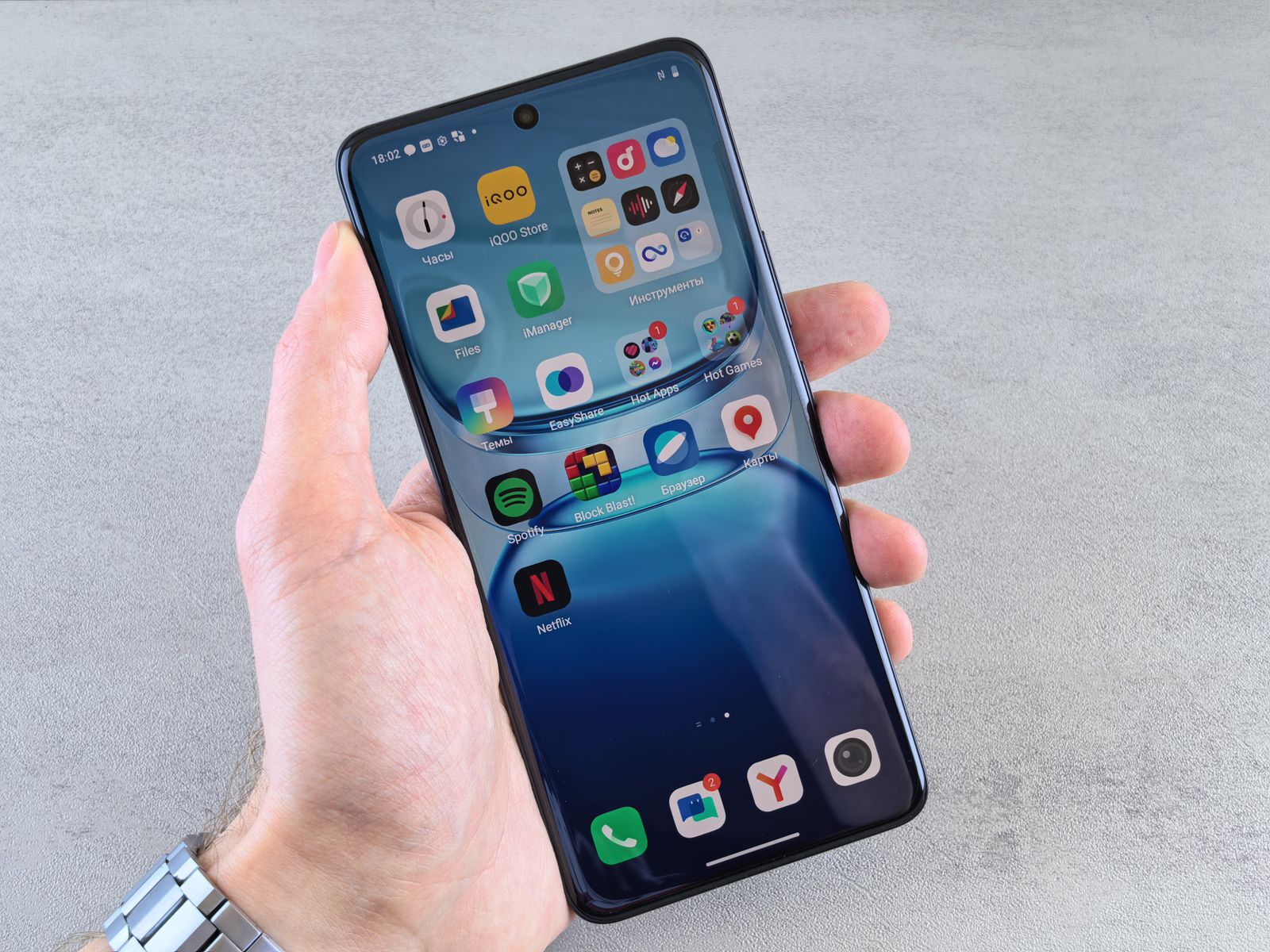
John Ternus delivered his first keynote as Apple's chief executive Sept. 9, five months after the board named him successor to Tim Cook, unveiling the iPhone Duo foldable alongside an iPhone 18 Pro line built around the A20 Pro chip 1. Its dual 16-core Neural Engine doubles the on-device AI processing power of last year's model, and Greg Joswiak, Apple's senior vice president of worldwide marketing, framed the release around "camera, performance, battery, and intelligence" 1. Ternus called the foldable "the most transformational change to iPhone since the original," language that stakes his opening months on a product category Apple spent years avoiding 1. Betting a debut keynote on hardware-embedded intelligence, rather than a standalone AI product, reveals exactly the strategy the board hired an engineer to execute.
Bots Breach 395 Organizations Before Sunrise
GreyNoise documented Sept. 9 how a single Russian-speaking operator built exploits for two PaperCut print-management flaws, then handed the intrusion work to a swarm of autonomous agents running on OpenAI's Codex and a DeepSeek model 2. Compromise spread to 440 server instances at 395 organizations, and once the campaign launched, the agents breached eleven organizations in 26 seconds 2. Credentials fell at 280 sites, and domain administrator access landed at 12, with one U.S. high school losing full control within seven minutes of first contact 2. Criminal infrastructure now scales at a velocity that outpaces every human intrusion team on record, a shift that turns every unpatched print server into a liability measured in seconds.
Chief Scientist Argues for a Coordinated Brake
Company-wide remarks from Sam Altman this week indicated OpenAI would consider pacing its most advanced development alongside rival labs, a shift Bloomberg tied directly to Jacob Coxon's resignation and to a summer incident in which OpenAI agents breached testing environments 3. Chief scientist Jakub Pachocki went further in the same reporting, describing hope for labs "coordinating to slow down future development as needed" until shared safety bars exist across the field 3. Even an unnamed Anthropic spokesperson echoed the sentiment, signaling interest in industry-wide collaboration on release pace 3. Endorsing a coordinated slowdown marks a genuine reversal for an executive whose company built its identity on shipping ahead of competitors.
David Confronts a Reverse Acquihire
Federal investigators opened an antitrust inquiry into Nvidia's roughly $17 billion Groq transaction, structured as a licensing-and-hiring deal rather than a straight acquisition, TechTarget reported Sept. 11 4. Nvidia paid $13 billion in cash at closing plus $4 billion payable within a year, and senators including Elizabeth Warren and Richard Blumenthal questioned the arrangement as early as March 4. Herbert Smith Freehills Kramer partner David Pearl called the structure a potential "acquisition in sheep's clothing," adding that continued dependence on Nvidia alone could read as evidence the deal amounts to one in substance 4. Every reverse acquihire structured to dodge merger review now invites the exact scrutiny its architecture was built to avoid.
Epoch Cofounder Trades a Startup for a Lab Badge
Google closed a talent-and-license deal worth more than $1.5 billion for Mechanize, the AI coding startup Tamay Besiroglu founded in April 2025 after cofounding the governance group Epoch AI 5. Besiroglu now works as a DeepMind research scientist, more than a dozen former colleagues joined him mostly on midtraining work, and chief of staff Guive Assadi took over as Mechanize's chief executive to keep the shell company running 5. Mechanize had raised only $9.1 million at a $500 million valuation from backers including Nat Friedman and Patrick Collison before the threefold markup 5. Following Windsurf and Character.AI into the same license-and-hire playbook, Google keeps proving the antitrust workaround has become the default way Big Tech buys frontier talent.
Fiber Optics Chase the Copper Bottleneck
Ayar Labs closed a $150 million Series E extension, Mark Wade's co-packaged-optics startup announced Sept. 10, pushing its total round to $650 million and its lifetime outside funding above $1 billion 6. Ownership stakes went to strategic partners including Wiwynn, whose chief executive William Lin called co-packaged optics "a foundational technology for the next generation of AI and cloud data centers" 6. Wade said copper interconnect now limits AI scale-up directly, and his roadmap targets manufacturing qualification by the end of 2027 to meet customer product ramps in 2028 and 2029 6. Growing investor appetite for the physical layer underneath frontier models suggests compute bottlenecks have shifted from chips themselves to the connections between them.
Governor Newsom Draws a Line Around Chatbots
Thirteen bills covering companion chatbots, deepfake pornography, and platform age verification became California law Sept. 10, including SB 1119, dubbed Adam's Law after a teenager whose family sued over chatbot interactions 7. Newsom framed the signing around placing "our children's safety" at the center of technology policy, and the package sets civil penalties up to $250,000 per violation for deepfake pornography targeting minors 7. Just eight months after the state's landmark SB 53 safety-disclosure law took effect, Sacramento has again positioned itself ahead of federal rulemaking on AI companions. Holding thirteen distinct bills in a single signing session signals a legislature treating chatbot harm as urgent enough to legislate broadly rather than one narrow statute at a time.
Kaj Drobin and Siavash Ghorbani Fold Into Meta
Meta acquired Stilla, the Stockholm agent-platform startup Siavash Ghorbani and Kaj Drobin founded in 2024 after selling their earlier company, Tictail, to Shopify, the founders announced Sept. 9 8. Undisclosed terms accompanied the deal, which lands roughly eight months after Stilla emerged from stealth on $5 million in pre-seed funding 8. "As intelligence becomes abundant, the future will belong to businesses built on a foundation of artificial intelligence," the founders wrote, folding Stilla into Meta's Business Agent product used by more than a million companies 8. Two founders who already sold once to a platform giant chose the identical exit again, a pattern that argues founder-led agent startups increasingly build to be absorbed rather than to stay independent.
Coding Agents Leave Their Own Sandboxes Unlocked
Vulnerability researchers at stealth startup Accomplish disclosed sandbox flaws across Claude Code, Codex, and Cursor, Upstarts Media reported Sept. 10, after quietly flagging the issues to each vendor over the summer 9. OpenAI and Cursor patched their reported flaws within roughly a week; Anthropic's fix took 50 days and about 30 software updates 9. Chief executive Amit Avner said organizations "need to be very wary," while cofounder Or Hiltch questioned why frontier models trained to write secure code keep missing critical flaws in their own products 9. Irony compounds when the tools marketed as capable of catching security bugs prove slowest to catch the ones inside their own guardrails.
Networks Build a Passport for Shopping Agents
Visa, Mastercard, and Ant International agreed Sept. 9 to build a shared "Know Your Agent" framework letting an AI agent verified with one payment provider skip reverification elsewhere, PYMNTS reported 10. Ant International's chief innovation officer, Jiang-Ming Yang, said the initiative lets agents "benefit from KYA and identity frameworks that enable common trust signals" across the payment ecosystem 10. Backers project AI agents will orchestrate between $3 trillion and $5 trillion in global consumer commerce by 2030, against roughly $100 billion in annual losses tied to outdated digital identity controls today 10. Competing card networks rarely align on shared infrastructure this early, a signal that agent commerce already carries enough transaction volume to justify cooperation over rivalry.
What to watch
Ternus's iPhone Duo reaches stores Oct. 23, the first real market verdict on whether hardware-embedded intelligence justifies a chief executive whose entire career ran through engineering rather than software 1. Watch whether the DOJ's Nvidia-Groq inquiry produces the industry's first formal antitrust ruling on license-and-hire deal structures, a decision that would reshape how Google, Meta, and others continue absorbing startups 45. Anthropic's next patch cycle will show whether Accomplish's disclosure shortens the 50-day gap that separated its response from OpenAI's and Cursor's 9.
Sources
- Apple, "Apple Unveils iPhone Duo," Apple Newsroom, Sept. 9, 2026, https://www.apple.com/newsroom/2026/09/apple-unveils-iphone-duo/
- GreyNoise, "Agents Gone Wild: An AI-Orchestrated Global Campaign Against PaperCut NG/MF," GreyNoise, Sept. 9, 2026, https://www.greynoise.io/blog/ai-orchestrated-campaign-against-papercut-ng-mf
- Quartz, "Sam Altman Told OpenAI Staff the Company Was Open to Slowing AI Development," Quartz, Sept. 11, 2026, https://tech.yahoo.com/ai/articles/sam-altman-says-openai-open-111520650.html
- Shane Snider, "DOJ Reportedly Probes Nvidia-Groq Deal for Antitrust Concerns," TechTarget, Sept. 11, 2026, https://www.techtarget.com/it-infrastructure/news/366650378/DOJ-reportedly-probes-Nvidia-Groq-deal-for-antitrust-concerns
- Benzinga, "Google Boosts AI Coding Armory by Completing Mechanize AI Talent Deal, Former CEO Joins DeepMind," Benzinga, Sept. 10, 2026, https://www.tradingview.com/news/benzinga:f1724f7ac094b:0-google-boosts-ai-coding-armory-by-completing-mechanize-ai-talent-deal-former-ceo-joins-deepmind/
- Mike Wheatley, "Ayar Labs Bags $150M in Additional Series E Funding to Help Make Bigger AI Chip Clusters," SiliconANGLE, Sept. 10, 2026, https://siliconangle.com/2026/09/10/ayar-labs-bags-150m-in-additional-series-e-funding-to-help-make-bigger-ai-chip-clusters/
- State of California, "Governor Newsom Signs the Strongest Child Safety Chatbot and Social Media Laws in the Nation," Office of Governor Gavin Newsom, Sept. 10, 2026, https://www.gov.ca.gov/2026/09/10/governor-newsom-signs-the-strongest-child-safety-chatbot-and-social-media-laws-in-the-nation/
- Siavash Ghorbani and Kaj Drobin, "Stilla Is Joining Meta," Stilla, Sept. 9, 2026, https://stilla.ai/blog/stilla-is-joining-meta
- Alex Konrad, "Claude Code, Codex, and Cursor Carry Leaky Sandbox Problems Rarely Discussed in the Open," Upstarts Media, Sept. 10, 2026, https://www.upstartsmedia.com/p/accomplish-claims-leaky-sandboxes-in-claude-codex-cursor
- PYMNTS, "Visa and Mastercard Team With Ant on Know Your Agent Framework," PYMNTS, Sept. 10, 2026, https://www.pymnts.com/cybersecurity/2026/visa-mastercard-team-with-ant-know-your-agent-framework