VRChat declined to add a label for AI-generated content. The company said so on Oct. 28, after a survey of 21,595 players found 95 percent wanted one1. Steam reviewers answered within days. The rating has kept sliding since, and that is why players are still searching for this decision a week later.
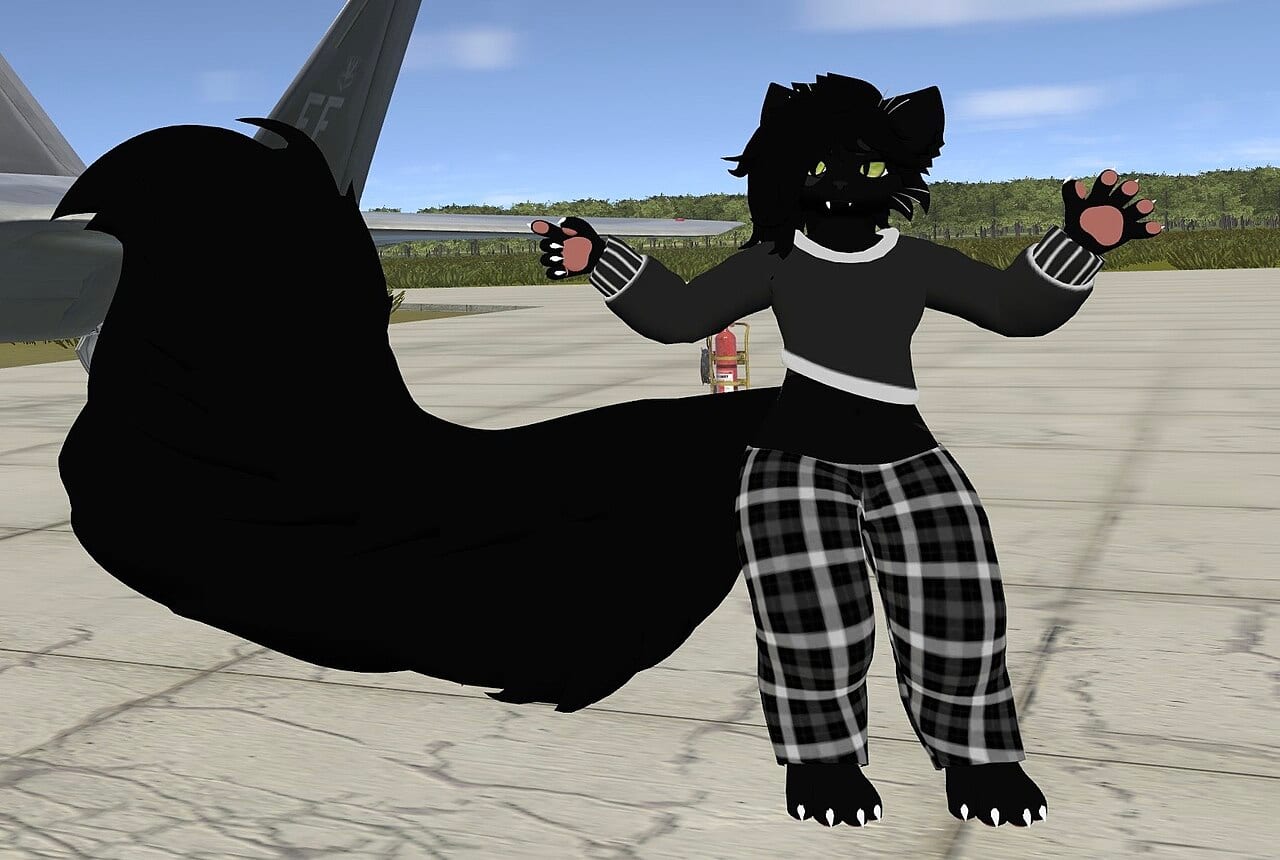
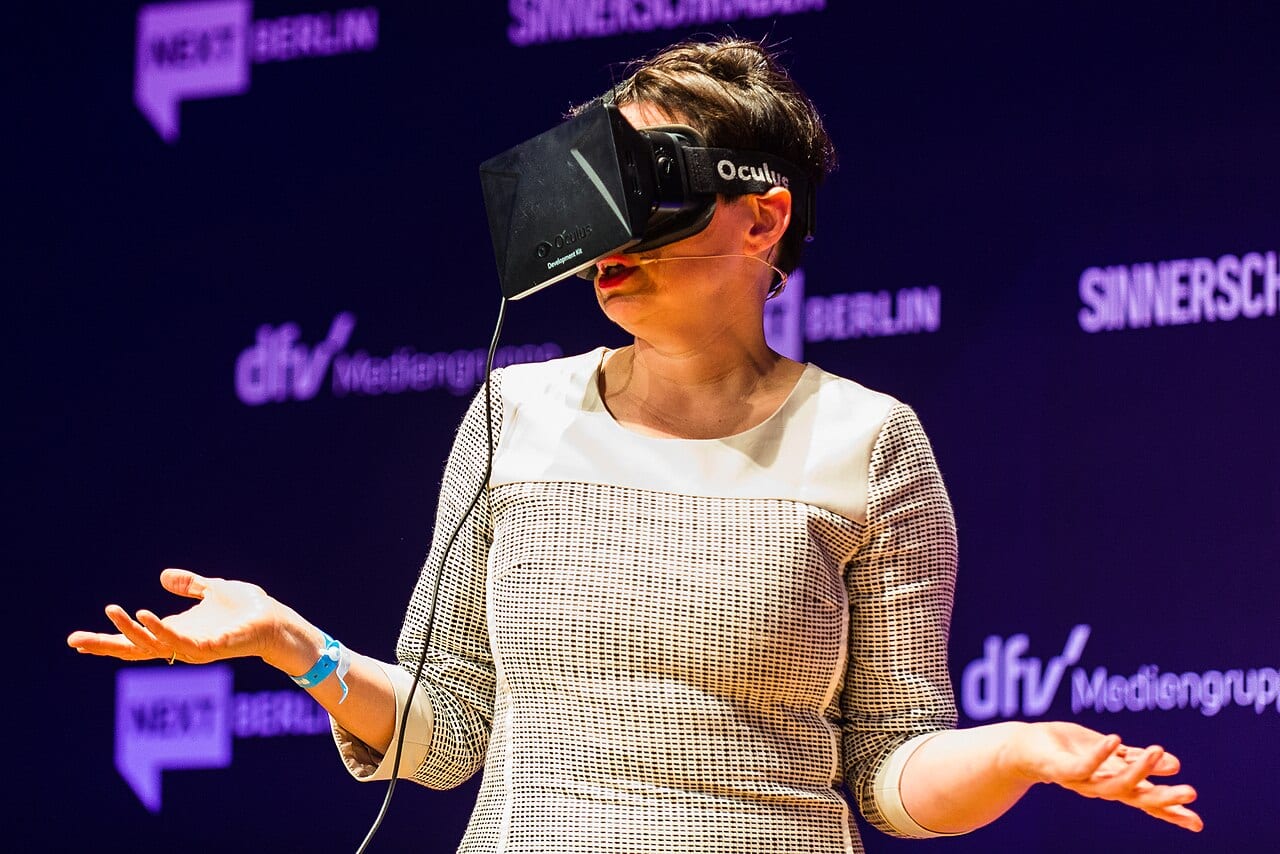
Players reach VRChat's worlds through a VR headset or a flat screen. Graham Gaylor and Jesse Joudrey built the platform, and it has run since Jan. 16, 20144. It set a concurrent-user record near 156,700 on Feb. 15, 2026, the clearest sign of how many people this one decision touches.
What 21,595 Players Actually Said
VRChat ran its AI survey for one week in October. The company published the results itself, inside the same post that announced its decision1.
Ninety-five percent of players asked for some kind of AI-usage label, VRChat wrote1. That 95 percent figure is the number most headlines about this story repeat.
The same post buried a second number. VRChat gave players eight example label types, and their answers split into 3,141 different combinations. Every single design stayed under 10 percent support1.
95 Percent of VRChat's Players Wanted a Label; Every Design Stayed Under 10 Percent
Share of players, VRChat's Oct. 28 survey of 21,595 respondents
The first column is the share of players who asked for some kind of AI-usage label; the second is the top share any single label design reached.
Source: VRChat [1]. Chart by Ryan Elliott Dennis.
The numbers behind this chart
| Item | Value |
|---|---|
| Wanted some label | 95% |
| Top design | 10% |
A third of players said they would skip AI-assisted worlds1. Another 37 percent said AI tools were fine, as long as a human kept creative control.
Why VRChat Passed on a Label
VRChat explained its reasoning in the same post1. The company wrote, "We're not adding an 'AI-generated' label or AI filters. While we think some creators would honestly label their content, we think others would try to pass off generative or assisted work as completely authored by hand."
A label built on trust breaks when someone lies, and VRChat said it expected some creators to lie. The company then raised a second worry: the label itself could turn into a weapon.
VRChat warned that a label could start "'sleuthing' behavior, where folks would attempt to sniff out 'AI' content or might harass other creators, even if they are genuinely not using any AI tools in their workflow." Harassment already breaks VRChat's rules, the company added. That rule stands whatever tools a creator chooses.
An optional "Human-authored" mark stayed on the table instead of a flat AI tag. VRChat explained the difference this way: "As it stands, saying you used AI can feel like a confession." A mark that praises a choice reads differently than a flag that accuses one.
The Parts VRChat Did Build
VRChat built three changes from the same survey, each one aimed at a complaint short of a full label.
Misleading thumbnails broke the rules first. VRChat's post said plainly, "Misleading thumbnails are now against the rules," and the company had already contacted creators whose world ads oversold what players would find inside1.
Likes and dislikes for worlds come next, targeted for the end of 2026 or soon after1. VRChat knows the risk already: "it can be gamed, and new or slower-built worlds could lose out to fast, flashy uploads," the company wrote. Multi-image galleries follow in the first half of 2027, so a single staged thumbnail stops being a world's only pitch.
Eighty-one percent of players called the thumbnail rule "very useful"1. Better discovery tools drew 72 percent support, and in-world feedback drew 69 percent. Those three numbers cleared VRChat's bar for building something. The label stayed undone, on the company's own account.
The Case for a Label
Jasper Raine made the strongest public case for restricting AI content, on VRChat's own feedback board2. "I really shouldn't have to go into detail as to why I think banning AI generated content would be for the best, but I'll go ahead and provide some arguments for the sake of the request," Raine wrote on Sept. 24.
Raine's post drew 402 votes of support before VRChat answered it2. Players who sign feedback like his want a plainer answer than a percentage.
Steam's reviewers turned that argument into numbers VRChat must answer. VRChat's review rating for the past 30 days read Mostly Negative on Nov. 3, with 30 percent of 4,311 reviews positive3. Across VRChat's full history on the same storefront, 69 percent of its 181,168 reviews are positive. The recent score opened that gap in roughly a week.
VRChat's Recent Steam Reviews Drop to 30 Percent Positive, From 69 Percent Lifetime
Share of Steam reviews rated positive, VRChat's store page, read Nov. 3, 2026
The blue dot is VRChat's lifetime positive-review share on Steam; the magenta dot is its share over the last 30 days; the rod is the gap between them.
Source: Steam [3]. Chart by Ryan Elliott Dennis.
The numbers behind this chart
| Item | Full history | Last 30 days |
|---|---|---|
| VRChat's Steam rating | 69% | 30% |
Glogy@Glogsquirrelcat- " we did a survey "
- " 95% of players want an AI label "
- " we are not adding the AI label "
???????? https://t.co/1g4ztzcoct pic.twitter.com/ZpGuZa5sNb

The backlash echoes an older one. VRChat's 2022 push to add anti-cheat software drew comparable anger from players who said they had legitimate reasons to run modified clients4. That fight passed. This one is still running.
What to Do
Read a platform's survey results the way VRChat published its own: the headline number and the breakdown underneath it. A 95 percent figure that hides 3,141 competing designs promises less than a 95 percent figure behind one plan.
Creators on VRChat can settle part of this themselves. Labeling a world's own AI use answers the "sleuthing" worry VRChat raised. Anyone can start labeling before VRChat builds a rule for it.
By the Numbers
- 95 percent: asked VRChat for some kind of AI-usage label1.
- 21,595: players answered VRChat's one-week AI survey1.
- 10 percent: capped every single label design's support1.
- 3,141 combinations: how many different label designs the same answers produced1.
- 30 percent: positive reviews made up VRChat's last 30 days on Steam, read Nov. 33.
- 156,700: VRChat's concurrent-user record, set Feb. 15, 20264.
- 69 percent: positive reviews make up VRChat's full Steam history, same reading3.
- 2014: Graham Gaylor and Jesse Joudrey launched VRChat this year4.
What to Watch
VRChat promised more detail on the "Human-authored" mark by the end of the first quarter of 20271. Watch whether that update narrows 3,141 competing designs into one plan, or scatters again the way the first survey did. Steam's rating is the simplest gauge: a return toward VRChat's 69 percent lifetime score would say the backlash passed. Staying near 30 percent would mark it as still running.
Sources
- VRChat, "Where we're landing on AI in VRChat," VRChat, Oct. 28, 2026, https://ask.vrchat.com/t/where-were-landing-on-ai-in-vrchat/49178
- Jasper Raine, "Completely ban the use of AI generated content," VRChat Feedback, Sept. 24, 2026, https://feedback.vrchat.com/feature-requests/p/completely-ban-the-use-of-ai-generated-content
- Valve Corporation, "VRChat on Steam," Steam, Nov. 3, 2026, https://store.steampowered.com/app/438100/VRChat/
- Wikipedia contributors, "VRChat," Wikipedia, Nov. 3, 2026, https://en.wikipedia.org/wiki/VRChat