Fed Chair Kevin Warsh held a news conference on Oct. 281. He said interest rates still reach artificial intelligence investment, even when the payoff investors expect runs large. Hours later, Alphabet posted earnings that gave his words a live test3.
A week on, people keep searching for his line. The reason is simple enough. Alphabet's own earnings named both sides of his argument on the very same day.
Reporters got a direct answer
The Federal Reserve held its benchmark rate at 3.75 to 4 percent on Oct. 282. It passed on a 10-2 vote. Governors Lisa Cook and Beth Hammack wanted a quarter-point hike instead.
Warsh then faced reporters and took on one argument directly: that AI returns run so high, financing costs barely register. He pushed back on that view.
"With respect to the new technology and this investment surge, do interest rates matter?" Warsh said. "I believe they do, and I don't believe that they're somehow divorced from the rest of the economy"1.
"Interest rates get in the cracks," Warsh added. "Interest rates affect directly, or indirectly, almost everything"1. He pointed to widening credit spreads on some assets as proof investors are already picking favorites among AI bets.
Julius Bendikas, an economist at Marsh, read the same hold as a vote for patience over urgency. "In our view, there is no need to rush with labor markets balanced, wage growth subdued and longer-term inflation expectations anchored," he said1.
Alphabet hands him a same-day example
Results landed hours later3. Google Cloud revenue more than doubled to $30.7 billion, up from $15.2 billion a year earlier5.
Google Cloud's revenue more than doubles to $30.7 billion in a year
Google Cloud quarterly revenue, in billions of dollars, third quarter 2025 versus third quarter 2026
Each column is one third quarter. The right column, this year's cloud revenue, stands more than twice as tall as the one from a year before.
Sources: Alphabet Inc. (SEC Form 8-K, Exhibit 99.1) [3]; Alphabet Inc. (SEC Form 8-K, Exhibit 99.1) [5]. Chart by Ryan Elliott Dennis.
The numbers behind this chart
| Item | Value |
|---|---|
| Q3 2025 | $15.2B |
| Q3 2026 | $30.7B |
Quarterly capital spending kept climbing. The first quarter reached $35.7 billion. Spending then climbed to $44.9 billion in the second. It hit $51.4 billion in the third367.
Free cash flow moved the opposite way. It opened the year at a positive $10.1 billion, then fell to negative $5.9 billion in the second quarter36. By the third quarter it stood at negative $9.1 billion7.
Alphabet's free cash flow swings $19 billion as capital spending climbs 44 percent
Alphabet's quarterly capital spending and free cash flow, in billions of dollars, Q1 to Q3 2026
Each line follows one number by quarter. The rising line is capital spending, and the falling line is free cash flow, which turned negative in the second quarter.
Sources: Alphabet Inc. (SEC Form 8-K, Exhibit 99.1) [3]; Alphabet Inc. (SEC Form 8-K, Exhibit 99.1) [6]; Alphabet Inc. (SEC Form 8-K, Exhibit 99.1) [7]. Chart by Ryan Elliott Dennis.
The numbers behind this chart
| Period | Capital spending | Free cash flow |
|---|---|---|
| Q1 | $35.7B | $10.1B |
| Q2 | $44.9B | −$5.9B |
| Q3 | $51.4B | −$9.1B |
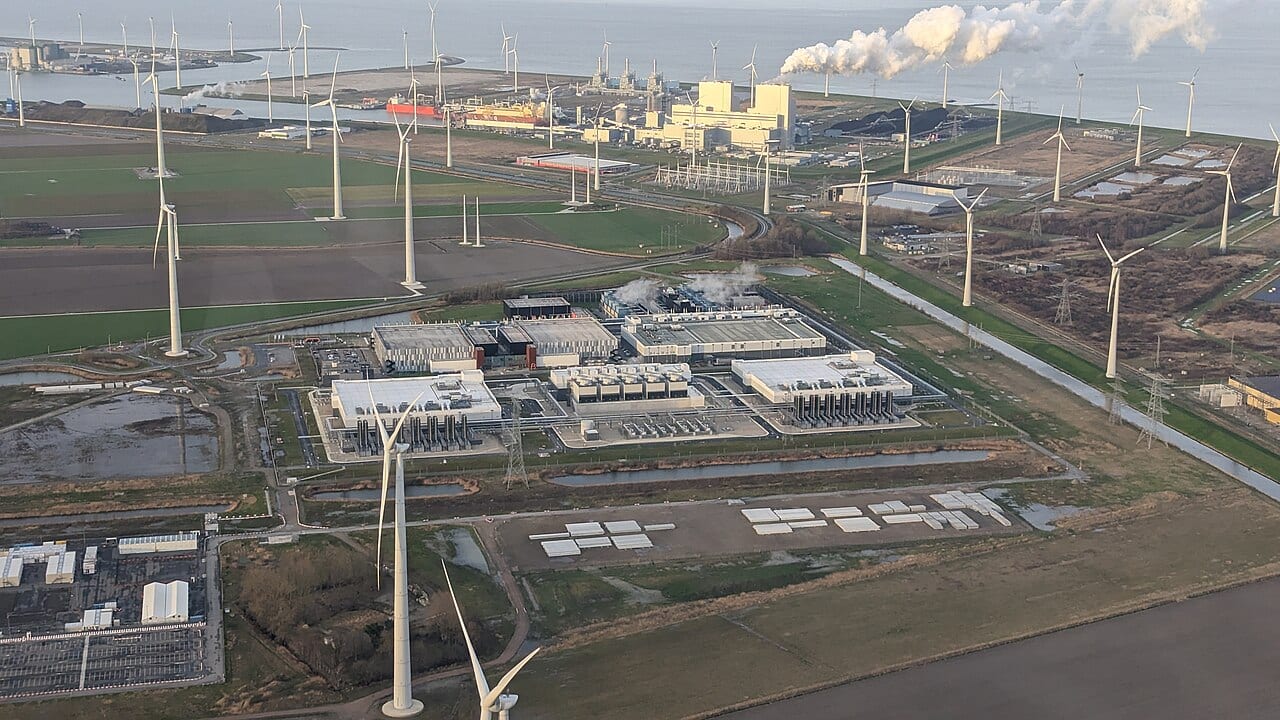
New shareholders are paying for part of that gap. Alphabet raised $84.8 billion in new equity this year, including $10 billion from Berkshire Hathaway4. It added $20.3 billion in senior notes during the second quarter alone6. Google Cloud's own customers will pay that back later, through bigger cloud bills.
Alphabet told investors to expect a big increase in 2027 capital spending4. Analysts now put that figure near $300 billion, up from about $200 billion this year.
Chief Executive Sundar Pichai called the quarter strong. "We had a strong quarter and are now on a half-trillion dollar revenue run rate," he said4. Chief Financial Officer Anat Ashkenazi said more detail on next year's spending would come with the fourth-quarter report.
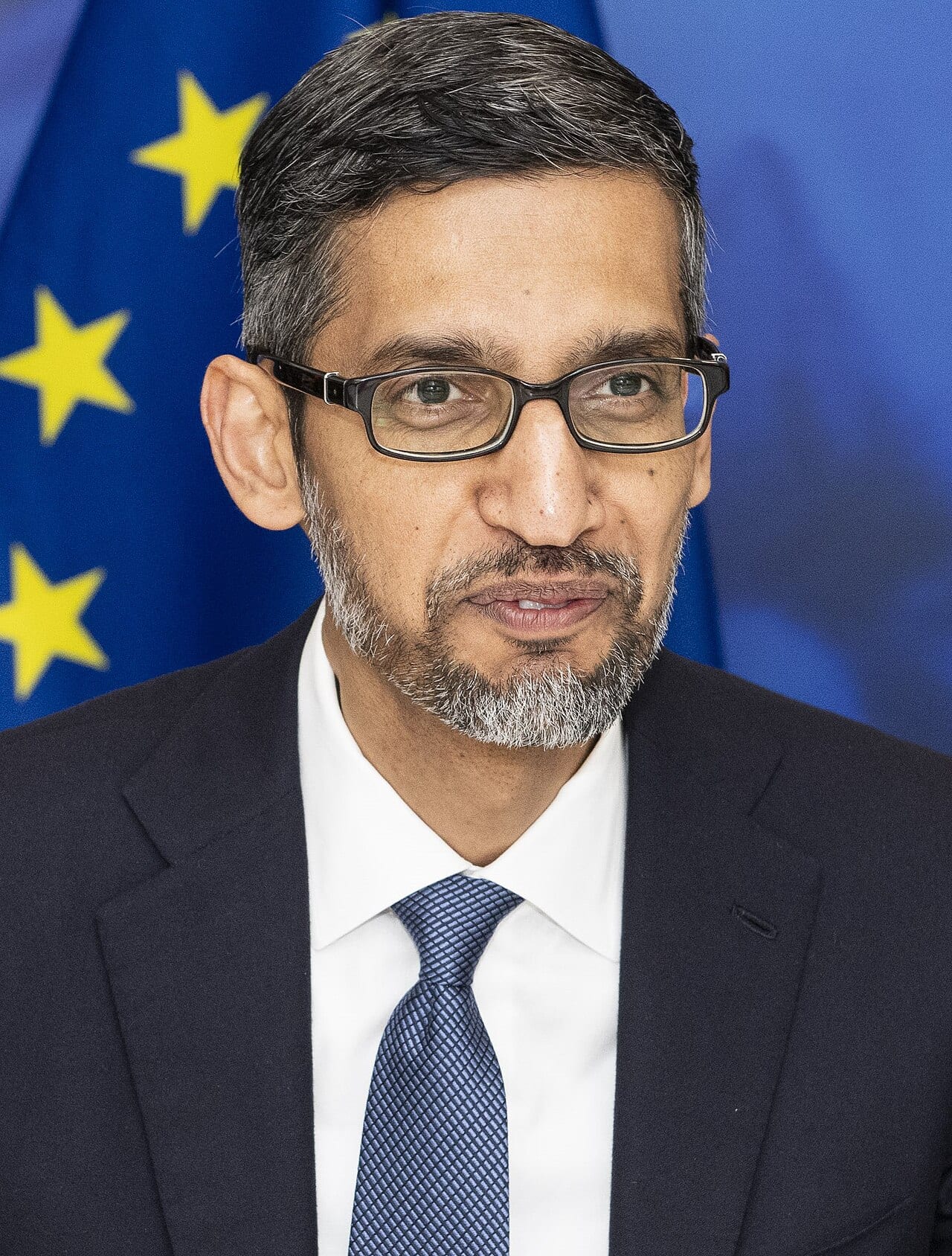
Investors answered differently than Pichai did. Alphabet's shares fell more than 11 percent after hours, wiping out more than $280 billion in market value14.
Independent analyst Luke Lango read the drop as a financing problem. "Alphabet is now funding the AI buildout with shareholders' money instead of its own cash," he wrote4. "This is a 'how do we pay for it' problem, not a 'nobody wants it' problem," he added.
Bill Ackman says the math already changed
Pershing Square's Bill Ackman argues the opposite case. A month before Warsh spoke, Ackman posted his own argument on X9.
Bill Ackman@BillAckmanThe presumption that the Fed raising short-term rates reduces inflation is predicated on the belief that higher rates reduce demand and investment.
But what if higher rates don’t reduce demand and investment because the demand for intelligence and energy is unaffected by higher…
He said the payoff from winning the AI race runs so high it erases the usual math on borrowing costs. "The demand for intelligence and energy is unaffected by higher rates," Ackman wrote, "because winning the race for super intelligence has a near infinite ROI"9. He closed with a direct question of his own: "I think the Fed might have just made a mistake. Am I right or am I wrong?"
Alphabet's own earnings cut both ways on that bet. Cloud revenue doubled the same quarter free cash flow turned negative, so growth and strain arrived together35.
Government data points toward Ackman's reading too. The broader economy grew at a 3.4 percent annual rate in the third quarter8. Spending on information processing equipment led that advance estimate.
What to do
Watch free cash flow on the next AI earnings call, alongside revenue growth. A business can grow fast and still need outside money to keep building at that pace.
Ask which financing story fits before you judge any single company. A company paying with its own cash sits in a different position than one selling new stock or bonds to keep up.
Expect this argument to resurface at the Fed's December meeting. Two governors already wanted a rate hike in October, and Warsh gave his clearest answer yet on how he reads AI spending.
By the numbers
- 3.75 to 4 percent: the Fed's benchmark rate range, held on Oct. 28 by a 10-2 vote2.
- Google Cloud revenue reached $30.7 billion in the third quarter, more than double the $15.2 billion from a year earlier35.
- Capital spending hit $51.4 billion in the third quarter, up from $35.7 billion in the first37.
- Free cash flow fell to negative $9.1 billion in the third quarter, down from a positive $10.1 billion in the first37.
- New equity worth $84.8 billion funded part of the buildout this year, including $10 billion from Berkshire Hathaway4.
- Alphabet's shares fell more than 11 percent after hours on the earnings, erasing over $280 billion in value14.
- The U.S. economy grew at a 3.4 percent annual rate in the third quarter, data Ackman and Warsh each read their own way8.
What to watch
Watch the Fed's December meeting for the next word on rates. Two governors already wanted a hike in October2. Watch Alphabet's fourth-quarter call too, when Ashkenazi promised more detail on next year's spending plans4. A clear 2027 capex number there will show which side of this argument is holding up better.
Sources
- Sheryl Estrada, "Fed Chair Kevin Warsh's warning to AI investors: 'Interest rates get in the cracks,'" Fortune, Oct. 29, 2026, https://fortune.com/2026/10/29/fed-chair-kevin-warsh-warning-ai-investors-interest-rates-get-in-the-cracks-cfo/
- Federal Open Market Committee, "Federal Reserve issues FOMC statement," Federal Reserve Board, Oct. 28, 2026, https://www.federalreserve.gov/newsevents/pressreleases/monetary20261028a.htm
- Alphabet Inc., "Alphabet Announces Third Quarter 2026 Results," SEC Form 8-K, Exhibit 99.1, Oct. 28, 2026, https://www.sec.gov/Archives/edgar/data/0001652044/000165204426000080/googexhibit991q32026.htm
- Amanda Gerut, "Alphabet's Google Cloud revenue doubles to $31 billion as cash flow stays deep red," Fortune, Oct. 28, 2026, https://fortune.com/2026/10/28/alphabet-google-stock-drops-cloud-revenue-doubles-free-cash-flow-negative/
- Alphabet Inc., "Alphabet Announces Third Quarter 2025 Results," SEC Form 8-K, Exhibit 99.1, Oct. 28, 2025, https://www.sec.gov/Archives/edgar/data/1652044/000165204425000087/googexhibit991q32025.htm
- Alphabet Inc., "Alphabet Announces Second Quarter 2026 Results," SEC Form 8-K, Exhibit 99.1, July 22, 2026, https://www.sec.gov/Archives/edgar/data/0001652044/000165204426000066/googexhibit991q22026.htm
- Alphabet Inc., "Alphabet Announces First Quarter 2026 Results," SEC Form 8-K, Exhibit 99.1, April 28, 2026, https://www.sec.gov/Archives/edgar/data/0001652044/000165204426000043/googexhibit991q12026.htm
- U.S. Bureau of Economic Analysis, "Gross Domestic Product (Advance Estimate), 3rd Quarter 2026," Oct. 29, 2026, https://www.bea.gov/news/2026/gdp-advance-estimate-3rd-quarter-2026
- Bill Ackman, post on X, Sept. 25, 2026, https://x.com/BillAckman/status/2103299666276184301