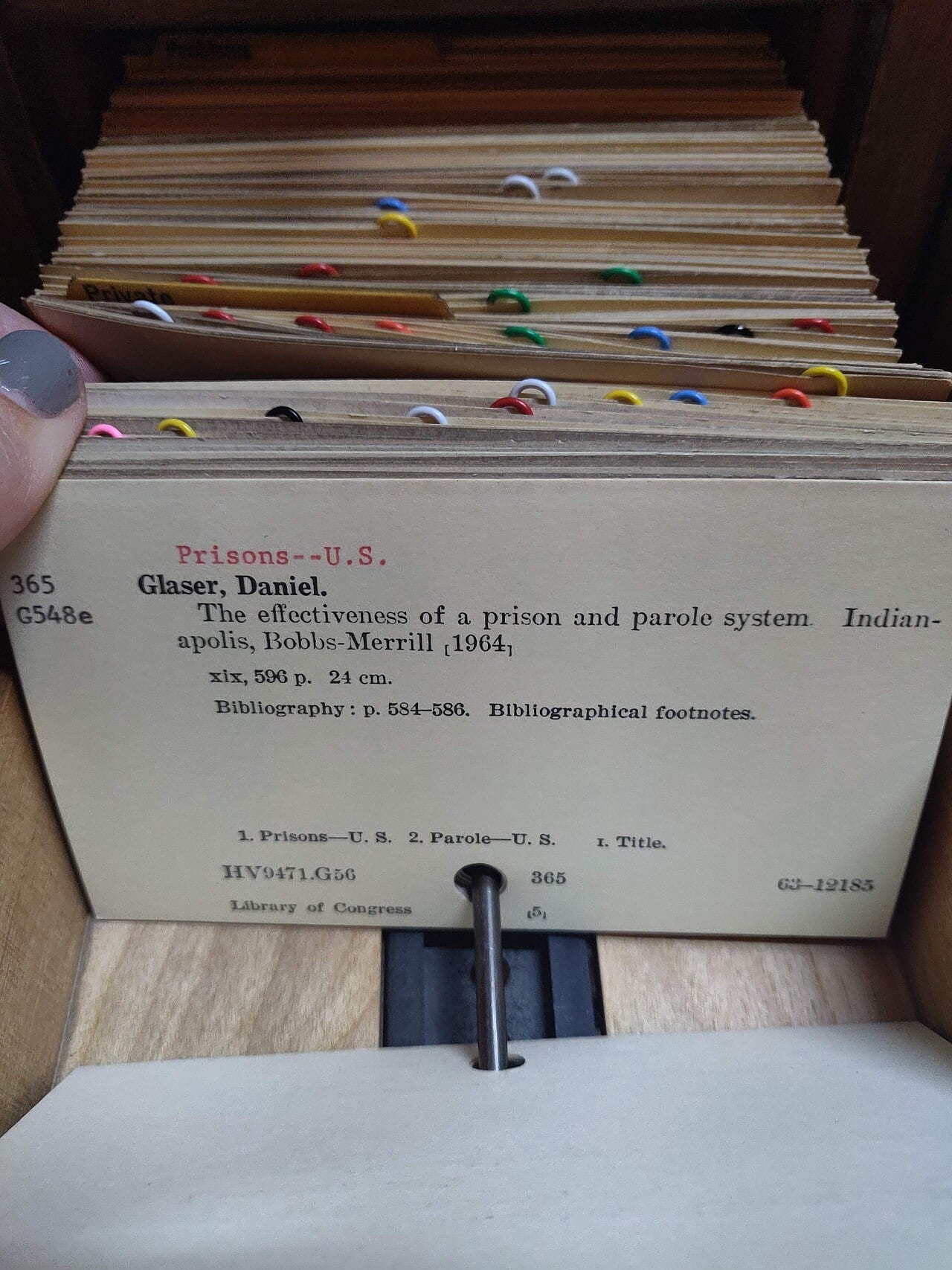
Three companies now build a memory into their AI assistant. ChatGPT, Claude and Meta AI each hold on to what you tell them, then use it later159.
The newest name in that group has barely shipped. Meta announced Active Memory on Oct. 12, 2026, inside a new model called Muse Wonder10. It will carry what matters about you across chats, and it reaches Meta's Muse app "beginning with paid subscribers".
Active Memory is a different tool from the one most people already use. Meta AI, the assistant inside WhatsApp, Messenger, Facebook and Instagram, has run its own memory since January 20259. Anyone picturing Meta's Active Memory live in their WhatsApp chat today is picturing a feature that has yet to arrive there.
What Each One Actually Remembers
ChatGPT lets you say "remember this" directly. Since June 4, 2026, it also writes memories on its own, under an upgrade one report called Dreaming V34. The system now reads your chat history and pulls out what still matters, on its own, before you ever write a note.
Claude saves memory differently. It keeps a list of topics, separate from a summary of the whole chat5. Health, race, religion and political belief stay out of that list by default. You have to switch on a setting called "Include sensitive topics in memory" before Claude keeps any of them8.
Meta AI remembers less by design. It only picks up details from one-on-one chats, apart from any group thread9. Other Meta data joins in too, like the home city on your Facebook profile, to shape an answer.
The Clock Each Service Sets for Itself
Deleting something and erasing it happen on different clocks.
OpenAI says a deleted chat or memory leaves your account right away. Its own systems then keep a copy for up to 30 days before it clears for good2.
Anthropic names the same 30-day window for Claude. A deleted conversation is "removed from your chat history immediately" and "deleted from our back-end storage systems within 30 days"7.
OpenAI and Anthropic Both Clear a Deleted Memory in 30 Days
Days a deleted memory can stay in backend storage, per each company's own help pages, checked Nov. 4, 2026
Each column shows one company's published window; Meta's own pages on deleting a memory leave the day count blank, so Meta sits outside this chart.
Meta's pages on deleting a memory, for both Meta AI and the newer Muse app, keep the day count out of print, so this chart counts two companies only.
Sources: OpenAI [2]; Claude Privacy Center [7]. Chart by Ryan Elliott Dennis.
The numbers behind this chart
| Item | Value |
|---|---|
| OpenAI | 30 days |
| Anthropic | 30 days |
Meta's own pages say less about this. Three separate pages, covering both the Meta AI assistant and the newer Muse app, each describe deleting a memory. Each stays silent on how many days that takes91112.

The Buttons You Actually Get
ChatGPT gives you five levers. You can read a memory summary, delete one entry with a trash icon, or wipe every memory in a single step1. A separate toggle stops ChatGPT from using what it already knows, while the memories themselves stay in place. Opening a temporary chat skips memory for that one conversation3.
Claude's settings page lists every topic it holds, under "Your Claude." You can edit one, delete one, or reset everything at once56. "Pause memory" stops new entries while keeping the old ones. An incognito chat skips memory the same way ChatGPT's temporary chat does.

Meta AI keeps its own list shorter in the pages checked here. You can tell it to remember something, and "you can delete its memories at any time"9. WhatsApp added Incognito Chat on May 13, 2026, built so that "even Meta cannot access" what you say inside it11.
The Case for Remembering Everything, and the Case Against
Sam Altman wants AI memory to keep growing. OpenAI's co-founder and chief executive called it his favorite feature on The OpenAI Podcast in June 2025. "Memory is probably my favorite recent ChatGPT feature," Altman said. "The first time we could talk to a computer like GPT-3 or whatever, that felt like a really big deal"15.
Christina Wadsworth Kaplan, OpenAI's personalization lead, posted about the same push on June 4, 2026, the day ChatGPT's bigger memory upgrade shipped. "ChatGPT memory research has evolved over the past three years from saved memory, to introducing dreaming, to dreaming V3 rolling out today," she wrote4.
Christina Wadsworth Kaplan@ChristinaHartWChatGPT memory research has evolved over the past three years from saved memory, to introducing dreaming, to dreaming V3 rolling out today (first to Plus and Pro — but something here for Free soon!). https://t.co/lXQLAmogfL
Abhisek Dash studies this from the other side. He works as a postdoctoral researcher at the Max Planck Institute for Software Systems13. There, he led a study of 2,050 real ChatGPT memory entries. Out of every 100 memories, 96 were ChatGPT's own idea; a user asked for only 4 of them.
ChatGPT Writes 96 of Every 100 Memories About You on Its Own
Share of 2,050 ChatGPT memory entries studied across 80 real users that the assistant created on its own initiative, one cube per 4 entries
Each magenta cube is memories ChatGPT wrote on its own initiative; the single gray cube is the share a user asked for directly.
Source: arXiv [13]. Chart by Ryan Elliott Dennis.
The numbers behind this chart
| Item | Value |
|---|---|
| ChatGPT wrote it on its own | 96 |
| A user asked for it directly | 4 |
| Whole | 100, each cube 4 |
"That is the privacy risk which is sort of emerging, because there is no boundary anymore; the system is acting as your advisor, your friend, your doctor, your lawyer, and so it has information on everything," Dash said14.

What to do
Open each assistant's own memory page this week, straight from the source. Read what it already holds, and delete anything you want left out of next month's conversation.
Treat the 30-day promise as a floor, well short of a finish line. OpenAI and Anthropic both say a deleted memory clears their back-end in that window27. Meta keeps that window to itself, so assume its clock could run longer.
Open a temporary or incognito chat before a sensitive conversation starts. ChatGPT, Claude and Meta AI each offer one1611.
By the numbers
- Thirty days: the window OpenAI names before a deleted chat or memory clears its back-end storage2.
- Also thirty days: the window Anthropic names for a deleted Claude conversation7.
- Ninety-six percent: share of 2,050 studied ChatGPT memory entries that the assistant wrote on its own13.
- Twenty-eight percent: share of those same entries holding data the European Union's GDPR defines as personal13.
- Jan. 27, 2025: the date Meta AI's memory began rolling out on Facebook, Messenger and WhatsApp9.
- May 13, 2026: the date WhatsApp added Incognito Chat with Meta AI11.
- Oct. 12, 2026: the date Meta announced Active Memory inside Muse Wonder10.
What to watch
Watch for Meta to publish a deletion window once Active Memory leaves its subscriber-only preview10. Regulators may also act on a system that writes most of its own memories, ninety-six percent of them in Dash's study13. The clearest signal will be the day one of these three companies shows you a deletion finish in real time.
Sources
- OpenAI, "Memory in ChatGPT," OpenAI, Nov. 4, 2026, https://help.openai.com/en/articles/8590148-memory-in-chatgpt
- OpenAI, "Chat and file retention in ChatGPT," OpenAI, Nov. 4, 2026, https://help.openai.com/en/articles/8983778-chat-and-file-retention-in-chatgpt
- OpenAI, "Temporary chat in ChatGPT," OpenAI, Nov. 4, 2026, https://help.openai.com/en/articles/8914046-temporary-chat-in-chatgpt
- Francesco Antonio Russo, "OpenAI ChatGPT Dreaming V3 memory upgrade: how it works," The Cryptonomist, Jun. 5, 2026, https://en.cryptonomist.ch/2026/06/05/openai-chatgpt-dreaming-v3-memory/
- Anthropic, "Using Claude's chat search and memory to build on previous context," Claude Support, Nov. 4, 2026, https://support.claude.com/en/articles/11817273-using-claude-s-chat-search-and-memory-to-build-on-previous-context
- Anthropic, "Memory," Claude, Sep. 11, 2025, https://claude.com/blog/memory
- Anthropic, "How long do you store my data?," Claude Privacy Center, Nov. 4, 2026, https://privacy.claude.com/en/articles/10023548-how-long-do-you-store-my-data
- Anthropic, "Release notes," Claude Support, Nov. 4, 2026, https://support.claude.com/en/articles/12138966-release-notes
- Meta, "Building Toward a Smarter, More Personalized Assistant," Meta Newsroom, Jan. 27, 2025, https://about.fb.com/news/2025/01/building-toward-a-smarter-more-personalized-assistant/
- Meta, "Introducing Muse Wonder and Muse Wonder Full," Meta Newsroom, Oct. 12, 2026, https://about.fb.com/news/2026/10/introducing-muse-wonder-models/
- WhatsApp, "Introducing Incognito Chat with Meta AI: A completely private way to chat with AI," WhatsApp Blog, May 13, 2026, https://blog.whatsapp.com/introducing-incognito-chat-with-meta-ai-a-completely-private-way-to-chat-with-ai
- Meta, "How to manage your Muse data," Meta Help Center, Nov. 4, 2026, https://www.meta.com/help/artificial-intelligence/2225571704857152/
- Abhisek Dash, Soumi Das, Elisabeth Kirsten, Qinyuan Wu, Sai Keerthana Karnam, Krishna P. Gummadi, Thorsten Holz, Muhammad Bilal Zafar, Savvas Zannettou, "The Algorithmic Self-Portrait: Deconstructing Memory in ChatGPT," arXiv, Feb. 24, 2026, https://arxiv.org/abs/2602.01450
- Vinay Patel, "ChatGPT May Be Building Psychological Profiles of Everyday Users Behind the Scenes, Study Warns," Tech Times, Oct. 26, 2026, https://www.techtimes.co.uk/chatgpt-memory-user-profiles-privacy-study-1809385
- Andrew Mayne, "Transcript: Sam Altman on AGI, GPT-5, And What's Next -- the OpenAI Podcast Ep. 1," SingJu Post, Jun. 19, 2025, https://singjupost.com/transcript-sam-altman-on-agi-gpt-5-and-whats-next-the-openai-podcast-ep-1/