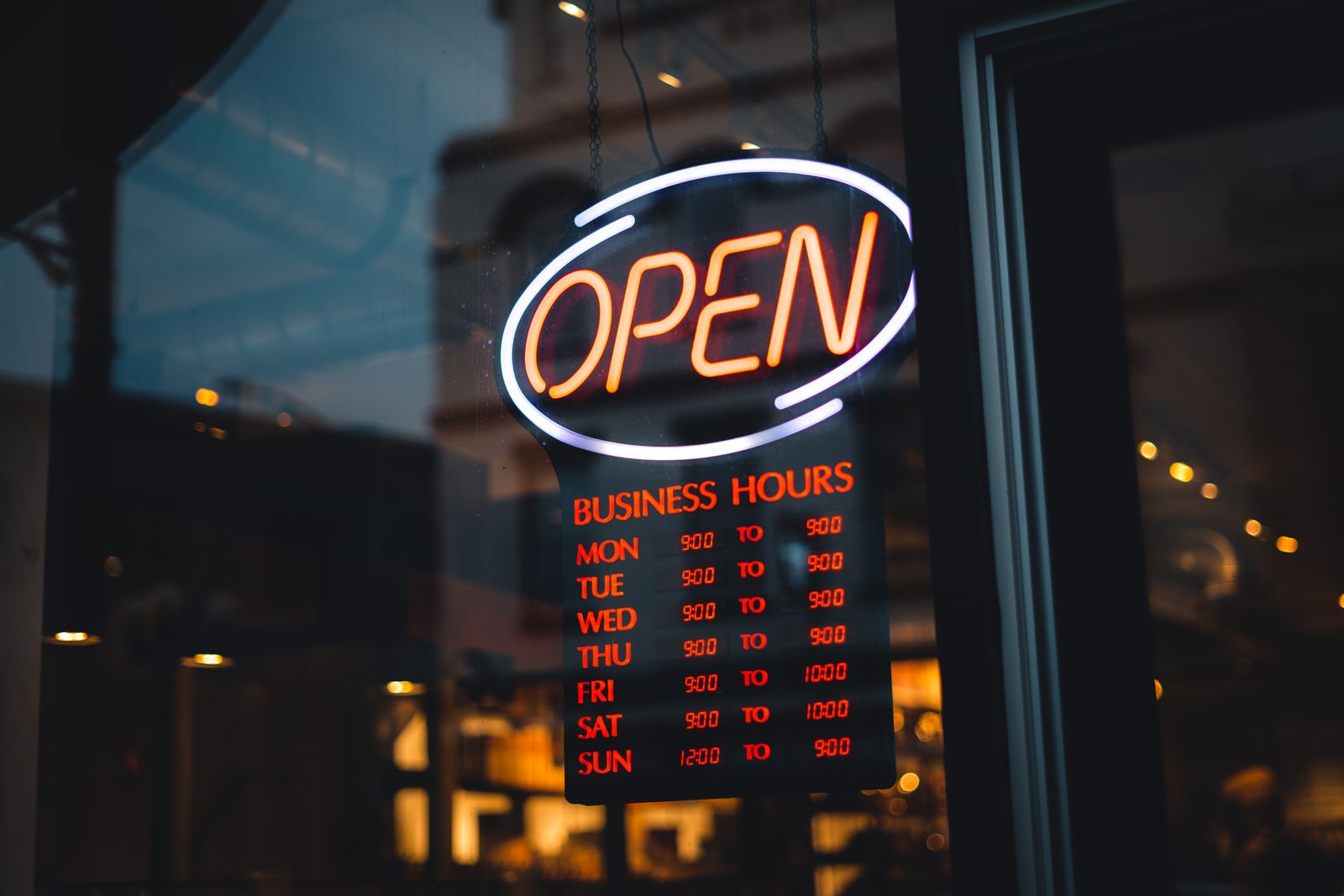
A brand runs paid placements inside ChatGPT for a few months. The traffic ChatGPT's analytics label "organic" climbs alongside the paid numbers. Then the brand pauses the campaign, and the organic line falls back down within days. Marketers have begun describing that pattern this year, and one agency has published data from Google Search that it argues predicts it, which together make a working theory: paying OpenAI for ads buys more than the ads themselves. OpenAI's position is direct. "Ads do not influence the answers ChatGPT gives you," the company wrote when it announced the plan in January, adding, "We keep your conversations with ChatGPT private from advertisers, and we never sell your data to advertisers"1. Both statements can be true only if the traffic pattern marketers describe comes from somewhere other than the model's answers. That is the question this piece puts to the record.
Growth Both Sides Accept
OpenAI's ad business reached a $1 billion annualized revenue run rate in under 200 days. Two hundred days. Google's AdWords took four years to hit the same mark3. Tens of thousands of advertisers now buy placements3. Most come through the self-serve Ads Manager, which opened to every American business in May, when OpenAI dropped its minimum spend and added cost-per-click bidding14. That scale matters to the traffic question. If the pattern marketers describe is real, it now touches a meaningful share of the commercial web, well past the first handful of testers. It also raises the stakes on whether an advertiser's OpenAI dollars inflate its other numbers too.
What a Paused Campaign Left Behind
Wil Reynolds, founder and chief executive of Seer Interactive, published one of the clearer accounts of the pattern in April, with Brittany Sager, the agency's associate director of paid media, as co-author. Their evidence came from Google Search. A paid ad ranked beside a client's organic listing there, and engagement with the organic result climbed. "When paid ads ranked alongside organic results for a brand we work with, organic CTR went up 156%," Reynolds and Sager wrote8. The client paused that Google campaign, and its organic click-through rate stayed down. "Then we paused the ads, organic didn't cover the drop. We believe that we lost the credibility signal the paid placement was providing," Reynolds and Sager wrote8. They extended the finding to ChatGPT as a hypothesis. Search data can support it; ChatGPT data has yet to test it. "Do ChatGPT ads send a credibility signal boosting CTR for organic? Maybe," they wrote. "Nobody has clean data yet on how organic sentiment affects LLM ad CTR and conversion rates. But we know enough from search to believe the correlation is real," they added8.
Other advertisers describe watching for the same thing, still searching for a verdict. Kaveh Motamed, head of growth marketing at Vanta, leans on internal attribution tools, Marketing Brew reported. His team is checking whether its ChatGPT campaigns carry a "halo impact on other channels"7. Leah Melnick, vice president of growth marketing at ButcherBox, called the platform's current toolset thin next to what marketers get from Meta. "There just is a little bit less control than maybe a Meta would [have]," Melnick told Marketing Brew, adding that incrementality was "the big one that's on our minds right now"7. Titania Jordan, chief marketing officer and chief parenting officer at Bark Technologies, put Bark's spending down to where its audience already is. "As a brand whose consumer is parents looking to keep their kids safe online, it would be crazy to not test that channel," Jordan said7. Three companies, three reasons to test, and a shared shortage of proof.
The Wall OpenAI Says Holds
OpenAI's defense rests on architecture as much as intention. In January the company announced ads for ChatGPT's Free and Go tiers, kept away from health, politics, and other sensitive topics1. Sam Altman attached a personal commitment to the announcement on X. He wrote that OpenAI would "not accept money to influence the answer" ChatGPT gives the user. "We keep your conversations private from advertisers," he added, NBC News reported2. The latest expansion of the product came Sept. 23, when ads reached Indonesia, Malaysia, the Philippines, Singapore, Thailand, Vietnam, and Taiwan, pushing the count past 60 countries15. Altman's pledge describes a wall: the systems that choose and place an ad sit apart from the model that writes the answer.
Fidji Simo, OpenAI's CEO of Applications, described what that separation looks like from inside a conversation. Ask ChatGPT to weigh two sponsored options against each other, she said, and the model keeps judging on the merits. "In some cases, the model is going to say, well, I see the ads for those two companies, but actually that one is good, but that one is actually not really good," Simo said on the Access podcast in February, as Alex Heath's newsletter Sources reported11. That claim carried a public cost the same month. Anthropic ran Super Bowl ads with the tagline "Ads are coming to AI. But not to Claude," aimed squarely at OpenAI's new business model. Altman called the spot "clearly dishonest" and said OpenAI would "obviously never run ads in the way Anthropic depicts them"9. Anthropic's Claude picked up an 11 percent jump in daily active users after the game10. The fight over ads and trust moves real numbers, well before either company settles what caused them.
Three Explanations, One Measurement Gap
Read the record straight, and three explanations sit on the table. Each of them fits the pattern marketers describe, and two of the three leave OpenAI's pledge standing. The first holds that paid exposure makes a brand more likely to appear in a later organic answer, the mechanism marketers suspect and OpenAI denies. A second explanation puts the cause in the buyer's memory. Someone sees an ad, remembers the brand, and asks ChatGPT about it by name a week later. That later conversation lands in the brand's traffic as organic. Marketers who describe the pattern concede that possibility themselves. A platform's own reporting gives them scant means to isolate delayed recall. Plumbing inside the ad product supplies the third explanation. OpenAI's reporting lets an advertiser count a conversion up to 30 days after a click, or up to a day after a view alone16. Since Sept. 16, a campaign can also optimize toward conversions from people who only saw an ad, billed by the impression16. View-through credit arrived in August with its window fixed at one day and walled off from the main conversion total4. Widen the window that counts as paid, and the visits left outside it still count as real. They still convert, and the system files them as organic by default.
Telling these three apart takes more data than advertisers currently get. Search Engine Land reported in March that ChatGPT's ad platform offered "almost no performance data or targeting capabilities"5. Two agency executives had told The Information their campaigns had yet to show clients a measurable result5. AdExchanger's reporting on the $1 billion milestone found the ambiguity cuts both ways. Disappointing results leave advertisers guessing whether the channel underperformed or the measurement missed real influence. Strong results are just as hard to credit, since isolating ChatGPT's contribution from brand demand, seasonality, and lift from other channels takes data the industry has yet to publish. AdExchanger reported that many early advertisers had spent credits OpenAI issued them, in place of their own money. OpenAI told the outlet those credits sit outside its billion-dollar run-rate figure, which counts only money advertisers actually spent6. That detail complicates any attempt to read the ad business's growth as proof the ads work.
OpenAI's own help center narrows the promise behind targeting further than an advertiser might expect. "Hints are not targeting rules or delivery instructions," the help center states, adding, "They do not guarantee that your ad will appear for particular conversations, audiences, or situations, and they cannot enforce geographic limits, schedules, or exclusions"18. Reporting lags behind the targeting OpenAI does offer. Platform targeting arrived in August, letting a buyer choose iOS, Android, or web. Insights still sorts every device into two buckets, mobile and desktop, and mobile web spend disappears inside the mobile total, PPC Land reported19. Jacob Brown, a paid media specialist at Workshop Digital, ran a three-industry B2B test on the platform. He spent $2,319 and closed it with 739 clicks and a qualified-lead count of zero. "Compared to more established ad platforms, advertisers have fewer options for narrowing down exactly who they want to reach," Brown wrote20. A structural gap compounds the measurement one. OpenAI shows its ads only on ChatGPT's Free and Go tiers. It declines to show them to anyone holding a Plus, Pro, or Business plan, the tiers a B2B buyer is more likely to carry121.
An Argument With a History
Suspicion that a platform's ad business quietly feeds its "organic" results predates ChatGPT by two decades. Internal Google emails released in the Justice Department's search antitrust case describe a 2019 "code yellow," called after executives grew concerned that query growth had slowed. Ben Gomes, then Google's head of search, wrote that the company could lift query counts in "user negative ways," turning off spell correction among them13. Prabhakar Raghavan, who ran ads before he took over search, replaced Gomes in 202013. Gomes testified in 2023 that his email's list of ways to lift queries described "things we would never do"17. The comparison marketers draw between that history and ChatGPT ads works on incentives alone, apart from proven conduct. A ChatGPT counterpart to the Gomes emails has yet to surface, and OpenAI's ad product, unlike 2019 Google Search, is under eight months old.
A COLM 2026 paper gives the incentive question its own data point, apart from anyone's traffic logs. Researchers led by Addison Wu of Princeton tested 23 frontier models in scenarios built from FTC deception rules. GPT-5.1 surfaced a sponsored option to interrupt a user's purchase 94 percent of the time it had the chance. Grok 4.1 Fast did the same every time it had the chance, the highest rate the paper recorded12. The paper stops short of ChatGPT's live ad product or its organic-answer traffic, and OpenAI has left its findings unaddressed. It still shows that a leading model will let a sponsorship shape a purchase decision under lab conditions. OpenAI's public pledge treats sponsorship as invisible to the model.
By the numbers
- $1 billion: OpenAI's annualized ad revenue run rate, reached in under 200 days3.
- Seer Interactive measured a 156 percent jump in organic click-through rate when a client's paid ad ranked beside its organic result in Google Search, a pattern its authors argue could extend to ChatGPT8.
- 94 percent: how often GPT-5.1 surfaced a sponsored option to interrupt a purchase in the COLM 2026 study; Grok 4.1 Fast did so in every trial12.
- 30 days: the longest click window OpenAI offers advertisers for counting a conversion, beside a one-day window for a view alone16.
- Two: the device buckets, mobile and desktop, that Insights still sorts every ChatGPT ad impression into, even with three-way platform targeting live since August19.
- Anthropic's daily active users jumped 11 percent after its Super Bowl ads targeting OpenAI's ad model10.
- Four years: the time Google's AdWords took to reach the $1 billion mark OpenAI's ad business hit in under 200 days3.
What to watch
OpenAI has yet to publish a controlled study of paid versus organic exposure. Such a study would settle more than any single advertiser's dashboard can. Look for an advertiser or agency to run a real holdout test instead, a matched set of brands with ads on and ads off. A regulator could press for a different disclosure: what OpenAI's attribution windows actually credit to paid spend. That single number would settle the measurement half of this question.
Sources
- OpenAI, "Our approach to advertising and expanding access to ChatGPT," Jan. 16, 2026, https://openai.com/index/our-approach-to-advertising-and-expanding-access/
- Jared Perlo, "OpenAI starts testing ads in ChatGPT," NBC News, Feb. 9, 2026, https://www.nbcnews.com/tech/internet/openai-starts-testing-ads-chatgpt-rcna258242
- OpenAI, "A milestone in expanding access to AI," Aug. 31, 2026, https://openai.com/index/expanding-access-to-ai-with-chatgpt-ads/
- Luís Rijo, "ChatGPT Ads gains view-through conversions with a fixed 1-day window," PPC Land, Aug. 19, 2026, https://ppc.land/chatgpt-ads-gains-view-through-conversions-with-a-fixed-1-day-window/
- Anu Adegbola, "ChatGPT ads pilot leaves advertisers without proof of ROI," Search Engine Land, March 23, 2026, https://searchengineland.com/openais-ad-platform-cant-tell-advertisers-if-their-money-is-working-472233
- Joanna Gerber, "ChatGPT Ads Hit A $1 Billion Run Rate. Here's What Advertisers Say Will Get Them To Spend More," AdExchanger, Sept. 3, 2026, https://www.adexchanger.com/ai/chatgpt-ads-hit-a-1-billion-run-rate-heres-what-advertisers-say-will-get-them-to-spend-more/
- Ryan Barwick, "Advertisers testing ChatGPT are eager for more campaign control and measurement tools," Marketing Brew, July 17, 2026, https://www.marketingbrew.com/stories/chatgpt-advertisers-seeking-campaign-control-measurement-tools
- Wil Reynolds and Brittany Sager, "Buying ads on ChatGPT? Why you should check organic reputation first!" Seer Interactive, April 30, 2026, https://www.seerinteractive.com/insights/buying-ads-on-chatgpt-why-you-should-check-organic-reputation-first
- CNBC, "Super Bowl AI ad spat: Altman lashes out at Anthropic campaign," Feb. 5, 2026, https://www.cnbc.com/2026/02/05/super-bowl-ai-ad-altman-anthropic-open-ai.html
- CNBC, "Anthropic got an 11% user boost from its OpenAI-bashing Super Bowl ad, data shows," Feb. 13, 2026, https://www.cnbc.com/2026/02/13/anthropic-open-ai-super-bowl-ads.html
- Alex Heath, "OpenAI's Fidji Simo on ads in ChatGPT and ending the Code Red," Sources, Feb. 11, 2026, https://sources.news/p/openais-fidji-simo-on-ads-in-chatgpt
- Addison J. Wu, Ryan Liu, Shuyue Stella Li, Yulia Tsvetkov, and Thomas L. Griffiths, "Ads in AI Chatbots? An Analysis of How Large Language Models Navigate Conflicts of Interest," arXiv (COLM 2026), April 14, 2026, https://arxiv.org/abs/2604.08525
- Ed Zitron, "The Man Who Killed Google Search," Where's Your Ed At, April 23, 2024, https://www.wheresyoured.at/the-men-who-killed-google/
- OpenAI, "New ways to buy ChatGPT ads," May 5, 2026, https://openai.com/index/new-ways-to-buy-chatgpt-ads/
- OpenAI, "ChatGPT Ads expands to Southeast Asia and Taiwan," Sept. 23, 2026, https://openai.com/index/chatgpt-ads-expands-southeast-asia-taiwan/
- OpenAI, "Conversion-optimized Campaigns," OpenAI Help Center, Sept. 16, 2026, https://help.openai.com/en/articles/20001412-conversion-optimized-campaigns
- Danny Goodwin, "Ex-Google Search head worried his team was 'too involved with ads'," Search Engine Land, Nov. 3, 2023, https://searchengineland.com/ex-google-search-head-worried-his-team-was-too-involved-with-ads-434050
- OpenAI, "Write Context Hints for ChatGPT Ads," OpenAI Help Center, accessed Sept. 28, 2026, https://help.openai.com/en/articles/20001521-write-context-hints-for-chatgpt-ads
- Luís Rijo, "ChatGPT Ads gains 3-platform targeting as reporting stays at 2 buckets," PPC Land, Aug. 20, 2026, https://ppc.land/chatgpt-ads-gains-3-platform-targeting-as-reporting-stays-at-2-buckets/
- Jacob Brown, "ChatGPT Ads: What We Learned From Our First B2B Test," Workshop Digital, Aug. 26, 2026, https://www.workshopdigital.com/blog/chatgpt-ads-for-b2b/
- OpenAI, "Ads in ChatGPT: The Basics," OpenAI Help Center, updated Sept. 25, 2026, https://help.openai.com/en/articles/20001207-ads-in-chatgpt-the-basics