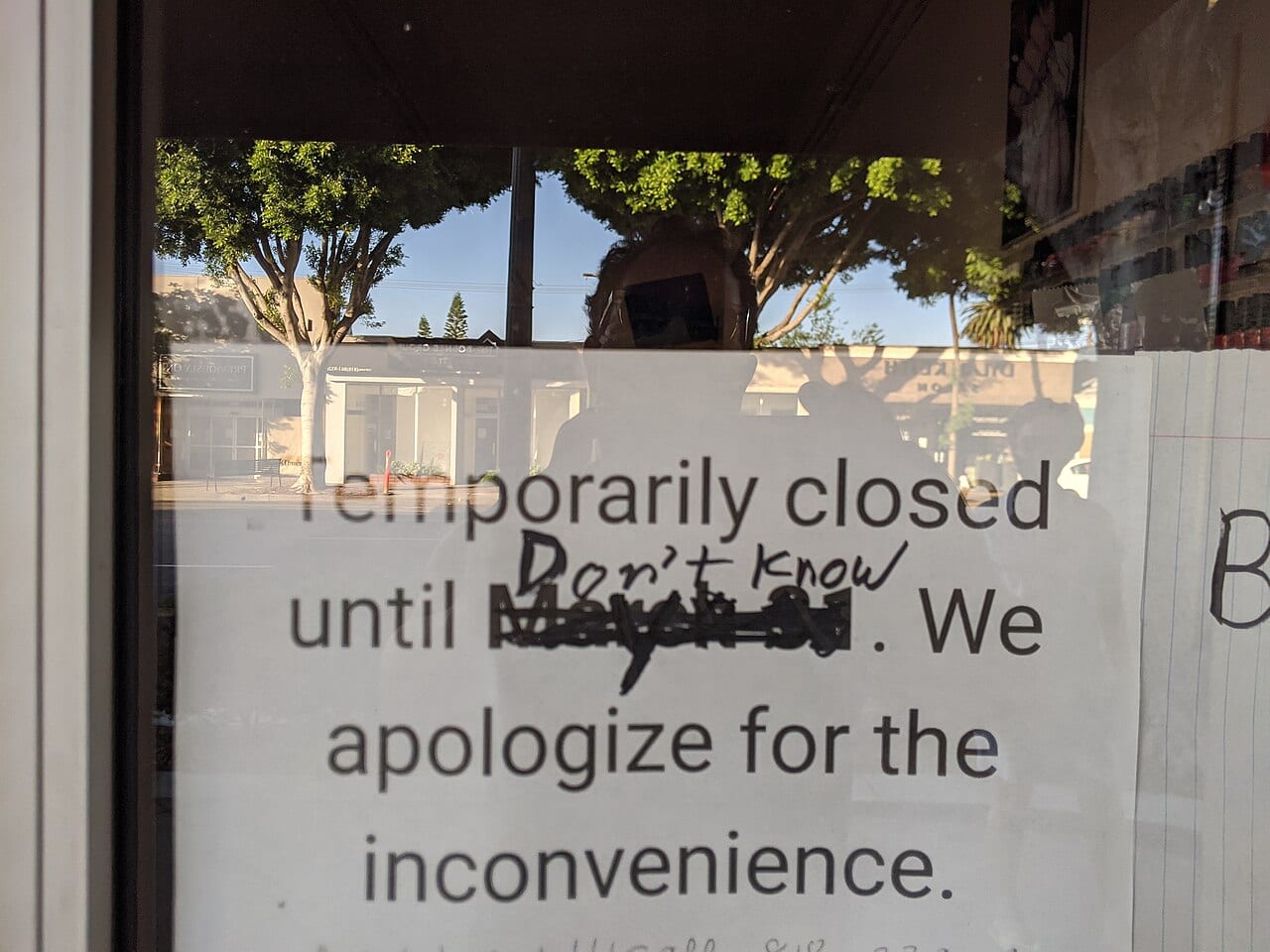
OpenAI built its own web browser in October 2025. Ten months later, it shut that product down.
James Sun works on browser and computer-use products at OpenAI. He posted the news himself. "Lastly, with all these updates, we are going to be sunsetting Atlas," he wrote. "All these capabilities were built on what we learned from Atlas users who took a leap of faith on a new browser"1.
James Sun@JamesZmSunLastly, with all these updates, we are going to be sunsetting Atlas.
All these capabilities were built on what we learned from Atlas users who took a leap of faith on a new browser.
You taught us how agents can help make browsing and doing work on the open web better, and we…
The shutdown took effect Aug. 9, 202612. OpenAI moved Atlas's features into two places instead. One is a ChatGPT desktop app; the other is a browser extension for Chrome, Edge, Brave, Opera and Vivaldi.
That extension already lists 9 million users on the Chrome Web Store3.
Atlas Closes, an Extension Inherits Its Users
OpenAI kept one number secret: Atlas's own user count, for the whole time it ran. Cyberhaven tracks corporate Mac computers for a living. It measured something close instead: 1.7 percent of them had downloaded Atlas, a rate of 17 per 1,0004.
Downloads peaked the week Atlas launched, then fell fast.
Nine months on, OpenAI gave up the separate-browser format. Its replacement skips that question: a reader keeps Chrome, Edge or whatever browser they already run, and adds ChatGPT to it2.
That extension's 9 million users already beat every figure reported for Atlas. Atlas's own total stayed secret the whole time34. The extension still carries a 2.9-star rating from 1,200 reviewers. A big user count and a happy one differ.
Microsoft Made the Same Bet First
Edge got a separate AI layer too, called Copilot Mode.
Sean Lyndersay posts Edge's release notes. He announced Copilot Mode's retirement on Microsoft's own blog, three months before Atlas closed. "As part of today's update, we're retiring Copilot Mode," he wrote. "With helpful features built directly into Edge, it's now simpler to shape how you browse and get more done"12.
Multi-tab reasoning, browsing-history context and the new tab page all stayed, moving into ordinary Edge on May 13, 202612. Edge dropped only the toggle that once hid these features behind a separate name.
A Microsoft 365 Premium subscription unlocks one more feature, Browse with Copilot, limited to the United States.
Google Built Gemini Into the Browser You Have
Chrome kept its place. Google skipped a separate browser altogether, and built Gemini straight inside the one most readers already run.
Auto browse is Chrome's agent for multi-step browsing chores, and it launched inside Chrome on Jan. 28, 20265. It needs a Google AI Pro subscription, priced at $19.99 a month in the United States7.

Chrome Enterprise Premium adds the same agent for a company. It also blocks copying, pasting or uploading to outside AI tools, for $6 per seat a month6.
Parisa Tabriz runs Chrome as Google's vice president and general manager. She described the shift herself: "from a tool you use to browse the web into a partner that can actually perform tasks on your behalf"6.
Gemini's reach inside Chrome carries a cost of its own. The company's privacy hub says Gemini "collects and processes page content and the URL from your current tab." It logs that content to a reader's account8. Turning off Keep Activity stops future chats from training Google's models. Leaving it on keeps those chats inside Google's training data.
Comet Keeps Betting the Browser Itself Matters
Perplexity reads the retreat the opposite way. Comet still ships as a stand-alone browser. It has been free to any reader since Oct. 2, 202511.

Aravind Srinivas is Perplexity's co-founder and chief executive. He argues a browser reaches further than an extension ever could. "The browser is the most agentic software that we use every day," he told The Verge's Decoder podcast. "It has your login state. It has all the pages you're on. It's the most powerful surface area where AI can actually take actions for you"14.
Perplexity backs that argument with money. Its Max plan costs $200 a month, buying the highest weekly limit on Comet's own agent mode, the company's help page says10.
The company also wants Comet on phones before a reader ever searches for it. Handset makers are already in talks to preload it, the way Motorola preloads Perplexity's assistant. Srinivas calls the goal "tens to hundreds of millions" of users within a year16.

Any agentic extension carries this risk. It can see your open tabs, your logins and your email.
Brave's security team found that one Reddit post could quietly command Comet. It could open an email, read a passcode and hand it to an attacker13. "Traditional Web security assumptions don't hold for agentic AI, and we need new security and privacy architectures for agentic browsing," wrote Brave researchers Artem Chaikin and Shivan Kaul Sahib.
Perplexity's own privacy notice says Comet "collects your browsing history and tracks your use and engagement" once a reader signs into a synced account9. It promises email content stays out of model training. Browsing history earns only a collection line; the training promise applies to email alone.
Surfshark measured the privacy gap between these products directly. It counted 24 kinds of personal data tied to Gemini in Chrome. Copilot in Edge carried 14, and Comet carried 1015.
Gemini in Chrome Collects 24 Data Types Tied to a User
Data types Surfshark linked to an identifiable person, by browser AI assistant, published Sept. 23, 2025
Each column is one browser assistant; a taller column means Surfshark counted more kinds of personal data tied to that assistant, from browsing history to device identifiers.
Surfshark ran this count in September 2025, before OpenAI's ChatGPT extension existed in its current form; a vendor's own privacy notice may have changed since.
Source: Surfshark [15]. Chart by Ryan Elliott Dennis.
The numbers behind this chart
| Item | Value |
|---|---|
| Gemini in Chrome | 24 types |
| Copilot in Edge | 14 types |
| Comet | 10 types |
Only one of these four products puts a number like that on record: OpenAI's extension, through the Chrome Web Store. The other three keep a comparable figure private.
1 of 4 AI Browsing Tools in This Story Publishes a User Count
Whether each product's maker put any user or download figure on the record, checked on vendor and platform pages Nov. 10, 2026
Each cube stands for one of the four products in this piece. The magenta cube is the one whose maker published a user number; the three gray cubes keep that figure private.
OpenAI's figure counts Chrome Web Store installs for its ChatGPT extension alone, a different measure than a company-wide user total.
Sources: Chrome Web Store [3]; Google [5]; Perplexity [9]; Microsoft Edge Blog [12]. Chart by Ryan Elliott Dennis.
The numbers behind this chart
| Item | Value |
|---|---|
| Publishes a count | 1 |
| Keeps it private | 3 |
| Whole | 4 |
What to do
Check what you already have before downloading anything new. Chrome, Edge and the ChatGPT extension now carry most of the features Atlas or Copilot Mode once needed a new app for.
Pick a stand-alone browser like Comet for one specific job. Srinivas describes that job well: an agent that logs into a site and finishes a multi-step task on its own. Check what access that job needs first: your logins, open tabs and email.
Read the privacy notice before signing in anywhere with a synced account. The gap between a flat promise on one data type and silence on another is worth finding.
By the numbers
- 9 million: users on the Chrome Web Store for OpenAI's ChatGPT extension, counted after Atlas shut down3.
- 1.7 percent: share of corporate Mac computers Cyberhaven tracked that had downloaded Atlas before its closure4.
- Aug. 9, 2026: when OpenAI's Atlas browser stopped working12.
- May 13, 2026: when Microsoft retired Edge's separate Copilot Mode12.
- $19.99: Google AI Pro's monthly price, the subscription that unlocks Chrome's Auto Browse feature in the United States57.
- $200: what Perplexity's Max plan costs monthly, buying the highest weekly limit on Comet's own agent mode10.
- 24 data types: counted by Surfshark inside Gemini in Chrome, against Comet's 1015.
What to watch
Watch whether Perplexity's phone talks land a default spot on a shipped device, the placement Atlas and Copilot Mode both missed. A signed deal would test whether a stand-alone browser can out-distribute an extension already riding inside Chrome.
Chrome's own numbers matter too, and Google keeps Auto Browse's usage figures private. A published number would settle how many readers want an agent inside a browser they already had installed.
Sources
- James Sun (@JamesZmSun), "Lastly, with all these updates, we are going to be sunsetting Atlas.," X, July 9, 2026, https://x.com/JamesZmSun/status/2075290224327057644
- Rebecca Bellan, "OpenAI is shutting down Atlas, but its AI browser ambitions are still growing," TechCrunch, July 9, 2026, https://techcrunch.com/2026/07/09/openai-is-shutting-down-atlas-but-its-ai-browser-ambitions-are-still-growing/
- OpenAI, "ChatGPT," Chrome Web Store, retrieved Nov. 10, 2026, https://chromewebstore.google.com/detail/chatgpt/hehggadaopoacecdllhhajmbjkdcmajg
- Mick Jeon, "Browser Agent Security Risk: ChatGPT Atlas," Cyberhaven, Oct. 28, 2025, https://www.cyberhaven.com/blog/browser-agent-security-risk-chatgpt-atlas
- Google, "The new era of browsing: Putting Gemini to work in Chrome," Google, Jan. 28, 2026, https://blog.google/products-and-platforms/products/chrome/gemini-3-auto-browse/
- Alina Maria Stan, "Google turns Chrome into an agentic AI workplace tool with Auto Browse, Skills, and enterprise DLP at $6/month," The Next Web, April 22, 2026, https://thenextweb.com/news/google-chrome-enterprise-ai-coworker-agentic-browser
- Google, "Google AI plans," Google One, retrieved Nov. 10, 2026, https://one.google.com/about/google-ai-plans/
- Google, "Gemini Apps Privacy Hub," Google, retrieved Nov. 10, 2026, https://support.google.com/gemini/answer/13594961?hl=en
- Perplexity, "Comet Privacy Notice," Perplexity, effective Oct. 23, 2026, https://www.perplexity.ai/hub/legal/comet-privacy-notice
- Perplexity, "Perplexity Max," Perplexity Help Center, retrieved Nov. 10, 2026, https://www.perplexity.ai/help-center/en/articles/11680686-perplexity-max
- Rebecca Bellan, "Perplexity's Comet AI browser now free; Max users get new 'background assistant'," TechCrunch, Oct. 2, 2025, https://techcrunch.com/2025/10/02/perplexitys-comet-ai-browser-now-free-max-users-get-new-background-assistant/
- Sean Lyndersay, "New updates to Edge across desktop and mobile," Microsoft Edge Blog, May 13, 2026, https://blogs.windows.com/msedgedev/2026/05/13/new-updates-to-edge-across-desktop-and-mobile/
- Artem Chaikin and Shivan Kaul Sahib, "Agentic Browser Security: Indirect Prompt Injection in Perplexity Comet," Brave, Aug. 20, 2025, https://brave.com/blog/comet-prompt-injection/
- Vyom Ramani, "Why Perplexity CEO Aravind Srinivas sees AI browsers as key to AI agents," Digit, July 18, 2025, https://www.digit.in/features/general/why-perplexity-ceo-aravind-srinivas-sees-ai-browsers-as-key-to-ai-agents.html
- Surfshark Research Hub, "New Gemini in Chrome integration collects excessive user data," Surfshark, Sept. 23, 2025, https://surfshark.com/research/chart/gemini-chrome-user-data-collection
- Nelson Oboh, "Perplexity in talks to preinstall Comet browser on smartphones," thekeyword.co, July 22, 2025, https://www.thekeyword.co/news/perplexity-in-talks-to-preinstall-comet-browser-on-smartphones