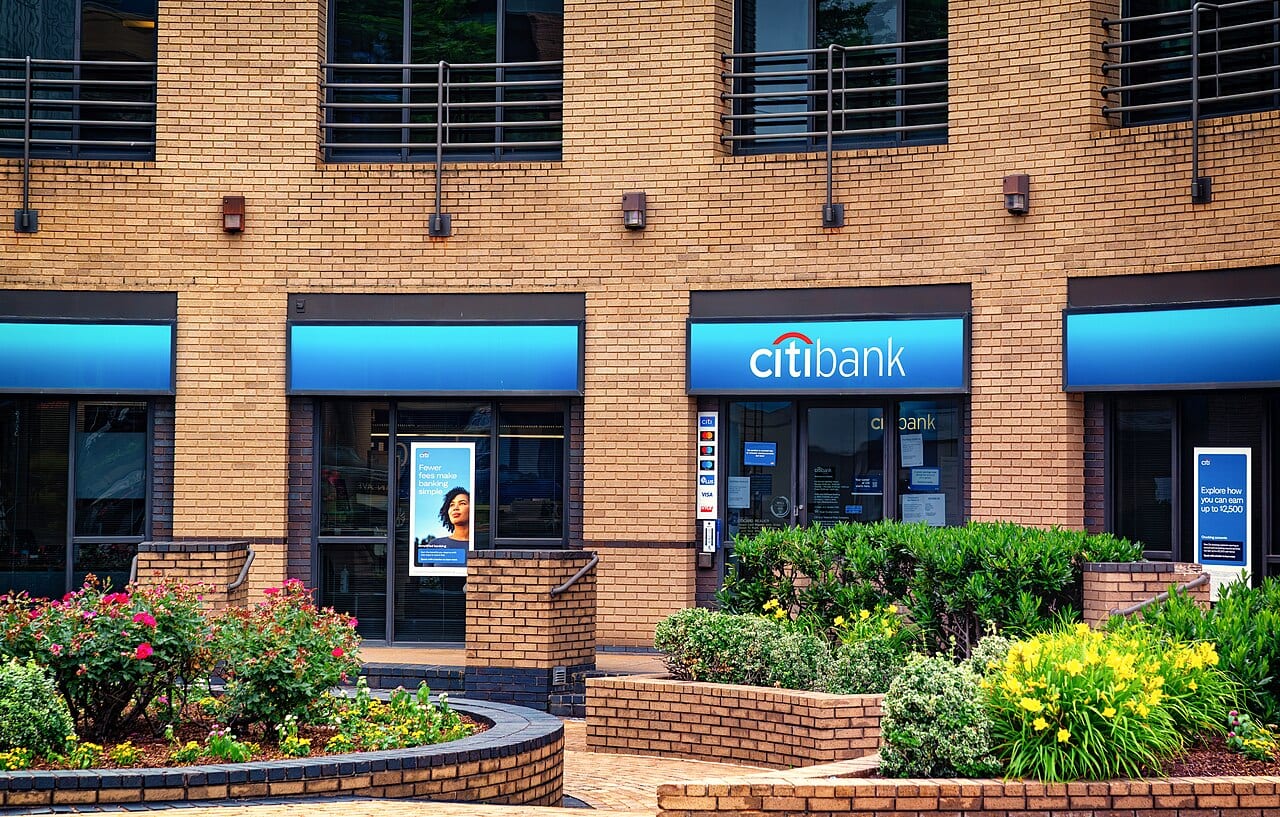
Citi added one new clause to its customer agreement this month. The clause names a clear loser before anything ever goes wrong.
Section H says a hacked AI agent's actions count as the customer's own3. The same clause excuses Citi's own agents from that rule. Four more banks reached a similar line inside one month, and together they hold $12.3 trillion in assets48.
Citi Writes the Exemption First
Citi's Online User Agreement now treats a third-party AI agent as an extension of the customer who connected it. "Citi will consider any access and actions taken by the agent as authorized by You," the new language reads3. The rule holds even when the agent's credentials get stolen.
One line carves out an exception. The clause skips "any third-party AI Agent, tool, function or feature provided by Citi"3. A Citi-built tool answers to Citi. One a customer connects answers to the customer alone, hacked or trusted.
A Citi spokesperson framed the change as clarity about risk that already existed. The bank wants customers to understand the risk of sharing banking credentials with an outside tool4. Citi says its new language only reinforces who already carried that risk.
Five Banks Reach the Same Clause
JPMorgan Chase and Bank of America moved first, in October. PNC followed on Nov. 18, and Citizens emailed customers the same warning that week4. Four of the five rank among the ten largest banks in the country by assets8.
JPMorgan Chase Carries $5.09 Trillion of the $12.3 Trillion Rewriting Agent Risk
Total consolidated assets of the five banks that rewrote AI agent liability terms this month, Q3 2026, in trillions of dollars
Each bar is one bank's total assets from its FR Y-9C filing; JPMorgan Chase's bar is the longest of the five.
Source: BankRegReports [8]. Chart by Kelly Dennis.
The numbers behind this chart
| Item | Value |
|---|---|
| JPMorgan Chase | $5.09T |
| Bank of America | $3.43T |
| Citi | $2.94T |
| PNC | $0.63T |
| Citizens Financial Group | $0.24T |
Jamie Dimon explained the shift on JPMorgan's earnings call weeks before Citi's clause existed. "If people are using them, they should understand the risk. There's a liability transfer. They should understand the liability transfer," the chief executive said1. He added one more fact: his bank blocks outside agents from its own systems. The risk runs too high for clients, he said, and for the bank itself.
Dimon's answer separates the two kinds of agent again. His bank builds its own and keeps it inside the walls he trusts most. A customer's own choice of agent stays outside those walls, and now outside the bank's own liability too.

Read as strategy, the clause buys each bank legal distance from a tool it can only partly inspect. Outside engineers built that tool instead of the bank's own team. The distance also buys each bank a reason to sell its own agent instead.
Regulators Hold a Different Last Word
A contract clause settles what a bank can bill a customer. It settles less about what regulators can bill the bank.
Regulation E, the rule governing electronic fund transfers, asks about authority and benefit instead of which program clicked the button7. An agent that moves money inside limits a customer actually set may count as the customer's own tool. One that moves money outside those limits sits in a gap both Citi's clause and Regulation E leave open.
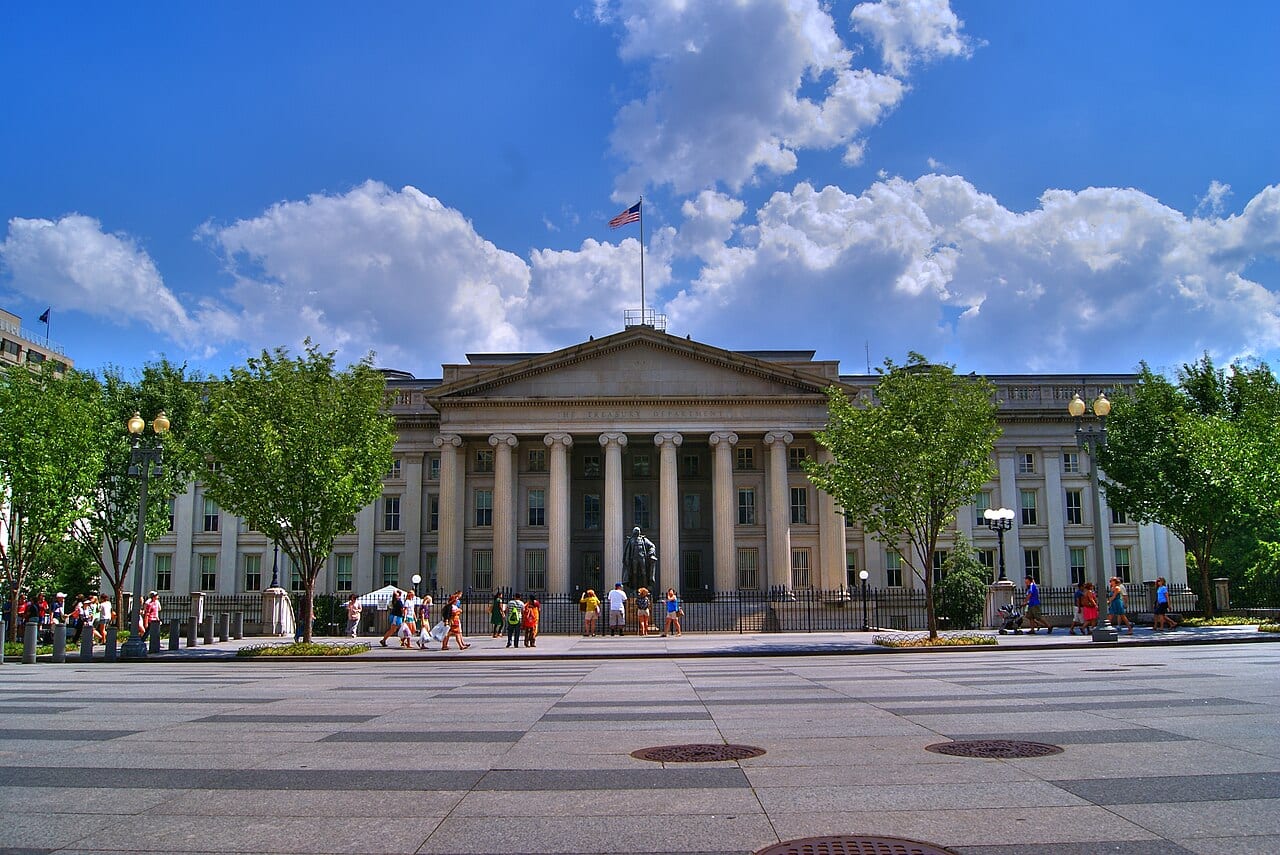
A federal regulator answered on Nov. 4. The Office of the Comptroller of the Currency issued a bulletin that day. It sorts a bank's AI uses into four tiers6. Each tier is graded by the damage a mistake could do, and how hard that damage is to undo.
One line cuts straight through the contract language banks spent November rewriting. "Using AI does not change the bank's existing legal obligations or the standards for a violation," the Office of the Comptroller of the Currency states in the bulletin.
The Case Against Writing Away the Risk
Carla Sanchez-Adams watched a panel debate this exact question on Nov. 18, the same week Citi's clause took effect. She is a senior attorney at the National Consumer Law Center. "With account credentials, a tool could see transaction history or gain access to linked accounts and additional ways to move money," she said5.
She named a second cost sitting beside the first. "Arbitration clauses and waivers in AI providers' terms could limit consumers' ability to sue," Sanchez-Adams said5. A customer who loses money to a hacked agent may lose the agent maker's own courtroom too.
Sen. Bernie Sanders pushed from Washington instead of a conference stage. "We cannot allow AI agents to go into your bank account and act independently without your authorization," Sanders said2.
Mark Warner, a Virginia Democrat, named the same fear in his own words. He called the access banks were allowing "the exact thing we've been warning about for years," pointing to AI agents with "unrestrained access to your bank account and protected information"2.
Mark Warner@MarkWarnerThis is the exact thing we’ve been warning about for years… AI agents with unrestrained access to your bank account and protected information. When consumer AI agents are accessing YOUR bank account or using YOUR credit card, they must be subject to fiduciary-like duties of… https://t.co/w0z04robdO
What to do
Read your bank's agreement before you connect an outside AI agent to it, specifically the section on third-party tools. Keep a dated copy of the moment you revoke an agent's access, since Citi's own language puts that proof on you.
Ask any bank, including your own, which rule covers its in-house agent. A different answer from the one covering outside tools is the bank's own verdict. It tells you how much the bank trusts the thing it sells you.
Watch for the same carve-out outside banking. A streaming service, an airline or a retailer can write an identical exemption into its own terms. Read the third-party clause wherever you connect an agent to money or data.
By the numbers
- $12.3 trillion: the five banks' combined assets before their new clauses8.
- JPMorgan Chase alone carries $5.09 trillion, the largest of the five banks named here8.
- Bank of America holds $3.43 trillion, and Citi holds $2.94 trillion, the next two largest8.
- PNC holds $628 billion, and Citizens Financial Group holds $235 billion, the two smallest of the five8.
- Four tiers: how the OCC now sorts a bank's AI uses, from autonomous payment agents down to internal productivity tools6.
- One exemption: the number of AI agents Citi's Section H protects from its own new rule3.
Dimon's October Warning Became Citi's Clause 35 Days Later
Key dates between JPMorgan's earnings-call warning and the week five banks' new AI agent terms took hold
Each pin is one dated event; the gap between Dimon's October warning and Citi's November clause spans 35 days.
Sources: Banking Dive [1]; TFTC [3]; TechCrunch [4]. Chart by Kelly Dennis.
The numbers behind this chart
| Date | Event |
|---|---|
| Oct. 13, 2026 | Dimon's warning. JPMorgan's earnings call, where Dimon described the liability transfer |
| Nov. 17, 2026 | Citi adds Section H |
| Nov. 18, 2026 | PNC updates its terms |
| Nov. 18, 2026 | Citizens' email notice |
What to watch
Watch whether the Consumer Financial Protection Bureau rules on an agent's departure from instructions, the gap Sanchez-Adams flagged on Nov. 18. See whether an examiner cites a bank under the OCC's new tiers before year's end. A citation would prove regulators keep the final word over the contract clause.
Sources
- Banking Dive, "JPMorgan CEO Dimon warns customers of 'liability transfer' with AI," Banking Dive, Oct. 13, 2026, https://www.bankingdive.com/news/jpmorgan-dimon-ai-agents-bank-customers-liability-transfer/832870/
- Common Dreams, "'Pause AI Now!' Sanders Says as US Banks Let Agents Operate in Customer Accounts," Common Dreams, Oct. 23, 2026, https://www.commondreams.org/news/sanders-ai-banks
- TFTC, "Citi AI Agent Liability Shifts to Customers in New Terms," TFTC, Nov. 17, 2026, https://www.tftc.io/citi-ai-agent-liability-customers-section-h
- TechCrunch, "More banks say customers using AI agents are on their own, even if they get hacked," TechCrunch, Nov. 18, 2026, https://techcrunch.com/2026/11/18/more-banks-says-customers-using-ai-agents-are-on-their-own-even-if-they-get-hacked/
- PYMNTS, "Panel Weighs Who Pays When AI Agents Exceed Consumers' Instructions," PYMNTS, Nov. 18, 2026, https://www.pymnts.com/news/artificial-intelligence/2026/panel-weighs-who-pays-when-ai-agents-exceed-consumers-instructions/
- Crowell & Moring, "OCC's AI Examiner Framework: How Banks' AI Use Can Trigger Legal Liability and Supervisory Exposure," Crowell & Moring, Nov. 16, 2026, https://www.crowell.com/en/insights/client-alerts/occs-ai-examiner-framework-how-banks-ai-use-can-trigger-legal-liability-and-supervisory-exposure
- iTechGuides, "AI Agent Unauthorized Transfer: Who Is Liable?," iTechGuides, Nov. 16, 2026, https://www.itechguides.com/ai-agent-payment-disputes-how-u-s-liability-is-decided/
- BankRegReports, "Largest US Bank Holding Companies by Assets (Q3 2026)," BankRegReports, Nov. 20, 2026, https://www.bankregreports.com/holding-companies/