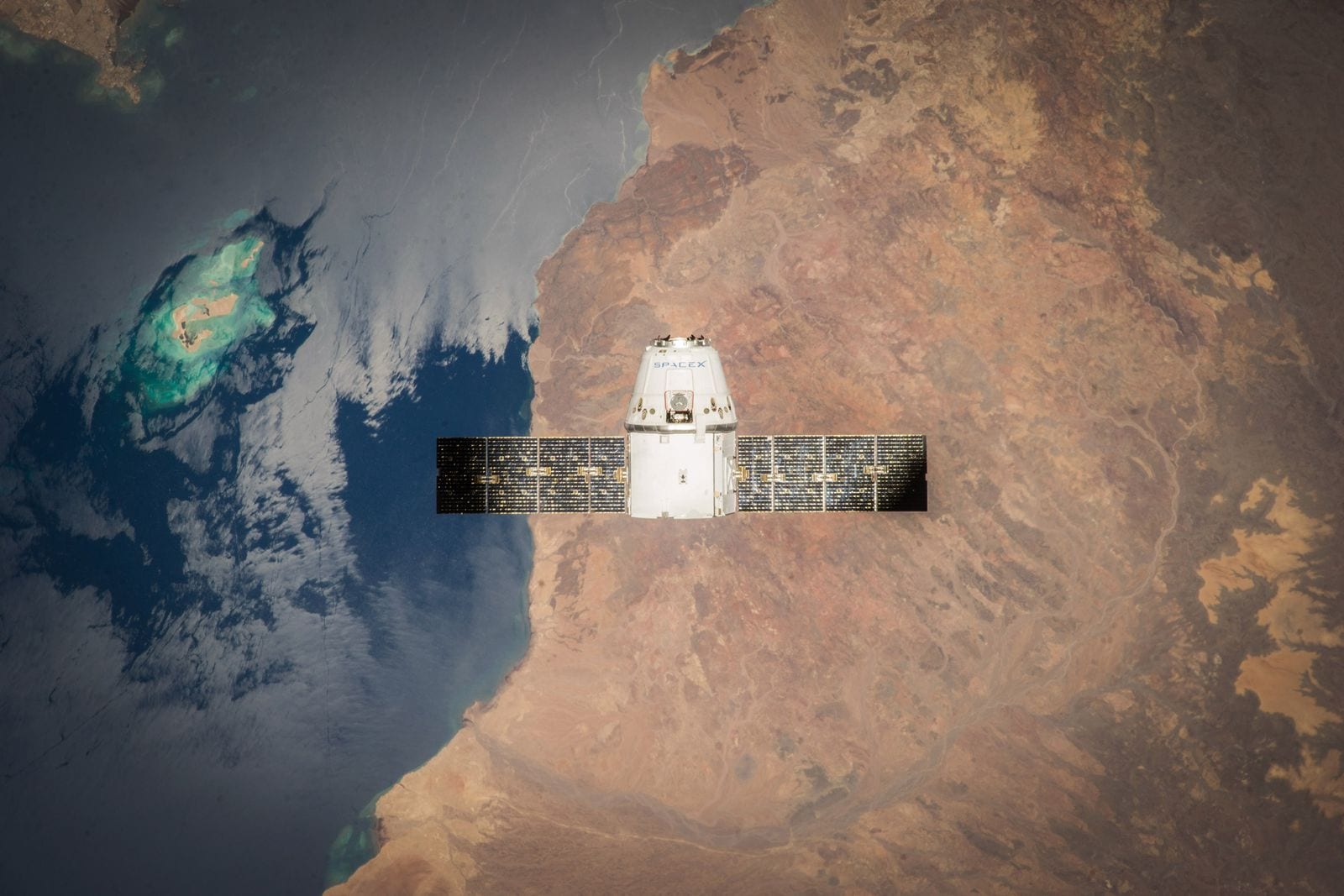
The Federal Communications Commission signed off Nov. 25 on SpaceX's plan to fly satellites built to work as data centers1. SpaceX can now deploy up to 1,000,000 of them, under a constellation name, Starmind, and a filing entity, Space Exploration Holdings. FCC Chairman Brendan Carr broke the news himself.
Carr announced it on X. "Today, in a historic first, the FCC approved SpaceX's request for 1 million satellites (orbital compute modules) to create data centers in space," he wrote2.
Musk answered in thirteen words. "Much appreciated. This will be a great asset to America and the world," he wrote back3.
The Grant Behind the Headline
Carr's post skips one detail. The FCC's own order covers only Starmind's backup radios1.
SpaceX calls each satellite an orbital data center. The name means it runs software in orbit, the way a ground data center runs servers in a warehouse.
Courtney Reinhard, chief of the FCC's Space Bureau, signed the order herself1. It authorizes radio spectrum for one job: emergency backup, in case a satellite's laser link fails. Primary communication runs on optical links between satellites, a method that skips radio spectrum altogether.
The order splits its ruling in two. SpaceX's debris plan for shells below 600 kilometers earns a grant. Shells above that line, four of the six total, get the same ruling deferred1.
SpaceX's debris ruling still waits for 4 of 6 orbital shells
Starmind's six altitude bands, by whether the FCC's debris mitigation finding is granted or deferred, Nov. 25, 2026
Each cube is one of Starmind's six altitude bands. Base-color cubes sit below 600 kilometers, where the FCC granted SpaceX's debris plan; accent cubes sit above 600 kilometers, where that ruling stays deferred.
Source: FCC Space Bureau [1]. Chart by Ryan Elliott Dennis.
The numbers behind this chart
| Item | Value |
|---|---|
| Below 600 km, plan granted | 2 |
| Above 600 km, plan deferred | 4 |
| Whole | 6 |
SpaceX must file a fuller debris plan before it flies anything in those four altitude bands1. Viasat and Amazon's Kuiper Systems had asked the FCC to deny the application over exactly that gap. The FCC denied their petitions anyway, along with one from the American Astronomical Society.
Six separate waivers came bundled with the grant. SpaceX skips the processing-round rules that force satellite operators to compete for spectrum. It also skips the usual surety bond. A new, looser deployment schedule applies instead, one the FCC adopted in July1.
That schedule sets four deadlines. SpaceX must fly one working satellite by November 2033. It needs 100,000 flying by 2035, then half the fleet, 500,000, by 2038. The full million has to fly by November 2040, or the license lapses1.
SpaceX's satellite count must grow tenfold from 2035 to 2040
Starmind satellites SpaceX must have working by each FCC deployment deadline, 2035 to 2040
Each column is the minimum satellite count SpaceX must reach by that year to keep its FCC license. The count grows tenfold between the first two deadlines shown.
Source: FCC Space Bureau [1]. Chart by Ryan Elliott Dennis.
The numbers behind this chart
| Item | Value |
|---|---|
| 2035 | 100,000 |
| 2038 | 500,000 |
| 2040 | 1,000,000 |
Why Musk Skips the Zoning Board
Musk has a simple pitch for orbit. Solar panels there catch constant sunlight, clear of clouds and weather. And orbit skips the neighbors who file noise complaints on the ground.
Michael Nicolls carries the technical half of that pitch. He is SpaceX's senior vice president for Starlink and AI. "We believe that we need to operate clusters of satellites in tight formation to get enough coherent compute together, such that we can run these AI models efficiently," Nicolls told Spaceflight Now6.
Each cluster bundles about ten satellites. They share roughly ten terabits of bandwidth between them, running as a single machine in orbit6.
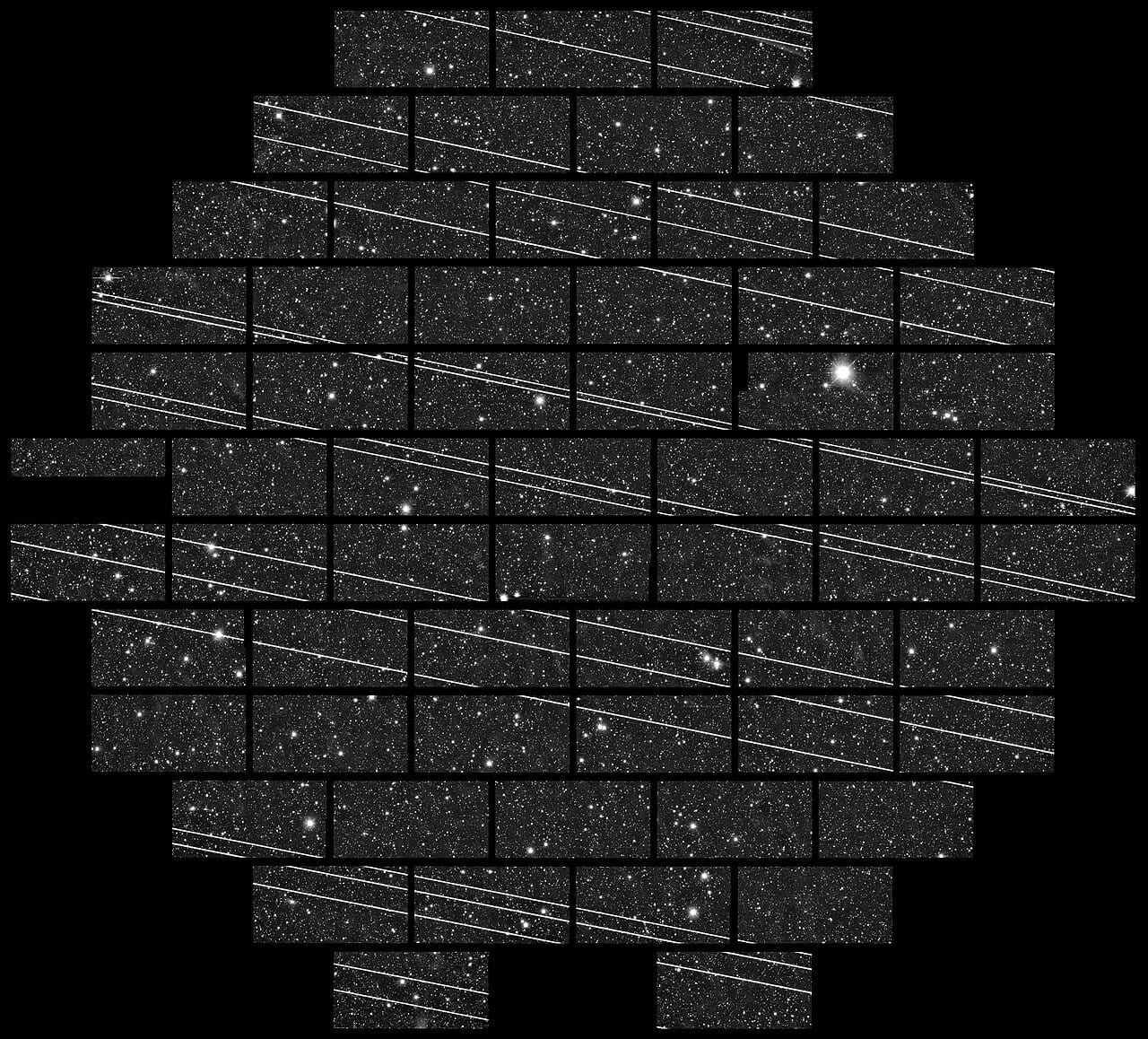
SpaceX's license carries a Nov. 25 date, yet the satellites stay grounded for years still. Musk has said the first Starmind unit should fly in the third quarter of 20275.
The Case for Racing Ahead
Brendan Carr frames Starmind as a contest the United States needs to win. His own Space Bureau wrote that the grant serves the public interest by "permitting SpaceX to pioneer emergent technology that advances American leadership in space and artificial intelligence"1.
Carr said as much in his own words, too. "Today, in a historic first, the FCC approved SpaceX's request for 1 million satellites (orbital compute modules) to create data centers in space," he wrote on X2.
Musk answered Carr in thirteen words. "Much appreciated. This will be a great asset to America and the world," he wrote3.
Brendan Carr@BrendanCarrFCCDATA CENTERS IN SPACE🇺🇸
Today, in a historic first, the FCC approved SpaceX’s request for 1 million satellites (orbital compute modules) to create data centers in space
The Starmind & competitor constellations will use solar power to extend America’s lead in Super Intelligence pic.twitter.com/VJinjK5e5E

Scale backs Carr's framing too. SpaceX already operates about 11,150 working Starlink satellites8. A license for 1,000,000 more, even stretched across 14 years, is larger than any single company's satellite plan before it.
The Case for Caution
Adam Becker argues the plan is moving well ahead of its own paperwork. He holds a doctorate in physics from the University of Michigan9. In 2025 he published "More Everything Forever," a book on Silicon Valley's space ambitions.
Becker told CNBC the debris risk already runs ahead of SpaceX's plan. "Any serious attempt at this is going to further pollute the night sky and runs a serious risk of a cascading chain reaction of space junk collisions," he said4.
The American Astronomical Society raised a related point inside the FCC's own record. It warned that waste heat from the satellites could raise the infrared brightness of the sky. The infrared concern is a problem the Commission's current rules skip entirely, by its own admission1.
Amazon's Kuiper Systems and Viasat fought the license on debris grounds too. Amazon called the whole project "a lofty ambition rather than a real plan" in its March filing1.
The FCC rejected every petition anyway. Its own order still leaves the harder half of the debris question open. Four of six orbital shells sit above 600 kilometers, the altitude where SpaceX's disposal plan still waits for approval1.
What to do
Read the order's own text before you repeat its headline elsewhere. SpaceX now holds a license, but the debris ruling for four of six shells stays open, and the agency said so itself1.
If a vendor pitches you orbital compute as a near-term option, ask for the 2033 and 2035 dates. A single working satellite by 2033 and 100,000 by 2035 are the real tests, long before Starmind reaches scale1.
Track Amazon and Viasat's own satellite plans next. Both argued against this license on the very same orbital shells1.
By the numbers
- 1,000,000: satellites the FCC authorized SpaceX to fly as Starmind, in an order released Nov. 25, 20261.
- Four of six: orbital shells that sit above 600 kilometers, where the FCC put off its debris ruling until SpaceX files again1.
- Tenfold: the jump in SpaceX's own deployment schedule, from 100,000 satellites due by November 2035 to 1,000,000 due by November 20401.
- About 250 kilowatts: the compute power SpaceX has described for a single Starmind satellite, grouped into flying clusters of about ten6.
- Roughly 11,150: Starlink satellites SpaceX already operates, a fraction of what its new license allows8.
- Three: petitions to deny the license, filed by Amazon's Kuiper Systems, Viasat and the American Astronomical Society, all denied by the FCC1.
What to watch
Watch for SpaceX's modification filing on the four shells above 600 kilometers. The filing has to answer the debris questions the FCC left open, with real numbers of its own1. Watch the 2033 deadline too. One working satellite, certified to the FCC within five business days of reaching orbit, starts the clock on every deadline after it.
Sources
- Courtney Reinhard, "Space Exploration Holdings LLC, Application for Launch and Operating Authority for the SpaceX Orbital Data Center System," Memorandum Opinion and Order and Authorization, DA 26-1273, FCC Space Bureau, Nov. 25, 2026, https://docs.fcc.gov/public/attachments/DA-26-1273A1.pdf
- Brendan Carr, post on X, Nov. 25, 2026, https://x.com/BrendanCarrFCC/status/2125623026918002860
- Elon Musk, post on X, Nov. 25, 2026, https://x.com/elonmusk/status/2125630856140308743
- CNBC, "SpaceX wins FCC approval to deploy 1 million orbital data center satellites," Nov. 25, 2026, https://www.cnbc.com/2026/11/25/spacex-fcc-satellite-approval.html
- Space.com, "Green light for Starmind: SpaceX gets approval to deploy 1 million AI satellites," Nov. 25, 2026, https://www.space.com/space-exploration/launches-spacecraft/green-light-for-starmind-spacex-gets-approval-to-deploy-1-million-ai-satellites
- Spaceflight Now, "FCC green lights SpaceX's plan to launch 1 million 'Starmind' data center satellites," Nov. 26, 2026, https://spaceflightnow.com/2026/11/26/fcc-green-lights-spacexs-plan-to-launch-1-million-starmind-data-center-satellites/
- SiliconANGLE, "FCC clears SpaceX to put up to 1 million 'Starmind' data centers in space," Nov. 25, 2026, https://siliconangle.com/2026/11/25/fcc-clears-spacex-to-put-up-to-1-million-starmind-data-centers-in-space/
- Wikipedia, "Starlink," accessed Nov. 26, 2026, https://en.wikipedia.org/wiki/Starlink
- Wikipedia, "Adam Becker," accessed Nov. 26, 2026, https://en.wikipedia.org/wiki/Adam_Becker