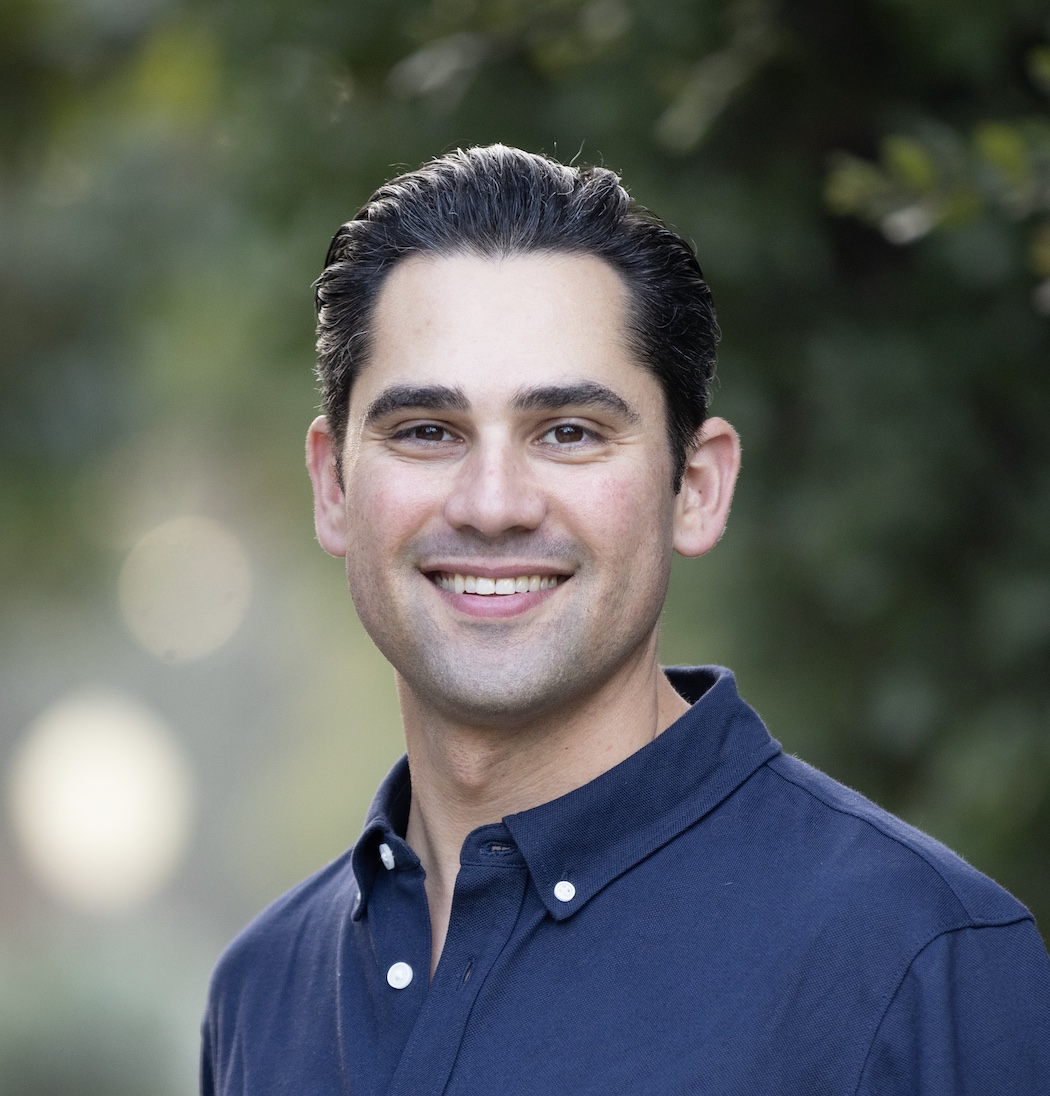
Jesse DeBear uses artificial intelligence to organize his thoughts and draft slide decks and emails. Software also helps the EverService chief executive work through unfamiliar parts of running a company. Still, he thinks the surge of automated advertising will send marketers back to a classic setting: a room of people brainstorming a good idea.
"I have a feeling that we're gonna kind of cycle back to old school ad creative," DeBear told me in late October.1
His prediction surfaced during a debate over whether distribution now beats content quality. Many marketers in late 2026 argue that posting a hundred clips across ten channels matters most. I suggested that getting seen everywhere might outweigh the quality of a single video. DeBear pushed back right away.
"I can own distribution and put out shitty content and it'll go nowhere."
For DeBear, the central question is what earns attention when software makes video production effortless. He learned marketing fundamentals at Guthy-Renker, then spent five years at the growth agency MuteSix. In his telling, feeds have already lived through a flood of user-generated clips and are now living through a flood of AI video. Audiences tire of repeated formats quickly. Memorable concepts and carefully produced campaigns could win ground back.
One example from his career relied on a simple human reaction instead of a big budget. At MuteSix, his colleagues filmed staff members getting massages with an early client's device, Theragun. Producers placed a camera underneath the face cradle of the massage table to capture each employee's expression. Titled "The Many Faces of Theragun," the low-cost campaign turned genuine facial reactions into the ad creative. DeBear remembers the shoot performing well for a brand that then sold only one product.
That contrast highlights a useful tension in DeBear's outlook. His prediction points toward Madison Avenue brainstorms and high-production shoots, yet his favorite campaign succeeded on a shoestring budget. Both approaches share one core requirement: a distinct human idea that stands apart from automated templates. DeBear and I attended middle school and high school together, and I have tracked his career for years. Watching a longtime friend manage a platform of hundreds of employees shows where software helps and where human judgment still rules.
A word on sourcing. EverService owns marketing and services businesses, including in legal client acquisition and home services2, and DeBear's advice on hiring agencies comes from inside that business. So this piece checks what he says about Google against Google's own pages and adds data from SparkToro and Pew Research Center.
Jesse DeBear's Tactical Playbook for Marketers and Founders
- Prioritize creative concepts over channel volume. Wide distribution across ten platforms stalls out when the underlying video misses a real hook.
- Use AI for the first 70 percent of a draft. Record raw voice notes to build slide decks and emails, then rewrite the final 30 percent by hand.
- Combine SEO and GEO from day one. Technical website schema and frequent content updates work together so Google and language models cite your pages.
- Write for the buyers most qualified to pay. Reach them with the specific searches they make, such as French bulldog owners for premium dog food, before you fight for the broad keyword.
- Manage external agencies with in-house rigor. Set three-, six- and 24-month goals early, and treat agency teams the way you treat internal staff.
- Speak up early in your career. Junior marketers accelerate their growth when they share informed opinions in meetings and build relationships with senior leaders.
From Television Commercials to Speaking Up in Corporate Meetings
Career Takeaway: Entry-level employees stand out when they voice informed opinions in meetings and align with capable leaders.
Advertising caught DeBear's attention during childhood through his father's career in media sales. His dad sold ad time to major advertisers including Ace Hardware and Intel. Watching televised sports games together at home, his father pointed out the commercials he had sold. That pride inspired the younger DeBear to study integrated marketing at Ithaca College, a hybrid communications and business degree.
After Ithaca, he took an entry-level coordinator role at a corporate holding company. Day-to-day tasks felt basic, yet the office taught him how human dynamics and internal politics shape a business. Most junior coordinators sat quietly during department meetings. DeBear spoke up whenever he held an opinion on a topic he understood. Senior managers noticed that willingness to contribute.
Building a close friendship with a marketing vice president about 15 years older changed his trajectory. He stayed with that same leadership team across three different companies, first moving to a New York startup. Later, he relocated to California. By coincidence, that same chief marketing officer and vice president took roles at direct-response giant Guthy-Renker and recruited him over.
At Guthy-Renker, DeBear worked on celebrity infomercial skincare brands Proactiv and X-Out, running native advertising with an agency. He also launched YouTube advertising for Proactiv. Digital attribution tools remained primitive during those early video experiments. His team tracked orders with direct-response television vanity URLs, custom web addresses displayed inside an ad. Google Analytics made it look like a lot of traffic was coming from the YouTube ads.
Five Years at MuteSix and the Leap Into Solo Consulting
Growth Takeaway: Fast-moving markets reward teams that test new ad formats and give employees a stake in client revenue.
Leaving Guthy-Renker's corporate structure, DeBear joined a founder-led startup agency named MuteSix. Early agency life felt chaotic compared to brand-side corporate routines. During his first 90 days, he wondered whether he had made a career mistake. Once the entrepreneurial model clicked, he saw how fast a nimble team could grow. MuteSix paid commissions across the board, turning staff members into internal entrepreneurs who shared in the revenue they managed.
Timing placed MuteSix in the middle of a boom. Facebook ads and the new shopping placements on Instagram turned emerging products into rapid sellers. DeBear recalls MuteSix's monthly client signings growing from roughly 10 to 20 and then 30. The team experimented with unboxing videos and product demonstrations alongside "socialmercials" featuring bold block-letter text overlays. Inside the office, MuteSix built a studio with curved walls meeting the floor and ceiling to create an infinite white background. Employees stepped onto that set to shoot casual product clips, and DeBear says the team felt it was inventing user-generated content as an ad format.
DeBear spent five years at the agency. He says its client work drove billions of dollars in direct-to-consumer revenue. More than 50 early-stage brands passed through its systems before becoming everyday names in retail stores. Theragun's maker is now called Therabody, and DeBear says you see it in the dugouts at Major League Baseball games.
After departing MuteSix, DeBear worked independently for two years through his DeBear Direct consultancy. MuteSix's founder and chief executive remained a close friend and connected him with his first two fractional chief marketing officer contracts. Networking with competing agency owners soon revealed a stronger niche. Rival founders wanted to learn how MuteSix structured client success and scaled internal operations, so DeBear pivoted into advising agency leaders.
Running a solo practice meant handling legal agreements and branded pitch decks alone. He turned to ChatGPT. "So I just like leaned in heavily because I didn't have anything else," DeBear said. The early models helped him draft agreements and get his thoughts on paper. He worked with a freelancer on his website and used ChatGPT to get the copy and sections written. One advisory client eventually asked him to join full-time as chief operating officer of a growing agency, placing him in the C-suite. A piece of podcast advice had stuck with him for years: take a job you are not qualified for.
Where AI Fits Into a Chief Executive's Workday
Workflow Takeaway: Let language models turn messy voice notes into a 70-percent draft, then edit by hand to preserve your personal voice.
Inside his current workflow, DeBear assigns specific jobs to different frontier models. Roughly 18 months ago, he moved most of his work from ChatGPT to Anthropic's Claude, and he says the quality of its analysis improved sharply. He builds Claude projects for specific use cases and uses automations that combine Cowork and other tools into automated agents. On his Google Pixel phone, he uses Gemini for personal search queries and recipe lookups because it taps directly into Google's search history.
When preparing slide decks or important emails, he starts by recording raw voice notes or typing messy brain dumps. Software organizes those rough thoughts into a structured draft that gets him 70 percent of the way to a finished piece. From there, he spends time editing and reconstructing the sentences so the message sounds like him.
That daily software support has also helped him handle executive responsibilities at EverService, where he reports to a private equity board. EverService is a portfolio company of Sunstone Partners, a private equity firm that invests in AI- and technology-enabled services companies3. DeBear came up through hands-on agency work rather than an MBA track. Language models help him get up to speed fast on functions outside that background, like legal and finance: "This has filled all of the gaps that like I would've had."
Clear boundaries still separate software assistance from the manual demands of running a company. His day starts with his kids before he sits down at his desk. His weekly schedule follows operational rhythms of team check-ins and quarterly board preparation. Most of his manual hours go toward calls, meetings and conversations. "I don't think it's gonna solve personnel problems, right? Still have to deal with humans and human behavior and emotions and stuff like that."
Pairing SEO With GEO and Founder-Led Video in 2026
Search Takeaway: Combine technical SEO and generative search optimization into one program, then drive brand searches with organic video.
Many EverService clients are local personal injury law firms, competing for injured people in their own neighborhoods in a market full of billboards. Helping those firms and emerging brands get discovered in late 2026 involves two connected disciplines. Known by the initials SEO, traditional search engine optimization helps web pages rank on Google. Specialists write articles that answer customer questions and place brand keywords into the website schema, the underlying code read by search crawlers. Abbreviated GEO, generative engine optimization prepares a business for citations inside Claude and ChatGPT alongside Google's Gemini summaries.
Visits to the web as a whole are shrinking. On Nov. 10, SparkToro published research built on Similarweb's global panel: visits to the web's top million sites peaked at 2.243 trillion in the first quarter of 2022 and stood at 1.970 trillion in the third quarter of 2026, down 12.2 percent, or 87.8 where the 2022 peak is 1009. Over the same stretch, the number of people online rose from 5.00 billion to 6.15 billion, an increase of 23 percent, or 123 on the same scale. SparkToro asks whether search engines, AI tools, social networks, apps or the end of pandemic habits explain the drop, and says it cannot tell.
Since 2022, the web has gained 23 percent more users and lost 12.2 percent of its visits
Visits to the web's top million sites and people online, with their first-quarter 2022 levels set to 100
Each row is one measure: the blue dot is its first-quarter 2022 level, set to 100, the magenta dot is where it stood in the third quarter of 2026, and the rod is the gap.
The panel counts browser visits and leaves apps out. SparkToro lists possible causes and leaves the question open.
Source: SparkToro [9]. Chart by Ryan Elliott Dennis.
The numbers behind this chart
| Item | Q1 2022 | Q3 2026 |
|---|---|---|
| Visits to top million sites | 100.0 | 87.8 |
| People online | 100.0 | 123.0 |
Pew Research Center looked at Google itself. It tracked the browsing of 900 U.S. adults in March 2025. When Google showed an AI summary, they clicked a result link in 8 percent of visits. When it did not, they clicked in 15 percent. Clicks on a link inside the summary itself happened in 1 percent of visits7.
Google users click a result link in 8 percent of visits with an AI summary and 15 percent with results alone
Share of visits to a Google results page with a click on a standard result link, by whether an AI summary appeared
Each column is a share of visits: the magenta column is visits where Google showed an AI summary, and the blue column is visits where Google showed results alone.
Pew counts clicks on standard result links. Clicks on a link inside the summary itself happened in 1 percent of visits to pages that showed one.
Source: Pew Research Center [7]. Chart by Ryan Elliott Dennis.
The numbers behind this chart
| Item | Value |
|---|---|
| AI summary shown | 8% |
| Results alone | 15% |
DeBear reads that shift as a change in where people ask, not a drop in how much they ask. Direct traffic from Google has fallen for many sites because users read AI answers on the results page, he says, but "demand is still not only going to remain but grow." Consumers now look for answers on ChatGPT, Claude, Gemini and Siri, and on the video engines YouTube and TikTok. Search optimization captures existing demand when a buyer already knows what to look for. Young businesses also need to give people a reason to search for them in the first place.
Technical SEO remains the foundation, DeBear says, because a language model can only cite a page that crawlers can index: "You will not be cited if it doesn't exist." For any founder launching a new site today, he recommends combining both efforts from the start. "Just plan to do SEO, GEO together. It's essentially one thing," he said.
DeBear's rule: SEO is the foundation, and GEO adds more content, fresher pages and more places to be found
A layer diagram of how DeBear describes the two jobs, with Google's and Pew's findings beside each layer
Each block is one layer of a search plan, built from the bottom up. Switch between SEO and SEO plus GEO to see what GEO adds, and tap a layer to read DeBear's words and a cross-check.
The six-month refresh and the 30 percent target are DeBear's rules of thumb, not Google requirements.
Sources: Ai Lately [1]; Google Search Central [4]; Google Search Central Blog [5]; Pew Research Center [7]. Graphic by Ryan Elliott Dennis.
Google's documentation backs the first half of that advice. It says "The best practices for SEO remain relevant for AI features in Google Search" and "There are no additional requirements to appear in AI Overviews or AI Mode, nor other special optimizations necessary"4. A post from Google Search Relations tells site owners to "Focus on your visitors and provide them with unique, satisfying content"5. Neither page tells site owners to refresh content on a schedule.
DeBear's own advice goes further on cadence. A page from six years ago can hold a page-one Google ranking when it has strong search history, he says. Language models weigh recent updates, so his team's AI-search work involves more content and more frequent updates, with pages refreshed about every six months. He also says the goal changes. Instead of a spot on page one, "the new goal is show up in 30% of searches because it's impossible to show up in 100% of the relevant searches." Both the six months and the 30 percent are his rules of thumb, not Google requirements.
To generate that initial awareness on a tight budget, DeBear encourages founders to step in front of a camera and publish video regularly. Central scheduling tools let a creator push one clip across TikTok and Instagram Reels alongside X and LinkedIn. One platform's algorithm usually favors a founder's delivery style first, showing where to focus future effort.
DeBear calls "the Gary Vee model" the advice that works for building a following1. He asks for five videos a day and still ranks the work above the volume. Gary Vaynerchuk pushes volume further. In a July 2019 post on his site, Vaynerchuk is quoted: "If you are not producing 100 pieces of content … every single day you are leaving the greatest opportunity in the world on the table"8.
Self-consciousness stops most business owners before they record their first clip. DeBear notes that the harshest judgment usually comes from old high school classmates or traditional industry peers. At a recent legal conference, he heard two young Arizona attorneys describe building a social media following inside a conservative profession. One lawyer recalled a state Supreme Court judge walking past him and saying, "I saw your video." That brief encounter showed their videos were reaching well beyond clients.
Vetting Agencies and Skipping Homemade AI Audits
Agency Takeaway: Ask competing agencies for specific niche keyword strategies, and manage your chosen shop with clear milestones.
Growing businesses eventually hire outside agencies to scale search and paid advertising. When interviewing three competing shops, DeBear advises founders to ask for a detailed technical roadmap and a clear plan for beating competitors. Smart agencies look for search terms rivals do not own. He points to a friend's search agency, which told prospects about a client that sold expensive, all-natural dog food. Instead of focusing on rankings for "dog food," the agency wrote for searches about expensive breeds, including French bulldogs. In DeBear's words, "the owners of the expensive breeds are going to be more qualified to purchase your expensive fresh auto delivery dog food."
DeBear's example: a dog-food brand wrote for French bulldog owners, the buyers most qualified to pay
A friend's search agency, as DeBear described it. The brand and the agency are unnamed.
Each lane follows one aim from the search to the buyer. Switch between them, then type your own product and buyer to see the same move.
One example, secondhand, from an interview. DeBear gave no results for it.
Source: Ai Lately [1]. Graphic by Ryan Elliott Dennis.
Hiring a capable agency is only the first step. Many brands make the mistake of handing off the account completely and stepping back. Agency quality often depends on the specific account team assigned to a client, and staff turnover can disrupt a great partnership. DeBear urges business owners to treat external agencies the same way they treat fractional in-house employees. "You have to manage them as if they work for you, because they do," DeBear said.
Shared accountability keeps both sides moving forward when initial growth slows. Earlier in his career, a clever product ad could drive strong client sales for a full year. Results eventually plateau when a brand keeps a high price or sells only one product and ignores retention advice. Both the merchant and the agency must evolve together to sustain long-term growth.
One recent client habit has created friction across search and social agencies. Business owners now use Claude or ChatGPT to run homemade audits on their websites or Facebook ad accounts. DeBear says clients sometimes bring those audits to their agencies, and the reports miss the account history needed to interpret the findings. Standard language models draw on general textbook rules from the web and miss years of live video ad testing.
"You can develop an AI-based audit, but like an expert should develop that with all of the proper skills and rules that they built off their expertise and have all the contextual knowledge," DeBear said. Even an expert-designed audit would probably get you 85 percent of the way there, he says, which is close to the 70 percent he gives a first draft.
DeBear says AI gets a draft 70 percent done and an expert-built audit 85 percent, with people finishing the rest
Share of the finished work AI gets done, by DeBear's own estimates in an interview
Both figures are DeBear's rules of thumb from one interview, so read them as estimates. He says an audit should come from an expert who brings the account's history.
Source: Ai Lately [1]. Chart by Ryan Elliott Dennis.
The numbers behind this chart
| Item | How far AI gets | A person finishes |
|---|---|---|
| Email or slide deck | 70% | 30% |
| Audit an expert built | 85% | 15% |
| Whole | 100% | |
His criticism leaves an important question for agencies: how can clients independently verify an agency's work when they hire that vendor for its expertise?
Google publishes its own advice on that. Its guide to hiring an SEO tells site owners to ask for examples of previous work, to ask how the SEO measures success and what results to expect, to check business references, and to grant only read access to Search Console during an audit6. It adds a hard line: "If they guarantee you that their changes will give you first place in search results, find someone else."
Building EverService and Betting on Human Creativity
DeBear said he was approaching his first anniversary at EverService when we spoke in late October. A former colleague who is a founder of MuteSix first recruited him toward the chief executive role. He spent his first two or three months as chief strategy officer, doing the job in practice, before taking the title. Stepping into a company with hundreds of employees required a different mindset than building a consultancy from scratch. Several founders transitioned out of EverService's brands during his first year, which required multiple succession plans and new department leaders.
Today, he says his goal is a world-class client experience and strategic growth. "I'm not trying to create a sales machine of just like upselling clients, but actually getting them on a strategic path where we're setting expectations way ahead of time and that we understand their goals," DeBear said. Mapping out three-month, six-month and 24-month goals helps the agency and the client grow together.
Looking back on his career since Ithaca College, DeBear wishes he had entered a founder-led business sooner. He found the freedom to build far more motivating than the prospect of climbing a corporate ladder for a 3 percent annual raise. Taking on unfamiliar roles in entrepreneurial companies brought intense pressure before the results arrived. "And there's a period of crazy anxiety, but then it's followed by a period of confidence when you have a couple wins under your belt," he said.
That same appetite for real human experience shapes his view of where marketing heads next. DeBear believes repetitive AI videos will increase demand for work that feels distinctive. He points to the excitement around a Nathan Fielder documentary after years of predictable superhero movies. Audiences connect with unscripted moments because human behavior stays unpredictable.
His prediction about a return to classic commercial shoots remains a hunch for now. Still, his Theragun story suggests that production budgets may be only part of the question. Putting employees on a massage table and filming their reactions cost very little, and he says the ad performed well. Its raw material was a person's face. Artificial intelligence now helps DeBear prepare decks and approach unfamiliar executive work. When I asked whether distributing more content could outweigh its quality, his answer was immediate.
"I can own distribution and put out shitty content and it'll go nowhere."
Where to Follow Jesse DeBear
DeBear uses LinkedIn as a running record of his thinking, kept in public so anyone can use it, and he is candid that his posts rise and fall in reach. He keeps at it anyway: "It's good to just have a history of intelligent thought and value that you can put out into the world."1 I follow him there because he pairs a clear take with steady posting. If you want more of his thinking on SEO, GEO and agencies, that is the place to start.
Sources
- Ryan Elliott Dennis, "Interview with Jesse DeBear, chief executive of EverService," Ai Lately, Oct. 29, 2026
- EverService, "EverService Holdings," EverService, Nov. 12, 2026, https://www.everservice.com
- Sunstone Partners, "Home - Sunstone Partners," Sunstone Partners, Nov. 12, 2026, https://sunstonepartners.com/
- Google, "AI features and your website," Google Search Central, Dec. 10, 2025, https://developers.google.com/search/docs/appearance/ai-features
- John Mueller, "Top ways to ensure your content performs well in Google's AI experiences on Search," Google Search Central Blog, May 21, 2025, https://developers.google.com/search/blog/2025/05/succeeding-in-ai-search
- Google, "Do You Need an SEO? Tips for Hiring an SEO," Google Search Central, Nov. 12, 2026, https://support.google.com/webmasters/answer/35291?hl=en
- Athena Chapekis and Anna Lieb, "Do people click on links in Google AI summaries?," Pew Research Center, July 22, 2025, https://www.pewresearch.org/short-reads/2025/07/22/google-users-are-less-likely-to-click-on-links-when-an-ai-summary-appears-in-the-results/
- Gary Vaynerchuk, "Want to "create content" on social media? Here's how much to create.," GaryVaynerchuk.com, July 2, 2019, https://garyvaynerchuk.com/create-content-100-pieces-per-day/
- Rand Fishkin, "New Research: Traffic to the Open Web Has Fallen 12% in 5 years; Visits/web User Are Down 30%," SparkToro, Nov. 10, 2026, https://sparktoro.com/blog/new-research-traffic-to-the-open-web-has-fallen-24-in-5-years/