Zhipu promised a new model by November. November came and went. GLM-5.5 carries roughly 3 trillion parameters, and Zhipu once planned to ship it this month. Reuters reported this week that the launch may now slip to the first quarter of 20271.
Moonshot, the lab behind Kimi, faces the same wait. Its next flagship, Kimi K4, could land around mid-2027. That timeline would stretch a six-month release habit toward a year1. Both delays landed in the same week Washington closed the last legal path for renting American chips from data centers abroad.
Jukan @ SEMICON JAPAN@jukan05Reuters reports that the launch of Zhipu AI’s 3-trillion-parameter GLM-5.5 could slip to Q1 2027 or later, with OpenAI and Anthropic’s crackdown on model distillation contributing to the delay.
Moonshot AI, the company behind Kimi, estimates internally that the gap between major…
The Rule That Closed the Gap
A new US rule took effect Nov. 197. It covers a foreign data center sending large amounts of computing power to a buyer in China. That center now needs a license first.
The line sits near 750 Nvidia H100-class chips worth of total power, per the rule's text7. A deal below that line goes through. Washington's word alone decides any deal above it.
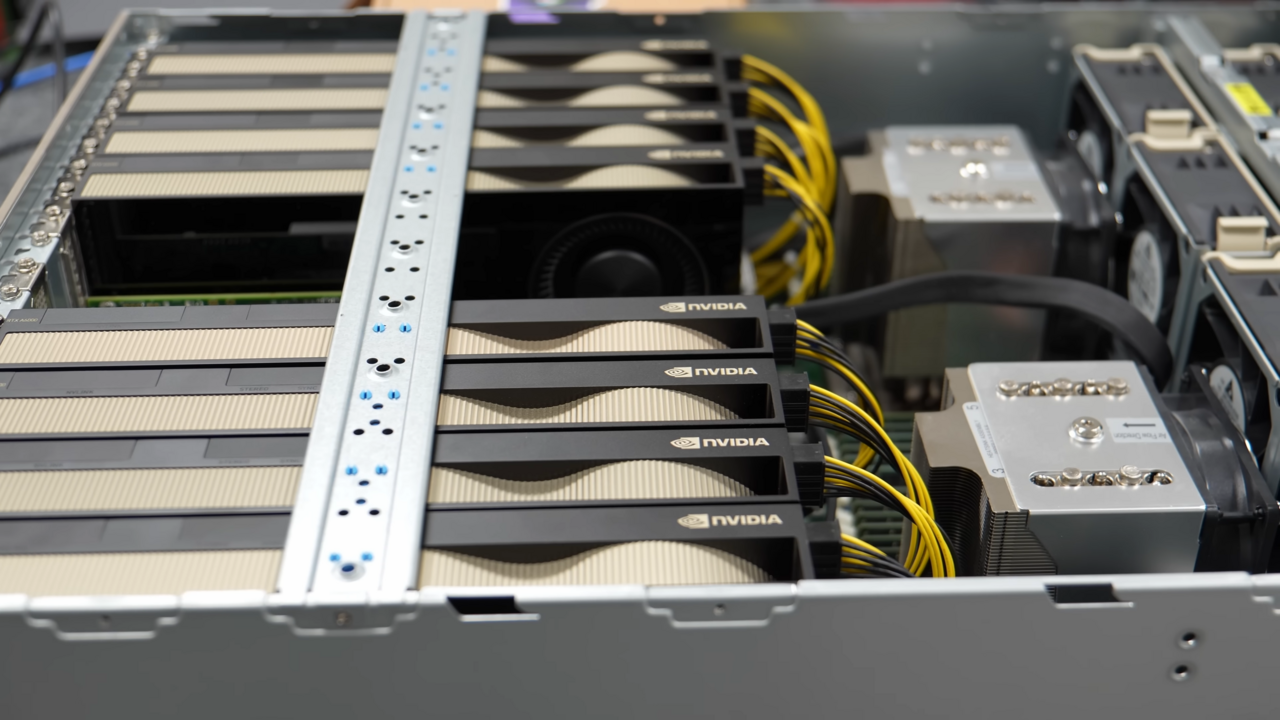
Regulators built the rule to close a workaround: Chinese firms had been renting access to Nvidia chips overseas, rather than importing the hardware7. The Treasury Department and the National Security Council directed the fix. A license now stands between a foreign data center and any large sale of American computing power. That covers a buyer in China, Macau or another country the rule names.
Anthropic had already tightened a second door. Distillation trains a cheaper model on a rival's answers. Anthropic's October defenses against the practice cut the data harvested from Claude's reasoning by 90 to 99 percent2. Anthropic named Zhipu as one firm it caught attempting it.
China's AI Gap Could Triple to 9 Months If Distillation Stops
DeepSeek's internal estimate of China's lag behind US frontier models, now against a full distillation cutoff
The first column is the low end of the gap DeepSeek sees today; the second, lighter column is DeepSeek's own estimate if it lost all access to distill American models.
DeepSeek's own researchers made this estimate internally. It assumes a complete end to distillation, a bar far past where things stand today.
Source: Heise Online [8]. Chart by Ryan Elliott Dennis.
The numbers behind this chart
| Item | Value |
|---|---|
| Gap today | 3 mo |
| Full cutoff (estimate) | 9 mo |
Chris Miller wrote the book "Chip War". He studies export policy at Tufts. "The evidence suggests that US restrictions have been highly effective in restraining China's domestic chip production," Miller said5. He argues China still trails badly on the tools that make advanced chips, a gap that runs deeper than the chips themselves.

A Lab Pushes Back
Zhipu disputes the story outright. Researcher Yang Haoyi dismissed the Reuters report on WeChat the day it ran. The company's investor relations team maintains a December launch still stands9.
The denial skips any date Zhipu will confirm in writing. A Chinese brokerage note still expects GLM-5.5 in December. So the gap between Reuters's sourcing and Zhipu's own silence is the real story here.

Moonshot has started leaning on rivals instead. Reuters reports the firm now distills training data from Google and Meta's models, after OpenAI and Anthropic made their own harder to copy1. Moonshot's usual cadence runs one major release every six months. Losing its overseas computing lease entirely would stretch that cadence toward a full year, the company's own planning assumes.
Renting fit the firm's size. A homegrown data center inside China takes years to build. It also takes billions of dollars a younger lab has yet to raise. Leasing space abroad let Moonshot skip that wait, right up until the rule closed the door on Nov. 19.
The Case That Controls Backfired
Rakesh Kumar teaches chip engineering at the University of Illinois. He has studied the policy's track record for years, and he reads the data the other way. "Export controls spurred China to invest all this money to set up an ecosystem where they can now serve these applications by themselves," Kumar said. "Not only have export controls failed in that sense, but they've had the opposite effect"4.
Kumar's strongest evidence arrived the same week as Reuters's report. Bloomberg found a Shanghai data center running a banned Nvidia GB300 rack, pledged as collateral for a $14 million loan3. The site ties to Megaspeed, a firm Alice Huang founded. Nvidia approved it as a partner within just four days, and Washington blacklisted the firm this month.
8 Days Hold 4 of 5 Moves in the Chip Fight
Dated events in the chip and distillation fight, Oct. 12 to Nov. 27, 2026
Each pin is one dated event; the rail breaks across the long October gap, then the pins crowd into the final eight days.
Sources: Reuters [1]; Anthropic [2]; The Decoder [3]; The Daily Star (Reuters) [6]; Sidley Austin [7]. Chart by Ryan Elliott Dennis.
The numbers behind this chart
| Date | Event |
|---|---|
| Oct. 12, 2026 | Defenses cut data 90-99%. Anthropic tightens anti-distillation rules |
| Nov. 19, 2026 | Chip rule takes effect. Closes the overseas rental loophole |
| Nov. 22, 2026 | Self-sufficiency push. Reuters on China's chip investment |
| Nov. 26, 2026 | Two labs' delays leak. Reuters reports both labs slip to 2027 |
| Nov. 27, 2026 | Banned chip found. Bloomberg traces a GB300 rack to Shanghai |
Neil Shah, a vice president at Counterpoint Research, sits between the two camps. "Closing the gap at the leading edge before 2028, or even by 2030, looks difficult," Shah said of China's position6. Yet Shah separately warns against reading China's leaner models as proof of weakness. Tighter chip access forced real engineering, well beyond simple imitation.
Liu Xingliang, an independent technology analyst in Beijing, states the stakes plainly. "If training cycles become longer or the deployment of additional computing capacity slows, product iteration and commercialisation could be delayed," Liu said6. That is the mechanism Reuters just reported in practice. It is already underway at two labs at once.
What to do
A buyer weighing a Chinese open-weight model should check one thing first. Look at the schedule Zhipu and Moonshot kept before this month, ahead of whatever either company announces next. Expect a slipped follow-up whenever the flagship itself slips first.
An operator planning next year's model budget should treat the China gap as a range. Real room sits on both ends of that range. DeepSeek's own 3-to-9-month estimate only holds if distillation access closes completely. Every lab has stayed short of that bar so far.
By the numbers
- 3 trillion: Zhipu's parameter count for its delayed GLM-5.5, per Reuters1.
- 90 to 99 percent: Anthropic's reported cut in harvested distillation data since October2.
- $14 million: a loan a Shanghai firm secured against a banned Nvidia rack3.
- $12 billion: Nvidia orders bound for China that Megaspeed is accused of brokering3.
- 200 million: suspected distillation exchanges Anthropic flagged in September alone1.
- 3 to 9: China's AI gap behind US labs, in months, under today's rules against a full distillation cutoff8.
What to watch
Watch whether Zhipu ships GLM-5.5 in December, the date its own team still claims. A December launch would undercut Reuters's sourcing more than any denial on WeChat has. Watch too whether another banned chip surfaces in China. One rack in one loan filing is a thin sample next to Nvidia's full order book.
Sources
- Reuters, "Exclusive-US chip curbs, distillation crackdown threaten Chinese AI model development, sources say," Nov. 26, 2026, https://wkzo.com/2026/11/26/exclusive-us-chip-curbs-distillation-crackdown-threaten-chinese-ai-model-development-sources-say/
- Anthropic, "Strengthening our defenses against distillation attacks," Oct. 12, 2026, https://www.anthropic.com/news/distillation-defenses
- Matthias Bastian, "Banned Nvidia Blackwell chips turn up in a Shanghai data center linked to Alice Huang, Bloomberg reports," The Decoder, Nov. 27, 2026, https://the-decoder.com/banned-nvidia-blackwell-chips-turn-up-in-a-shanghai-data-center-linked-to-alice-huang-bloomberg-reports/
- Nicholas Gordon, "'I told you so': China's chip sector is making breakthroughs, and U.S. export controls are the reasons why," Fortune, Oct. 16, 2026, https://fortune.com/2026/10/16/china-chip-export-controls-failed-rakesh-kumar/
- Asianet Newsable, "US curbs limit China's high-end AI chip production: 'Chip War' author," Sept. 16, 2026, https://newsable.asianetnews.com/business/us-curbs-limit-china-s-high-end-ai-chip-production-chip-war-author-articleshow-83wtgoa
- The Daily Star (Reuters), "US AI chip curbs hit China tech stocks, spur self-sufficiency push," Nov. 22, 2026, https://www.thedailystar.net/business/global-economy/news/us-ai-chip-curbs-hit-china-tech-stocks-spur-self-sufficiency-push-4329761
- Sidley Austin, "New Export Controls on Advanced Chips Close Remote Compute Access 'Loopholes': Five Key Takeaways," Nov. 19, 2026, https://www.sidley.com/en/insights/newsupdates/2026/11/new-export-controls-on-advanced-chips-close-remote-compute-access-loopholes-five-key-takeaways
- Tomislav Bezmalinović, "China's AI labs under pressure as U.S. measures slow model development," Heise Online, Nov. 26, 2026, https://heise.de/en/news/China-s-AI-labs-under-pressure-as-U-S-measures-slow-model-development-11539684.html
- Dave Barr, "Zhipu's GLM-5.5 Reportedly Faces a 2027 Slip That an Executive Disputes," Startup Fortune, Nov. 27, 2026, https://startupfortune.com/zhipus-glm-55-reportedly-faces-a-2027-slip-that-an-executive-disputes/