
Nvidia told Dell and Supermicro to stop shipping servers to four countries. The order covers Malaysia, Singapore, Thailand and Indonesia. Dell and Supermicro build the machines that carry Nvidia's chips into those markets1.
The Spectator Index posted the news to X within hours. "BREAKING: NVIDIA has halted shipments of its chips to Malaysia, Singapore, Thailand and Indonesia, according to Financial Times report," the account wrote on Nov. 266.
The Spectator Index@spectatorindexBREAKING: NVIDIA has halted shipments of its chips to Malaysia, Singapore, Thailand and Indonesia, according to Financial Times report.
Nvidia gave its partners an open-ended timeline. It called the pause an "unspecified period" while it checks whether its customers meet a new US rule1.
The Loophole the Rule Closes
A ban keeps Chinese firms from buying Nvidia's newest chips directly. Some rented the same computing power instead, from data centers built in friendlier countries nearby2.
The Bureau of Industry and Security published a rule on Nov. 16 to stop that. It covers five countries: Singapore, Malaysia, Indonesia, Thailand and Brazil2. The rule took effect three days later, on Nov. 19.
A data center now needs a US license once it can reach 12 million TPP of American chips. TPP stands for Total Processing Performance, the Commerce Department's own yardstick for a chip's power. Chris McGuire, a senior fellow at the Council on Foreign Relations, put the threshold in terms anyone can picture: "a US export license to provide Chinese companies with access to 12 million TPP or more (equivalent to ~200 of the most advanced Blackwell chips, or ~800 H100 chips)"3.
Remote Southeast Asian Data Centers Reach 24% of China's AI Computing Power
China's AI computing power reachable through Southeast Asian data centers, Institute for Progress estimate, Nov. 26, 2026
The Institute for Progress estimate measures remote access to compute outside China, apart from chips sold inside the country.
Source: TechCrunch [1]. Chart by Ryan Elliott Dennis.
The numbers behind this chart
| Item | Value |
|---|---|
| Reachable via Southeast Asia | 24% |
| Whole | 100% |
Operators already above that threshold get 90 days to apply. The clock runs out Feb. 17, 20272. A data center that misses the deadline risks losing its own access to future American chips.
Nvidia Pulls the Shipments
Dell and Supermicro passed Nvidia's order straight to their customers. Both companies stayed quiet on how long the pause will last1.
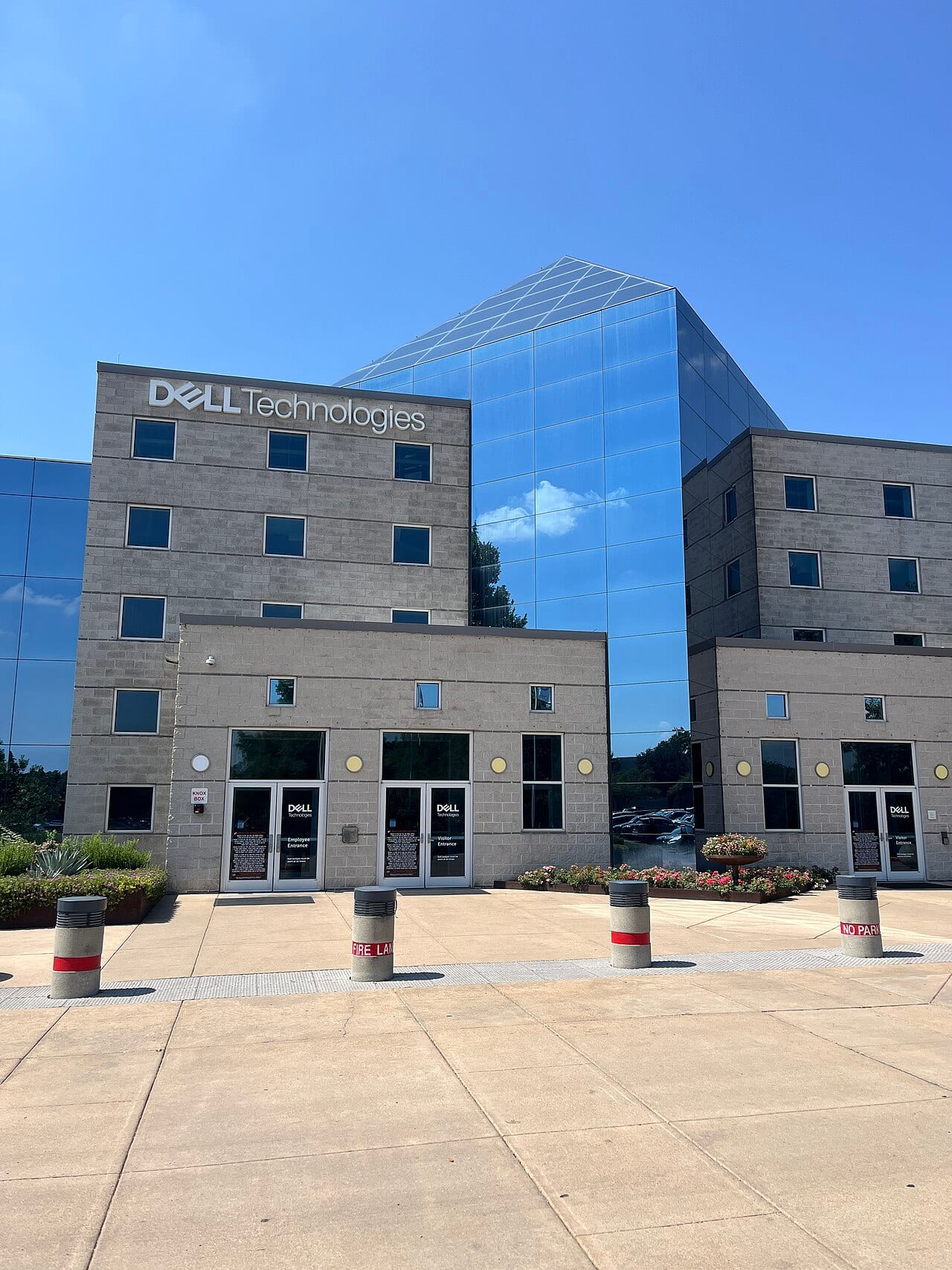
TechCrunch reported that Commerce closed the loophole "grudgingly," a word that points to pressure from outside the agency1. Chris McGuire's own post backs that reading. He called the rule's origin "remarkable and unprecedented," since the Commerce press release says it "was written by and at the direction of the Department of Treasury and the National Security Council"3.
Singapore's government moved fast once the pause hit the news. Deputy Prime Minister Gan Kim Yong told reporters his ministry is reaching out to local firms. "We are in the process of engaging our businesses, to reach out to them to see how this impacts their businesses," he said5.

Nvidia's Pause Landed on Day 7 of a 90-Day License Clock
Key dates from the rule's publication to Nvidia's shipment pause, Nov. 16, 2026 to Feb. 17, 2027
Each pin marks one date; the rule's 90-day license window runs from the second pin to the last one, and Nvidia's pause landed early inside it.
Sources: TechCrunch [1]; Bureau of Industry and Security, U.S. Department of Commerce [2]. Chart by Ryan Elliott Dennis.
The numbers behind this chart
| Date | Event |
|---|---|
| Nov. 16, 2026 | BIS publishes the rule |
| Nov. 19, 2026 | Rule takes effect. Starts the 90-day license clock. |
| Nov. 26, 2026 | Nvidia pauses shipments. Tells Dell and Supermicro to stop. |
| Feb. 17, 2027 | License window closes |
The Case for the Rule
McGuire called the rule overdue, and he gave two reasons. The first is scale. Singapore, Malaysia, Thailand and Indonesia rank among the world's biggest AI chip importers this year. McGuire puts them second, fourth, fifth and eighth3.
The second reason is urgency. "This is the first time in over 18 months that the administration is starting to take export controls seriously, and does represent a meaningful step forward," McGuire wrote3. The rule reaches four of the world's top eight chip buyers. That scale, in his reading, finally matches the size of the problem it targets.
McGuire still wants more. His post flagged a gap the new rule skips. Chinese firms can still rent chips from data centers built inside the United States. Domestic centers sit under the same remote-access trick Washington just closed off abroad3.
The Case Against It

Juan Fernandez runs Export Classification Advocates, a trade compliance firm. He told Export Compliance Daily the rule asks for a customer list that outruns what any honest operator can hand over. "Go to your local coffee shop and ask them for a customer list," Fernandez said. "The coffee shop owner is going to look at you and say, 'Do you want that with or without the customers in line behind you?'"4
Fernandez's point lands past the joke. A data center sells compute the way a coffee shop sells espresso, to whoever walks up and pays. Naming every buyer asks for a kind of certainty this business skipped from the start. Proving each one stays clear of a Chinese firm asks even more.
Nvidia's pause reads as the rule's own uncertainty, passed down the supply chain. Dell and Supermicro still lack a way to tell a compliant shipment from a risky one. Both stopped shipping altogether, choosing caution over a wrong guess.
What to do
Any company leasing cloud compute through a Southeast Asian provider should ask that provider one question now. Has it checked its customer list against the 12 million TPP threshold? A clear answer today beats a scramble before Feb. 17, 2027.
Marketing, product and operations leads who depend on a vendor's AI roadmap should ask that vendor where its chips ship from. Southeast Asian compute now carries a licensing risk the vendor may have left unpriced.
By the numbers
- Four: the countries Nvidia's pause reaches, Malaysia, Singapore, Thailand and Indonesia1.
- Nov. 16, 2026: the date the Bureau of Industry and Security published the rule behind the pause2.
- Three days later: the rule took effect, starting its 90-day license clock2.
- Feb. 17, 2027: the deadline for data centers already over the threshold to apply with Commerce2.
- 12 million TPP: the compute threshold Commerce now checks before a shipment clears, about 200 Blackwell chips or 800 H100 chips3.
- Second, fourth, fifth and eighth: the four countries' rank among the world's biggest AI chip importers this year, per Chris McGuire3.
- About 24 percent: the Institute for Progress's estimate of China's AI computing power reachable through remote Southeast Asian data centers1.
- 22,116: readers who opened Nvidia's own Wikipedia page on Nov. 26, the day the pause became news7.
What to watch
Watch Feb. 17, 2027, the deadline for data centers already over the compute threshold. A wave of approved licenses before then would back McGuire's reading of the rule as overdue and workable. Fresh pauses would back Fernandez's warning that the customer-list standard still lacks a clean answer. The same goes for a data center that loses its own access.
Singapore is worth a separate watch. Gan Kim Yong's ministry is still gathering facts from local firms. Its next move will show whether a government can meet Washington's new standard faster than a private data center can.
Sources
- Connie Loizos, "Nvidia hits pause on chip shipments to Southeast Asia," TechCrunch, Nov. 26, 2026, https://techcrunch.com/2026/11/26/nvidia-hits-pause-on-chip-shipments-to-southeast-asia/
- Bureau of Industry and Security, "BIS Issues Rule Addressing Remote Access to American Super Intelligence Technology," U.S. Department of Commerce, Nov. 16, 2026, https://www.bis.gov/press-release/bis-issues-rule-addressing-remote-access-american-super-intelligence-technology
- Chris McGuire, post on X, Nov. 16, 2026, https://x.com/ChrisRMcGuire/status/2122340547578761513
- Ian Cohen, "BIS Remote Access Rule Seen as Imposing Unrealistic, Difficult Due Diligence Burdens," Export Compliance Daily, Nov. 24, 2026, https://exportcompliancedaily.com/article/2026/11/24/bis-remote-access-rule-seen-as-imposing-unrealistic-difficult-due-diligence-burdens-2611200039
- AFP, "Singapore 'engaging' with local firms over US chip restrictions," The Korea Times, Nov. 27, 2026, https://www.koreatimes.co.kr/world/20261127/singapore-engaging-with-local-firms-over-us-chip-restrictions
- The Spectator Index, post on X, Nov. 26, 2026, https://x.com/spectatorindex/status/2125849749781905624
- Wikimedia Foundation, "Pageviews for Nvidia, Nov. 25 to 27, 2026," Wikimedia REST API, Nov. 26, 2026, https://wikimedia.org/api/rest_v1/metrics/pageviews/per-article/en.wikipedia/all-access/user/Nvidia/daily/2026112500/2026112700