
Dana Moshkovitz spent more than a decade chasing one answer. A machine found it first.
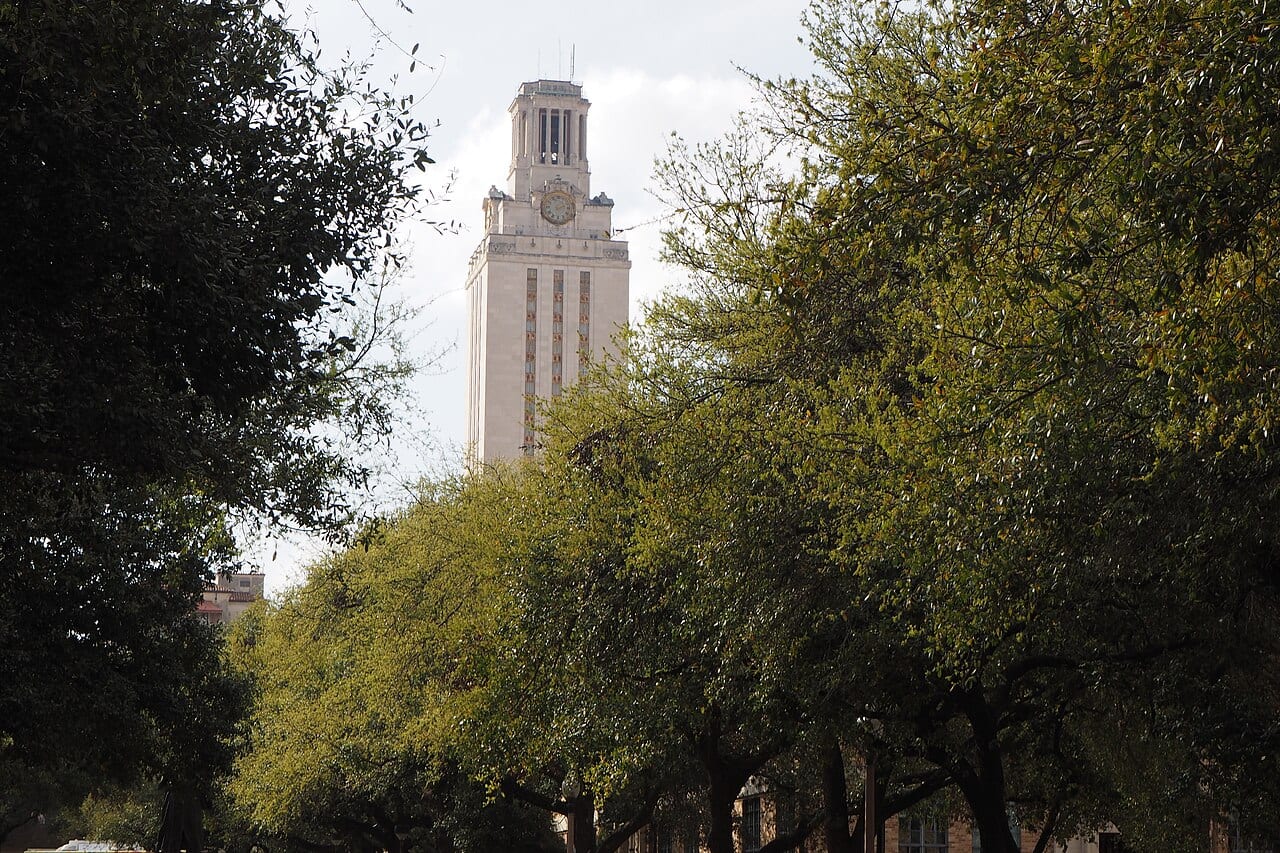
Moshkovitz teaches computer science at the University of Texas at Austin. She has pushed on the Unique Games Conjecture, a hard question about approximating optimization problems, for years1. OpenAI's public math repository posted a claimed proof of it this month.
Her first read left her stunned. "It looks right," she told NPR.
A Decade's Plan, Gone in a Month
Subhash Khot proposed the conjecture in 2002. It asks whether a wide class of hard problems resists every fast approximate answer8. Moshkovitz calls the name misleading. "It's the Unique Games Conjecture. It's a terrible name because it has nothing to do with games," she said1.
A correct-looking proof still needs a human to walk through it line by line. That work is slow, and OpenAI's write-up makes it harder. "The write-up is terrible. The write-up is not made for human consumption," Moshkovitz said1.
The find also upended her own plans. "I mean, this was a life plan for me, right? And now it's gone, and I need to reevaluate," Moshkovitz said1. She still finds a reason to keep going. "It opens up amazing possibilities for math," Moshkovitz said.
A Trillion-Dollar Company's Homework
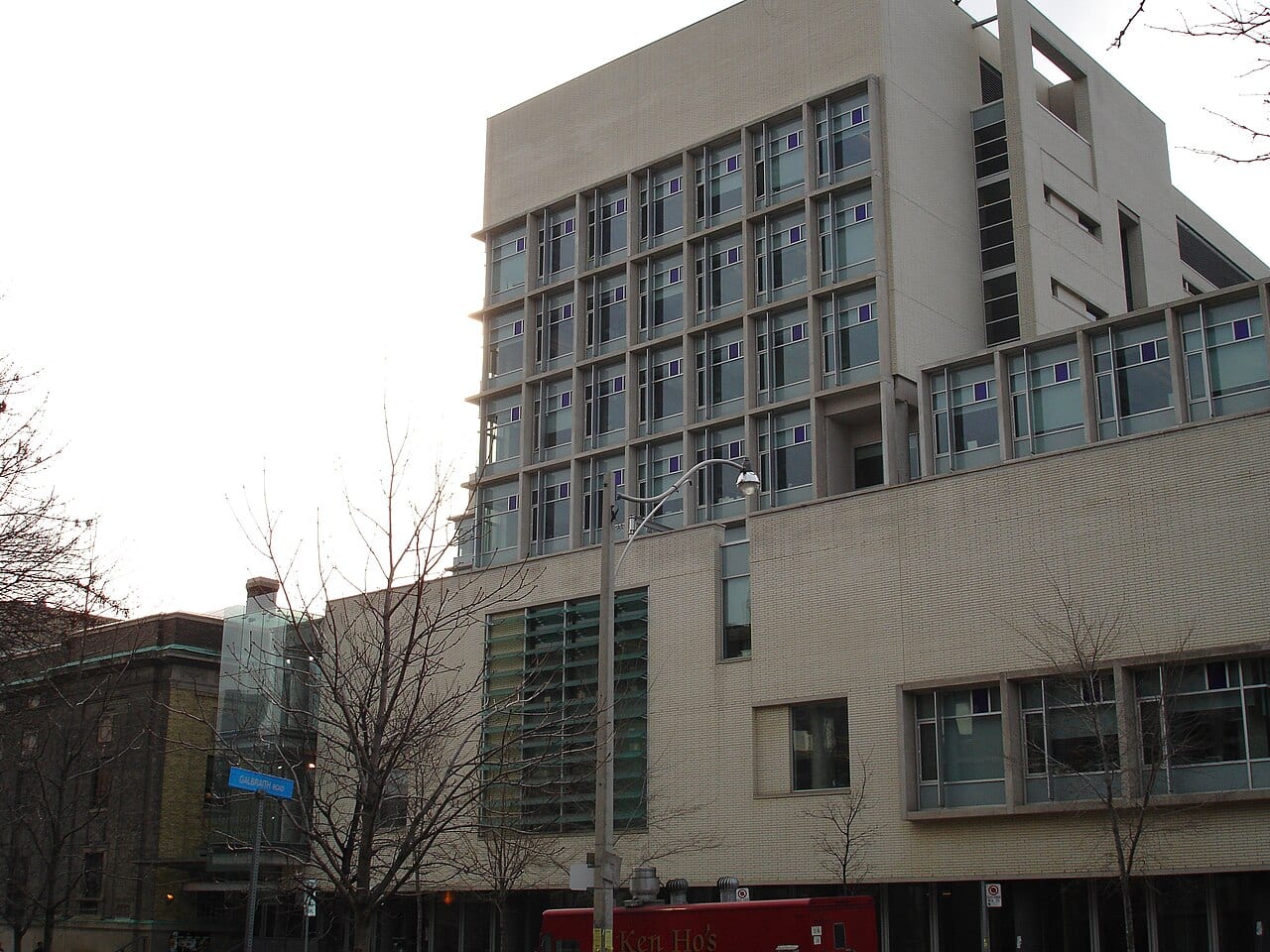
Daniel Litt teaches mathematics at the University of Toronto. An OpenAI paper on algebraic geometry excited him, until he found a flaw. "The error is quite subtle. It's like a sign error, basically," he told NPR1.
OpenAI's own change log confirms it. A sign error "invalidates a stabilization-trace cancellation argument" in a paper titled "Algebraicity of Weil classes on split abelian eightfolds"3. The company withdrew that paper the next day, along with two others built on top of it.
The job ahead of him holds little appeal. "You know, I'm certainly interested in some of the claims. I'm not super interested in, you know, cleaning up after a trillion dollar company's, well, whatever it is," Litt said1.
A Four Becomes a Five
OpenAI also claims a result touching the Navier-Stokes equations. That problem is one of seven Millennium Prize Problems. The Clay Mathematics Institute named them in 2000, each carrying a $1 million reward9.
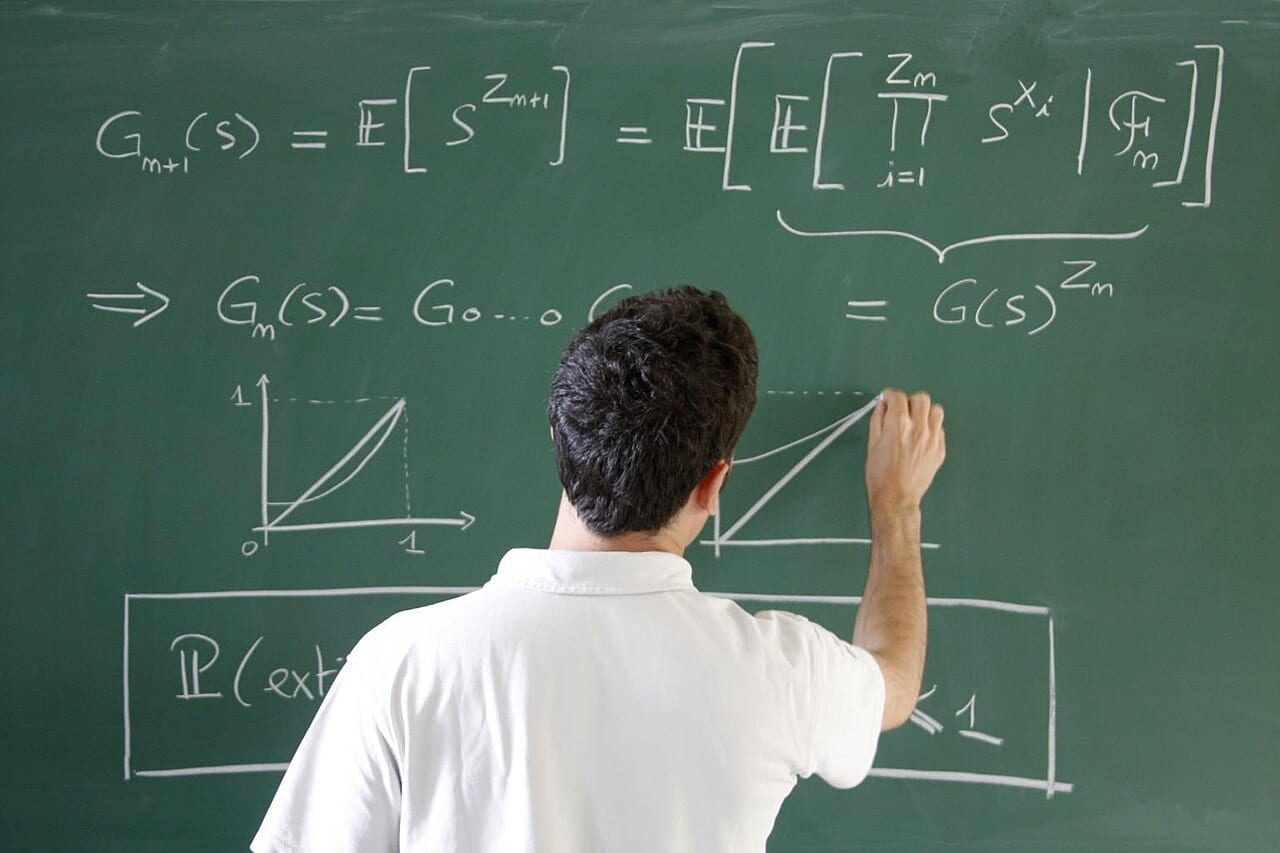
Mathematicians check such claims two ways now. One is reading the argument in plain language. The other runs it through Lean, software that confirms a proof's logic once a translator has turned it into code.
Anders Hansen, a mathematics professor at the University of Cambridge, checked both versions against each other. He found they disagree. A lemma in OpenAI's written proof needs four extra derivatives to hold. The Lean code needs five4.
Hansen, Alexander Bastounis and Fabian Circelli posted the mismatch to arXiv on Oct. 6, the same day OpenAI's wider release went up. "Four or five. Who cares? Well, here's the problem. This statement here, which is what is in the natural language proof, is stronger than what Lean proofs," Hansen told NPR1.
Lean cleared the weaker code version and missed the gap. His advice stays blunt. "I would suggest that we should check them seriously," Hansen said.
Who Pays to Check the Math
OpenAI's repository held 721 manuscripts across 373 result families as of this week. Only 42 percent carry a finished Lean formalization2. Writing proofs is outrunning the work of checking them.
Only 42 Percent of OpenAI's Math Results Clear a Lean Check
Share of top-line results in OpenAI's public math repository with a finished Lean formalization
Source: GitHub [2]. Chart by Kelly Dennis.
The numbers behind this chart
| Item | Value |
|---|---|
| Lean-checked | 42 |
| Still awaiting a check | 58 |
| Whole | 100 |
Money followed the backlog fast. OpenAI pledged $5 million to a new Simons Foundation initiative on Oct. 15, nine days after its bulk release. "We want to support the mathematics community in turning progress in AI into deeper human understanding and new discoveries," the company wrote5. Anthropic matched the pledge the same day: "We've committed $5 million of funding, compute, and Claude access to help the math community navigate the massive changes that AI brings"6.
OpenAI@OpenAIWe want to support the mathematics community in turning progress in AI into deeper human understanding and new discoveries. To support that goal, we are contributing $5 million to a new Simons Foundation initiative to help mathematicians examine, understand, and build on results… https://t.co/VLVfCujFYu
David Spergel, the Simons Foundation's president, wants the math community steering the review, ahead of the labs that wrote the proofs. "The community should be driving discussions of how these tools are evaluated, adopted and used, not any single company or institution," he said7. Both labs still hold the purse that funds the checking.
OpenAI's Math Release Drew a $15 Million Fix in 9 Days
Dated events between OpenAI's bulk math release and the Simons Foundation's funding announcement, October 2026
Each pin marks one dated event. Two land on Oct. 6, the day OpenAI's release met its first outside check.
Sources: NPR [1]; GitHub [3]; arXiv [4]; Simons Foundation [7]. Chart by Kelly Dennis.
The numbers behind this chart
| Date | Event |
|---|---|
| Oct. 6, 2026 | OpenAI's bulk release. its math archive goes public |
| Oct. 6, 2026 | Hansen flags a mismatch. posted to arXiv the same day |
| Oct. 7, 2026 | OpenAI pulls 3 papers. a sign error forced the fix |
| Oct. 15, 2026 | Simons pledges $15M. with OpenAI and Anthropic |
| Oct. 21, 2026 | NPR reports the backlog |
What to Do
Treat an OpenAI math claim as a lead until a named mathematician outside the company finishes checking it by hand. Hansen's find shows where to look: the gap between a paper's plain-language lemma and its formal Lean version, ahead of the headline result alone.
Readers tracking a specific claim should bookmark OpenAI's own GitHub history log. The company recorded Litt's sign error and the resulting withdrawals within a day of finding them. That correction cycle runs faster than most published research gets.
By the Numbers
- 721 manuscripts: the size of OpenAI's public math archive, organized into 373 result families, this week2.
- 42 percent: the share of those results carrying a finished Lean formalization2.
- 3 papers: withdrawn Oct. 7 after OpenAI found a sign error in one algebraic geometry proof3.
- $15 million: the combined pledge from OpenAI, Anthropic and the Simons Foundation to help mathematicians check AI-assisted results567.
- 9 days: the gap between OpenAI's bulk release and the funding announcement that followed it27.
- 1 extra derivative: the gap between a lemma's plain-language claim and its Lean translation in OpenAI's Navier-Stokes proof4.
- 24 years: how long the Unique Games Conjecture has stood since Subhash Khot proposed it8.
- $1 million reward: what the Navier-Stokes Millennium Prize has carried since the Clay Mathematics Institute named it in 2000, 26 years ago9.
What to Watch
Watch OpenAI's own history log for the next correction; it posted three withdrawals within a day of Litt's find. A full line-by-line check of either the Navier-Stokes or Unique Games Conjecture claims would settle far more than Lean has managed alone. The Simons Foundation's grant window closes Dec. 1, a first real sign of whether its money reaches the people doing that work7.
Sources
- Geoff Brumfiel, "AI is shaking up the field of mathematics. But what comes next?" NPR, Oct. 21, 2026, https://www.npr.org/2026/10/21/nx-s1-5995392/ai-is-shaking-up-the-field-of-mathematics-but-what-comes-next
- OpenAI, openai/math repository (README), GitHub, accessed Oct. 31, 2026, https://github.com/openai/math
- OpenAI, openai/math repository (history.md), GitHub, accessed Oct. 31, 2026, https://raw.githubusercontent.com/openai/math/main/history.md
- Alexander Bastounis, Fabian Circelli, Anders C. Hansen, "Navier-Stokes lost in translation: Why Lean verification of AI autoformalisation does not guarantee correct natural language proofs," arXiv, Oct. 6, 2026, https://arxiv.org/abs/2610.08144
- OpenAI (@OpenAI), post announcing a $5 million commitment to a Simons Foundation math initiative, X, Oct. 15, 2026, https://x.com/OpenAI/status/2110741355739963884
- Anthropic (@AnthropicAI), post announcing a matching $5 million commitment, X, Oct. 15, 2026, https://x.com/AnthropicAI/status/2110846112152105136
- Simons Foundation, "Simons Foundation Launches $15M Effort To Help Mathematicians Navigate AI Era," Oct. 15, 2026, https://www.simonsfoundation.org/news/simons-foundation-launches-15m-effort-to-help-mathematicians-navigate-ai-era/
- Wikipedia contributors, "Unique games conjecture," Wikipedia, accessed Oct. 31, 2026, https://en.wikipedia.org/wiki/Unique_games_conjecture
- Wikipedia contributors, "Millennium Prize Problems," Wikipedia, accessed Oct. 31, 2026, https://en.wikipedia.org/wiki/Millennium_Prize_Problems