Nick Cammarata helped name a theory of how AI models actually work, back in 2020. On Oct. 16, he took a large piece of it back1. He says most neurons inside a model do one clean job. The field has spent six long years calling them a tangled mess instead.
Interpretability is the work of reading a model's reasoning, one neuron at a time. A bank or a hospital that deploys an AI agent wants proof the system does what it claims. The old theory said that proof would stay hard to get, because one neuron could carry many ideas at once.
The Neuron Everyone Misread
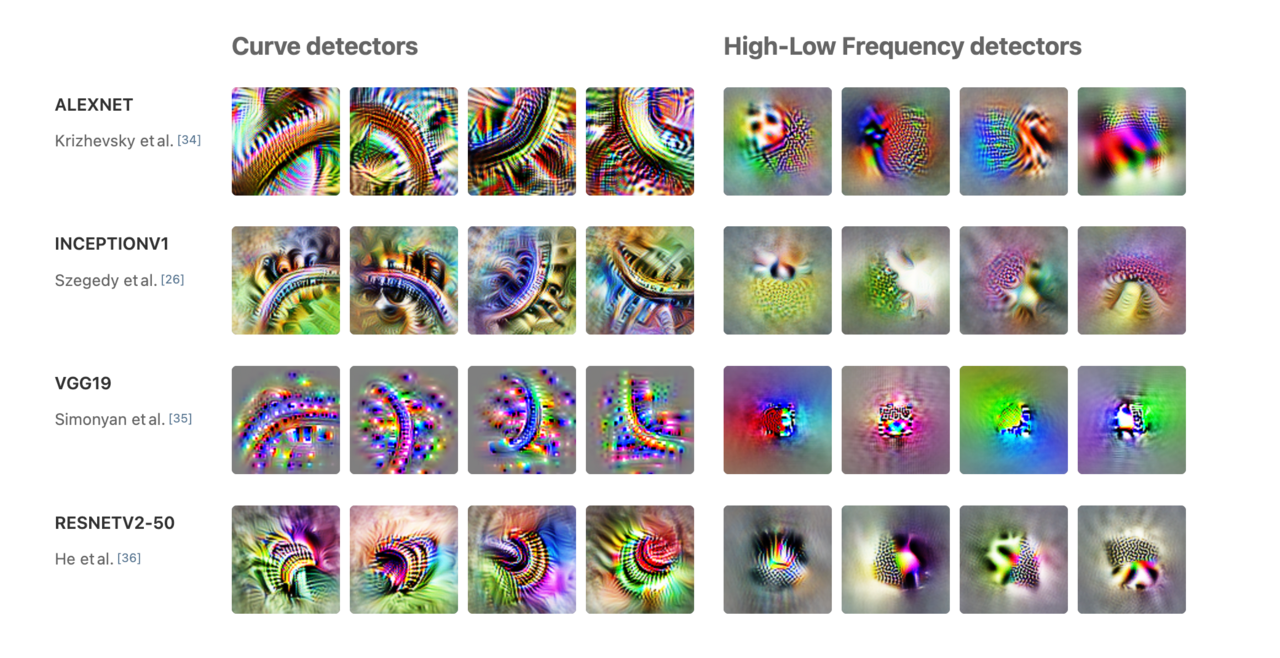
In 2020, Cammarata worked at OpenAI with Chris Olah5. They studied an older image model called Inception v1. One neuron there fired for both cat faces and car fronts, a pairing that puzzled them both.
The pair called it proof of superposition. A network, they argued, crams unrelated ideas into one neuron when it runs short of room. Their paper, "Zoom In: An Introduction to Circuits," published March 10, 2020, became a founding text of interpretability research5. Scientists then treated a tangled neuron as the rule, for six years running.
A Year of Ten-Hour Days
Cammarata later left OpenAI for Goodfire, a startup built just to read AI models1. Anthropic backed Goodfire's $50 million funding round in 2025, its first direct investment in another company outside its own labs6. Cammarata then spent the next year staring at neurons most researchers had given up on. "I spent like, I don't know, 10 hours a day, seven days a week, for most of the last year just looking at neurons," he said2.
One day, he looked at the old cat-car neuron again. The image stayed exactly the same. His reading of it changed completely.
"Almost instantly it was obvious: it's not a cat and car neuron, it's a V-shape neuron," Cammarata wrote1. Cats and cars share one shape in common. The neuron had been legible the whole time, by his new account.
Ninety Percent Clean, by His Count
Cammarata calls the old reading a misread. He stops short of calling it a lie. Most "polysemantic" neurons, in his argument, share one deeper pattern rather than many random ones. He names that pattern recursive generalization: a neuron grows new senses the way a branch grows side shoots.
One neuron first caught the letters "iy." Later, it caught "diy." By the end, it caught the phrase "do it yourself," built from different letters entirely3.
Cammarata ran the same kind of test on a current open-weight model, Qwen3-32B. "We estimate that roughly 90% of neuron poles have one main job," he wrote1. Another 7 percent do two related jobs, and the rest stay mixed, rounding out all 100 percent of the poles his team counted. Two colleagues helped with the count, Curt Tigges and Tarun Gogineni, studying language-specific neurons and editing the essay.
Cammarata calls 90 percent of neuron poles in Qwen3-32B clean
Share of neuron poles in one audit of Qwen3-32B, by how clearly each one reads, per Cammarata's essay
These are Cammarata's own preliminary figures from one audit of one open-weight model, ahead of outside verification.
Source: Goodfire [1]. Chart by Kelly Dennis.
The numbers behind this chart
| Item | Value |
|---|---|
| One clean job | 90% |
| Two related jobs | 7% |
| Still mixed | 3% |
| Whole | 100% |
That number flips six years of pessimism on its head. Six years, undone in one. A field braced for noise found a clean signal instead, at least by Cammarata's account.
Neel Nanda Pushes Back
Plenty of readers stayed skeptical of the reversal. Neel Nanda leads mechanistic interpretability work at Google DeepMind4. On Oct. 19, he read Cammarata's essay and posted his verdict on X: "This is interesting work, but I don't think it's a significant update to the big picture of interpretability," Nanda wrote.

Chris Potts runs a lab at Stanford University that studies how language models work. He put his doubt more bluntly to a reporter. "As far as I can tell, nothing about this blog post makes the problems any easier," Potts said2.
Reaction split in the opposite direction too. Roon, an OpenAI researcher well known on social media, called the essay "a major moment in scientific history" on X4. He said the finding was positive enough to make Eliezer Yudkowsky, a prominent voice warning of AI catastrophe, lower his risk estimate.
6 years pass between naming superposition and Cammarata's reversal
Key dates in the superposition story, 2020 to 2026
Each point is a dated event: the 2020 paper that named superposition, Cammarata's essay six years later, and the researchers who answered it within days.
Sources: Goodfire [1]; MIT Technology Review [2]; Distill [5]. Chart by Kelly Dennis.
The numbers behind this chart
| Date | Event |
|---|---|
| March 10, 2020 | "Zoom In" names superposition |
| Oct. 16, 2026 | Cammarata's essay recants it |
| Oct. 19, 2026 | Nanda and Potts respond |
Both researchers raise the same gap. Cammarata tested an older image model and one open language model. His tests skip the frontier systems now running agents and making decisions for paying customers.
What Would Have to Be True
Cammarata's case gets stronger every time another lab repeats his test and finds the same clean split. Nanda's doubt gets stronger every time a frontier model, read the same way, comes back tangled instead.
Both sides accept the numbers already on the table. They disagree about what one year of harder looking proves. Six years of tools, budgets and hiring plans were built on the older answer.
What to do
Ask your AI vendor a direct question before you trust any claim about a model's safety checks. Does an interpretability finding they cite come from a production model your company actually uses? Or does it come from a smaller open model, picked for the test?
Treat this week's essay as a lead worth watching, short of a settled fact. The gap Nanda names, between an image model and a frontier one, is exactly where a vendor's marketing tends to skip a step.
By the numbers
- 2020: the year Cammarata and Chris Olah named superposition, in the paper "Zoom In"5.
- 90 percent: the share of neuron "poles" Cammarata's team calls clean, in one audit of Qwen3-32B1.
- 26,000 words: the length of the essay making his case2.
- Six years: how long the field treated superposition as the best explanation, before this essay1.
- 10 hours: how long Cammarata says he spent most days last year, staring at neurons2.
- 1: the open-weight model Cammarata's published audit actually names1.
What to watch
Watch for a frontier audit next. Cammarata's team, or a rival lab, could test a frontier model built for agents next14. That would beat the older image model and the open benchmark tested so far. A second lab reproducing his 90 percent figure, on a model someone else chose, would turn a hunch into a finding.
Sources
- Nick Cammarata, "Neural Networks Are Already Clean," Goodfire, Oct. 16, 2026, https://already-clean.goodfire.com
- Will Douglas Heaven, "'We were looking at it wrong': The explosive claim that's upended the AI world," MIT Technology Review, Oct. 19, 2026, https://www.technologyreview.com/2026/10/19/1147149/we-were-looking-at-it-wrong-the-explosive-claim-thats-upended-the-ai-world/
- Maximilian Schreiner, "Is AI interpretability close to a breakthrough? A new essay has researchers divided," The Decoder, Oct. 16, 2026, https://the-decoder.com/is-ai-interpretability-close-to-a-breakthrough-a-new-essay-has-researchers-divided/
- Frank Landymore, "Explosive Document Claims That AI Is Not What We Think," Futurism, Oct. 19, 2026, https://futurism.com/artificial-intelligence/explosive-document-ai-not-what-we-think
- Chris Olah, Nick Cammarata, Ludwig Schubert, Gabriel Goh, Michael Petrov, Shan Carter, "Zoom In: An Introduction to Circuits," Distill, March 10, 2020, https://distill.pub/2020/circuits/zoom-in/
- Maria Deutscher, "Goodfire raises $50M in funding," SiliconANGLE, April 18, 2025, https://siliconangle.com/2025/04/18/ai-interpretability-startup-goodfire-raises-50m-funding/