OpenAI said Monday its AI found proofs for three old problems. One sits in pure math. A second sits in computer science. The last sits in physics.
Every claim went up on OpenAI's own site and on X1. Dan Roberts, an OpenAI scientist, signed the post. Three teams of outside scholars must now check the work by hand. All three proofs still await that check.
Three Claims in One Afternoon
Start with the math. A wave focuses most sharply for only a short moment, and that sharp focus rarely hits its worst case. Christopher Sogge proposed that rule in 19914.
Mathematicians proved it for two dimensions in 2019, then proved a related puzzle, the Kakeya conjecture, in three dimensions in 20254. OpenAI's model proved Sogge's rule for every dimension at once. That also settles the Kakeya conjecture and a third puzzle, Stein's restriction conjecture1.
The model found this proof on Oct. 18. A Lean check cleared it the next day.
Now the computer science. A rule called the Exponential Time Hypothesis says some logic puzzles always take a long time to crack. Hundreds of papers lean on that rule4. It helps show that some biology, database and graph problems stay hard.
OpenAI's model found a disproof on Oct. 16. Lean checked it on Oct. 171.
Physics took the longest road of the three. OpenAI's model wrote a Yang-Mills existence proof on Sept. 9, then extended it to quantum chromodynamics on Sept. 181.
OpenAI held the physics release back until its Lean check landed, on Oct. 16, 37 days after the model's first draft.
OpenAI's physics proof waited 37 days for the check its math proof passed in one
Days between the AI's write-up and its Lean formalization check, by field, per OpenAI's own account
Each bar is one field's wait between the AI's output and a finished Lean proof check; the physics bar runs far past the other two.
Source: OpenAI [1]. Chart by Kelly Dennis.
The numbers behind this chart
| Item | Value |
|---|---|
| Math | 1 days |
| Computer science | 1 days |
| Physics | 37 days |
The Referees Who Decline to Call It Proof
OpenAI left the grading to outsiders this round. For the computer-science claim, it asked three scientists to check the work4. They are Russell Impagliazzo and Ramamohan Paturi of UC San Diego, and Ryan Williams of MIT. Impagliazzo and Paturi proposed the Exponential Time Hypothesis itself, decades ago, with Francis Zane1.
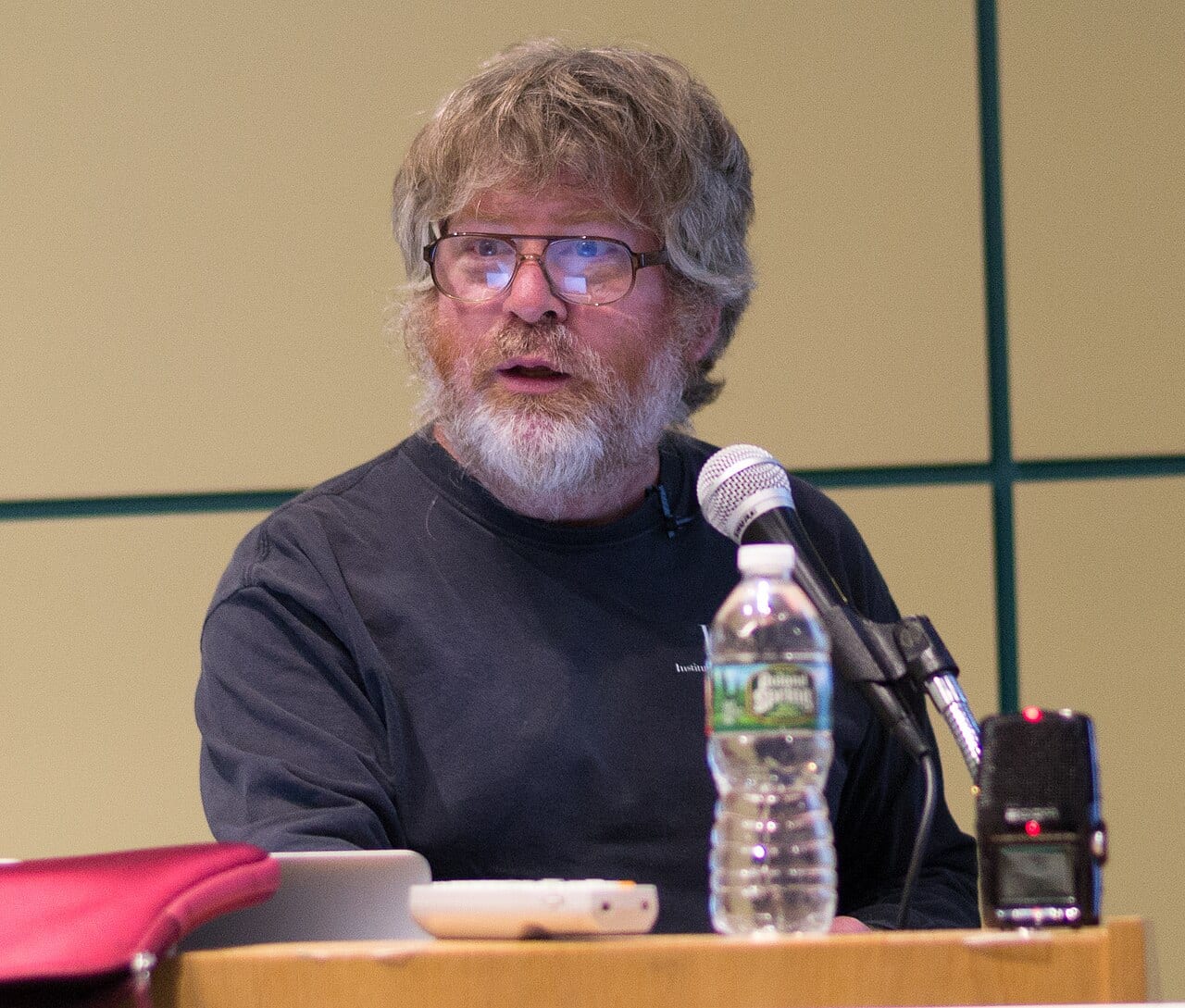
Williams posted the news on Bluesky the same day OpenAI did. "An internal model at OpenAI has produced a claimed refutation of ETH! Russell Impagliazzo, Mohan Paturi, and I have been asked to help organize an open and independent examination of this claim," Williams wrote4.

The three scientists then wrote a joint letter. It limits what their role means. "Our involvement should not be taken as certification of the claim. A result of this significance requires careful, independent scrutiny," Impagliazzo, Paturi and Williams wrote4.
They asked OpenAI for two things: every scrap of raw data behind the claim, and money for a conference on it. OpenAI agreed to both.
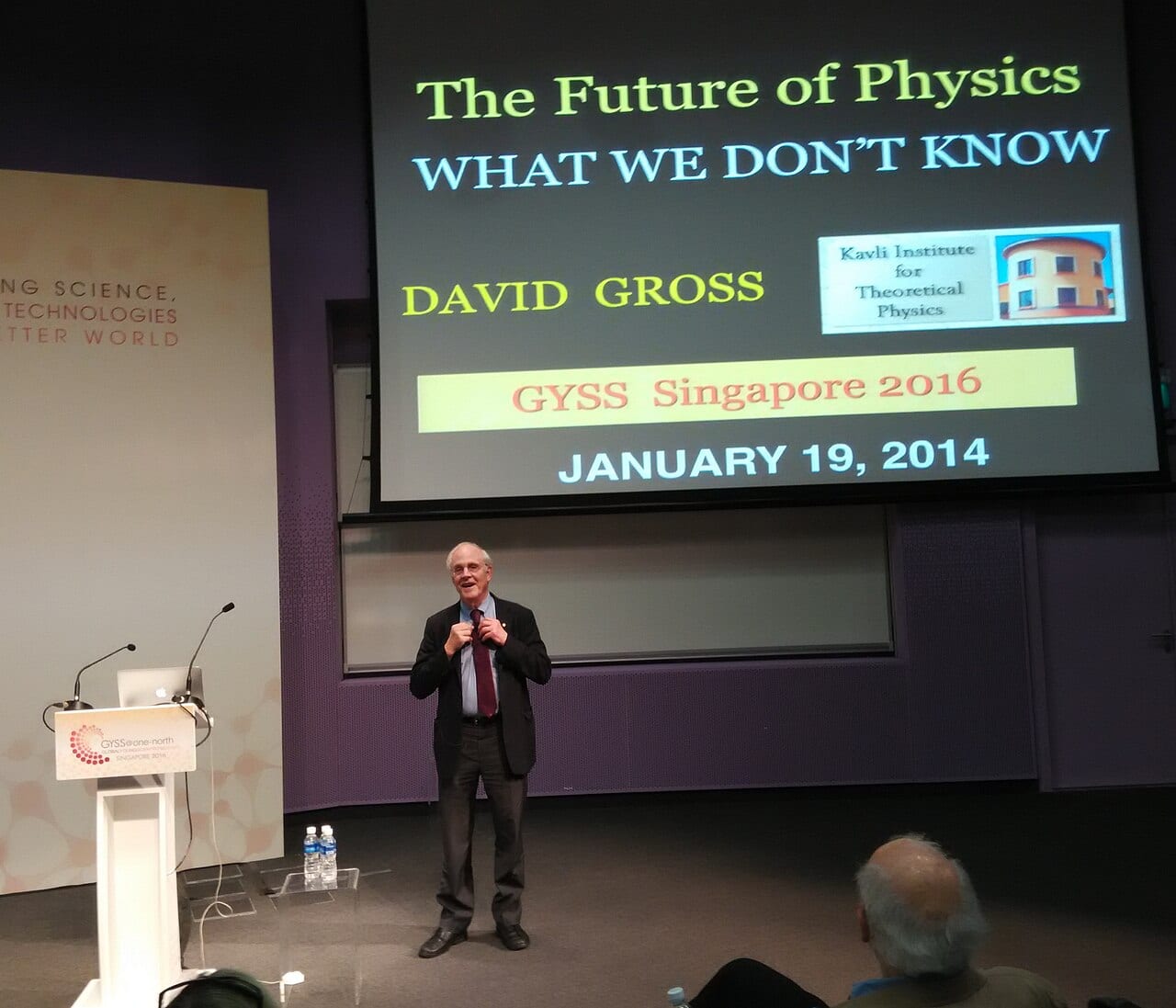
Physics drew its own panel. David Gross will lead that group1. Gross is a physicist at the University of California, Santa Barbara, who shared the 2004 Nobel Prize for work on the strong force4.
His panel also includes Michael Douglas, Arthur Jaffe, Igor Klebanov and Nikita Nekrasov. Jaffe helped define the Yang-Mills Millennium Prize problem the new proof touches.
Why Mathematicians Still Flinch
OpenAI frames its new approach as a fix. It asked outside scientists to run the review before this week's announcement went out. "Our release process continues to evolve in response to feedback from the associated academic communities," Dan Roberts, the OpenAI scientist who posted the claims, wrote on X2. "In our view, these manuscripts are best understood as a form of raw research data."
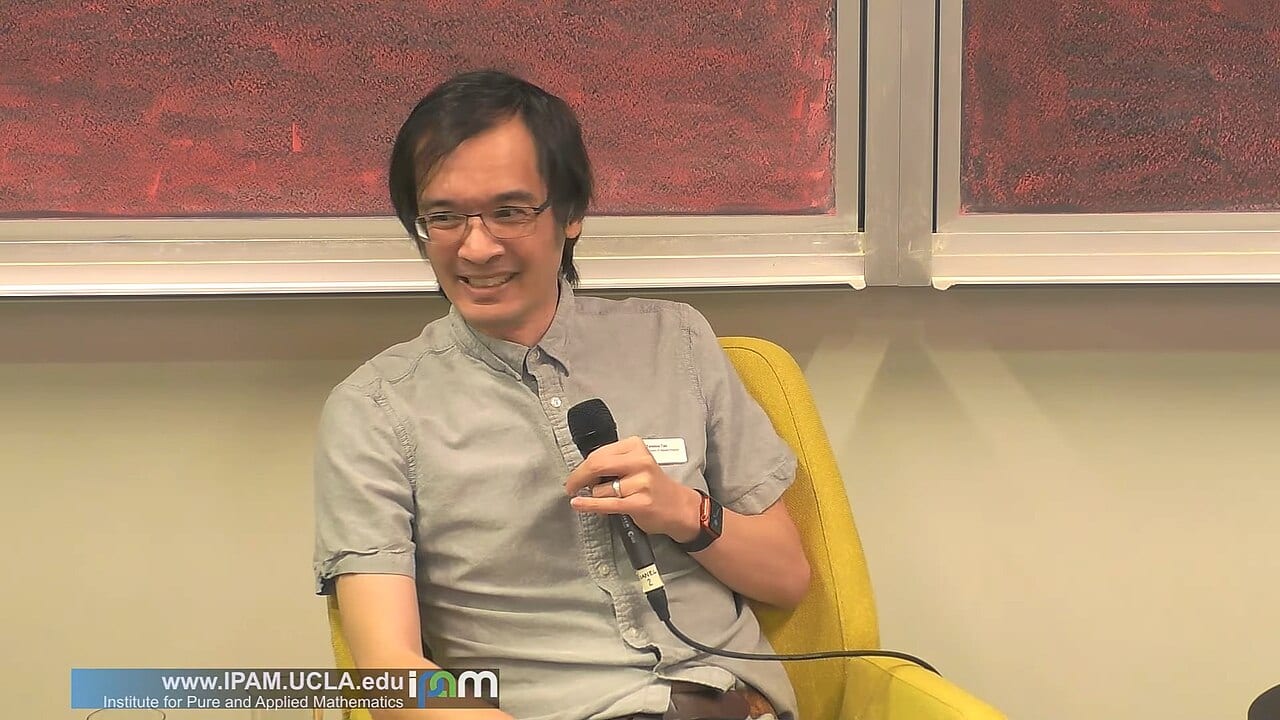
The scar from October still shows. That month, OpenAI posted more than 700 math manuscripts at once. It published before any referee stood ready. The Association for Human Mathematics, a group of working mathematicians, answered in a statement posted to Terence Tao's blog.
"Releasing over 700 files at once is not a demonstration of scholarship, but a demonstration of power," the Association for Human Mathematics' communications working group wrote3. The group urged mathematicians to walk away from OpenAI altogether.
42 of every 100 top results in OpenAI's math archive carry a finished Lean check
Share of top-line results in the openai/math GitHub repository with a completed Lean formalization, as of Oct. 27, 2026
Source: GitHub [5]. Chart by Kelly Dennis.
The numbers behind this chart
| Item | Value |
|---|---|
| Lean-checked | 42% |
| Whole | 100% |
Dan Roberts@danintheoryWe are announcing three new discoveries in mathematics, computer science, and physics about harmonic analysis, complexity theory, and quantum field theory.https://t.co/9BX8HWQDTJ
Monday's pattern stayed mostly the same for math. OpenAI posted its math write-up straight to GitHub1. The math claim shipped before OpenAI named any outside group for it. Only the computer-science and physics claims got a referee panel lined up before release.
What to Do
Treat each of Monday's three claims as a lead first. Hold the word "result" until a shepherd group checks it. Wait for that group's own write-up before citing any of the three in your own work.
Watch Impagliazzo, Paturi and Williams' public channels for the computer-science verdict. They named themselves as the check on that one claim.
By the numbers
- 35 years: the age of Sogge's 1991 conjecture, which OpenAI's model claims to settle in every dimension1.
- 1 day: the gap between the model's write-up and its Lean check, for both the math claim and the computer-science claim1.
- 37 days: the gap between the model's first physics write-up, on Sept. 9, and the Lean check that cleared part of it on Oct. 161.
- 721 manuscripts: the size of OpenAI's public math archive right now, spread across 373 result families5.
- 42 of every 100: the share of top-line results in that archive with a finished Lean formalization5.
- $5 million: OpenAI's gift to the Simons Foundation, for conferences on checking AI-produced results1.
- Nearly 15,700: the stars on OpenAI's math repository on GitHub, as of Oct. 275.
- About 4,700: the likes on Dan Roberts' X post announcing the claims, as of Oct. 272.
What to watch
Watch for the computer-science panel's own written verdict on the Exponential Time Hypothesis claim. Impagliazzo, Paturi and Williams signaled the check would run for weeks. A second marker sits with the physics group: will it ever formalize the quantum chromodynamics half of its claim in Lean?
Only the Yang-Mills half has cleared that check so far. A fresh word from the Association for Human Mathematics would say more about trust than anything OpenAI posts. So would its continued silence.
Sources
- OpenAI, "Working with academic communities to build scientific understanding," OpenAI, Oct. 26, 2026, https://openai.com/index/building-scientific-understanding-with-academic-communities/
- Dan Roberts (@danintheory), post announcing three new discoveries in mathematics, computer science and physics, X, Oct. 26, 2026, https://x.com/danintheory/status/2114833682469122314
- Association for Human Mathematics, "AHM Statement on OpenAI's October 6 Release of Mathematical Documents," posted on Terence Tao's blog, Oct. 7, 2026, https://terrytao.wordpress.com/2026/10/07/ahm-statement-on-openais-october-6-release-of-mathematical-documents/
- Ana Maria Constantin, "OpenAI says its AI model has disproved the Exponential Time Hypothesis," The Next Web, Oct. 26, 2026, https://thenextweb.com/news/openai-exponential-time-hypothesis-false-kakeya-yang-mills
- OpenAI, openai/math repository, GitHub, accessed Oct. 27, 2026, https://github.com/openai/math
- pajenegod, "Both ETH and 3SUM conjectures have now been proven false by AI," Codeforces, Oct. 26, 2026, https://codeforces.com/blog/entry/158197
- Ali Farhat, "OpenAI Announces Three AI-Assisted Discoveries Across Math, Computer Science and Physics," DEV Community, Oct. 27, 2026, https://dev.to/alifar/openai-announces-three-ai-assisted-discoveries-across-math-computer-science-and-physics-4p69