PrismML released Ternary Bonsai 2.5 27B on Tuesday, an AI model built to run coding agents on a person's own computer1. The download takes 5.9 gigabytes. Its full-size parent takes 53.8 gigabytes2.
On SWE-bench Verified, a coding test of 500 software tasks, PrismML measured the small model within five points of the parent12. The company posted the model for free under the Apache 2.0 open license. OpenAI stopped using that test in February4.
What three values buy
An AI model is a long list of numbers called weights. Full-size models store each weight with 16 bits of memory2. In a ternary model, each weight is one of three values: minus one, zero or one8. Researchers described that three-value idea in a February 2024 paper.
Fewer bits for each weight means a smaller file.
PrismML built the release from Qwen3.8 27B, an open model the Qwen team published on Aug. 517. The new model holds 27.36 billion weights2. It uses 1.76 bits for each one and takes 5.93 gigabytes, one ninth of the parent's size.
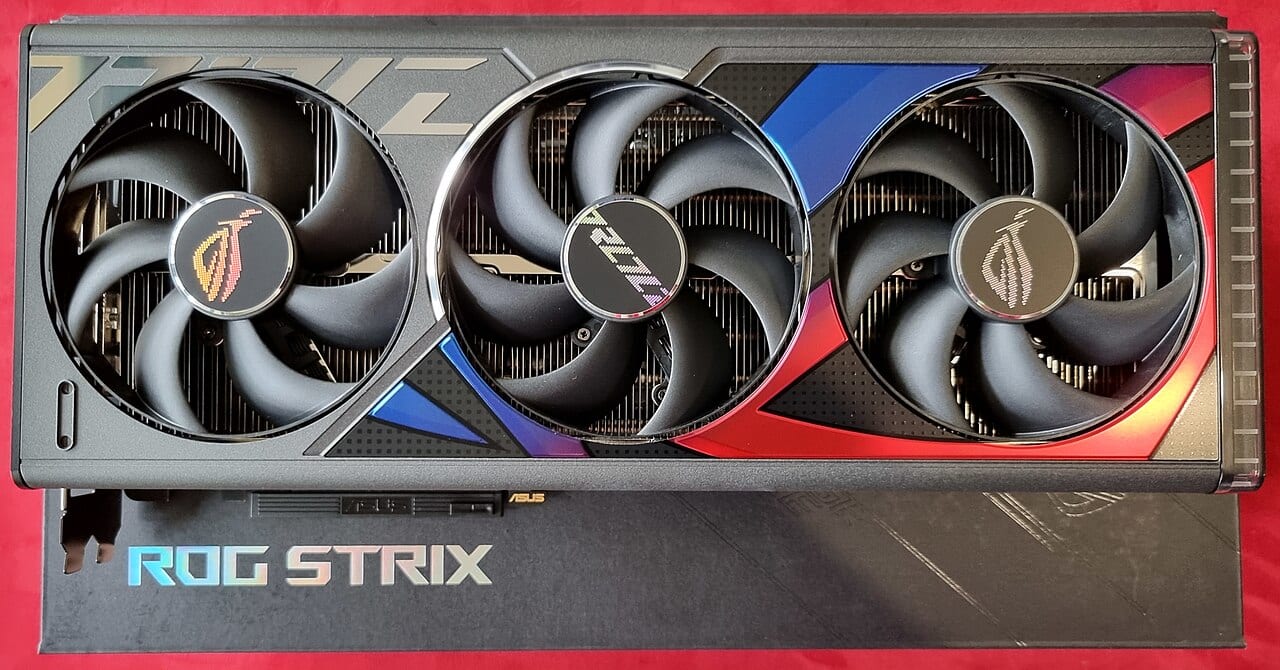
PrismML's paper times the model on a gaming graphics card, a laptop and a phone2. It runs on Nvidia and Intel graphics chips through llama.cpp, and on Mac, iPhone and iPad through MLX1. Both are free programs that run AI models on a person's own machine. One card PrismML tested is the RTX 4090, which the company calls consumer-grade.
Coding agents are the model's target1. An agent is a program that lets a model act on its own. It runs code, reads the error and edits a file. PrismML names three uses: a coding assistant for private code, a document app that drafts summaries and a desktop assistant for repeat analysis.
"Agentic workflows are particularly sensitive to model degradation: small errors can compound across successive tool calls and derail an entire task," PrismML wrote1. A wrong step early in a long job can spoil each step after it. The company said September's version thought too long and repeated itself in loops.
What the scores show
Every score here is PrismML's own, from one attempt at each task2. Outside labs have yet to repeat them. On SWE-bench Verified, September's model scored 60.8, the new one scored 75.6 and the full-size parent scored 80.61.
PrismML's 5.9 GB model scores 75.6, five points under its full-size parent
SWE-bench Verified score (higher is better), three models, as PrismML reported Nov. 24, 2026
Each column is one model's score on the same 500 coding tasks: PrismML's September version, its new version, and the full-size model both were made from.
Source: PrismML [1]. Chart by Kelly Dennis.
The numbers behind this chart
| Item | Value |
|---|---|
| Bonsai 2, Sept. | 60.8 |
| Bonsai 2.5, new | 75.6 |
| Full-size parent | 80.6 |
The paper averages three coding tests: SWE-bench Verified, Terminal-Bench 2.1 and DeepSWE2. Across them the new model keeps 90 percent of the parent's score, up from 63 percent in September. September's release failed every DeepSWE task. The new one scored 27, close to the parent's 30.1.
AppWorld asks an agent to write code that works with nine everyday apps2. The new model scored 90.5 there, up from 51.2. One score fell. On LiveCodeBench v6 the new model slipped to 83.0 from 83.81.
Speed is counted in tokens per second, and a token is a piece of a word. With PrismML's speed-up feature on, an Nvidia H100 data-center chip writes 282 tokens a second today2. Tuesday's announcement cites a higher figure1. The paper ties that figure to a software update still in testing.
On an RTX 4090 the model writes 204 tokens a second2. An Apple M4 Pro manages 25.3 and an Intel Core Ultra laptop 23.1. A Samsung Galaxy S26 Ultra phone reaches 8.79, using a fix PrismML has yet to release.
The same model writes 282 tokens a second on a data-center chip, 25.3 on a Mac
Tokens written per second with PrismML's speed-up feature on, by device, from PrismML's Nov. 2026 paper
Each column is one device running the same 5.9 GB model. A taller column means the model writes its answer faster.
Source: GitHub (PrismML-Eng/Bonsai-demo) [2]. Chart by Kelly Dennis.
The numbers behind this chart
| Item | Value |
|---|---|
| H100 | 282 |
| RTX 4090 | 204 |
| M4 Pro | 25.3 |
| Laptop | 23.1 |
| Phone | 8.79 |
Who built it
PrismML says it grew out of a team of Caltech researchers1. Khosla Ventures, Cerberus and Google backed its founding, and Samsung backs it now. Its September release carried a Pasadena, California dateline5. The first Ternary Bonsai 27B came in July, Bonsai 2 on Sept. 17 and Bonsai 2.5 on Tuesday.
The release went up on X at 2:29 p.m. in New York3. PrismML attached its own table to the post, with scores on five tool-use tests and three coding tests for all three models.
PrismML@PrismMLToday, we’re releasing Ternary Bonsai 2.5 27B.
An upgrade to Ternary Bonsai 2 27B, with substantially stronger agentic coding, multi-turn tool use, and long-horizon task execution. All within the same 5.9 GB model footprint.
Based on Qwen3.8 27B, the model is 9x smaller than… pic.twitter.com/YwGwk3j95Q

Tuesday's announcement carries only a company byline1. Founder and chief executive Babak Hassibi spoke at the Sept. 17 launch of Bonsai 25. "Bonsai 27B proved that powerful models do not have to be confined to cloud infrastructure," Hassibi said then.
Ion Stoica, a UC Berkeley professor who advises PrismML, spoke in the same release5. "If that gap continues to close, it can fundamentally expand where highly capable models can be deployed," Stoica said. Both men were describing September's model.
PrismML gives the weights away and sells work around them1. It offers to train the model on a customer's own data and to tune it for a customer's chips.
The test OpenAI stopped using
PrismML puts the shrinking gap at the center of its case1. "Ternary Bonsai 2.5 significantly narrows the performance gap to the full-precision base model while retaining its compact footprint," PrismML wrote. On X the company called it the strongest model of its memory size for agent work3.
The test behind the lead score has a prominent critic4. OpenAI helped create SWE-bench Verified in August 20242. On Feb. 23 it said it had stopped reporting scores on that test. The post is about the test alone and predates Bonsai 2.5 by nine months.
OpenAI audited a slice of the problems, the ones models often failed4. At least 59.4 percent of those had flawed tests that rejected correct answers. OpenAI also found signs that models had seen the problems in training. "This means that improvements on SWE-bench Verified no longer reflect meaningful improvements in models’ real-world software development abilities," OpenAI wrote.
Another test, SWE-bench Pro, now has OpenAI's backing4. PrismML's paper lists that test among the work it has yet to run2.
One reading favors PrismML. Its table sets the small model against its own parent on the same tasks12. Leaked answers in the parent's training would lift both scores. The gap between them would still show what shrinking cost.
Most of the table's other tests also rose from September1.
Another reading cuts the other way, and it comes from PrismML's own paper2. The company tested four ordinary shrunken copies of the same parent, made by other groups. A 9.3 gigabyte copy scored 75.4 on SWE-bench Verified, close behind Bonsai 2.5. Bonsai 2.5 also lost the three-test coding average to a 10.1 gigabyte copy.
The paper states its own limits too2. "Terminal-Bench 2.1 is still the agentic benchmark where we are furthest from FP16, and even our longest evaluations are bounded, single-task episodes," PrismML wrote. FP16 is the paper's name for the full-size model. The company has yet to test jobs that run for hours.
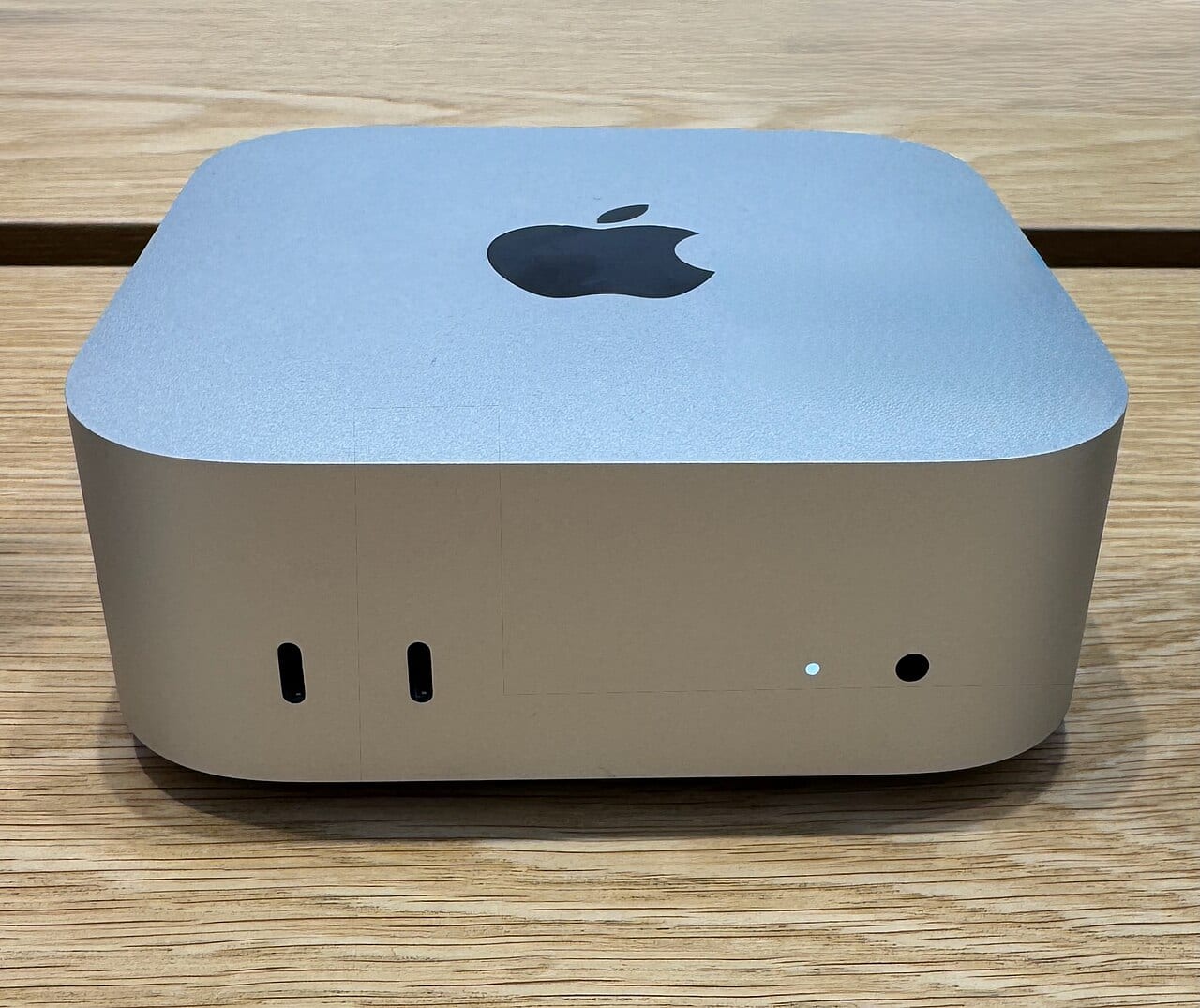
Readers on Hacker News spent Tuesday afternoon testing the release themselves6. One reader ran the model on a Mac Mini with an M5 Pro chip and reported 22.3 tokens a second. Another said September's version got stuck in loops. A third called the new one useful next to the old one.
What to do
Developers who keep private code off cloud servers can test the model today for the cost of a download.
- Start with a machine PrismML timed: an Nvidia RTX card, an Apple M4 Pro Mac or an Intel Core Ultra laptop2.
- Run it on a few of your own multi-step tickets. A public test score says little about your code.
- Watch whether it finishes each ticket or repeats the same step.
- If you have the memory, try a 10.1 gigabyte copy of Qwen3.8 27B on the same tickets. That copy scored higher on PrismML's coding average2.
- Read the Apache 2.0 license before you ship the weights inside a product1.
By the numbers
- The new model takes 5.93 gigabytes, against 53.8 gigabytes for its full-size parent2.
- It scored 75.6 on SWE-bench Verified, against 80.6 for the parent and 60.8 for September's version1.
- Its DeepSWE score rose from zero in September to 272.
- A 9.3 gigabyte copy made by another group scored 75.4 on SWE-bench Verified2.
- OpenAI found flawed tests in at least 59.4 percent of the SWE-bench Verified problems it audited4.
What to watch
Four things would settle whether Tuesday's numbers hold in daily work. First, an outside lab can run the same coding tests2. A SWE-bench Pro score would come next, on the test OpenAI recommends4.
Third is a test of jobs that run for hours, which PrismML's paper says it has yet to measure2. Last is the software update now in testing. When it ships, owners of an H100 can check for 291 tokens a second1.
Sources
- PrismML, "Introducing Ternary Bonsai 2.5 27B: Powering Agentic Coding and Private Knowledge Work," PrismML, Nov. 24, 2026, https://prismml.com/news/bonsai-2-5-27b
- PrismML, "Ternary Bonsai 2.5 27B," GitHub (PrismML-Eng/Bonsai-demo), Nov. 24, 2026, https://github.com/PrismML-Eng/Bonsai-demo/blob/main/bonsai-2-5-27b-whitepaper.pdf
- PrismML (@PrismML), "Today, we’re releasing Ternary Bonsai 2.5 27B.," X, Nov. 24, 2026, https://x.com/PrismML/status/2125310762390552588
- OpenAI, "Why SWE-bench Verified no longer measures frontier coding capabilities," OpenAI, Feb. 23, 2026, https://openai.com/index/why-we-no-longer-evaluate-swe-bench-verified/
- PrismML, "PrismML Launches Bonsai 2 27B, Its Most Capable Model Yet," PrismML, Sept. 17, 2026, https://prismml.com/news/prismml-launches-bonsai-2-27b
- b0m and others, "Ternary Bonsai 2.5 27B," Hacker News, Nov. 24, 2026, https://news.ycombinator.com/item?id=50633922
- Qwen team, "Qwen/Qwen3.8-27B," Hugging Face, Aug. 5, 2026, https://huggingface.co/Qwen/Qwen3.8-27B
- Shuming Ma and nine co-authors, "The Era of 1-bit LLMs: All Large Language Models are in 1.58 Bits," arXiv, Feb. 27, 2024, https://arxiv.org/abs/2402.17764
- Ragesoss, "Pinus mugo bonsai at the BBG, August 2, 2008," Wikimedia Commons, Aug. 2, 2008, https://commons.wikimedia.org/wiki/File:Pinus_mugo_bonsai_at_the_BBG,_August_2,_2008.jpg