Ravi Vakil had a proof to share, and a board meeting to run. He leads the American Mathematical Society. On Friday he posted a proof of the Riemann Hypothesis from inside that meeting1.
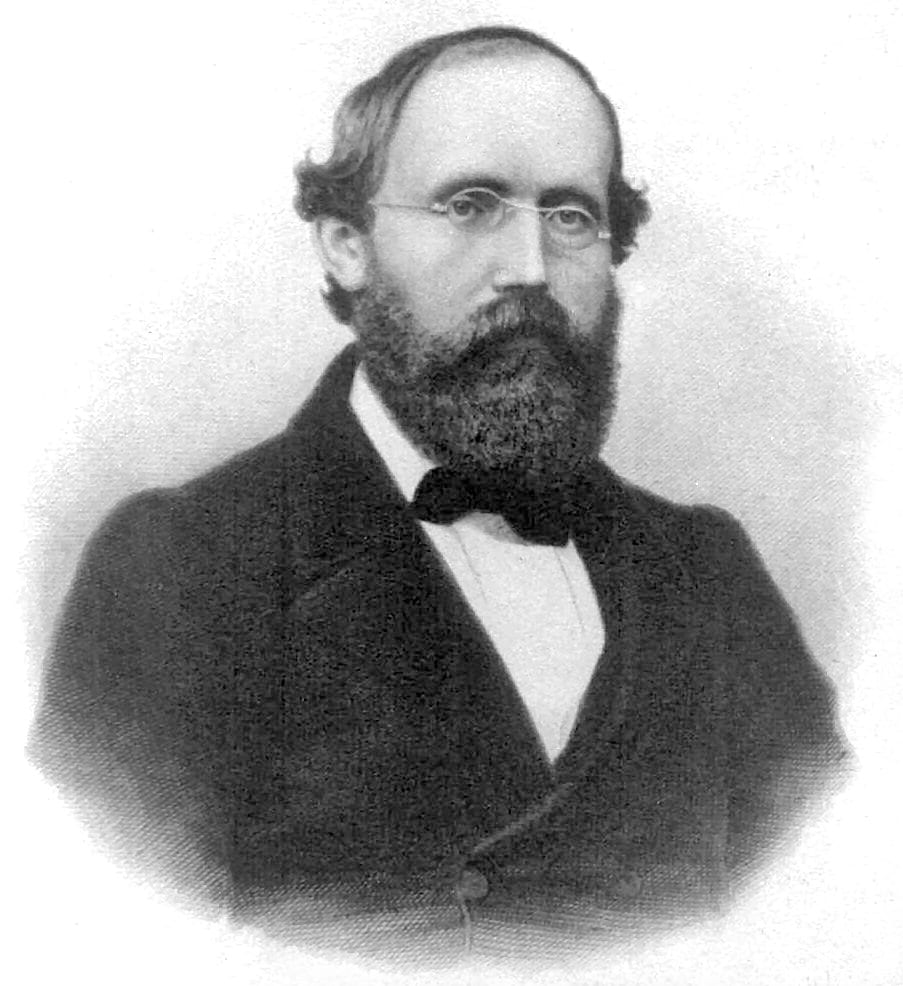
Prime numbers follow one hidden rule, the hypothesis guesses, past scattered chance. Bernhard Riemann asked the question in 18592. It has stood open for 167 years, longer than almost any other question in math.
Vakil named the proof's author: Alessandro Masullo, a Stanford postdoctoral researcher1. Masullo built the argument over twelve years, working mostly alone2. Vakil wrote, "It is all human, with no AI".
Two days earlier, an Anthropic mathematician named Levent Alpöge made a rival claim. He said Claude helped him solve the same problem5. Alpöge's own note runs four pages, backed by a formal Lean file the mathematics community is still working through6. Lean is software that checks a proof's logic step by step, the way a calculator checks a sum.
Masullo's proof arrived as the human answer to that machine-assisted one. The two claims now sit side by side, each still waiting on the field's slower judgment.
A Dozen Years, Then a Rush to Post
Vakil had a slower plan. He wanted Brian Conrad, a Stanford mathematician, to spend a year polishing the draft with Masullo before anyone saw it1.
Then Alpöge's claim went public, and Vakil dropped the plan. "The hope was to have Brian work with Alessandro for a year to polish the writing and then announce it after running it by enough people," Vakil wrote. "Now it seems best to put out the current draft"1.
He posted it from the American Mathematical Society's own board meeting, the one he was chairing that afternoon1.
Conrad had already read Masullo's argument closely for months3. His review found "it is so far looking good to him," Vakil said, before any outside reader had seen a page1.
The Hole AI Found in Eight Hours
Vakil's post went up hopeful. His update, eight hours later, read differently.
"Several people have contacted me to report problems in the proposed proof, identified with the assistance of different AI models," Vakil wrote1. He thanked the mathematicians who wrote in first.
Thomas Bloom@thomasfbloomAn independent, 100% human, claimed proof of RH (only 940 pages long). (Seems like this was finished months ago, but has been privately being reviewed.)https://t.co/xz4sFkNesk
The proof meant to answer an AI-assisted claim needed AI to find its own early cracks. Vakil still kept the draft alive in his own words. "All issues need to be resolved to the satisfaction of the community before this proof would be accepted as true," he wrote1.
What Still Needs Checking
Masullo's draft reaches past the plain Riemann Hypothesis. It also claims the Generalized Riemann Hypothesis, a wider version covering more number-counting functions than the original question touches3.
Brian Conrad gave Scientific American his own measured read. Asked if the work will hold up, he said, "To judge the success of the method requires the paper to reach a stage of more final revision. It's undergoing major revision"3.
A verified proof would win Masullo the $1 million prize the Clay Mathematics Institute holds for a solved Riemann Hypothesis5. The prize waits for the field's own sign-off, which moves far slower than one blog post.
Two Claims, Two Different Crowds
Attention split unevenly between the two claims. Yifan Zhang's post about Alpöge's claim drew about 54,000 likes by Saturday morning8. Thomas Bloom's post about Masullo's claim drew roughly 5,900 likes over the same stretch4.
Alpöge's Claim Draws 9 Times the Likes of Masullo's
Likes on the X post that first announced each claim, by Saturday morning, Nov. 21, 2026
Each column is one post's likes: the tall magenta column is Yifan Zhang's post about Alpöge's AI-assisted claim, and the short blue column is Thomas Bloom's post about Masullo's human-only claim.
Likes keep climbing on both posts, so this is one Saturday-morning snapshot, ahead of any final tally.
Sources: X (@thomasfbloom) [4]; X (@yifanzhang_) [8]. Chart by Kelly Dennis.
The numbers behind this chart
| Item | Value |
|---|---|
| Alpöge's claim | 54,038 |
| Masullo's claim | 5,931 |
Hacker News leaned the same way. The thread on Alpöge's claim carried 2,489 points Saturday morning, against 1,800 points for the thread on Masullo's910.
Alpöge's Claim Leads Masullo's by 689 Hacker News Points
Points on each claim's own Hacker News thread, read Saturday morning, Nov. 21, 2026
Each bar is one claim's Hacker News points: the longer magenta bar is Alpöge's AI-assisted claim, and the shorter blue bar is Masullo's human-only claim.
Hacker News points keep moving while a thread stays active, so these counts are one Saturday-morning reading.
Sources: Hacker News [9]; Hacker News [10]. Chart by Kelly Dennis.
The numbers behind this chart
| Item | Value |
|---|---|
| Alpöge's claim | 2,489 |
| Masullo's claim | 1,800 |
A like counts attention. Proof asks for a slower kind of count, and both threads kept arguing well after these numbers came in.
Who Gets to Say They Were Right
Masullo wrote his own note inside the draft, aimed at mathematicians who feel sidelined by AI. "We are still here. We are very much alive. We are not going anywhere," he wrote2.
Conrad's caution points the other way. His read treats the draft as work still in progress, whoever or whatever built it3.
Vakil framed the decision as a choice between two weak options1. He could announce an unfinished draft now, or stay quiet and risk looking slow next to Alpöge's claim. Speed won.
The eight-hour update shows what that choice cost. It also shows what speed bought: a faster, public check from more readers than a year of private polishing would have drawn.
What to do
Treat both proofs as drafts headed toward a result, still short of one. Watch the Lean formalization race on Alpöge's side and the human revision on Masullo's side. The $1 million prize waits on both claims until reviewers finish, each on its own clock.
Weigh a "human-only" claim by what checked it. Who caught a proof's mistakes matters more than who wrote it. The same AI tools now flag errors in work billed as untouched by them.
By the numbers
- 940 pages: the length of Masullo's manuscript, "The Music of the Primes"4.
- 12 years: how long Masullo says he spent building the proof2.
- 8 hours: the gap between Vakil's post and his update naming AI-assisted problem reports1.
- $1 million: the Clay Mathematics Institute's prize for a verified proof5.
- 175,187: Lean source files in Alpöge's AI-assisted archive6.
- 250,000-plus: pages Alpöge's proof would run if written out for people to read, by Bloom's estimate7.
- Zhang's post about Alpöge's claim: 54,038 likes, by Saturday morning8.
- Bloom's post about Masullo's claim: 5,931 likes, over the same stretch4.
What to watch
Watch Conrad's revision notes on Masullo's draft. A cleaner version that survives a second AI-assisted check would say more than Friday's rushed post did.
The Lean community's progress on Alpöge's archive matters just as much. Whichever claim compiles first, or falls apart first, will tell readers more than any count of likes.
Sources
- Ravi Vakil, "Hurried Announcement: Alessandro Masullo GRH," Ravi Vakil's blog, Nov. 20, 2026, https://math216.wordpress.com/2026/11/20/hurried-announcement-alessandro-masullo-grh/
- Tim Fernholz, "AI claimed a solution to the 167-year-old Riemann hypothesis — and a human did, too," TechCrunch, Nov. 20, 2026, https://techcrunch.com/2026/11/20/ai-claimed-a-solution-to-the-167-year-old-riemann-hypothesis-and-a-human-did-too/
- Joseph Howlett, "Dueling claims of Riemann hypothesis proofs emerge," Scientific American, Nov. 20, 2026, https://www.scientificamerican.com/article/dueling-claims-of-riemann-hypothesis-proofs-emerge/
- Thomas Bloom, post on X (@thomasfbloom), Nov. 20, 2026, https://x.com/thomasfbloom/status/2123848175568228604
- Joseph Howlett, "Anthropic mathematician claims to prove Riemann hypothesis, most famous problem in all of math," Scientific American, Nov. 20, 2026, https://www.scientificamerican.com/article/anthropic-mathematician-claims-to-prove-riemann-hypothesis-most-famous-problem-in-all-of-math/
- Aamir Khollam, "Claude helped prove 167-year-old Riemann hypothesis, researcher claims," Interesting Engineering, Nov. 20, 2026, https://interestingengineering.com/ai-robotics/anthropic-167-year-old-riemann-hypothesis-claude
- Thomas Bloom, post on X (@thomasfbloom), Nov. 20, 2026, https://x.com/thomasfbloom/status/2123796489197514945
- Yifan Zhang, post on X (@yifanzhang_), Nov. 20, 2026, https://x.com/yifanzhang_/status/2123789252756414577
- "Hurried Announcement: Alessandro Masullo GRH," Hacker News, Nov. 20, 2026, https://news.ycombinator.com/item?id=50579568
- "Levent Alpöge claims proof of the Generalized Riemann Hypothesis," Hacker News, Nov. 20, 2026, https://news.ycombinator.com/item?id=50574968