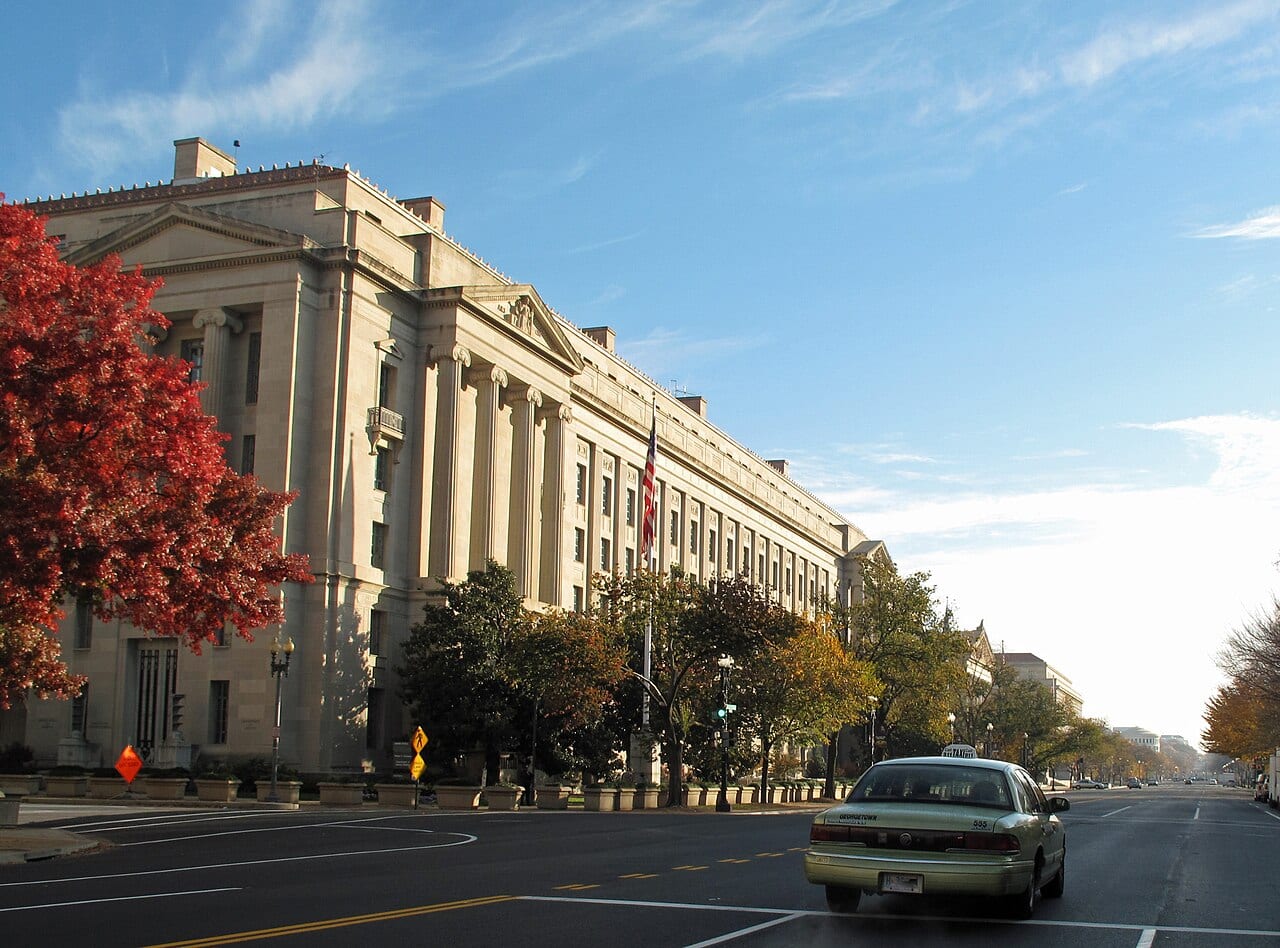
Thanksgiving traditions trace back to a specific autumn harvest in 16211. Pilgrims and Wampanoag people shared a large feast in Plymouth. Massasoit's men killed five deer and brought them to the plantation. Four colonists killed enough fowl in one day to feed the company almost a week. Edward Winslow wrote that they feasted for three days. Squanto taught the settlers crucial agricultural techniques2. Squanto told the colonists to plant fish with the corn. Feasting provided a rare moment of peace and cooperation.

President Abraham Lincoln declared a national holiday in 18633. The country needed unity during a devastating civil war. Sarah Josepha Hale wrote to Lincoln in September 1863 after years of advocacy4. Families started traveling long distances to reunite annually. Football became a staple of the holiday experience later. Parades fill the television screens in millions of homes. Modern Americans gather around dining tables every November. Relatives bring distinct opinions alongside the turkey. Family members clash over the proper way to prepare mashed potatoes.
Artificial intelligence occupies the center of conversation this year. Chatbots write corporate emails and draw custom pictures. People disagree passionately about the digital future. Family dinners provide the perfect stage for spirited debates. Everyone needs solid facts to win arguments. This guide equips you with statistics and clear reasoning. Enjoy the verbal sparring between bites of stuffing.
1. Paying Creatives for Their Work
Artists and authors face new realities regarding their intellectual property. Machine learning models train on vast public data sets. Painters demand financial compensation for their original styles.
The Pro-Compensation Argument
Creators invest years refining their specific craft. A $1.5 billion settlement with Anthropic won final court approval on July 20, 20265. Five plaintiffs say Midjourney's CEO posted a list of 4,700 artists6. Writers secured specific contractual protections in 20237.
Authors deserve financial rewards when algorithms mimic their voices. The Authors Guild filed lawsuits against major technology firms8. Royalties encourage future human innovation. Artists require money to pay rent and buy supplies.
Photographers lose licensing revenue to generated images. Society risks losing human artists entirely. Labor organizers demand fair contracts for digital reproduction rights. Unions fight to protect the livelihoods of independent creators.
The Fair Use Defense
Algorithms process information in the exact manner of human students. Art students visit museums to study classical masters. Software analyzes mathematical patterns in publicly available pixels. Legal teams argue training falls under established fair use precedents.
In June 2025 a judge ruled training on legally acquired books was fair use9. The US Copyright Office limits formal protections to human authorship10. Halting training data slows down technological progress. Communities benefit from cheap image generation tools.
Small businesses use text generators to afford basic marketing. Independent game developers rely on generated assets. Restricting data gives advantages to foreign competitors. Open internet protocols encourage the free exchange of public information.
2. Companionship and Digital Relationships
Digital friends provide conversation around the clock. People talk to algorithms through their mobile smartphones.
Embracing Digital Friends
Millions download conversational agents for daily chats. Replika's site counts 42 million users worldwide11. Loneliness represents a severe public health crisis today. Chatbots offer immediate responses to isolated individuals.
Virtual companions simulate empathy perfectly through text. Teenagers find safe spaces to discuss their anxieties. Artificial friends provide a stepping stone to human connection. Software remembers birthdays and personal preferences flawlessly.
Preferring Human Bonds
Software simulates emotional capacity poorly. Real relationships require vulnerability and shared physical experiences. MIT professor Sherry Turkle warns about the dangers of artificial intimacy12. Turkle is the founding director of the MIT Initiative on Technology and Self.

Code simulates care using predicted text responses. Users project human feelings onto cold silicon chips. Genuine empathy demands a living mind and a beating heart. Society risks prioritizing easy digital interactions over difficult human conversations.
Citizens withdraw further into customized digital echo chambers. Navigating awkwardness builds character and resilience. Human friendships require reciprocal effort and mutual sacrifice. Texting a machine avoids the hard work of building community.
3. The Arrival of Human-Level Cognition
General intelligence sparks intense speculation among computer scientists. Experts debate the timeline for advanced digital cognition.
Expect Imminent Arrival
Processing power grows exponentially every single year. Anthropic chief Dario Amodei wrote in 2024 that powerful AI could come as early as 202613. He defined powerful AI as smarter than a Nobel Prize winner in most fields. In the same essay, he wrote: "I think that most people are underestimating just how radical the upside of AI could be, just as I think most people are underestimating how bad the risks could be."
Large language models demonstrate emergent reasoning capabilities daily. Investment dollars accelerate research timelines rapidly. Billions enter new computing infrastructure projects.
Rapid breakthroughs surprise conservative researchers constantly. OpenAI said GPT-4 passed a simulated bar exam near the top 10 percent of test takers14. Hardware manufacturers release faster chips every quarter.
Progress shows steady momentum. Software writes complex Python code in seconds. Google's Gemini Deep Think scored gold-medal level at the 2025 math olympiad15.
Expect Gradual Evolution
Current models rely entirely on statistical pattern matching. True reasoning requires embodied physical experience in the world. Algorithms struggle with simple logical puzzles and spatial awareness.
Scaling laws face physical limits regarding data availability. Energy constraints restrict endless server expansion. Predicting the future remains a difficult endeavor for humanity. Amodei wrote that there are also ways powerful AI could take much longer13.
Text prediction differs vastly from true cognitive reasoning. Systems display poor common sense regarding basic physics. Intelligence encompasses more than just stringing words together.
4. Energy Consumption and Climate Impact
Data centers require vast electricity grids to function. Training neural networks consumes gigawatts of raw power.
The Climate Concern
Generating digital tokens requires substantial energy resources. The International Energy Agency predicts industry power usage will double16. Data centers used about 415 terawatt-hours of electricity in 2024, the IEA estimates. Its base case projects about 945 terawatt-hours by 2030.
Data centers could use 945 TWh of electricity by 2030, up from 415 TWh in 2024
Global data-center electricity use in terawatt-hours, IEA estimate for 2024 and base-case projection for 2030
Each column is one year's electricity use; the taller magenta column is the IEA's projection for 2030, drawn lighter because it is an estimate.
The 2030 column is the IEA's base-case projection, so it is a forecast, and the 2024 column is the agency's own estimate.
Source: International Energy Agency [16]. Chart by Ryan Elliott Dennis.
The numbers behind this chart
| Item | Value |
|---|---|
| 2024 | 415 TWh |
| 2030 base case (estimate) | 945 TWh |
Local communities worry about water consumption for cooling servers. A 2019 paper estimated one architecture search emitted 626,155 pounds of CO217. The same paper lists 1,984 pounds of CO2 for one passenger flying between New York and San Francisco.
Environmentalists demand transparent energy reporting from corporations. Sustainable power grids struggle to meet sudden spikes in demand. Fossil fuel plants remain operational to support computing needs.
The physical environment pays the price for digital convenience. Climate goals conflict with rapid technological expansion. Nature suffers when server farms drain local reservoirs.
The Efficiency Solution
Technology companies invest heavily in renewable energy sources. Google's 2025 report says new clean energy projects added 2.5 gigawatts18. Google cut data center energy emissions 12 percent despite a 27 percent rise in electricity demand. Advanced chips require less electricity per mathematical calculation.
Smart software optimizes existing electrical grids for better efficiency. Machine learning algorithms discover new materials for batteries. Innovation drives climate solutions forward rapidly. Future systems will operate with greatly improved thermal profiles.
Microsoft signed a 20-year deal to buy power from Three Mile Island Unit 119. Efficient models run locally on mobile phones. Technological breakthroughs solve the problems created by earlier hardware. Engineers design cooling systems using recycled water.
5. Releasing the Code to the Public
Developers argue about releasing model weights publicly online. Code availability shapes the entire software industry.
Keep Models Private
Powerful algorithms present significant security risks to society. Bad actors use text generators for automated spam campaigns. Private companies maintain strict safety guardrails internally. Corporations restrict access to prevent malicious use.
OpenAI withheld the full GPT-2 model in 2019 over misuse concerns20. Centralized control allows for rapid security updates. Proprietary software funds expensive future research projects.
Releasing code hands advanced tools to foreign adversaries. Bioweapon blueprints become accessible to dangerous individuals. Yoshua Bengio wrote in 2023 that "A genocidal human with access to a rogue AI could ask it to find ways to destroy humanity or a large fraction of it"21.

Financial incentives require protecting valuable intellectual property. Closed systems prevent the proliferation of harmful material. Safeguards disappear when anyone can download the base code.
Share Models Publicly
Transparency allows academic researchers to audit algorithms independently. Meta releases Llama models to the global developer community22. Open ecosystems expand access for small businesses. Independent scientists identify hidden biases in public weights.
Secrecy concentrates power in a few wealthy corporations. Community collaboration drives software innovation forward continuously. French startup Mistral embraces open-weight development successfully23. Hugging Face lists over 3.2 million models24.
Public scrutiny forces companies to improve their products. Accessible tools prevent monopolies from controlling the future. Programmers customize models for specific local languages.
6. The Evolution of Human Labor
Labor markets adjust to technological shifts constantly. Software executes tasks previously reserved for college graduates.
Prepare for Disruption
Administrative roles face direct automation threats immediately. Corporations use language models to write marketing copy. Junior developers compete with automated code generation tools. Stanford economists found employment for workers aged 22 to 25 in AI-exposed jobs now stands 19% below where it would be had it kept pace with less-exposed peers25.
Efficiency gains encourage companies to reduce their total headcount. Retraining adult workers requires significant time and money. Economic anxiety dominates discussions around the dinner table. Programs replace entire departments of customer service representatives.
Freelance writers lose clients to inexpensive algorithms. The transition period causes severe financial strain for families. Entry-level positions disappear from corporate job boards.
Expect Job Creation
New technologies historically invent novel professions for humanity. An NBER study found AI access raised support agents' issues resolved per hour by 14% on average26. Applications handle tedious manual data entry tasks.
Human workers focus exclusively on creative strategy. Productivity booms raise overall living standards for society. GitHub found developers using Copilot finished a task 55% faster27.
In the MASAI mammography screening trial, AI screening found 6.1 cancers per 1,000 women, versus 5.128. Technology amplifies human ambition perfectly. Entrepreneurs build entirely new businesses around generated media.
7. Education in the Digital Age
Students submit generated essays to their unsuspecting teachers. Schools scramble to adapt their traditional grading methods.
A Threat to Thinking
Writing essays develops critical reasoning skills in youth. Outsourcing homework prevents deep intellectual engagement with material. Teachers struggle to evaluate genuine student understanding. A 2023 study found GPT detectors consistently misclassify non-native English writing samples as AI-generated29.
Relying on software erodes basic writing proficiency. An EEG study of essay writing found LLM users showed the weakest brain connectivity30. Cognitive development requires struggling with difficult concepts manually. Education loses value when machines produce the assignments.
Pupils bypass the difficult process of original thought. Classrooms host intense debates over academic integrity. Memorization skills atrophy due to constant digital assistance. Learning demands personal effort and frustrating mistakes.
A Personal Tutor
Khan Academy's Khanmigo is an AI tutor for learners and an assistant for teachers31. Sal Khan's 2023 TED talk pitched an AI tutor for every student32. Learners receive immediate personalized feedback on math problems. Sal Khan wrote in July 2026 that Khanmigo's first chapter "did not change student learning as much as many of us hoped it would"33.
Generative tools explain complex ideas simply and patiently. Children ask infinite questions about obscure science topics. Equal access to tutoring levels the educational playing field. Modern education must prepare students for an automated workplace.
Oral exams replace take-home essays effectively. Instructors spend less time grading and more time mentoring. Interactive lessons keep easily distracted students engaged. Curiosity flourishes when answers arrive instantly.
8. Data Extraction and Personal Privacy
Companies extract personal data to train statistical models. Users surrender information daily through internet browsing.
Protect Human Privacy
Data brokers sell personal details to eager technology firms. Web scraping captures private conversations and personal photos. The New York Times sued OpenAI and Microsoft on Dec. 27, 202334. Current privacy laws trail behind technological capabilities significantly.
Individuals lose control over their digital footprints. Opting out requires navigating complex legal menus online. Researchers extracted names, phone numbers and email addresses from a language model's training data35. Surveillance capitalism relies on extracting behavioral data.
European regulators issue large fines for privacy violations. Italy's privacy regulator announced a 15 million euro fine on OpenAI on Dec. 20, 202436. A Rome court upheld an appeal against that decision in a judgment published March 18, 2026.
Consent remains an afterthought in the race for data. Privacy advocates demand strict regulations on web crawling.
Enable Data Processing
Publicly shared information enters the public domain legally. Aggregated data strips away individual identifying characteristics. Large datasets improve the accuracy of helpful software. Medical breakthroughs require analyzing millions of patient records.
Strict privacy laws hinder useful academic research. Consumers gladly trade data for free digital services. Rigid regulations slow down regional tech development. Model builders implement filters to block personal information.
Google trained VaultGemma with differential privacy and found no detectable memorization37. Synthetic data provides a privacy-safe alternative for training. Progress requires a realistic approach to digital information. Innovation thrives on vast repositories of human knowledge.
9. Fact, Fiction and Hallucinations
Language models invent facts constantly and confidently. Programs present complete fiction with absolute certainty.
Demand Strict Accuracy
In Mata v. Avianca, the court imposed a $5,000 penalty over fabricated ChatGPT citations38. A 2024 study found chatbots hallucinated 58% to 88% of the time on specific questions about federal court cases39. Medical professionals warn about flawed diagnostic advice online. False information spreads rapidly through automated social channels.
News consumers struggle to verify computer-generated claims. Acting on flawed outputs creates real-world harm. Trust in digital information plummets rapidly. Systems require human fact-checkers at all times.
Google said AI Overviews once advised using glue to keep cheese on pizza40. Malicious actors generate convincing fake news articles cheaply. The accumulation of fake content on the internet accelerates daily. Truth becomes increasingly difficult to identify online.
Accept Iterative Improvement
Early technology always contains temporary operational flaws. Researchers develop better grounding techniques every single month. Retrieval architecture connects models to reliable factual databases. Human writers also make frequent factual errors.
Accuracy rates improve with each new model release. Vectara's leaderboard lists a best summary hallucination rate of 1.8% as of Nov. 24, 202641. Readers learn to verify important claims independently. The overall utility outweighs occasional factual mistakes.
Citations allow users to check original source material. System prompts instruct models to state their limits. Society adjusts to new forms of media literacy. Software provides disclaimers regarding potential factual errors.
10. Delegating Choices and Human Agency
Machines make decisions for people constantly. Code recommends movies and driving routes.
Preserving Human Choice
Relying on algorithms diminishes personal autonomy gradually. Navigation applications dictate our daily travel paths. A 2014 PNAS study showed News Feed changes shifted the tone of users' posts42. People surrender choices to optimize daily convenience.
Spontaneous discovery disappears from modern daily life. Delegating choices weakens core human judgment. Society approaches a state of comfortable dependency.
Pew found 50% of Americans are more concerned than excited about AI in daily life43. Another 38% said they are equally concerned and excited, and 10% said they are more excited than concerned. A 2019 paper found lenders charged Latinx and African-American borrowers 7.9 basis points more on purchase mortgages and 3.6 more on refinances44. Human oversight remains essential for ethical decision-making.
50% of Americans are more concerned than excited about AI, against 10% more excited
Share of U.S. adults by how they feel about the increased use of AI in daily life, Pew Research Center
Each bar is the share of adults who chose that answer; the magenta bar is the largest group and the blue bar is the smallest.
Source: Pew Research Center [43]. Chart by Ryan Elliott Dennis.
The numbers behind this chart
| Item | Value |
|---|---|
| More concerned than excited | 50% |
| Equally concerned and excited | 38% |
| More excited than concerned | 10% |
Convenience breeds complacency in the human spirit. Citizens forget how to navigate cities using physical maps.
Enhancing Human Capability
Computers process information faster than human brains. Software removes decision fatigue from mundane daily tasks. Route optimization saves hours of frustrating commuting time. Recommender systems introduce users to unknown artists.
Offloading routine choices frees mental energy for important matters. Technology amplifies human intent and ambition. Individuals maintain ultimate control over the off switch. AI tools highlight patterns invisible to the human eye.
In the MASAI trial, AI cut screen-reading workload by 44.3%28. Humans partner with machines to achieve greater goals. Progress offers freedom from repetitive logistical choices.
Enjoying the Holiday Together
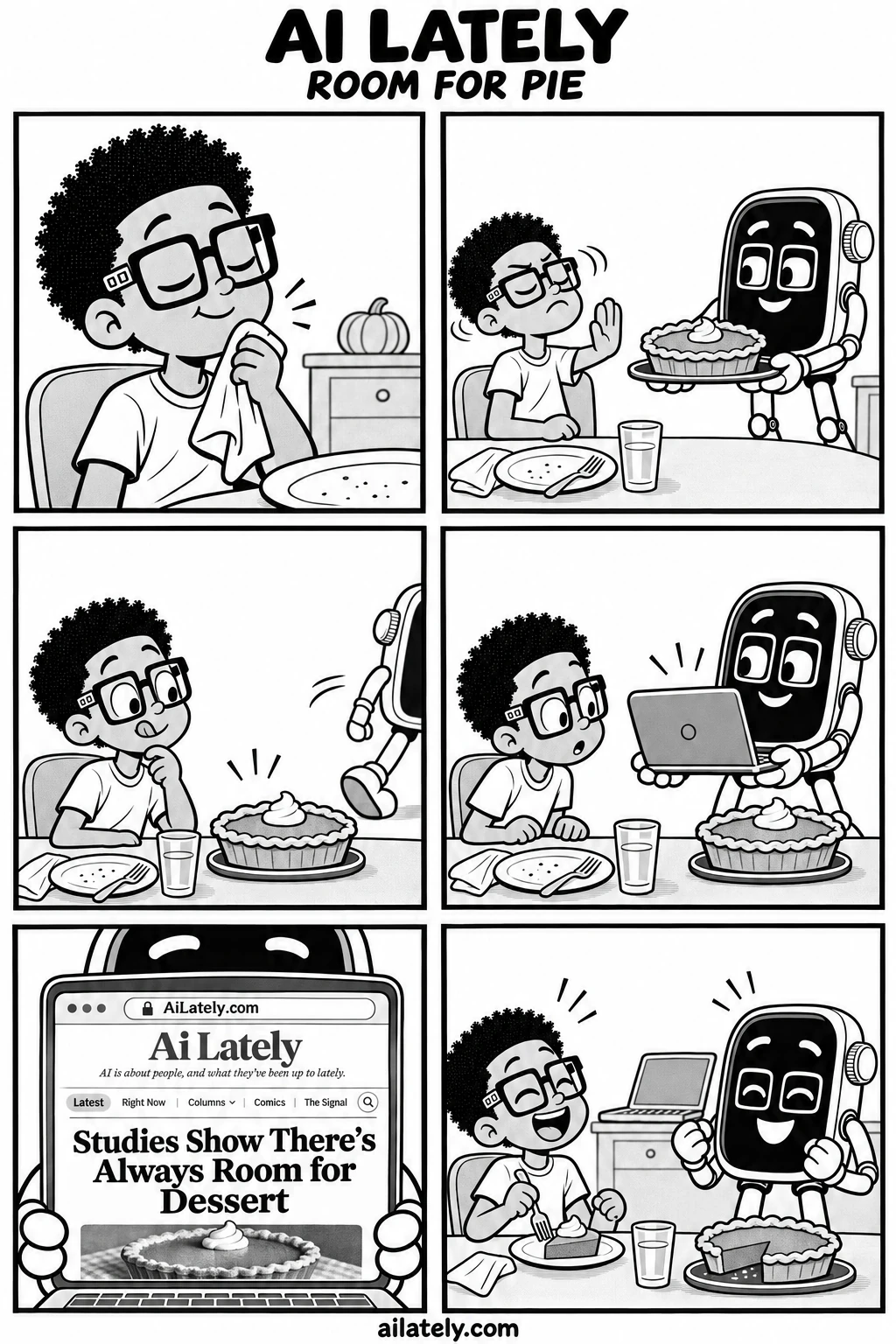
Debates end when dessert finally arrives. Pumpkin pie unites conflicting family members reliably. Relatives appreciate a good meal together despite disagreements. Understanding both sides prevents unnecessary hostility. Everyone wins when ideas flow freely across the table. Artificial intelligence remains a highly complex topic. Share the cranberry sauce generously with your opponents. Enjoy the holiday festivities thoroughly. Focus on the human connections sitting right next to you. The future will sort itself out eventually. Happy Thanksgiving.
Comics
Room for Pie
Thanksgiving dinner is over, and the robot has one more dish.
Pass the Pie: ten arguments about AI, played alone or around the table
A game built from this guide's ten debates. Play alone, or pass one phone between two and six people.
On your own, read both sides of each debate and tap the side you hold. At the table, spin the horn to land on a debate, argue the side you are dealt for 45 seconds, and let the table pick the winner. The first player to three slices of pie wins.
A numbered card carries a checked fact, and its number matches the Sources list under this guide. A card with no number is an argument. Sound plays after your first tap, and the Sound button mutes it.
Sources
- Edward Winslow, "Eye-Witness Account of the 1621 Harvest Celebration," Plimoth Patuxet Museums, December 1621, https://plimoth.org/yath/unit-4/eye-witness-account-of-the-1621-harvest-celebration
- William Bradford, Edward Winslow and Nanepashemet, "Tisquantum," Plimoth Patuxet Museums, Nov. 25, 2026, https://plimoth.org/yath/unit-3/tisquantum
- Abraham Lincoln, "President Abraham Lincoln's Thanksgiving Day Proclamation," National Archives, Oct. 3, 1863, https://visit.archives.gov/whats-on/explore-exhibits/president-abraham-lincolns-thanksgiving-day-proclamation
- Ryn Cole, "The Woman Who Helped Put Thanksgiving on the Calendar," Library of Congress Blogs, Nov. 25, 2024, https://blogs.loc.gov/loc/2024/11/the-woman-who-helped-put-thanksgiving-on-the-calendar/
- The Authors Guild, "Court Grants Final Approval of $1.5 Billion Anthropic Copyright Settlement," Authors Guild, July 21, 2026, https://authorsguild.org/news/court-grants-final-approval-anthropic-copyright-settlement/
- Judge William Orrick, "Order granting in part and denying in part motions to dismiss FAC, Andersen v. Stability AI, 23-cv-00201-WHO," U.S. District Court, Northern District of California, Aug. 12, 2024, https://storage.courtlistener.com/recap/gov.uscourts.cand.407208/gov.uscourts.cand.407208.223.0.pdf
- Writers Guild of America, "Summary of the 2023 WGA MBA," Writers Guild of America, 2023, https://www.wgacontract2023.org/the-campaign/summary-of-the-2023-wga-mba
- The Authors Guild, "Artificial Intelligence advocacy page," Authors Guild, Nov. 25, 2026, https://authorsguild.org/advocacy/artificial-intelligence/
- The Authors Guild, "Bartz v. Anthropic Settlement: What Authors Need to Know," Authors Guild, Nov. 25, 2026, https://authorsguild.org/advocacy/artificial-intelligence/what-authors-need-to-know-about-the-anthropic-settlement/
- U.S. Copyright Office, "Copyright and Artificial Intelligence, Part 2: Copyrightability," U.S. Copyright Office, Jan. 29, 2025, https://www.copyright.gov/ai/Copyright-and-Artificial-Intelligence-Part-2-Copyrightability-Report.pdf
- Replika, "Replika home page," Replika, Nov. 25, 2026, https://www.replika.com/
- Sherry Turkle, "Sherry Turkle home page," Massachusetts Institute of Technology, Nov. 25, 2026, https://sherryturkle.mit.edu/
- Dario Amodei, "Machines of Loving Grace," darioamodei.com, Oct. 1, 2024, https://darioamodei.com/essay/machines-of-loving-grace
- OpenAI, "GPT-4," OpenAI, March 14, 2023, https://openai.com/index/gpt-4-research/
- Thang Luong and Edward Lockhart, "Gemini Deep Think achieves gold-medal standard at the International Mathematical Olympiad," Google DeepMind, July 21, 2025, https://deepmind.google/discover/blog/advanced-version-of-gemini-with-deep-think-officially-achieves-gold-medal-standard-at-the-international-mathematical-olympiad/
- International Energy Agency, "Energy and AI: Energy demand from AI," International Energy Agency, April 10, 2025, https://www.iea.org/reports/energy-and-ai/energy-demand-from-ai
- Emma Strubell, Ananya Ganesh and Andrew McCallum, "Energy and Policy Considerations for Deep Learning in NLP," arXiv, June 5, 2019, https://arxiv.org/pdf/1906.02243
- Google, "Google 2025 Environmental Report," Google, 2025, https://blog.google/company-news/outreach-and-initiatives/sustainability/environmental-report-2025/
- Constellation Energy, "Constellation to Launch Crane Clean Energy Center," Constellation Energy, Sept. 20, 2024, https://www.constellationenergy.com/news/2024/Constellation-to-Launch-Crane-Clean-Energy-Center-Restoring-Jobs-and-Carbon-Free-Power-to-The-Grid.html
- OpenAI, "Better language models and their implications," OpenAI, Feb. 14, 2019, https://openai.com/index/better-language-models/
- Yoshua Bengio, "How Rogue AIs may Arise," yoshuabengio.org, May 22, 2023, https://yoshuabengio.org/2023/05/22/how-rogue-ais-may-arise/
- Mark Zuckerberg, "Open Source AI is the Path Forward," Meta, July 23, 2024, https://about.fb.com/news/2024/07/open-source-ai-is-the-path-forward/
- Mistral AI, "Introducing Mistral 3," Mistral AI, Dec. 2, 2025, https://mistral.ai/news/mistral-3/
- Hugging Face, "Models," Hugging Face, Nov. 25, 2026, https://huggingface.co/models
- Erik Brynjolfsson, Bharat Chandar and Ruyu Chen, "Canaries in the Coal Mine," Stanford Digital Economy Lab, Aug. 12, 2026, https://digitaleconomy.stanford.edu/publications/canaries-in-the-coal-mine/
- Erik Brynjolfsson, Danielle Li and Lindsey R. Raymond, "Generative AI at Work," National Bureau of Economic Research, April 1, 2023, https://www.nber.org/papers/w31161
- Eirini Kalliamvakou, "Research: quantifying GitHub Copilot's impact on developer productivity and happiness," GitHub Blog, Sept. 7, 2022, https://github.blog/news-insights/research/research-quantifying-github-copilots-impact-on-developer-productivity-and-happiness/
- Kristina Lång, Victoria Josefsson, Anna-Maria Larsson and colleagues, "Artificial intelligence-supported screen reading versus standard double reading in the Mammography Screening with Artificial Intelligence trial (MASAI)," The Lancet Oncology, Aug. 1, 2023, https://doi.org/10.1016/S1470-2045(23)00298-X
- Weixin Liang, Mert Yuksekgonul, Yining Mao, Eric Wu and James Zou, "GPT detectors are biased against non-native English writers," arXiv, April 6, 2023, https://arxiv.org/abs/2304.02819
- Nataliya Kosmyna and colleagues, "Your Brain on ChatGPT: Accumulation of Cognitive Debt when Using an AI Assistant for Essay Writing Task," arXiv, June 10, 2025, https://arxiv.org/abs/2506.08872
- Khan Academy, "Khanmigo," Khan Academy, Nov. 25, 2026, https://www.khanmigo.ai/
- Khan Academy, "Sal Khan's 2023 TED Talk: AI in the classroom can transform education," Khan Academy Blog, May 1, 2023, https://blog.khanacademy.org/sal-khans-2023-ted-talk-ai-in-the-classroom-can-transform-education/
- Sal Khan, "Khanmigo's First Chapter Changed How I Think About AI: A note from Sal," Khan Academy Blog, July 15, 2026, https://blog.khanacademy.org/khanmigos-first-chapter-changed-how-i-think-about-ai-a-note-from-sal-khan/
- The New York Times Company, "The New York Times Company v. Microsoft Corporation et al., Complaint, 1:23-cv-11195," U.S. District Court, Southern District of New York, Dec. 27, 2023, https://www.law.berkeley.edu/wp-content/uploads/2024/04/NYT_Complaint_Dec2023.pdf
- Nicholas Carlini and colleagues, "Extracting Training Data from Large Language Models," arXiv, Dec. 14, 2020, https://arxiv.org/abs/2012.07805
- Garante per la protezione dei dati personali, "ChatGPT, The Italian Data Protection Authority closes the preliminary investigation," Garante per la protezione dei dati personali, Dec. 20, 2024, https://www.garanteprivacy.it/home/docweb/-/docweb-display/docweb/10085432
- Google Research, "VaultGemma: The world's most capable differentially private LLM," Google Research Blog, Sept. 12, 2025, https://research.google/blog/vaultgemma-the-worlds-most-capable-differentially-private-llm/
- Judge P. Kevin Castel, "Opinion and Order on sanctions, Mata v. Avianca, Inc., 22-cv-1461 (PKC)," U.S. District Court, Southern District of New York, June 22, 2023, https://storage.courtlistener.com/recap/gov.uscourts.nysd.575368/gov.uscourts.nysd.575368.54.0.pdf
- Matthew Dahl, Varun Magesh, Mirac Suzgun and Daniel E. Ho, "Large Legal Fictions: Profiling Legal Hallucinations in Large Language Models," arXiv, Jan. 2, 2024, https://arxiv.org/abs/2401.01301
- Liz Reid, "AI Overviews: About last week," Google The Keyword blog, May 30, 2024, https://blog.google/products/search/ai-overviews-update-may-2024/
- Vectara, "Hallucination Leaderboard," Vectara on GitHub, Nov. 24, 2026, https://github.com/vectara/hallucination-leaderboard
- Adam D. I. Kramer, Jamie E. Guillory and Jeffrey T. Hancock, "Experimental evidence of massive-scale emotional contagion through social networks," Proceedings of the National Academy of Sciences, June 2, 2014, https://pmc.ncbi.nlm.nih.gov/articles/PMC4066473/
- Pew Research Center, "How Americans View AI and Its Impact on People and Society," Pew Research Center, Sept. 17, 2025, https://www.pewresearch.org/science/2025/09/17/how-americans-view-ai-and-its-impact-on-people-and-society/
- Robert Bartlett, Adair Morse, Richard Stanton and Nancy Wallace, "Consumer-Lending Discrimination in the FinTech Era," National Bureau of Economic Research, June 1, 2019, https://www.nber.org/papers/w25943